

Soup, chicken broth cubes, dry, prepared with water
Whole food · Soups, Sauces, and Gravies

Photo: Wikipedia
This is the ultimate pantry shortcut: a dehydrated, compressed cube of concentrated chicken stock that transforms plain water into a savory, golden broth. It dissolves quickly to release a rich, umami-packed chicken flavor with a slightly salty, savory depth and a smooth, clear liquid texture. Nutritionally, it's a very low-calorie way to add significant flavor and a small protein boost to dishes.
Calorie split: 30% protein · 48% carbs · 21% fat
↓ Full nutrition💚 Why it's loved
People love it for its unmatched convenience and flavor power—a single cube can instantly elevate rice, vegetables, or a simple soup. It's a staple in home kitchens worldwide for creating a comforting, savory base with minimal effort.
⚠️ Watch-outs & how to enjoy it better
The primary concern is its high sodium content, which can contribute to excess salt intake if not managed. To counteract this, use only half a cube, dilute the broth further, or pair it with low-sodium ingredients and fresh herbs. It may also contain gluten or soy as allergens, so always check the label.
Key benefits
- Extremely low in calories and fat.
- Provides a quick source of sodium and electrolytes.
- Adds deep umami flavor without adding sugar or fat.
- Long shelf life and requires no refrigeration.
- Convenient base for soups, sauces, and grains.
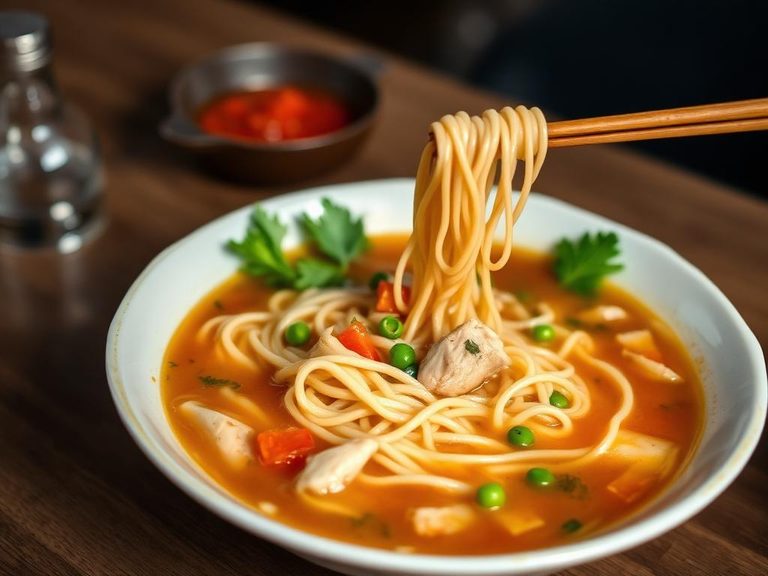
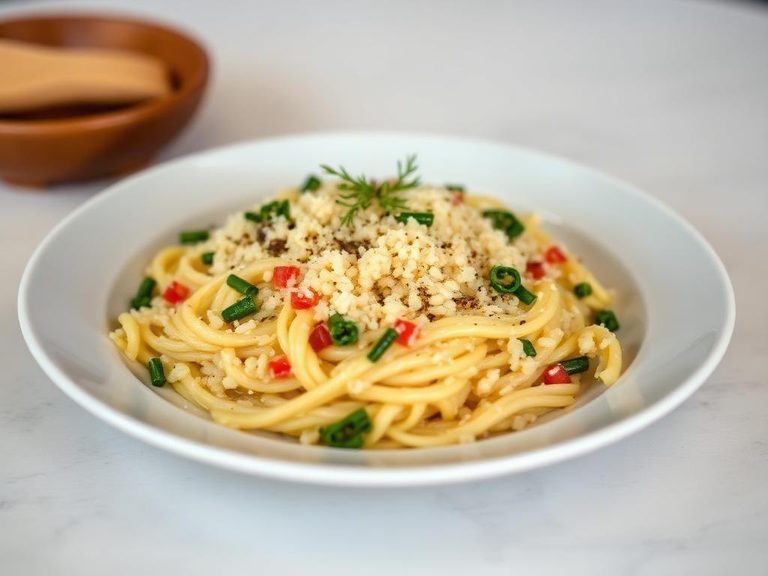
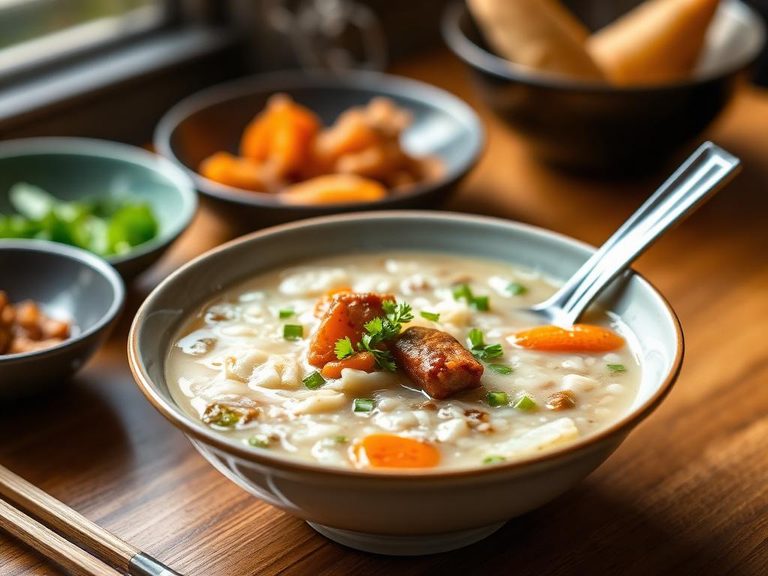
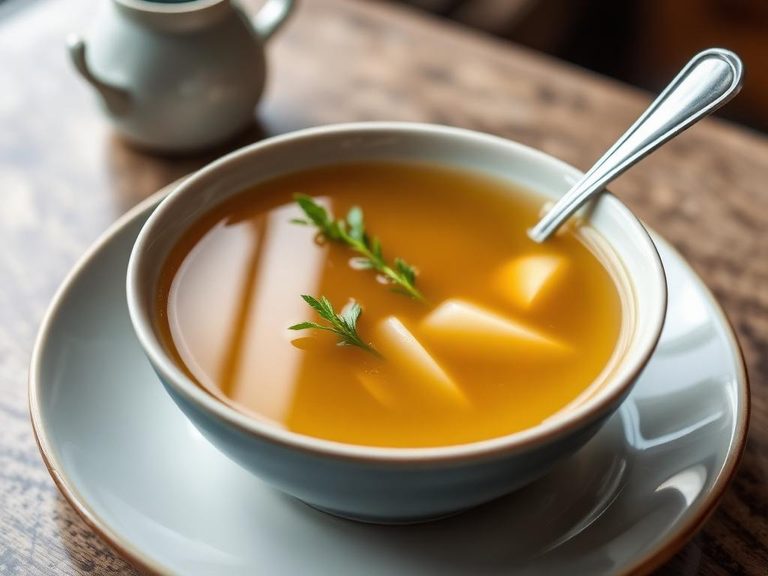
🍽️ Popular dishes
🌍 Where it's eaten
💡 Did you know?
The concept of the bouillon cube was popularized by the Swiss company Maggi in 1908, though the French company Knorr had already patented a similar dried soup block in 1873.
Full nutrition (USDA data · scales with serving)
| Water | 97.4 g |
| Energy | 5.0 kcal |
| Energy | 21.0 kj |
| Protein | 0.39 g |
| Total lipid (fat) | 0.12 g |
| Ash | 1.4 g |
| Carbohydrate, by difference | 0.62 g |
| Calcium, Ca | 5.0 mg |
| Iron, Fe | 0.05 mg |
| Magnesium, Mg | 1.0 mg |
| Phosphorus, P | 5.0 mg |
| Potassium, K | 10.0 mg |
| Sodium, Na | 326 mg |
| Zinc, Zn | 0.01 mg |
| Copper, Cu | 0.00 mg |
| Manganese, Mn | 0.01 mg |
| Vitamin C, total ascorbic acid | 0.00 mg |
| Thiamin | 0.01 mg |
| Riboflavin | 0.01 mg |
| Niacin | 0.10 mg |
| Pantothenic acid | 0.02 mg |
| Vitamin B-6 | 0.00 mg |
| Folate, total | 1.0 ug |
| Folic acid | 0.00 ug |
| Folate, food | 1.0 ug |
| Folate, DFE | 1.0 ug |
| Vitamin B-12 | 0.01 ug |
| Vitamin A, RAE | 1.0 ug |
| Retinol | 1.0 ug |
| Vitamin A, IU | 7.0 iu |
Fat & fatty acid profile (per 100g)
| Fatty acids, total saturated | 0.03 g |
| SFA 12:0 | 0.00 g |
| SFA 14:0 | 0.00 g |
| SFA 16:0 | 0.02 g |
| SFA 18:0 | 0.01 g |
| Fatty acids, total monounsaturated | 0.05 g |
| MUFA 16:1 | 0.01 g |
| MUFA 18:1 | 0.04 g |
| MUFA 20:1 | 0.00 g |
| Fatty acids, total polyunsaturated | 0.04 g |
| PUFA 18:2 | 0.04 g |
| PUFA 18:3 | 0.00 g |
| PUFA 20:4 | 0.00 g |
| Cholesterol | 0.00 mg |
Amino acid profile (per 100g)
Estimated from Soup, bean with pork, canned, condensed — USDA does not publish this profile for Soup.
| Tryptophan | 0.06 g |
| Threonine | 0.24 g |
| Isoleucine | 0.29 g |
| Leucine | 0.48 g |
| Lysine | 0.40 g |
| Methionine | 0.07 g |
| Cystine | 0.07 g |
| Phenylalanine | 0.33 g |
| Tyrosine | 0.18 g |
| Valine | 0.32 g |
| Arginine | 0.31 g |
| Histidine | 0.15 g |
| Alanine | 0.29 g |
| Aspartic acid | 0.66 g |
| Glutamic acid | 1.1 g |
| Glycine | 0.28 g |
| Proline | 0.27 g |
| Serine | 0.29 g |
FAQ
How does the nutrition compare to homemade chicken broth?
Dry cubes are far more concentrated. Per 100g, they have more sodium and less protein than homemade broth, which is mostly water. A prepared cup from a cube is much lower in calories and protein than a rich, homemade stock.
Can I use it for anything other than soup?
Absolutely. Dissolve a cube in water to cook rice or quinoa, use it to deglaze a pan for a quick sauce, or mix a small amount into ground meat for extra flavor.
Is it gluten-free?
Not always. Many brands use wheat flour as a filler or flavor enhancer. You must check the specific product's ingredient list and allergen warnings for a gluten-free version.
Nutrient density (calculated · NRF9.3)
Nutrient Rich Foods index: beneficial nutrients (protein, fiber, vitamins, minerals) minus saturated fat, added sugar & sodium, per 100 kcal.
NRF9.3 index — Fulgoni, Keast & Drewnowski, 2009. Computed from USDA nutrients.
Weight-loss friendliness (composite index)
Energy density 0.05 kcal/g · 31% calories from protein · 0.0 g fiber · 0.0 g sugar per 100 g.
Composite of energy density (Rolls et al., 1999), protein & fiber satiety, minus sugar. A calculated heuristic — ranks satiety-per-calorie, not a clinical measure.
Dietary load (calculated from USDA values)
Potential renal acid load. Positive = acid-forming, negative = alkaline-forming.
Sodium-to-potassium ratio: 32.60 (lower is better — aim for ≤ 1)
Sodium:potassium per WHO potassium guidance. Computed from USDA nutrients.