

Shrimp with lobster sauce
Common food
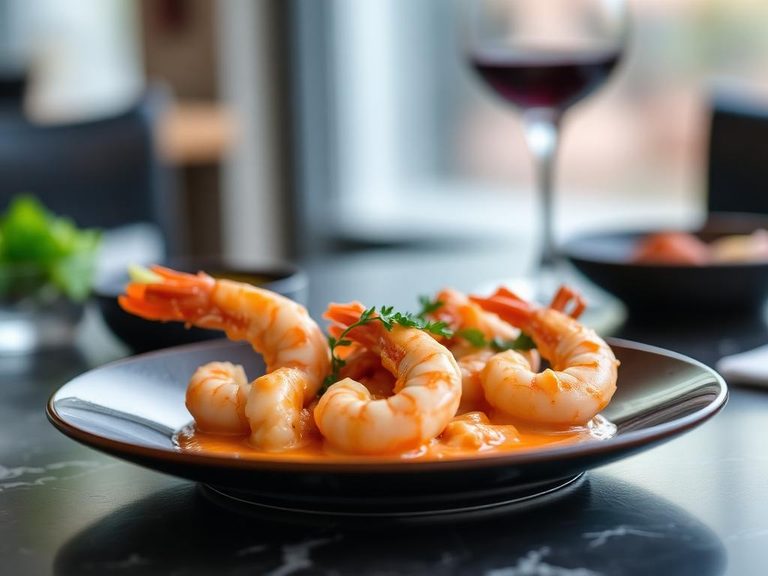
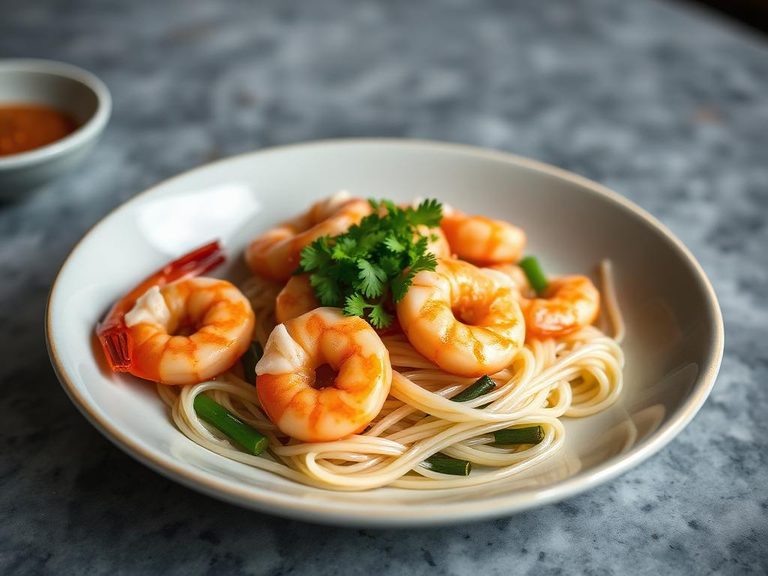
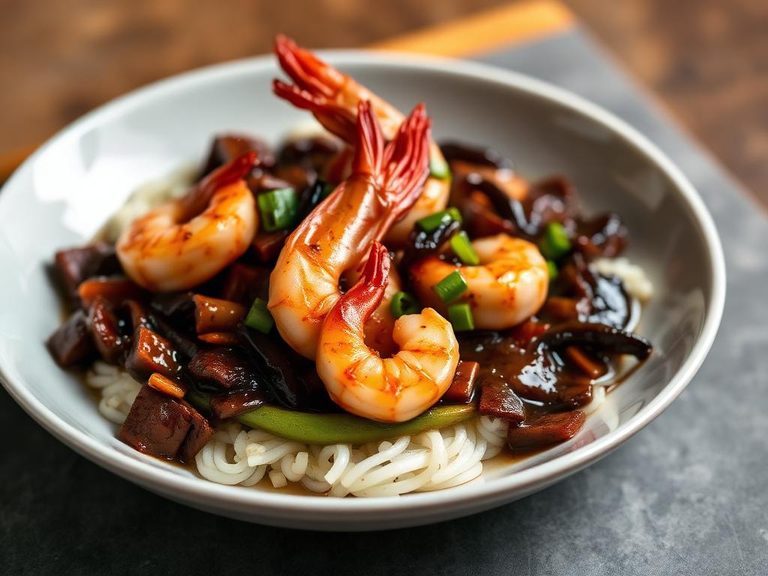
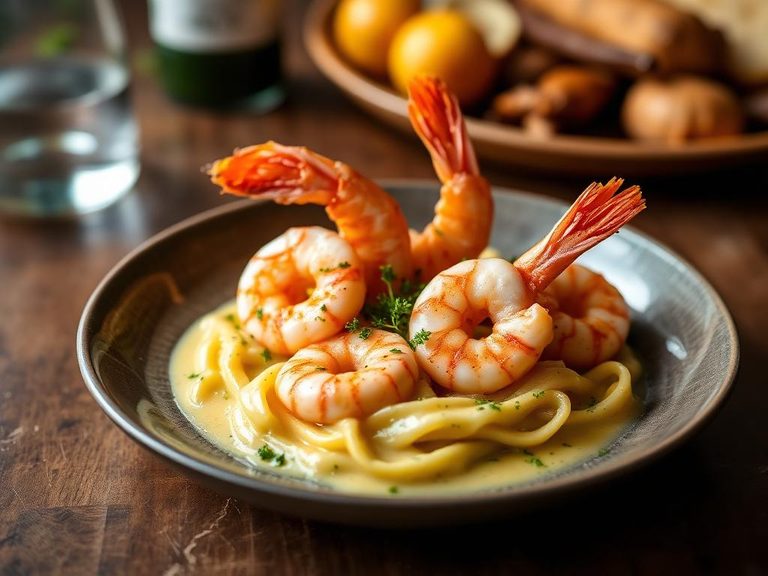
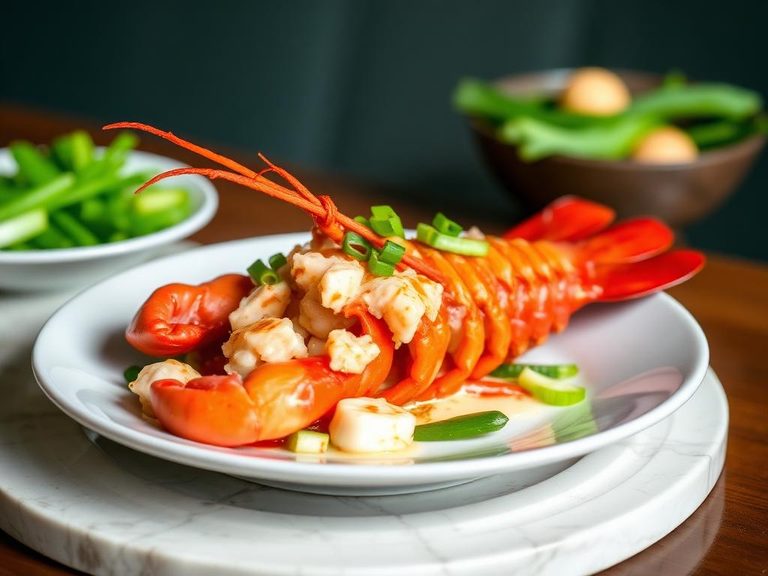
Shrimp with lobster sauce is a classic Chinese-American stir-fry featuring tender shrimp in a rich, savory brown sauce, often thickened with egg ribbons and enriched with minced pork and fermented black beans. The sauce is velvety and umami-forward, with a subtle brininess from the seafood, while the shrimp provides a firm, succulent bite. Despite its indulgent appearance, it's a relatively lean protein source, with most of its calories coming from the shrimp and a small amount of oil.
Calorie split: 46% protein · 6% carbs · 48% fat
↓ Full nutrition💚 Why it's loved
People love it for the luxurious combination of tender shrimp and a deeply savory, slightly sweet sauce that clings to every bite. It's a beloved staple in Chinese-American cuisine, offering a taste of restaurant-quality comfort food that's both familiar and satisfying.
⚠️ Watch-outs & how to enjoy it better
The sauce can be high in sodium from soy sauce, oyster sauce, and fermented black beans, which may be a concern for those monitoring salt intake. To counteract this, you can request sauce on the side, use low-sodium soy sauce, or pair the dish with plain steamed vegetables or rice to balance the flavors. Additionally, shrimp is a common allergen, so those with shellfish allergies must avoid it entirely.
Key benefits
- High in complete protein for muscle maintenance and satiety
- Low in carbohydrates, making it suitable for low-carb diets
- Contains selenium and vitamin B12 from shrimp
- Fermented black beans provide probiotics and antioxidants
- Quick-cooking, preserving the shrimp's nutrient profile
🍽️ Popular dishes
🌍 Where it's eaten
💡 Did you know?
Despite its name, the classic 'lobster sauce' in this dish contains no lobster; the name is thought to derive from the sauce's rich, red-brown color and luxurious texture, reminiscent of a sauce traditionally served with lobster.
Full nutrition (USDA data · scales with serving)
| Water | 70.3 g |
| Energy | 151 kcal |
| Protein | 16.8 g |
| Total lipid (fat) | 7.8 g |
| Carbohydrate, by difference | 2.2 g |
| Fiber, total dietary | 0.00 g |
| Total Sugars | 0.80 g |
| Calcium, Ca | 100 mg |
| Iron, Fe | 1.6 mg |
| Magnesium, Mg | 25.0 mg |
| Phosphorus, P | 163 mg |
| Potassium, K | 114 mg |
| Sodium, Na | 1031 mg |
| Zinc, Zn | 1.7 mg |
| Copper, Cu | 0.18 mg |
| Selenium, Se | 35.8 ug |
| Vitamin C, total ascorbic acid | 2.6 mg |
| Thiamin | 0.10 mg |
| Riboflavin | 0.09 mg |
| Niacin | 0.93 mg |
| Vitamin B-6 | 0.08 mg |
| Folate, total | 9.0 ug |
| Folic acid | 0.00 ug |
| Folate, food | 9.0 ug |
| Folate, DFE | 9.0 ug |
| Choline, total | 80.9 mg |
| Vitamin B-12 | 0.60 ug |
| Vitamin B-12, added | 0.00 ug |
| Vitamin A, RAE | 10.0 ug |
| Retinol | 10.0 ug |
| Carotene, beta | 1.0 ug |
| Carotene, alpha | 0.00 ug |
| Cryptoxanthin, beta | 1.0 ug |
| Lycopene | 0.00 ug |
| Lutein + zeaxanthin | 24.0 ug |
| Vitamin E (alpha-tocopherol) | 1.5 mg |
| Vitamin E, added | 0.00 mg |
| Vitamin D (D2 + D3) | 0.20 ug |
| Vitamin K (phylloquinone) | 3.9 ug |
| Alcohol, ethyl | 0.00 g |
| Caffeine | 0.00 mg |
| Theobromine | 0.00 mg |
Fat & fatty acid profile (per 100g)
| Fatty acids, total saturated | 1.7 g |
| SFA 4:0 | 0.00 g |
| SFA 6:0 | 0.00 g |
| SFA 8:0 | 0.00 g |
| SFA 10:0 | 0.00 g |
| SFA 12:0 | 0.00 g |
| SFA 14:0 | 0.04 g |
| SFA 16:0 | 1.1 g |
| SFA 18:0 | 0.50 g |
| Fatty acids, total monounsaturated | 3.0 g |
| MUFA 16:1 | 0.12 g |
| MUFA 18:1 | 2.8 g |
| MUFA 20:1 | 0.05 g |
| MUFA 22:1 | 0.00 g |
| Fatty acids, total polyunsaturated | 2.2 g |
| PUFA 18:2 | 1.6 g |
| PUFA 18:3 | 0.18 g |
| PUFA 18:4 | 0.00 g |
| PUFA 20:4 | 0.05 g |
| PUFA 20:5 n-3 (EPA) | 0.18 g |
| PUFA 22:5 n-3 (DPA) | 0.03 g |
| PUFA 22:6 n-3 (DHA) | 0.16 g |
| Cholesterol | 192 mg |
FAQ
Why is it called 'lobster sauce' if it has no lobster?
The name is a historical misnomer. The thick, savory, and often slightly sweet brown sauce with egg ribbons was originally a sauce prepared for lobster in Cantonese cuisine. When shrimp became the more common and affordable protein in Chinese-American restaurants, the sauce's name stuck.
What is the typical texture of the sauce?
The sauce is characteristically velvety and slightly thick, achieved by thickening with a cornstarch slurry. It often contains delicate ribbons of beaten egg, minced pork, and sometimes fermented black beans, giving it a complex, hearty texture.
Is this dish spicy?
In its most traditional form, Shrimp with Lobster Sauce is not spicy. The flavor profile is savory, umami, and slightly sweet. However, some regional or restaurant variations may add a touch of chili oil or black pepper for heat.
Nutrient density (calculated · NRF9.3)
Nutrient Rich Foods index: beneficial nutrients (protein, fiber, vitamins, minerals) minus saturated fat, added sugar & sodium, per 100 kcal.
NRF9.3 index — Fulgoni, Keast & Drewnowski, 2009. Computed from USDA nutrients.
Weight-loss friendliness (composite index)
Energy density 1.51 kcal/g · 44% calories from protein · 0.0 g fiber · 0.8 g sugar per 100 g.
Composite of energy density (Rolls et al., 1999), protein & fiber satiety, minus sugar. A calculated heuristic — ranks satiety-per-calorie, not a clinical measure.
Dietary load (calculated from USDA values)
Potential renal acid load. Positive = acid-forming, negative = alkaline-forming.
Sodium-to-potassium ratio: 9.04 (lower is better — aim for ≤ 1)
Sodium:potassium per WHO potassium guidance. Computed from USDA nutrients.