

Shrimp toast
Common food

Photo: Wikipedia
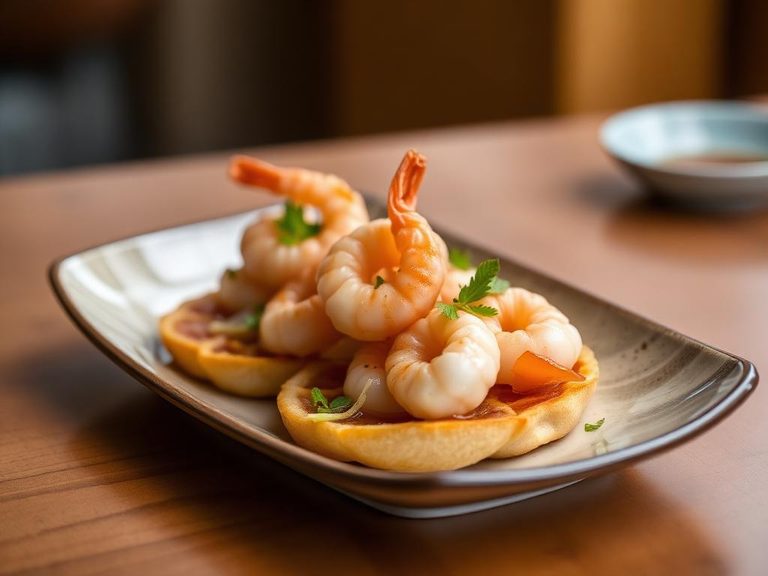
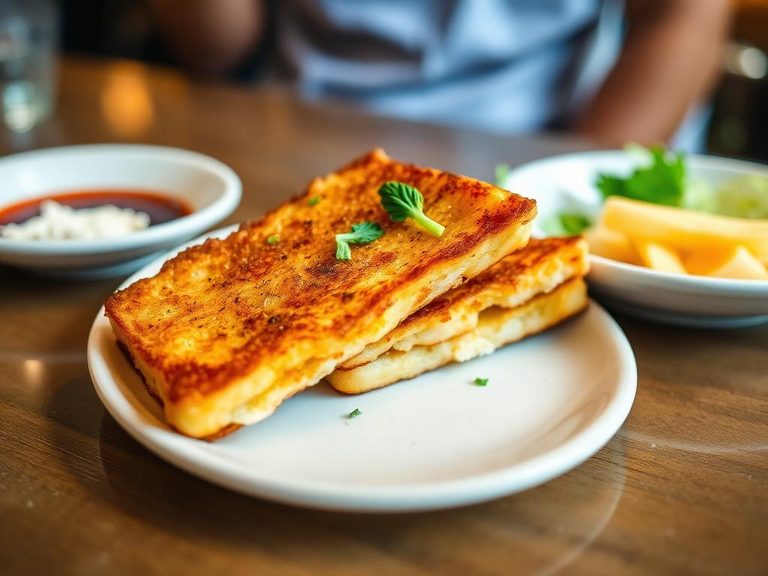
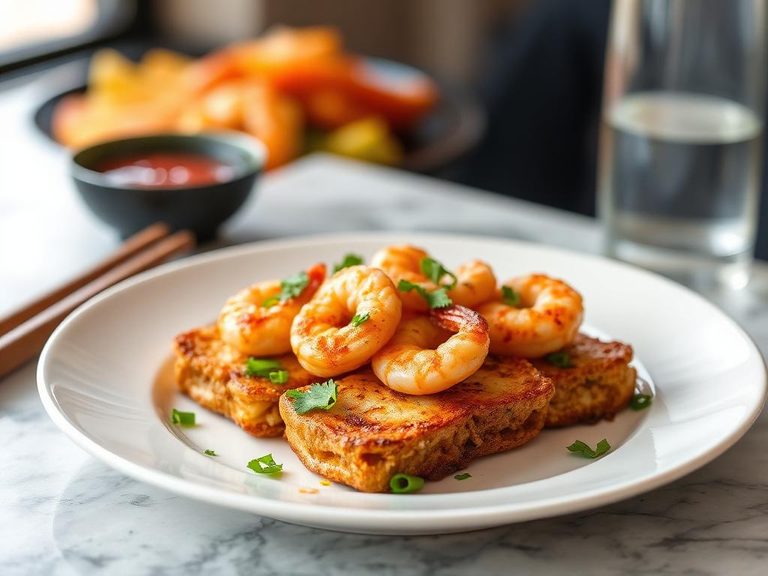
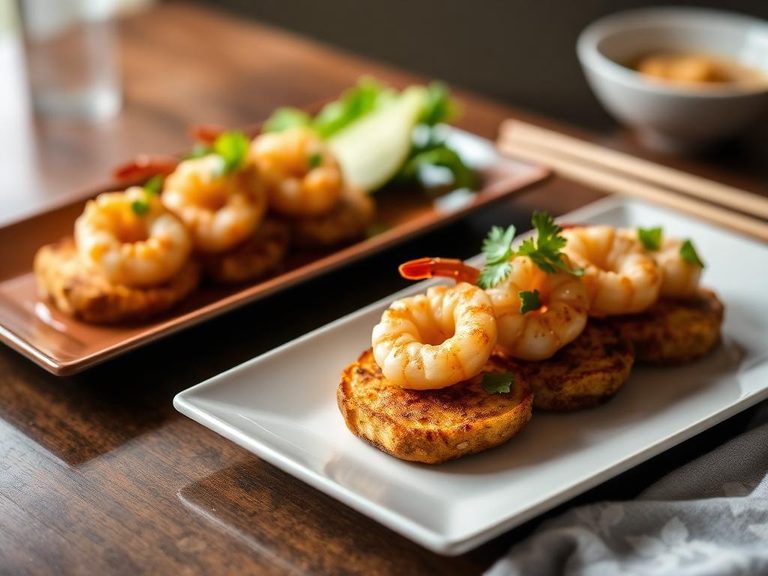
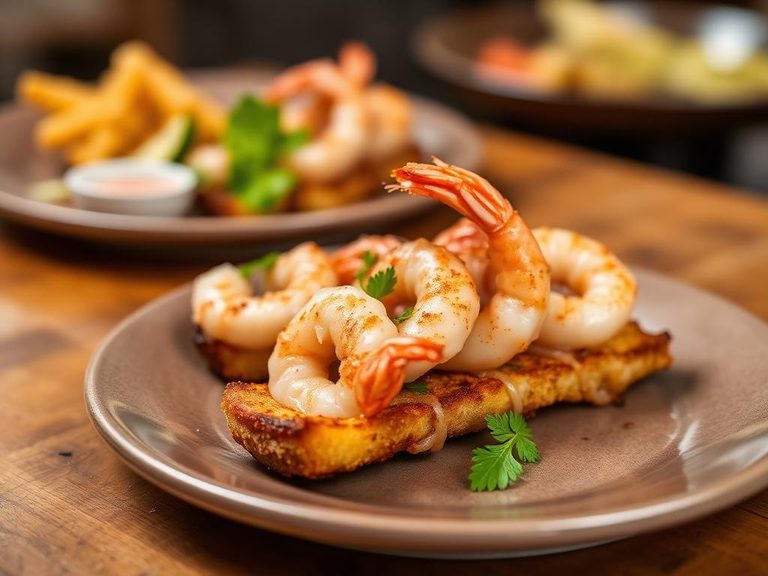
Shrimp toast is a crispy, golden-fried appetizer where a savory paste of minced shrimp and seasonings is spread onto bread and deep-fried until crunchy. The texture is a delightful contrast of a shatteringly crisp exterior and a tender, slightly bouncy shrimp filling. It's a calorie-dense treat, with a significant portion of its energy coming from fat due to the frying process.
Calorie split: 15% protein · 22% carbs · 63% fat
↓ Full nutrition💚 Why it's loved
People love shrimp toast for its irresistible combination of crispy, oily bread and the sweet, savory pop of the shrimp paste. It's a beloved comfort food and a staple at dim sum restaurants and Asian takeaways, evoking a sense of nostalgia and indulgence.
⚠️ Watch-outs & how to enjoy it better
The primary downside is its high fat and calorie content from deep-frying, which can contribute to weight gain if consumed frequently. As it's a common allergen (shellfish, gluten), those with sensitivities should avoid it. To counteract this, enjoy it in moderation as an occasional treat, pair it with a fresh, acidic salad or pickled vegetables to cut through the richness, and consider baking or air-frying a homemade version to reduce oil absorption.
Key benefits
- Provides a good source of protein from shrimp
- Offers a satisfying crunch and savory flavor
- Quick and popular appetizer in many cuisines
- Can be a source of selenium and vitamin B12 from shrimp
🍽️ Popular dishes
🌍 Where it's eaten
💡 Did you know?
Shrimp toast, known as 'haam sīu jīu' in Cantonese, is believed to have originated in Guangdong province, China, and was popularized in the West by Chinese immigrants in the mid-20th century, becoming a staple in Chinese-American restaurants.
Full nutrition (USDA data · scales with serving)
| Water | 61.9 g |
| Energy | 222 kcal |
| Protein | 8.5 g |
| Total lipid (fat) | 15.4 g |
| Carbohydrate, by difference | 12.0 g |
| Fiber, total dietary | 0.80 g |
| Total Sugars | 1.4 g |
| Calcium, Ca | 59.0 mg |
| Iron, Fe | 0.77 mg |
| Magnesium, Mg | 17.0 mg |
| Phosphorus, P | 134 mg |
| Potassium, K | 132 mg |
| Sodium, Na | 558 mg |
| Zinc, Zn | 0.64 mg |
| Copper, Cu | 0.12 mg |
| Selenium, Se | 18.0 ug |
| Vitamin C, total ascorbic acid | 2.6 mg |
| Thiamin | 0.08 mg |
| Riboflavin | 0.07 mg |
| Niacin | 1.5 mg |
| Vitamin B-6 | 0.10 mg |
| Folate, total | 25.0 ug |
| Folic acid | 10.0 ug |
| Folate, food | 14.0 ug |
| Folate, DFE | 32.0 ug |
| Choline, total | 41.4 mg |
| Vitamin B-12 | 0.44 ug |
| Vitamin B-12, added | 0.00 ug |
| Vitamin A, RAE | 31.0 ug |
| Retinol | 23.0 ug |
| Carotene, beta | 84.0 ug |
| Carotene, alpha | 12.0 ug |
| Cryptoxanthin, beta | 0.00 ug |
| Lycopene | 299 ug |
| Lutein + zeaxanthin | 80.0 ug |
| Vitamin E (alpha-tocopherol) | 3.5 mg |
| Vitamin E, added | 0.00 mg |
| Vitamin D (D2 + D3) | 0.00 ug |
| Vitamin K (phylloquinone) | 27.2 ug |
| Alcohol, ethyl | 0.00 g |
| Caffeine | 0.00 mg |
| Theobromine | 0.00 mg |
Fat & fatty acid profile (per 100g)
| Fatty acids, total saturated | 2.2 g |
| SFA 4:0 | 0.00 g |
| SFA 6:0 | 0.00 g |
| SFA 8:0 | 0.00 g |
| SFA 10:0 | 0.00 g |
| SFA 12:0 | 0.00 g |
| SFA 14:0 | 0.01 g |
| SFA 16:0 | 1.5 g |
| SFA 18:0 | 0.49 g |
| Fatty acids, total monounsaturated | 6.3 g |
| MUFA 16:1 | 0.06 g |
| MUFA 18:1 | 6.1 g |
| MUFA 20:1 | 0.10 g |
| MUFA 22:1 | 0.00 g |
| Fatty acids, total polyunsaturated | 5.9 g |
| PUFA 18:2 | 5.2 g |
| PUFA 18:3 | 0.66 g |
| PUFA 18:4 | 0.00 g |
| PUFA 20:4 | 0.02 g |
| PUFA 20:5 n-3 (EPA) | 0.03 g |
| PUFA 22:5 n-3 (DPA) | 0.00 g |
| PUFA 22:6 n-3 (DHA) | 0.03 g |
| Cholesterol | 57.0 mg |
FAQ
Is shrimp toast healthy?
Shrimp toast is generally considered an indulgent treat rather than a health food. While it provides protein from shrimp, its high fat content from deep-frying makes it calorie-dense. Enjoy it occasionally and in moderation.
What is the texture of shrimp toast?
The texture is a key appeal: the bread becomes very crispy and crunchy on the outside, while the shrimp paste filling is tender, slightly bouncy, and moist.
Can I make shrimp toast without frying?
Yes, you can bake or air-fry shrimp toast to reduce the oil content. While it won't be quite as crispy as the deep-fried version, it can still be delicious and significantly lower in fat.
Nutrient density (calculated · NRF9.3)
Nutrient Rich Foods index: beneficial nutrients (protein, fiber, vitamins, minerals) minus saturated fat, added sugar & sodium, per 100 kcal.
NRF9.3 index — Fulgoni, Keast & Drewnowski, 2009. Computed from USDA nutrients.
Weight-loss friendliness (composite index)
Energy density 2.22 kcal/g · 15% calories from protein · 0.8 g fiber · 1.4 g sugar per 100 g.
Composite of energy density (Rolls et al., 1999), protein & fiber satiety, minus sugar. A calculated heuristic — ranks satiety-per-calorie, not a clinical measure.
Dietary load (calculated from USDA values)
Potential renal acid load. Positive = acid-forming, negative = alkaline-forming.
Sodium-to-potassium ratio: 4.23 (lower is better — aim for ≤ 1)
Sodium:potassium per WHO potassium guidance. Computed from USDA nutrients.