

Shrimp salad
Common food
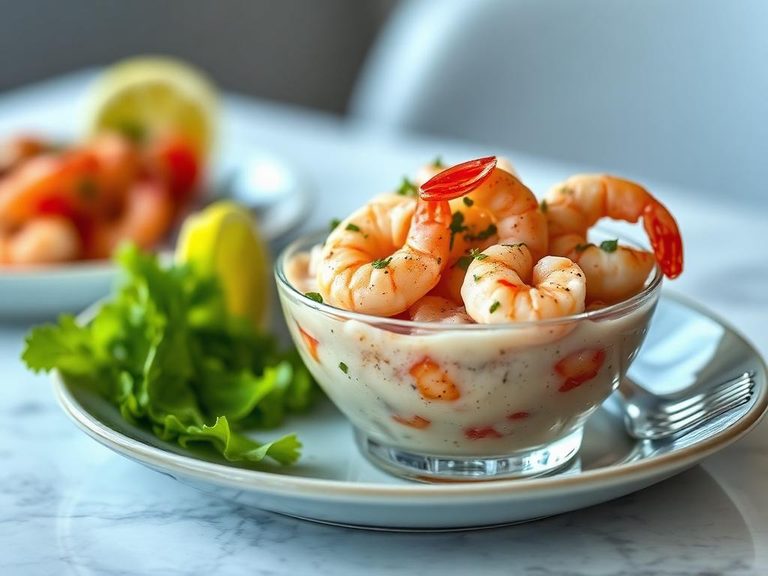
A chilled, savory salad featuring tender, briny shrimp tossed in a creamy, tangy dressing, often with crisp vegetables like celery and onion. The texture is a satisfying contrast of succulent seafood and crunchy bits, with a rich, slightly sweet flavor profile. It's a protein-packed, low-carb option, with most of its calories coming from healthy fats in the dressing.
Calorie split: 22% protein · 3% carbs · 75% fat
↓ Full nutrition💚 Why it's loved
People love it for its refreshing, cool taste and the satisfying combination of tender shrimp with a creamy, zesty dressing. It's incredibly versatile, working as a light lunch, a sandwich filling, or an elegant appetizer, and it's a staple at summer gatherings and coastal cuisine.
⚠️ Watch-outs & how to enjoy it better
The primary concern is the potential for high sodium from the shrimp and dressing, and the risk of shellfish allergies. To counteract this, choose low-sodium shrimp or rinse them, use a homemade dressing with less salt, and always check for allergen warnings. For those watching fat intake, opt for a lighter, yogurt-based dressing instead of a mayonnaise-heavy one.
Key benefits
- High in lean protein for muscle maintenance and satiety.
- Very low in carbohydrates and sugar, suitable for low-carb diets.
- Good source of selenium and vitamin B12 from the shrimp.
- Can be a quick, no-cook meal or appetizer.
- Provides healthy fats if made with olive oil or avocado-based dressing.
🍽️ Popular dishes
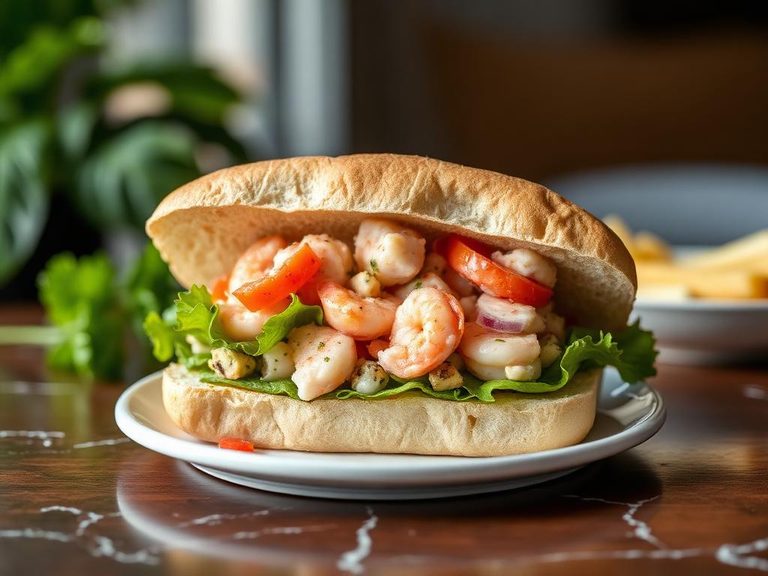
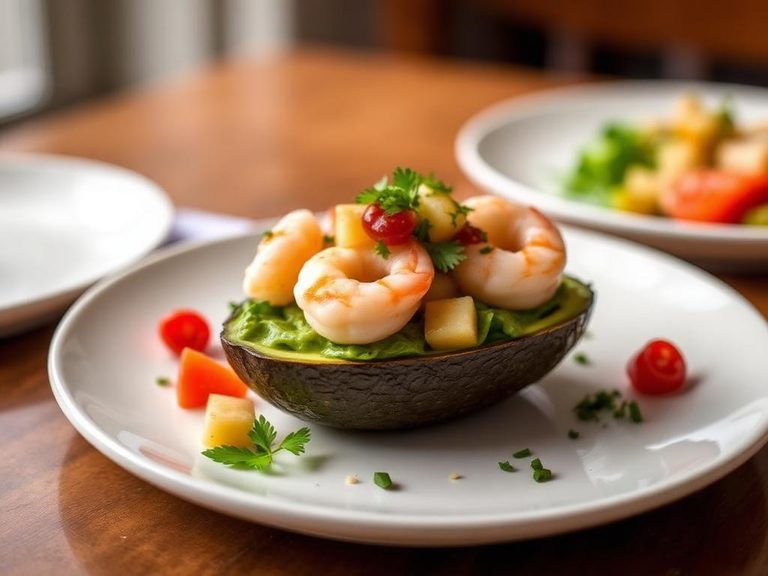
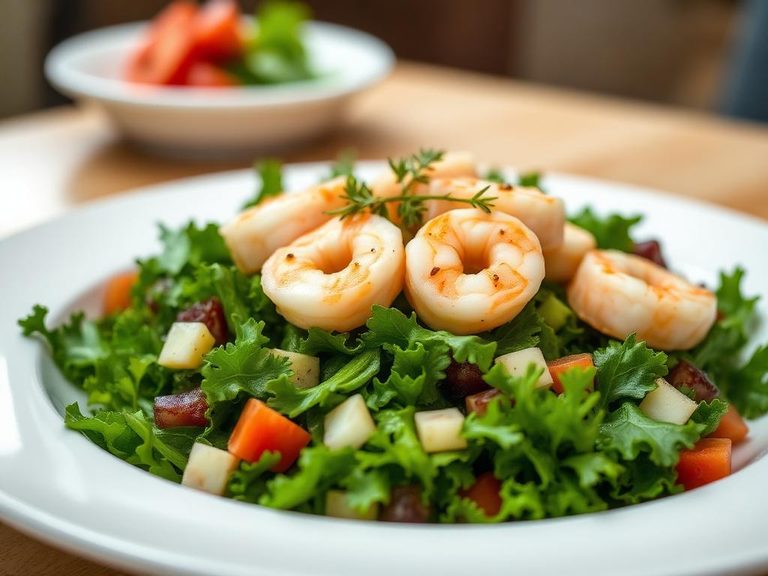
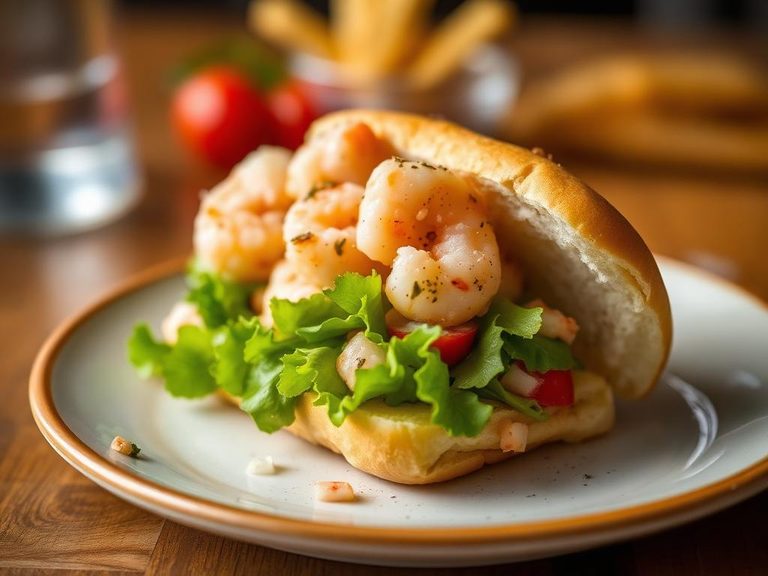
🌍 Where it's eaten
💡 Did you know?
The classic American shrimp salad often uses mayonnaise, which was popularized in the US in the late 19th century, but early versions might have used a simple vinaigrette or even a mustard-based sauce.
Full nutrition (USDA data · scales with serving)
| Water | 69.8 g |
| Energy | 196 kcal |
| Protein | 10.7 g |
| Total lipid (fat) | 16.2 g |
| Carbohydrate, by difference | 1.3 g |
| Fiber, total dietary | 0.40 g |
| Total Sugars | 0.57 g |
| Calcium, Ca | 86.0 mg |
| Iron, Fe | 1.1 mg |
| Magnesium, Mg | 20.0 mg |
| Phosphorus, P | 109 mg |
| Potassium, K | 110 mg |
| Sodium, Na | 703 mg |
| Zinc, Zn | 1.1 mg |
| Copper, Cu | 0.14 mg |
| Selenium, Se | 24.6 ug |
| Vitamin C, total ascorbic acid | 5.0 mg |
| Thiamin | 0.01 mg |
| Riboflavin | 0.03 mg |
| Niacin | 0.36 mg |
| Vitamin B-6 | 0.02 mg |
| Folate, total | 15.0 ug |
| Folic acid | 0.00 ug |
| Folate, food | 15.0 ug |
| Folate, DFE | 15.0 ug |
| Choline, total | 49.8 mg |
| Vitamin B-12 | 0.40 ug |
| Vitamin B-12, added | 0.00 ug |
| Vitamin A, RAE | 8.0 ug |
| Retinol | 3.0 ug |
| Carotene, beta | 62.0 ug |
| Carotene, alpha | 0.00 ug |
| Cryptoxanthin, beta | 1.0 ug |
| Lycopene | 0.00 ug |
| Lutein + zeaxanthin | 67.0 ug |
| Vitamin E (alpha-tocopherol) | 1.3 mg |
| Vitamin E, added | 0.00 mg |
| Vitamin D (D2 + D3) | 0.00 ug |
| Vitamin K (phylloquinone) | 40.3 ug |
| Alcohol, ethyl | 0.00 g |
| Caffeine | 0.00 mg |
| Theobromine | 0.00 mg |
Fat & fatty acid profile (per 100g)
| Fatty acids, total saturated | 2.5 g |
| SFA 4:0 | 0.00 g |
| SFA 6:0 | 0.00 g |
| SFA 8:0 | 0.00 g |
| SFA 10:0 | 0.00 g |
| SFA 12:0 | 0.00 g |
| SFA 14:0 | 0.01 g |
| SFA 16:0 | 1.7 g |
| SFA 18:0 | 0.68 g |
| Fatty acids, total monounsaturated | 3.5 g |
| MUFA 16:1 | 0.03 g |
| MUFA 18:1 | 3.4 g |
| MUFA 20:1 | 0.05 g |
| MUFA 22:1 | 0.01 g |
| Fatty acids, total polyunsaturated | 9.6 g |
| PUFA 18:2 | 8.1 g |
| PUFA 18:3 | 1.1 g |
| PUFA 18:4 | 0.00 g |
| PUFA 20:4 | 0.03 g |
| PUFA 20:5 n-3 (EPA) | 0.15 g |
| PUFA 22:5 n-3 (DPA) | 0.03 g |
| PUFA 22:6 n-3 (DHA) | 0.13 g |
| Cholesterol | 136 mg |
FAQ
Is shrimp salad healthy?
It can be, as it's high in protein and low in carbs. However, its healthiness depends heavily on the dressing—creamy, mayonnaise-based versions are higher in fat and calories, while lighter, yogurt-based or vinaigrette dressings are better choices.
How long does shrimp salad last in the fridge?
Properly stored in an airtight container, shrimp salad is best consumed within 1-2 days. The shrimp's texture can become rubbery, and the dressing may separate or spoil if left too long.
Can I use frozen shrimp for shrimp salad?
Yes, frozen shrimp are perfectly fine and often more convenient. Thaw them completely in the refrigerator or under cold running water, then pat them dry before using to prevent a watery salad.
Nutrient density (calculated · NRF9.3)
Nutrient Rich Foods index: beneficial nutrients (protein, fiber, vitamins, minerals) minus saturated fat, added sugar & sodium, per 100 kcal.
NRF9.3 index — Fulgoni, Keast & Drewnowski, 2009. Computed from USDA nutrients.
Weight-loss friendliness (composite index)
Energy density 1.96 kcal/g · 22% calories from protein · 0.4 g fiber · 0.6 g sugar per 100 g.
Composite of energy density (Rolls et al., 1999), protein & fiber satiety, minus sugar. A calculated heuristic — ranks satiety-per-calorie, not a clinical measure.
Dietary load (calculated from USDA values)
Potential renal acid load. Positive = acid-forming, negative = alkaline-forming.
Sodium-to-potassium ratio: 6.39 (lower is better — aim for ≤ 1)
Sodium:potassium per WHO potassium guidance. Computed from USDA nutrients.