

Seaweed, Canadian Cultivated EMI-TSUNOMATA, dry
Whole food · Vegetables and Vegetable Products
EMI-TSUNOMATA is a vibrant, deep-red dried seaweed cultivated in Canada, known for its striking crimson color and delicate, slightly crunchy texture when rehydrated. It offers a unique, subtly sweet and oceanic flavor with a hint of umami, and is a nutritional powerhouse, particularly noted for its exceptionally high dietary fiber content.
Calorie split: 24% protein · 71% carbs · 5% fat
↓ Full nutrition💚 Why it's loved
It is prized for its beautiful color that adds visual appeal to salads and soups, and its unique, mild sea-sweet flavor that enhances dishes without overpowering them. It's also celebrated for its versatility, rehydrating quickly into a ready-to-eat ingredient.
⚠️ Watch-outs & how to enjoy it better
Due to its extremely high fiber content, consuming large amounts without adequate water can cause digestive discomfort. It may also contain moderate levels of sodium; to counteract this, rinse it briefly after rehydrating and pair it with low-sodium ingredients or fresh vegetables.
Key benefits
- Excellent source of dietary fiber (36.7g per 100g dry)
- High in plant-based protein (15.34g per 100g dry)
- Very low in fat (1.39g per 100g dry)
- Contains naturally occurring iron and iodine
- Provides antioxidants like astaxanthin, which gives it its red color
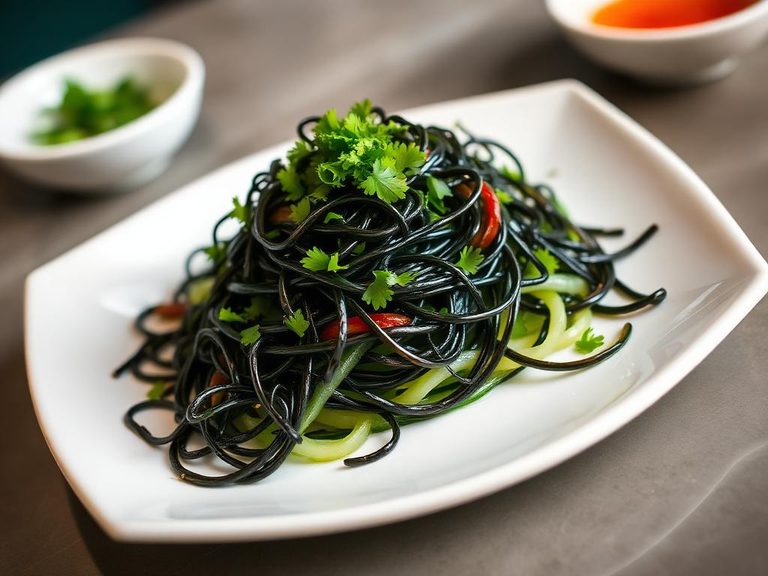
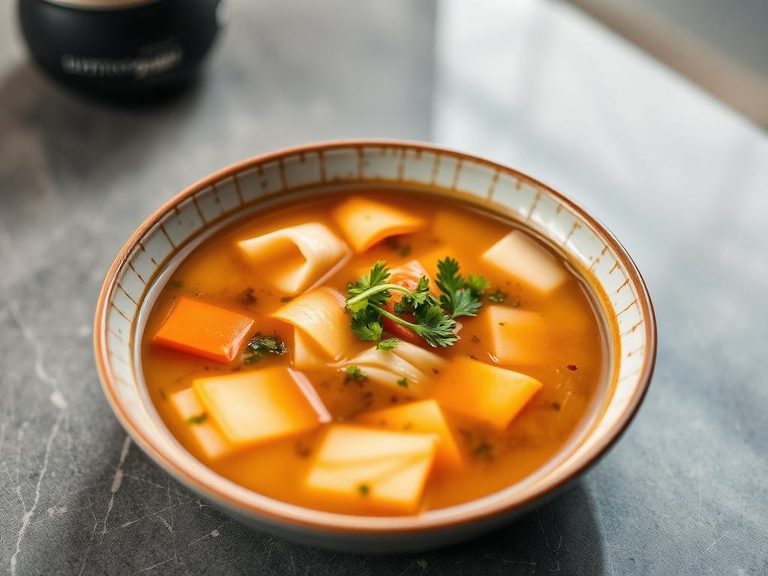
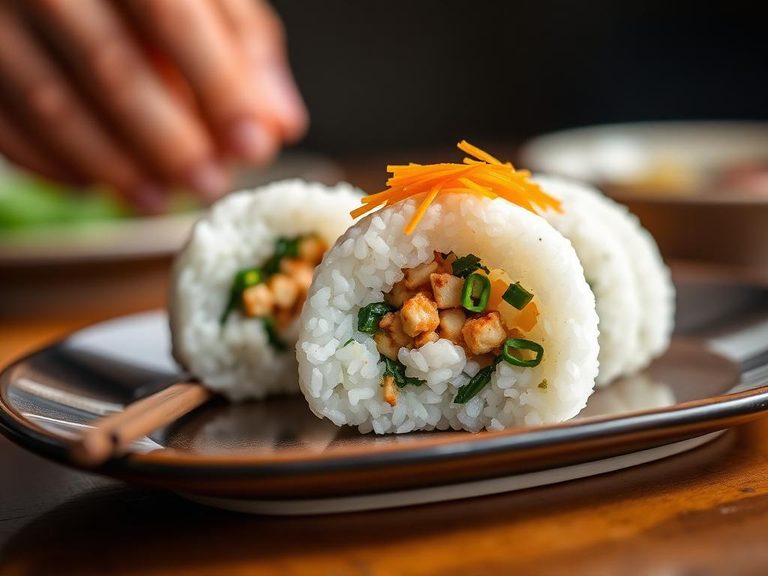
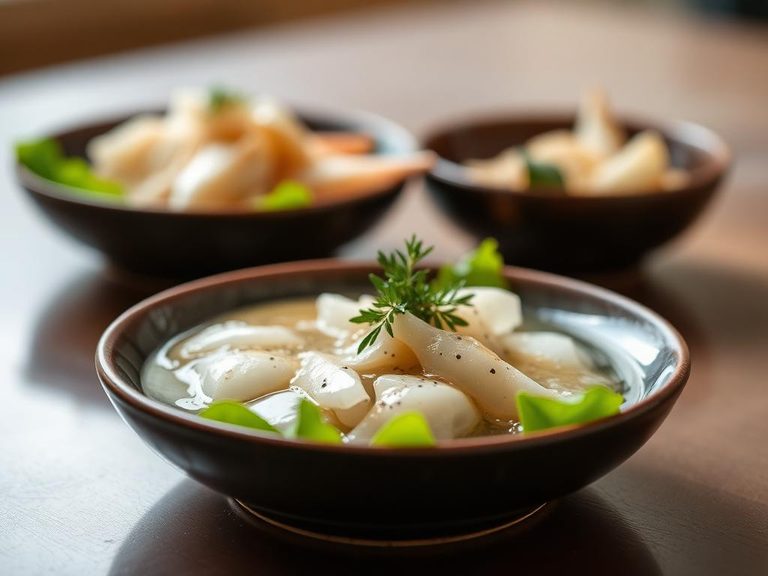
🍽️ Popular dishes
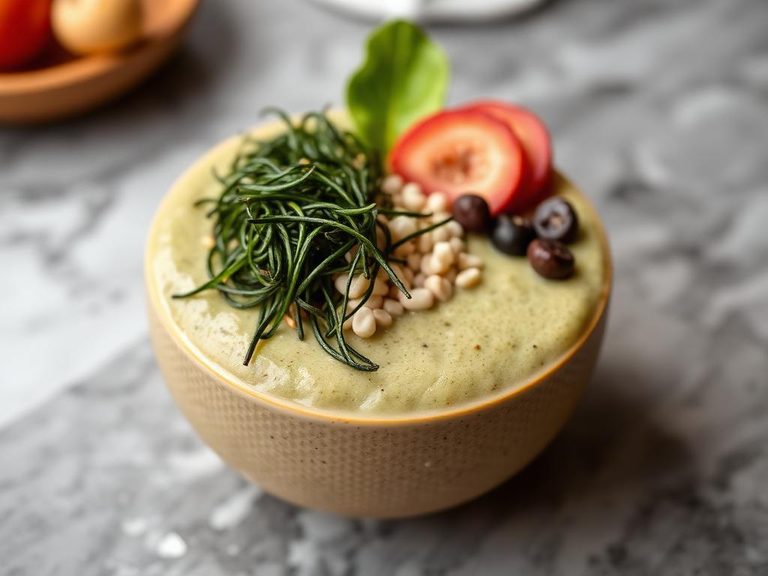
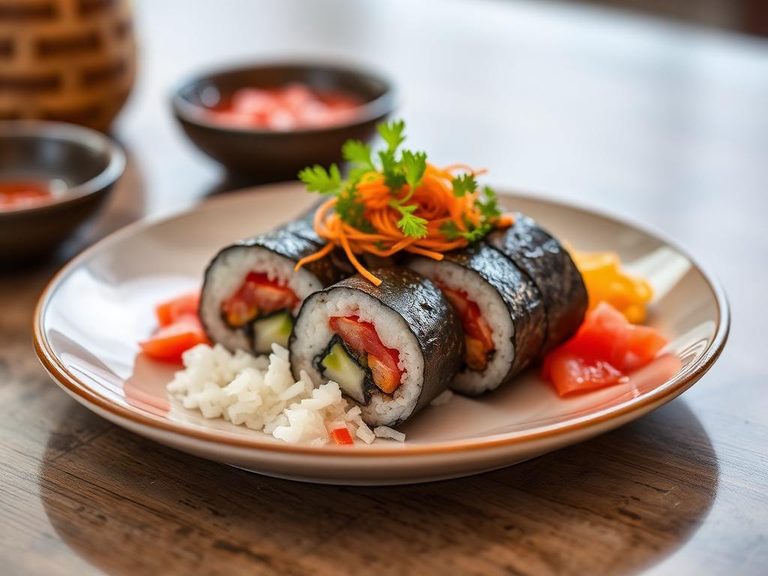
🌍 Where it's eaten
💡 Did you know?
The striking red color of EMI-TSUNOMATA comes from the antioxidant astaxanthin, the same pigment that turns flamingos and cooked shrimp pink.
Full nutrition (USDA data · scales with serving)
| Water | 14.0 g |
| Energy | 259 kcal |
| Energy | 1083 kj |
| Protein | 15.3 g |
| Total lipid (fat) | 1.4 g |
| Ash | 23.0 g |
| Carbohydrate, by difference | 46.2 g |
| Fiber, total dietary | 36.7 g |
| Calcium, Ca | 299 mg |
| Iron, Fe | 66.4 mg |
| Magnesium, Mg | 692 mg |
| Phosphorus, P | 260 mg |
| Potassium, K | 2944 mg |
| Sodium, Na | 4331 mg |
| Zinc, Zn | 2.5 mg |
| Copper, Cu | 0.47 mg |
| Manganese, Mn | 5.9 mg |
| Vitamin C, total ascorbic acid | 29.0 mg |
| Thiamin | 0.48 mg |
| Riboflavin | 1.6 mg |
| Niacin | 3.8 mg |
| Vitamin B-6 | 0.23 mg |
| Folate, total | 188 ug |
| Folic acid | 0.00 ug |
| Folate, food | 188 ug |
| Folate, DFE | 188 ug |
| Vitamin B-12 | 2.3 ug |
| Vitamin A, RAE | 406 ug |
| Carotene, beta | 4872 ug |
| Carotene, alpha | 0.00 ug |
| Cryptoxanthin, beta | 0.00 ug |
| Vitamin A, IU | 8120 iu |
| Lycopene | 0.00 ug |
| Vitamin E (alpha-tocopherol) | 5.5 mg |
| Vitamin D (D2 + D3), International Units | 126 iu |
| Vitamin D (D2 + D3) | 3.1 ug |
| Alcohol, ethyl | 0.00 g |
| Caffeine | 0.00 mg |
| Theobromine | 0.00 mg |
Fat & fatty acid profile (per 100g)
| Fatty acids, total saturated | 0.45 g |
| Fatty acids, total monounsaturated | 0.11 g |
| Fatty acids, total polyunsaturated | 0.75 g |
| Fatty acids, total trans | 0.00 g |
| Cholesterol | 33.0 mg |
Amino acid profile (per 100g)
| Tryptophan | 0.16 g |
| Threonine | 0.58 g |
| Isoleucine | 0.56 g |
| Leucine | 0.90 g |
| Lysine | 0.75 g |
| Methionine | 0.25 g |
| Cystine | 0.25 g |
| Phenylalanine | 0.81 g |
| Tyrosine | 0.34 g |
| Valine | 0.66 g |
| Arginine | 0.77 g |
| Histidine | 0.23 g |
| Alanine | 0.81 g |
| Aspartic acid | 1.3 g |
| Glutamic acid | 1.7 g |
| Glycine | 0.67 g |
| Proline | 0.66 g |
| Serine | 0.64 g |
FAQ
How do I prepare dried EMI-TSUNOMATA?
Soak it in cold or room-temperature water for 5-10 minutes until it expands and becomes tender. Drain and rinse gently before using in salads, soups, or other dishes.
Is it the same as regular wakame?
While related, EMI-TSUNOMATA is a specific red seaweed variety (Chondrus ocellatus) cultivated for its color and texture, distinct from the more common brown-green wakame (Undaria pinnatifida).
Can I eat it straight from the package?
No, it must be rehydrated in water first. It is sold fully dried for preservation and becomes palatable and digestible only after soaking.
Nutrient density (calculated · NRF9.3)
Nutrient Rich Foods index: beneficial nutrients (protein, fiber, vitamins, minerals) minus saturated fat, added sugar & sodium, per 100 kcal.
NRF9.3 index — Fulgoni, Keast & Drewnowski, 2009. Computed from USDA nutrients.
Weight-loss friendliness (composite index)
Energy density 2.59 kcal/g · 24% calories from protein · 36.7 g fiber · 0.0 g sugar per 100 g.
Composite of energy density (Rolls et al., 1999), protein & fiber satiety, minus sugar. A calculated heuristic — ranks satiety-per-calorie, not a clinical measure.
Dietary load (calculated from USDA values)
Potential renal acid load. Positive = acid-forming, negative = alkaline-forming.
Sodium-to-potassium ratio: 1.47 (lower is better — aim for ≤ 1)
Sodium:potassium per WHO potassium guidance. Computed from USDA nutrients.