

Seafood salad sandwich
Common food

Photo: Wikipedia
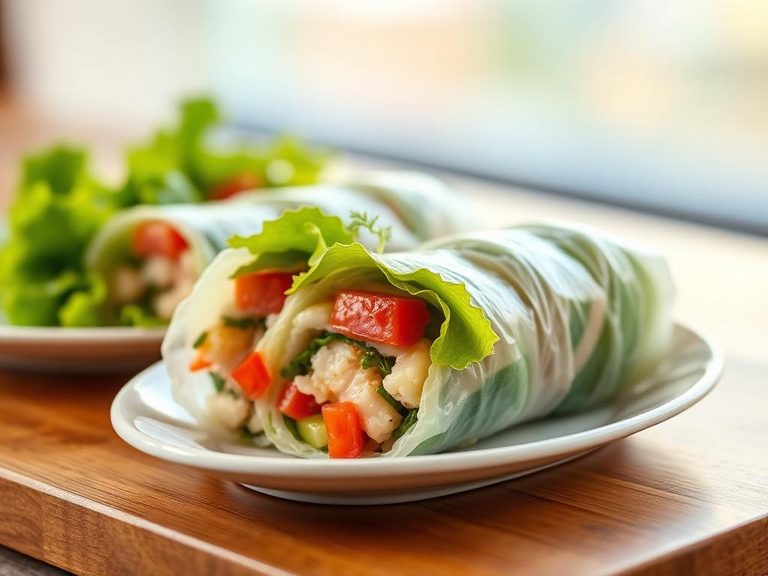
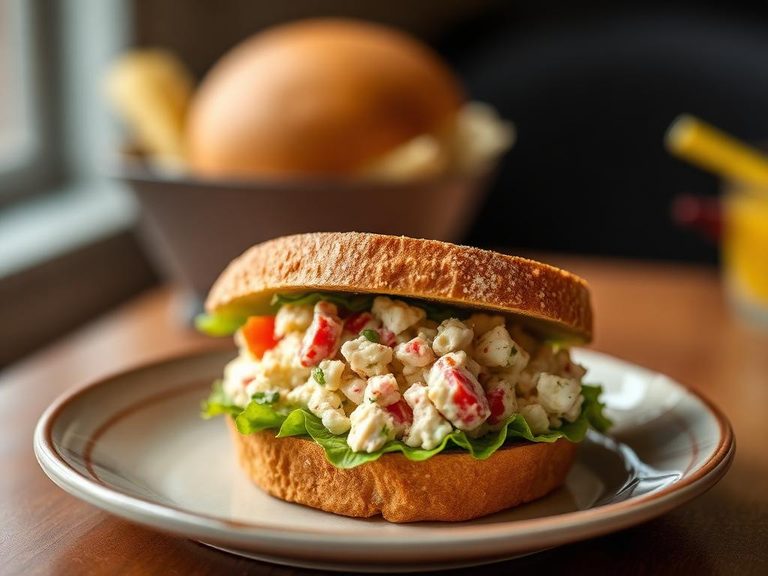
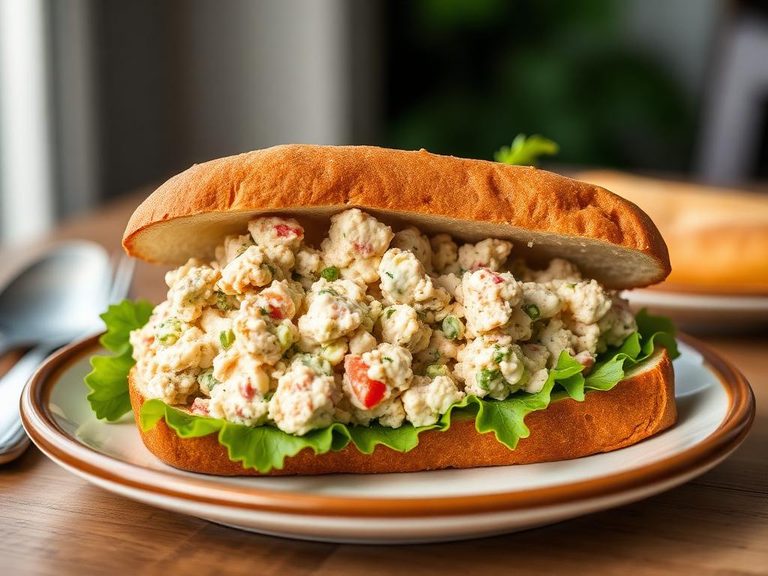
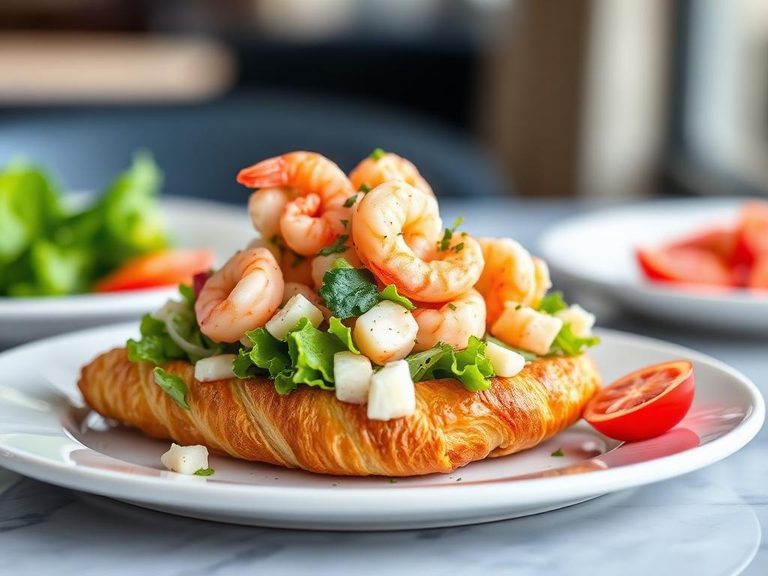
A seafood salad sandwich is a chilled, creamy filling of shredded or diced seafood (often imitation crab, shrimp, or tuna) bound with mayonnaise and served between slices of bread or a roll. It offers a satisfying contrast between the soft, cool, savory-sweet filling and the texture of the bread. Nutritionally, it provides a moderate protein boost with a notable fat content from the dressing, making it more energy-dense than a simple vegetable sandwich.
Calorie split: 18% protein · 32% carbs · 49% fat
↓ Full nutrition💚 Why it's loved
People love it for its cool, creamy, and savory flavor profile that feels both indulgent and light, making it a classic picnic or lunchbox staple. Its versatility allows for endless tweaks, from adding a dash of Old Bay to mixing in avocado, embedding it in casual culinary culture.
⚠️ Watch-outs & how to enjoy it better
The primary downsides are the high sodium content from processed seafood (like imitation crab) and mayonnaise, plus the potential for blood sugar spikes from white bread. Those with shellfish or fish allergies must avoid it entirely. To counteract, choose whole-grain bread for fiber, use a light mayo or Greek yogurt blend, and pair the sandwich with a large side salad or crunchy vegetables to increase volume and slow digestion.
Key benefits
- Good source of lean protein for muscle maintenance.
- Provides omega-3 fatty acids if made with real tuna or salmon.
- Quick and no-cook meal option for busy schedules.
- Can be a palatable way to increase seafood intake.
- Versatile base for adding vegetables like celery or onion.
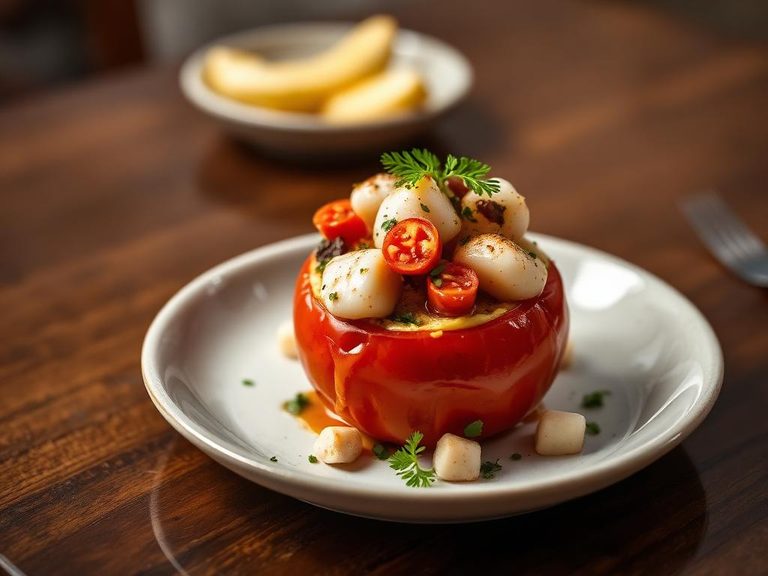
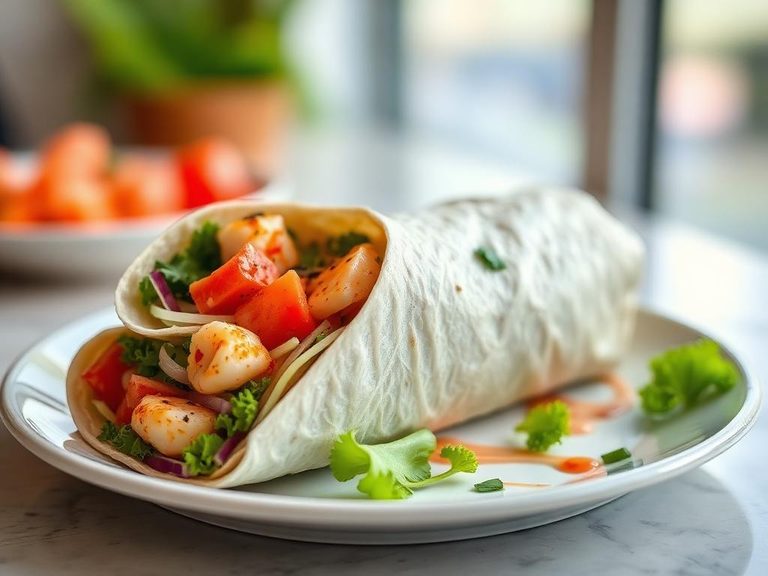
🍽️ Popular dishes
🌍 Where it's eaten
💡 Did you know?
The use of imitation crab (surimi) in seafood salads, which is a processed fish paste, was popularized in the United States in the 1970s as a cost-effective alternative to real crab meat.
Full nutrition (USDA data · scales with serving)
| Water | 59.2 g |
| Energy | 216 kcal |
| Protein | 9.9 g |
| Total lipid (fat) | 11.8 g |
| Carbohydrate, by difference | 17.2 g |
| Fiber, total dietary | 1.0 g |
| Total Sugars | 2.1 g |
| Calcium, Ca | 116 mg |
| Iron, Fe | 1.5 mg |
| Magnesium, Mg | 24.0 mg |
| Phosphorus, P | 114 mg |
| Potassium, K | 150 mg |
| Sodium, Na | 540 mg |
| Zinc, Zn | 1.5 mg |
| Copper, Cu | 0.35 mg |
| Selenium, Se | 26.8 ug |
| Vitamin C, total ascorbic acid | 2.8 mg |
| Thiamin | 0.18 mg |
| Riboflavin | 0.11 mg |
| Niacin | 2.2 mg |
| Vitamin B-6 | 0.07 mg |
| Folate, total | 52.0 ug |
| Folic acid | 29.0 ug |
| Folate, food | 23.0 ug |
| Folate, DFE | 72.0 ug |
| Choline, total | 38.3 mg |
| Vitamin B-12 | 0.64 ug |
| Vitamin B-12, added | 0.00 ug |
| Vitamin A, RAE | 6.0 ug |
| Retinol | 2.0 ug |
| Carotene, beta | 41.0 ug |
| Carotene, alpha | 0.00 ug |
| Cryptoxanthin, beta | 1.0 ug |
| Lycopene | 0.00 ug |
| Lutein + zeaxanthin | 59.0 ug |
| Vitamin E (alpha-tocopherol) | 1.0 mg |
| Vitamin E, added | 0.00 mg |
| Vitamin D (D2 + D3) | 0.00 ug |
| Vitamin K (phylloquinone) | 26.6 ug |
| Alcohol, ethyl | 0.00 g |
| Caffeine | 0.00 mg |
| Theobromine | 0.00 mg |
Fat & fatty acid profile (per 100g)
| Fatty acids, total saturated | 1.9 g |
| SFA 4:0 | 0.00 g |
| SFA 6:0 | 0.00 g |
| SFA 8:0 | 0.00 g |
| SFA 10:0 | 0.00 g |
| SFA 12:0 | 0.01 g |
| SFA 14:0 | 0.01 g |
| SFA 16:0 | 1.3 g |
| SFA 18:0 | 0.53 g |
| Fatty acids, total monounsaturated | 2.6 g |
| MUFA 16:1 | 0.03 g |
| MUFA 18:1 | 2.5 g |
| MUFA 20:1 | 0.04 g |
| MUFA 22:1 | 0.00 g |
| Fatty acids, total polyunsaturated | 6.9 g |
| PUFA 18:2 | 5.9 g |
| PUFA 18:3 | 0.82 g |
| PUFA 18:4 | 0.00 g |
| PUFA 20:4 | 0.02 g |
| PUFA 20:5 n-3 (EPA) | 0.06 g |
| PUFA 22:5 n-3 (DPA) | 0.01 g |
| PUFA 22:6 n-3 (DHA) | 0.04 g |
| Cholesterol | 62.0 mg |
FAQ
Is a seafood salad sandwich healthy?
It can be part of a balanced diet. It provides protein and potentially healthy fats, but its healthiness depends on the ingredients. Using whole-grain bread, light mayo, and adding plenty of vegetables boosts its nutritional value. Be mindful of sodium and portion size.
What kind of seafood is typically used?
Common options include canned tuna, canned salmon, cooked shrimp, and imitation crab (surimi). The choice affects both flavor, texture, and nutritional profile, with real fish offering more omega-3s.
How can I make a seafood salad sandwich lighter?
Substitute half or all of the mayonnaise with plain Greek yogurt or mashed avocado. Load the sandwich with lettuce, tomato, cucumber, and sprouts. Serve it open-faced on a single slice of bread or in a lettuce wrap to reduce carbohydrates.
Nutrient density (calculated · NRF9.3)
Nutrient Rich Foods index: beneficial nutrients (protein, fiber, vitamins, minerals) minus saturated fat, added sugar & sodium, per 100 kcal.
NRF9.3 index — Fulgoni, Keast & Drewnowski, 2009. Computed from USDA nutrients.
Weight-loss friendliness (composite index)
Energy density 2.16 kcal/g · 18% calories from protein · 1.0 g fiber · 2.1 g sugar per 100 g.
Composite of energy density (Rolls et al., 1999), protein & fiber satiety, minus sugar. A calculated heuristic — ranks satiety-per-calorie, not a clinical measure.
Dietary load (calculated from USDA values)
Potential renal acid load. Positive = acid-forming, negative = alkaline-forming.
Sodium-to-potassium ratio: 3.60 (lower is better — aim for ≤ 1)
Sodium:potassium per WHO potassium guidance. Computed from USDA nutrients.