

Ramen bowl with chicken
Common food
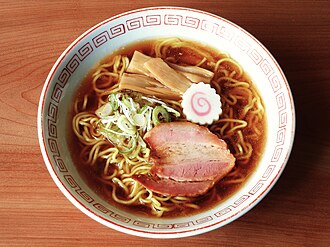
Photo: Wikipedia
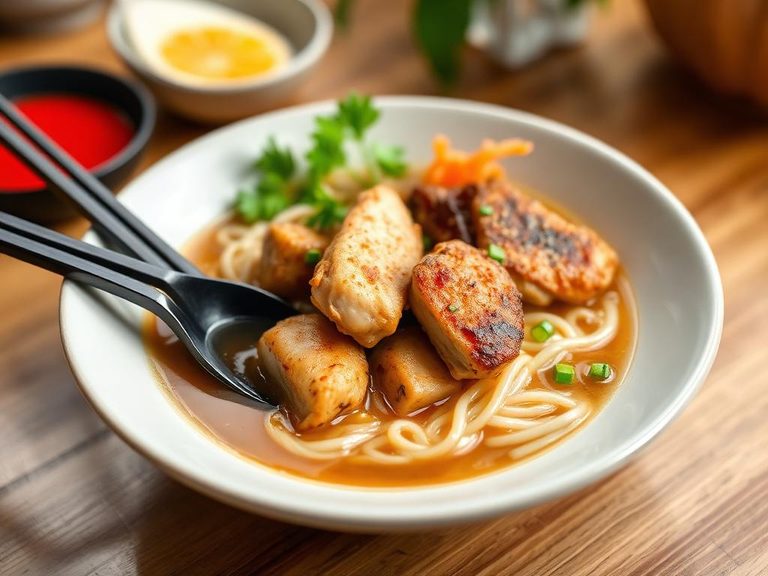
A steaming bowl of ramen noodles bathed in a savory broth, topped with tender slices of chicken, offering a comforting blend of chewy noodles, rich umami, and protein. This classic dish delivers a satisfying balance of carbohydrates for energy and lean protein for muscle support, all in a warm, slurpable package.
Calorie split: 23% protein · 49% carbs · 28% fat
↓ Full nutrition💚 Why it's loved
People adore it for its deep, savory umami flavor and the comforting ritual of slurping hot noodles from a rich broth. It's a versatile canvas that adapts to countless regional styles and personal toppings, making it a beloved staple in casual and home cooking.
⚠️ Watch-outs & how to enjoy it better
The sodium content in the broth can be very high, which may be a concern for those monitoring salt intake. The refined carbohydrates in the noodles can cause a quicker blood-sugar rise, so pairing it with extra vegetables or protein can help balance the meal.
Key benefits
- Good source of lean protein from chicken
- Provides quick energy from carbohydrates
- Low in fat compared to many other noodle soups
- Contains some dietary fiber
- Hydrating due to the broth base
🍽️ Popular dishes
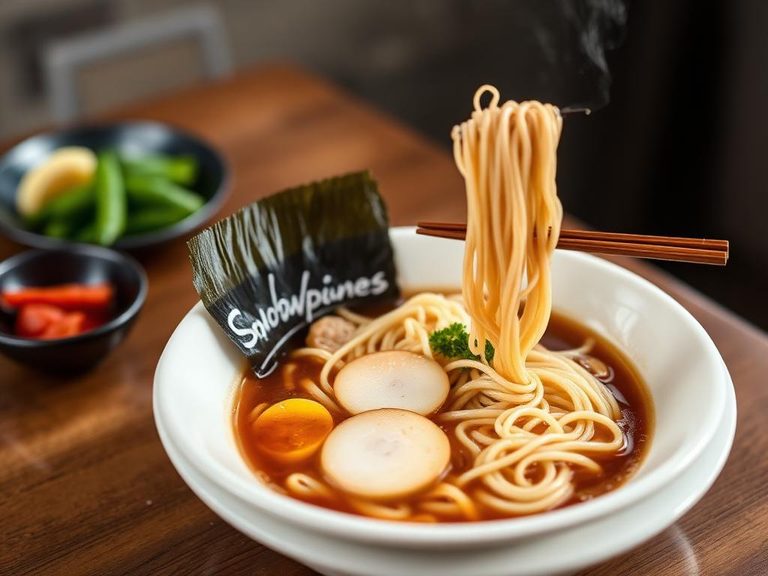
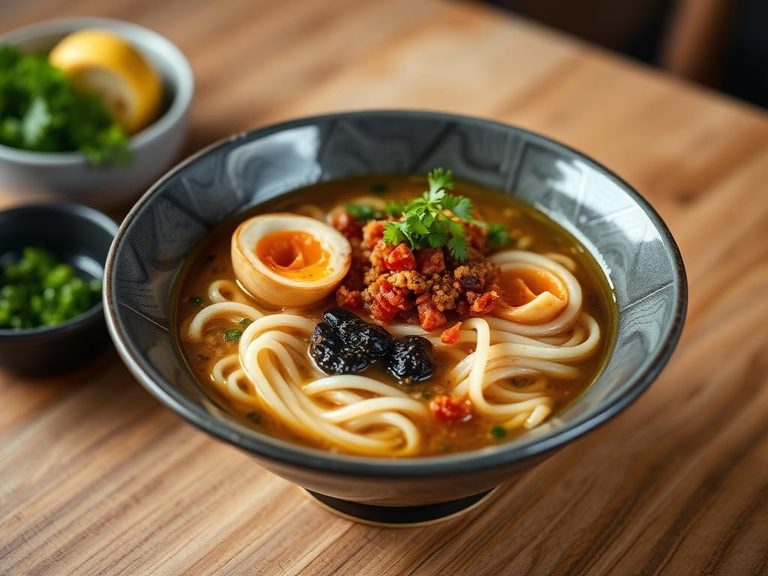
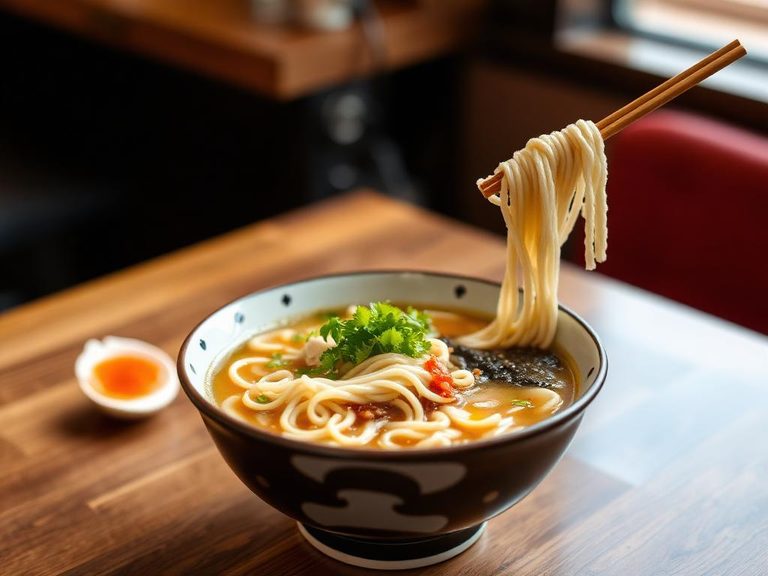
🌍 Where it's eaten
💡 Did you know?
The word 'ramen' is actually a Japanese borrowing of the Chinese word 'lamian,' which refers to hand-pulled noodles, highlighting the dish's cross-cultural journey.
Full nutrition (USDA data · scales with serving)
| Water | 72.6 g |
| Energy | 126 kcal |
| Protein | 7.0 g |
| Total lipid (fat) | 3.9 g |
| Carbohydrate, by difference | 15.4 g |
| Fiber, total dietary | 1.0 g |
| Total Sugars | 0.44 g |
| Calcium, Ca | 14.0 mg |
| Iron, Fe | 0.85 mg |
| Magnesium, Mg | 15.0 mg |
| Phosphorus, P | 65.0 mg |
| Potassium, K | 91.0 mg |
| Sodium, Na | 354 mg |
| Zinc, Zn | 0.48 mg |
| Copper, Cu | 0.06 mg |
| Selenium, Se | 17.1 ug |
| Vitamin C, total ascorbic acid | 3.1 mg |
| Thiamin | 0.15 mg |
| Riboflavin | 0.10 mg |
| Niacin | 2.0 mg |
| Vitamin B-6 | 0.14 mg |
| Folate, total | 42.0 ug |
| Folic acid | 32.0 ug |
| Folate, food | 10.0 ug |
| Folate, DFE | 65.0 ug |
| Choline, total | 17.2 mg |
| Vitamin B-12 | 0.05 ug |
| Vitamin B-12, added | 0.00 ug |
| Vitamin A, RAE | 15.0 ug |
| Retinol | 2.0 ug |
| Carotene, beta | 159 ug |
| Carotene, alpha | 0.00 ug |
| Cryptoxanthin, beta | 0.00 ug |
| Lycopene | 0.00 ug |
| Lutein + zeaxanthin | 61.0 ug |
| Vitamin E (alpha-tocopherol) | 0.54 mg |
| Vitamin E, added | 0.00 mg |
| Vitamin D (D2 + D3) | 0.00 ug |
| Vitamin K (phylloquinone) | 15.1 ug |
| Alcohol, ethyl | 0.00 g |
| Caffeine | 0.00 mg |
| Theobromine | 0.00 mg |
Fat & fatty acid profile (per 100g)
| Fatty acids, total saturated | 0.70 g |
| SFA 4:0 | 0.00 g |
| SFA 6:0 | 0.00 g |
| SFA 8:0 | 0.00 g |
| SFA 10:0 | 0.00 g |
| SFA 12:0 | 0.00 g |
| SFA 14:0 | 0.01 g |
| SFA 16:0 | 0.53 g |
| SFA 18:0 | 0.14 g |
| Fatty acids, total monounsaturated | 1.5 g |
| MUFA 16:1 | 0.07 g |
| MUFA 18:1 | 1.4 g |
| MUFA 20:1 | 0.02 g |
| MUFA 22:1 | 0.00 g |
| Fatty acids, total polyunsaturated | 1.3 g |
| PUFA 18:2 | 1.1 g |
| PUFA 18:3 | 0.13 g |
| PUFA 18:4 | 0.00 g |
| PUFA 20:4 | 0.01 g |
| PUFA 20:5 n-3 (EPA) | 0.00 g |
| PUFA 22:5 n-3 (DPA) | 0.00 g |
| PUFA 22:6 n-3 (DHA) | 0.00 g |
| Cholesterol | 18.0 mg |
FAQ
Is ramen with chicken a healthy meal?
It can be part of a balanced diet. The chicken provides lean protein, but be mindful of the sodium in the broth and the refined carbs in the noodles. Adding extra vegetables can boost fiber and nutrient content.
How can I reduce the sodium in my ramen?
Use a low-sodium broth or make your own. You can also use only half the seasoning packet and enhance flavor with fresh garlic, ginger, and a splash of low-sodium soy sauce or citrus.
What's the best way to store leftover ramen?
Store the noodles, broth, and toppings in separate airtight containers in the refrigerator for up to 3 days. This prevents the noodles from absorbing all the broth and becoming mushy upon reheating.
Nutrient density (calculated · NRF9.3)
Nutrient Rich Foods index: beneficial nutrients (protein, fiber, vitamins, minerals) minus saturated fat, added sugar & sodium, per 100 kcal.
NRF9.3 index — Fulgoni, Keast & Drewnowski, 2009. Computed from USDA nutrients.
Weight-loss friendliness (composite index)
Energy density 1.26 kcal/g · 22% calories from protein · 1.0 g fiber · 0.4 g sugar per 100 g.
Composite of energy density (Rolls et al., 1999), protein & fiber satiety, minus sugar. A calculated heuristic — ranks satiety-per-calorie, not a clinical measure.
Dietary load (calculated from USDA values)
Potential renal acid load. Positive = acid-forming, negative = alkaline-forming.
Sodium-to-potassium ratio: 3.89 (lower is better — aim for ≤ 1)
Sodium:potassium per WHO potassium guidance. Computed from USDA nutrients.