

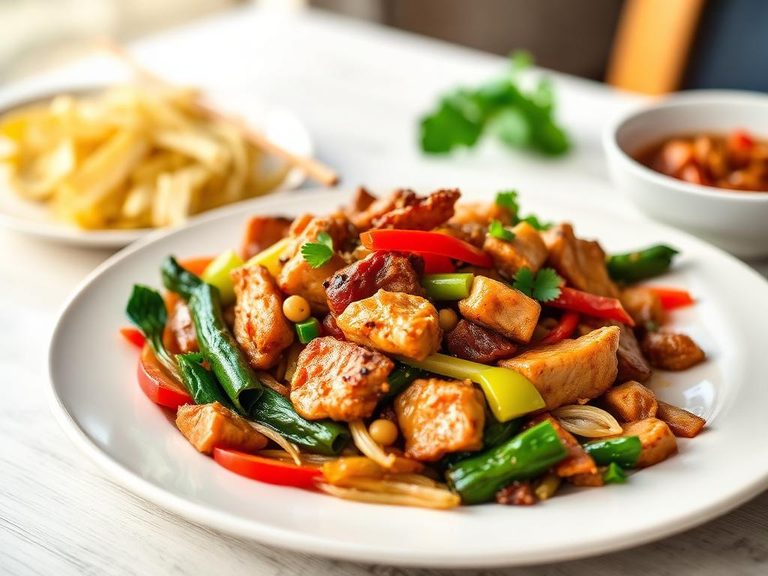
Pork chow mein or chop suey, no noodles
Common food

Photo: Wikipedia
This is a deconstructed, protein-forward take on classic Chinese-American takeout, where tender pork and crisp vegetables are stir-fried without the usual bed of noodles. The result is a savory, slightly sweet, and umami-rich dish with a satisfying crunch from vegetables like bean sprouts and celery. With over 10 grams of protein per 100g and minimal carbs, it's a surprisingly lean and filling option for a quick meal.
Calorie split: 43% protein · 16% carbs · 41% fat
↓ Full nutrition💚 Why it's loved
People love it for its savory, umami-packed flavor profile and the satisfying textural contrast between tender pork and crisp vegetables. It's a versatile dish that can be easily customized with different veggies or sauces, and it's a staple comfort food in many Chinese-American households and takeout spots.
⚠️ Watch-outs & how to enjoy it better
The main downside is often the high sodium content from soy sauce and other seasonings, which can be a concern for those monitoring blood pressure. To counteract this, look for low-sodium soy sauce or ask for sauce on the side, and pair it with a potassium-rich food like steamed broccoli or a side of fresh fruit to help balance electrolytes.
Key benefits
- High protein-to-calorie ratio (10.34g protein per 98 kcal)
- Low carbohydrate content (3.85g per 100g)
- Provides a good source of lean protein from pork
- Contains fiber and vitamins from stir-fried vegetables
- Quick and convenient meal option
🍽️ Popular dishes
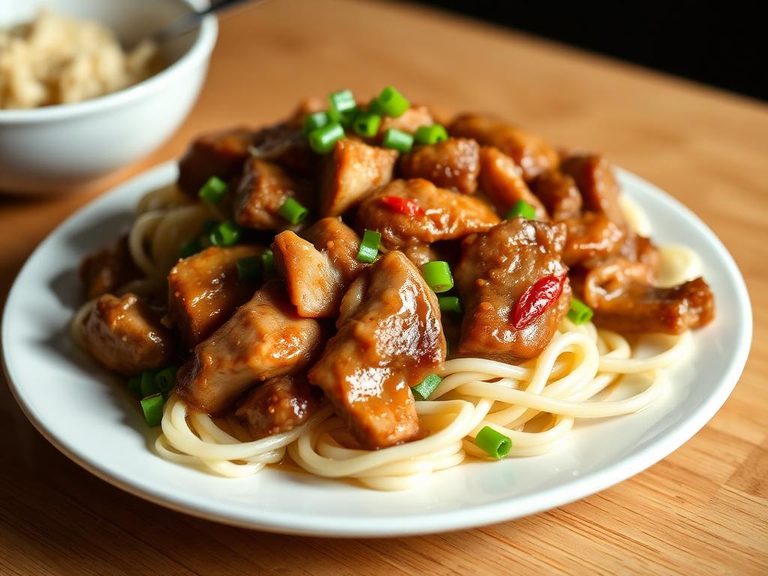
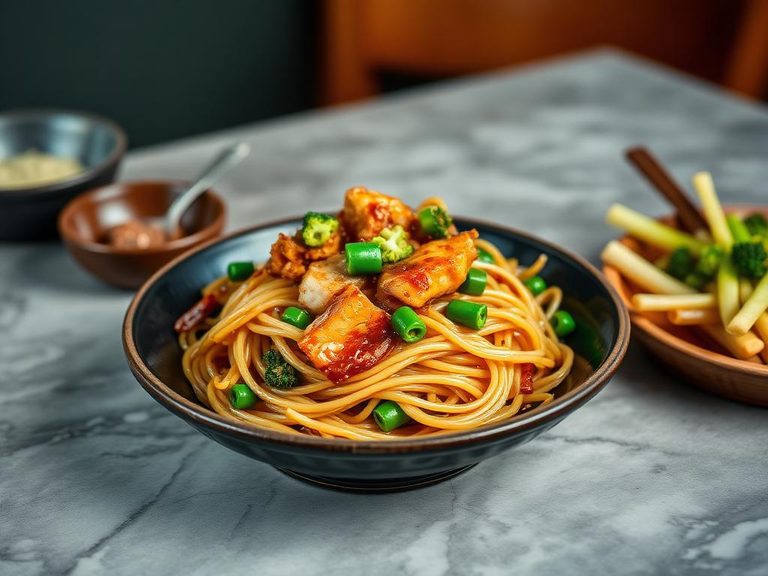
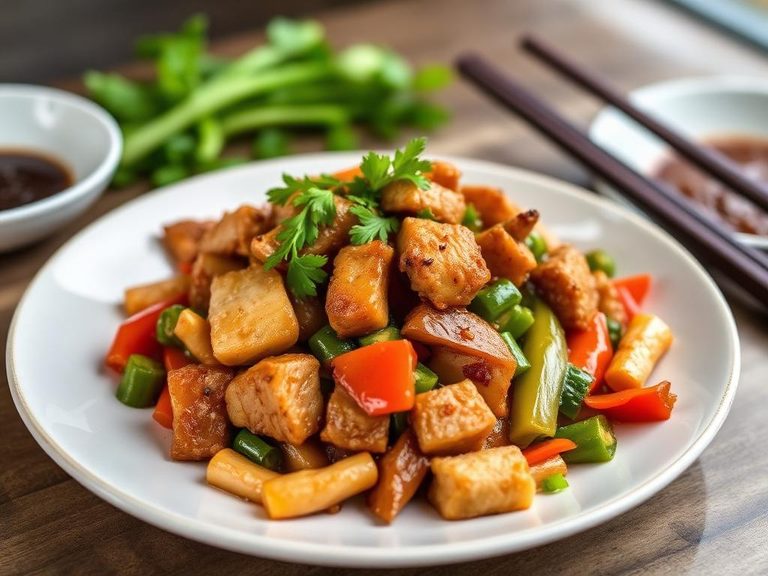
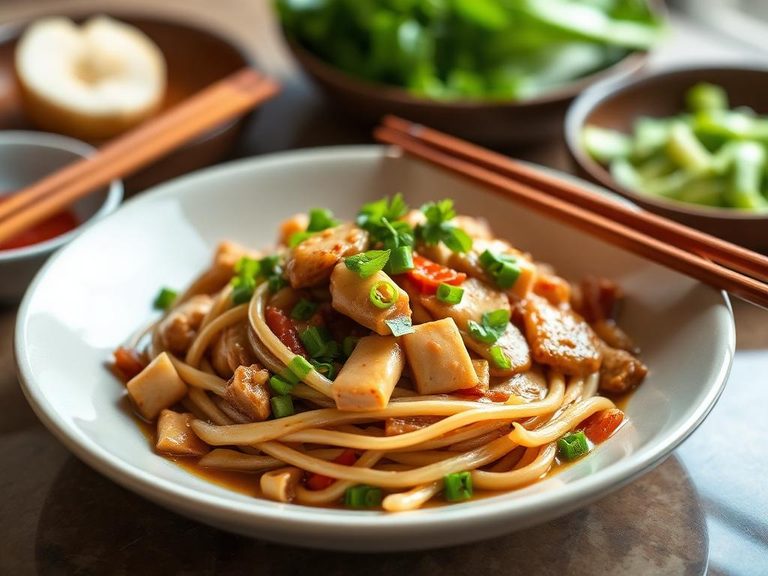
🌍 Where it's eaten
💡 Did you know?
Chop suey is believed to have been invented by Chinese immigrants in the United States in the mid-19th century, possibly as a way to use up leftover ingredients, and its name is thought to derive from the Cantonese phrase 'tsap sui' meaning 'miscellaneous pieces.'
Full nutrition (USDA data · scales with serving)
| Water | 80.5 g |
| Energy | 98.0 kcal |
| Protein | 10.3 g |
| Total lipid (fat) | 4.3 g |
| Carbohydrate, by difference | 3.9 g |
| Fiber, total dietary | 0.80 g |
| Total Sugars | 1.8 g |
| Calcium, Ca | 23.0 mg |
| Iron, Fe | 0.64 mg |
| Magnesium, Mg | 15.0 mg |
| Phosphorus, P | 102 mg |
| Potassium, K | 231 mg |
| Sodium, Na | 250 mg |
| Zinc, Zn | 0.96 mg |
| Copper, Cu | 0.04 mg |
| Selenium, Se | 11.8 ug |
| Vitamin C, total ascorbic acid | 5.0 mg |
| Thiamin | 0.35 mg |
| Riboflavin | 0.17 mg |
| Niacin | 2.3 mg |
| Vitamin B-6 | 0.24 mg |
| Folate, total | 27.0 ug |
| Folic acid | 0.00 ug |
| Folate, food | 27.0 ug |
| Folate, DFE | 27.0 ug |
| Choline, total | 43.1 mg |
| Vitamin B-12 | 0.24 ug |
| Vitamin B-12, added | 0.00 ug |
| Vitamin A, RAE | 9.0 ug |
| Retinol | 1.0 ug |
| Carotene, beta | 99.0 ug |
| Carotene, alpha | 19.0 ug |
| Cryptoxanthin, beta | 0.00 ug |
| Lycopene | 0.00 ug |
| Lutein + zeaxanthin | 119 ug |
| Vitamin E (alpha-tocopherol) | 0.40 mg |
| Vitamin E, added | 0.00 mg |
| Vitamin D (D2 + D3) | 0.20 ug |
| Vitamin K (phylloquinone) | 12.7 ug |
| Alcohol, ethyl | 0.00 g |
| Caffeine | 0.00 mg |
| Theobromine | 0.00 mg |
Fat & fatty acid profile (per 100g)
| Fatty acids, total saturated | 1.4 g |
| SFA 4:0 | 0.00 g |
| SFA 6:0 | 0.00 g |
| SFA 8:0 | 0.00 g |
| SFA 10:0 | 0.00 g |
| SFA 12:0 | 0.00 g |
| SFA 14:0 | 0.04 g |
| SFA 16:0 | 0.84 g |
| SFA 18:0 | 0.43 g |
| Fatty acids, total monounsaturated | 1.7 g |
| MUFA 16:1 | 0.10 g |
| MUFA 18:1 | 1.5 g |
| MUFA 20:1 | 0.03 g |
| MUFA 22:1 | 0.00 g |
| Fatty acids, total polyunsaturated | 0.87 g |
| PUFA 18:2 | 0.75 g |
| PUFA 18:3 | 0.10 g |
| PUFA 18:4 | 0.00 g |
| PUFA 20:4 | 0.01 g |
| PUFA 20:5 n-3 (EPA) | 0.00 g |
| PUFA 22:5 n-3 (DPA) | 0.00 g |
| PUFA 22:6 n-3 (DHA) | 0.00 g |
| Cholesterol | 27.0 mg |
FAQ
Is pork chow mein or chop suey without noodles healthy?
It can be a relatively healthy option due to its high protein and low carbohydrate content, but be mindful of sodium levels from the sauce. Opt for a version with plenty of vegetables and moderate sauce.
What vegetables are typically in pork chop suey?
Common vegetables include bean sprouts, celery, carrots, cabbage, onions, and sometimes water chestnuts or bamboo shoots, all stir-fried for a crisp-tender texture.
How does it differ from regular chow mein?
The key difference is the absence of noodles; this version focuses on the pork and vegetable stir-fry, making it lower in carbs and higher in protein per serving.
Nutrient density (calculated · NRF9.3)
Nutrient Rich Foods index: beneficial nutrients (protein, fiber, vitamins, minerals) minus saturated fat, added sugar & sodium, per 100 kcal.
NRF9.3 index — Fulgoni, Keast & Drewnowski, 2009. Computed from USDA nutrients.
Weight-loss friendliness (composite index)
Energy density 0.98 kcal/g · 42% calories from protein · 0.8 g fiber · 1.8 g sugar per 100 g.
Composite of energy density (Rolls et al., 1999), protein & fiber satiety, minus sugar. A calculated heuristic — ranks satiety-per-calorie, not a clinical measure.
Dietary load (calculated from USDA values)
Potential renal acid load. Positive = acid-forming, negative = alkaline-forming.
Sodium-to-potassium ratio: 1.08 (lower is better — aim for ≤ 1)
Sodium:potassium per WHO potassium guidance. Computed from USDA nutrients.