

Pork and vegetables including carrots, broccoli, and/or dark-green leafy; no potatoes, tomato-based sauce
Common food
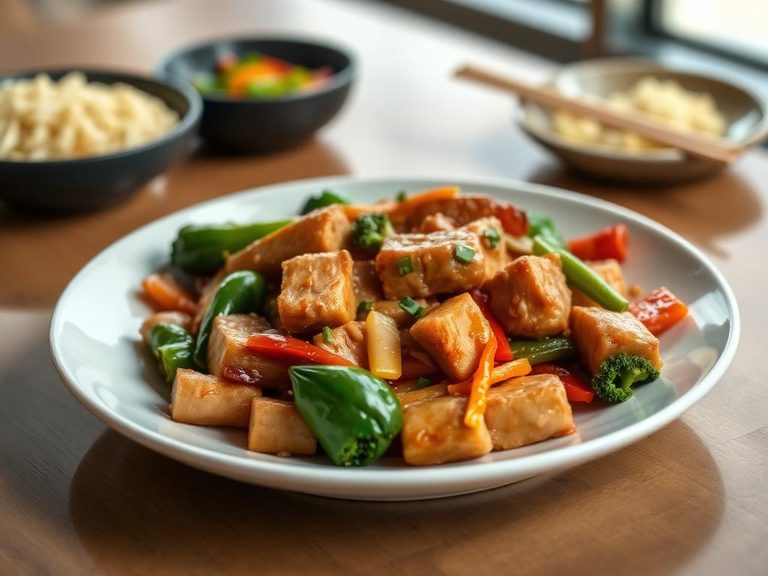
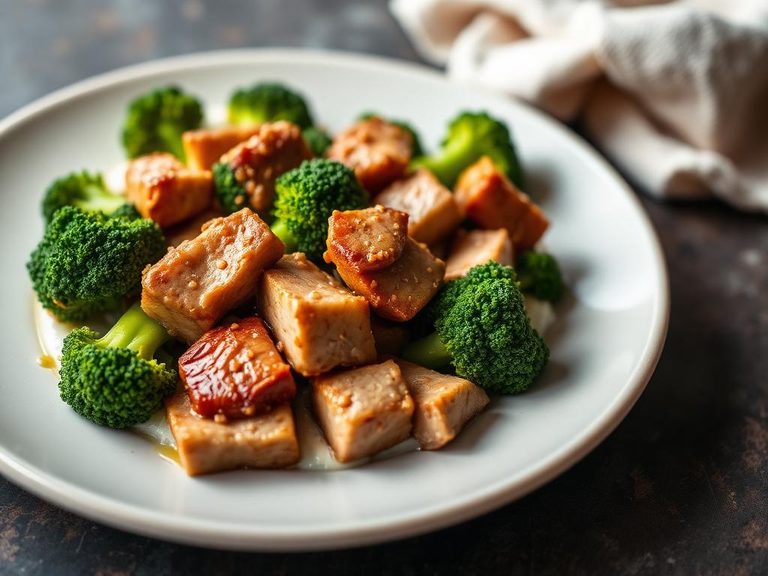
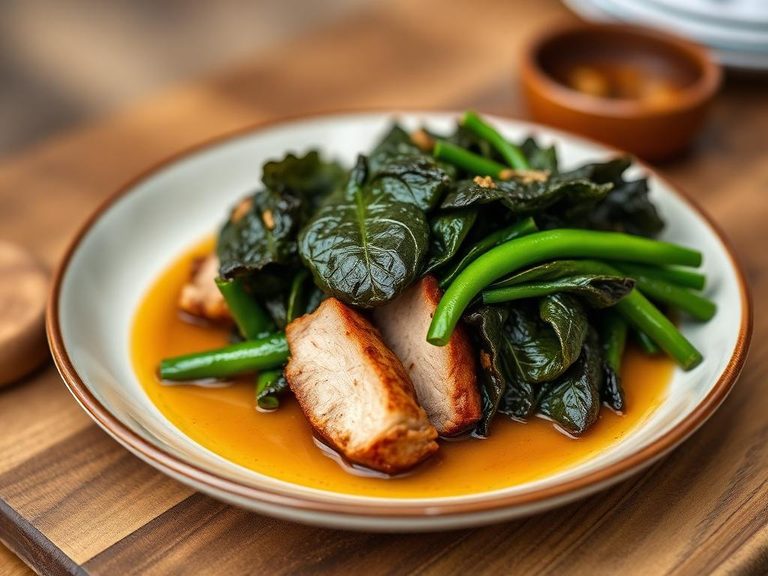
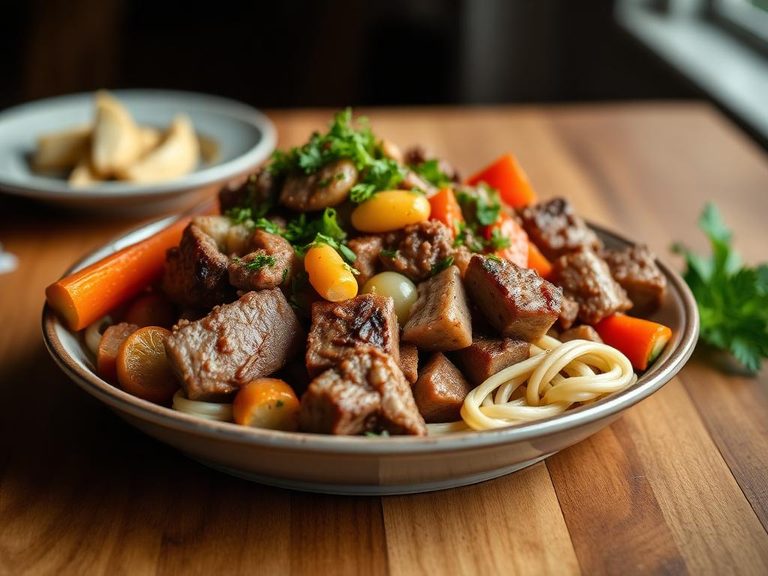
A savory, protein-rich stir-fry or sauté combining tender pork with a medley of crisp-tender vegetables like carrots and broccoli, all in a light, savory sauce that lets the natural flavors shine. The texture is a delightful contrast between the succulent meat and the firm, slightly crunchy vegetables. With a balanced macronutrient profile, it's a satisfying, low-carb meal that delivers substantial protein and healthy fats.
Calorie split: 27% protein · 16% carbs · 57% fat
↓ Full nutrition💚 Why it's loved
People love this dish for its savory, umami-rich flavor and the satisfying textural contrast between tender pork and crisp vegetables. Its versatility makes it a staple in many home kitchens, easily adaptable to different vegetable combinations and cooking styles.
⚠️ Watch-outs & how to enjoy it better
The dish may be high in sodium if prepared with salty sauces or seasonings, which could be a concern for those monitoring blood pressure. To counteract this, use low-sodium soy sauce or broth, and balance the meal with potassium-rich foods like bananas or sweet potatoes. Additionally, some individuals with sensitive digestion may find the high fiber content from vegetables challenging; starting with smaller portions and gradually increasing intake can help.
Key benefits
- High in protein for muscle maintenance and satiety
- Rich in fiber from vegetables for digestive health
- Low in carbohydrates, suitable for low-carb diets
- Contains essential vitamins (A, C, K) and minerals from vegetables
- Balanced fat content for sustained energy
🍽️ Popular dishes
🌍 Where it's eaten
💡 Did you know?
Pork is the most widely consumed meat in the world, and when paired with vegetables like broccoli, it creates a dish that is not only delicious but also a nutritional powerhouse, often referred to as a 'complete meal' in many cultures.
Full nutrition (USDA data · scales with serving)
| Water | 79.2 g |
| Energy | 111 kcal |
| Protein | 7.8 g |
| Total lipid (fat) | 7.1 g |
| Carbohydrate, by difference | 4.5 g |
| Fiber, total dietary | 1.7 g |
| Total Sugars | 2.5 g |
| Calcium, Ca | 21.0 mg |
| Iron, Fe | 0.88 mg |
| Magnesium, Mg | 17.0 mg |
| Phosphorus, P | 83.0 mg |
| Potassium, K | 288 mg |
| Sodium, Na | 304 mg |
| Zinc, Zn | 0.79 mg |
| Copper, Cu | 0.09 mg |
| Selenium, Se | 8.6 ug |
| Vitamin C, total ascorbic acid | 9.9 mg |
| Thiamin | 0.26 mg |
| Riboflavin | 0.13 mg |
| Niacin | 2.0 mg |
| Vitamin B-6 | 0.21 mg |
| Folate, total | 15.0 ug |
| Folic acid | 0.00 ug |
| Folate, food | 15.0 ug |
| Folate, DFE | 15.0 ug |
| Choline, total | 31.2 mg |
| Vitamin B-12 | 0.17 ug |
| Vitamin B-12, added | 0.00 ug |
| Vitamin A, RAE | 149 ug |
| Retinol | 0.00 ug |
| Carotene, beta | 1480 ug |
| Carotene, alpha | 577 ug |
| Cryptoxanthin, beta | 2.0 ug |
| Lycopene | 6443 ug |
| Lutein + zeaxanthin | 285 ug |
| Vitamin E (alpha-tocopherol) | 2.0 mg |
| Vitamin E, added | 0.00 mg |
| Vitamin D (D2 + D3) | 0.20 ug |
| Vitamin K (phylloquinone) | 21.7 ug |
| Alcohol, ethyl | 0.00 g |
| Caffeine | 0.00 mg |
| Theobromine | 0.00 mg |
Fat & fatty acid profile (per 100g)
| Fatty acids, total saturated | 1.5 g |
| SFA 4:0 | 0.00 g |
| SFA 6:0 | 0.00 g |
| SFA 8:0 | 0.00 g |
| SFA 10:0 | 0.00 g |
| SFA 12:0 | 0.00 g |
| SFA 14:0 | 0.03 g |
| SFA 16:0 | 0.98 g |
| SFA 18:0 | 0.40 g |
| Fatty acids, total monounsaturated | 3.0 g |
| MUFA 16:1 | 0.09 g |
| MUFA 18:1 | 2.8 g |
| MUFA 20:1 | 0.05 g |
| MUFA 22:1 | 0.00 g |
| Fatty acids, total polyunsaturated | 2.1 g |
| PUFA 18:2 | 1.8 g |
| PUFA 18:3 | 0.22 g |
| PUFA 18:4 | 0.00 g |
| PUFA 20:4 | 0.01 g |
| PUFA 20:5 n-3 (EPA) | 0.00 g |
| PUFA 22:5 n-3 (DPA) | 0.00 g |
| PUFA 22:6 n-3 (DHA) | 0.00 g |
| Cholesterol | 19.0 mg |
FAQ
Is this dish suitable for a low-carb diet?
Yes, with only 4.48g of carbs per 100g, it's an excellent low-carb option, especially when avoiding starchy vegetables like potatoes.
Can I use different vegetables in this dish?
Absolutely! This dish is highly versatile. You can substitute or add vegetables like bell peppers, snap peas, or zucchini based on preference or seasonality.
How can I make this dish healthier?
To enhance its health profile, use lean cuts of pork, limit added oils and sauces, and increase the proportion of vegetables. Opt for steaming or light sautéing instead of deep-frying.
Nutrient density (calculated · NRF9.3)
Nutrient Rich Foods index: beneficial nutrients (protein, fiber, vitamins, minerals) minus saturated fat, added sugar & sodium, per 100 kcal.
NRF9.3 index — Fulgoni, Keast & Drewnowski, 2009. Computed from USDA nutrients.
Weight-loss friendliness (composite index)
Energy density 1.11 kcal/g · 28% calories from protein · 1.7 g fiber · 2.5 g sugar per 100 g.
Composite of energy density (Rolls et al., 1999), protein & fiber satiety, minus sugar. A calculated heuristic — ranks satiety-per-calorie, not a clinical measure.
Dietary load (calculated from USDA values)
Potential renal acid load. Positive = acid-forming, negative = alkaline-forming.
Sodium-to-potassium ratio: 1.06 (lower is better — aim for ≤ 1)
Sodium:potassium per WHO potassium guidance. Computed from USDA nutrients.