

Pierogi
Common food

Photo: Wikipedia
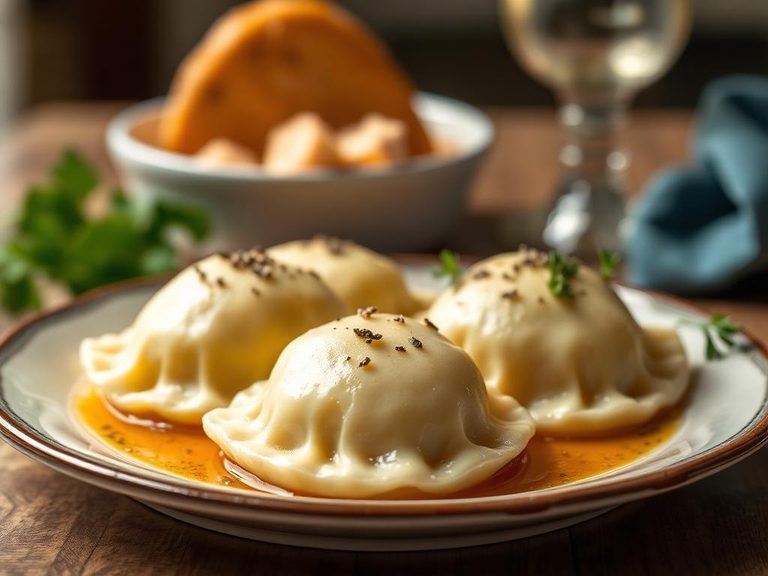
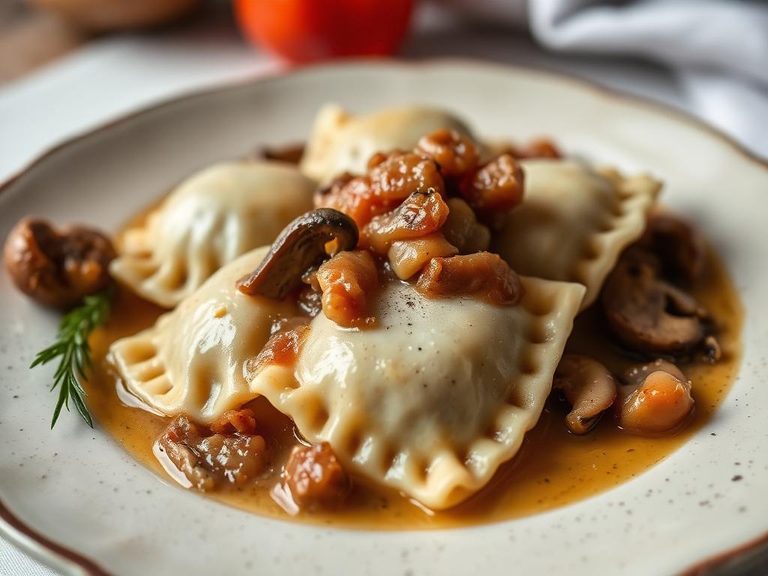
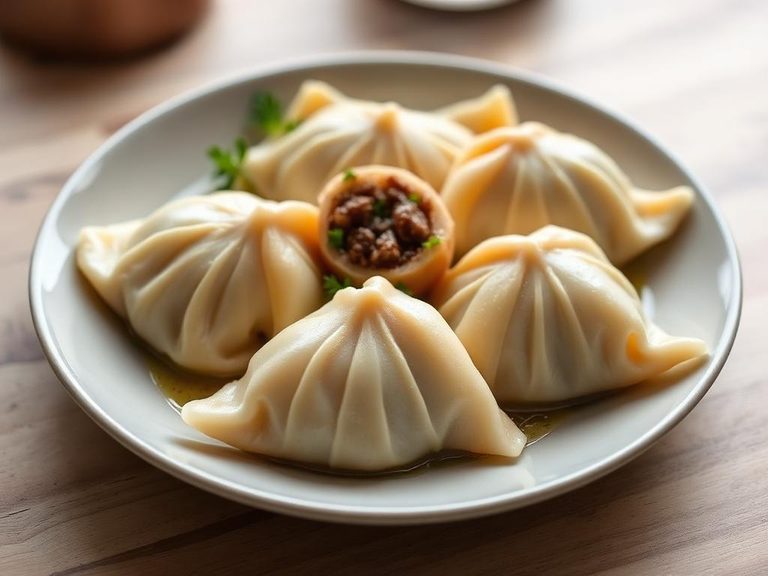
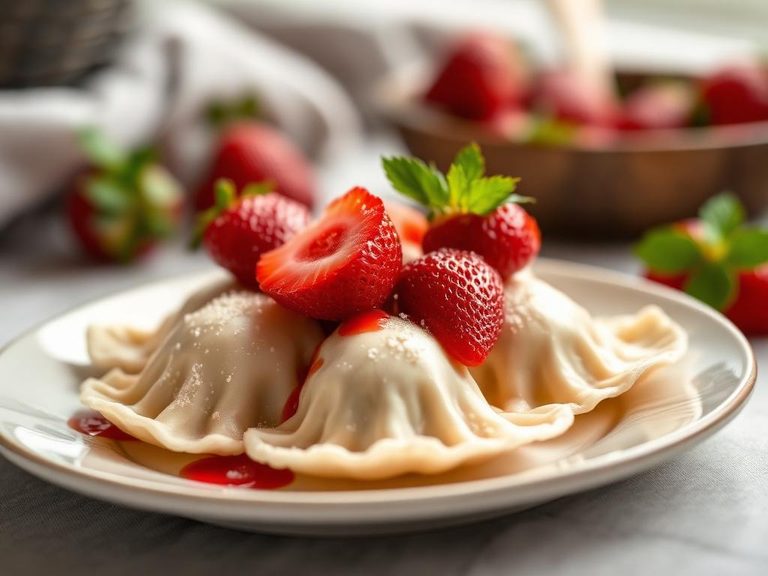
Pierogi are Eastern European dumplings made from unleavened dough, typically filled with savory or sweet ingredients like potato, cheese, sauerkraut, or fruit. Boiled and often pan-fried in butter, they offer a tender, chewy exterior with a soft, flavorful filling. Nutritionally, they provide a moderate energy source with a balance of carbs and protein, though they are relatively low in fiber.
Calorie split: 11% protein · 61% carbs · 28% fat
↓ Full nutrition💚 Why it's loved
People love pierogi for their comforting, hearty texture and the way they absorb flavors from butter, onions, or sour cream. They are deeply tied to family traditions and holiday celebrations across Central and Eastern Europe.
⚠️ Watch-outs & how to enjoy it better
Pierogi can be high in refined carbs and may cause blood-sugar spikes, especially when filled with potato and served with sugary toppings. They are also a common wheat (gluten) and sometimes dairy allergen. To counteract, pair with a protein like sausage or a vegetable side, choose whole-grain dough if available, and control portion size.
Key benefits
- Provides quick energy from carbohydrates
- Contains protein for muscle maintenance
- Versatile for both sweet and savory meals
- Can be a comforting, calorie-dense food
- Often includes nutrient-rich fillings like potato or cabbage
🍽️ Popular dishes
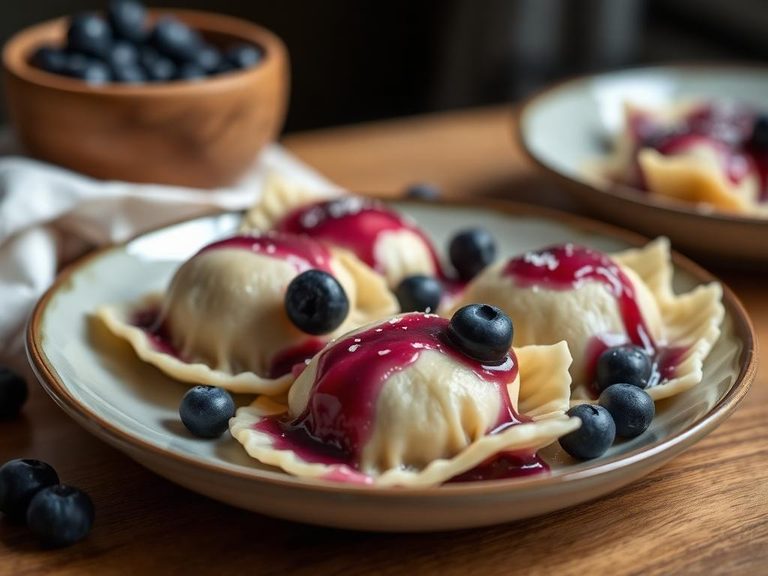
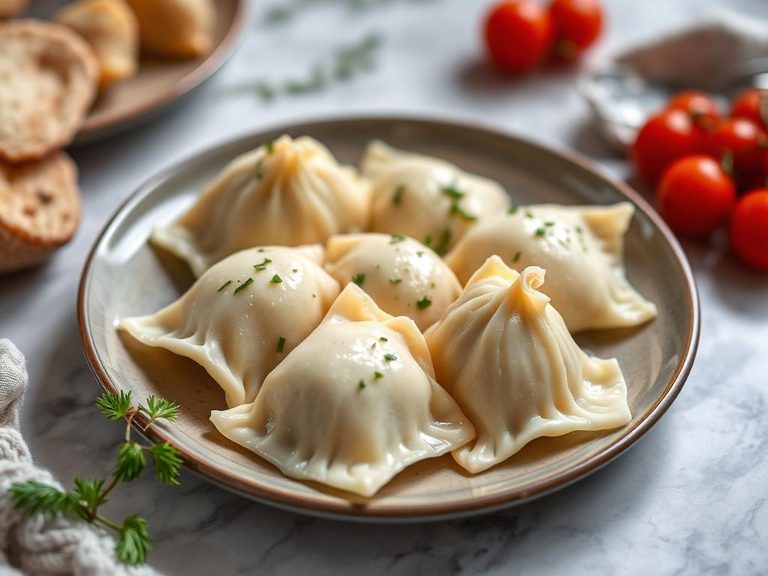
🌍 Where it's eaten
💡 Did you know?
The word 'pierogi' is often mistakenly thought to be plural, but in Polish, 'pieróg' is singular and 'pierogi' is the plural form, similar to 'spaghetti'.
Full nutrition (USDA data · scales with serving)
| Water | 57.3 g |
| Energy | 195 kcal |
| Protein | 5.3 g |
| Total lipid (fat) | 6.1 g |
| Carbohydrate, by difference | 29.6 g |
| Fiber, total dietary | 0.90 g |
| Total Sugars | 1.8 g |
| Calcium, Ca | 35.0 mg |
| Iron, Fe | 1.3 mg |
| Magnesium, Mg | 16.0 mg |
| Phosphorus, P | 79.0 mg |
| Potassium, K | 107 mg |
| Sodium, Na | 474 mg |
| Zinc, Zn | 0.44 mg |
| Copper, Cu | 0.06 mg |
| Selenium, Se | 13.4 ug |
| Vitamin C, total ascorbic acid | 5.3 mg |
| Thiamin | 0.29 mg |
| Riboflavin | 0.22 mg |
| Niacin | 2.2 mg |
| Vitamin B-6 | 0.06 mg |
| Folate, total | 64.0 ug |
| Folic acid | 52.0 ug |
| Folate, food | 12.0 ug |
| Folate, DFE | 100 ug |
| Choline, total | 9.6 mg |
| Vitamin B-12 | 0.08 ug |
| Vitamin B-12, added | 0.00 ug |
| Vitamin A, RAE | 3.0 ug |
| Retinol | 3.0 ug |
| Carotene, beta | 1.0 ug |
| Carotene, alpha | 0.00 ug |
| Cryptoxanthin, beta | 0.00 ug |
| Lycopene | 0.00 ug |
| Lutein + zeaxanthin | 8.0 ug |
| Vitamin E (alpha-tocopherol) | 0.98 mg |
| Vitamin E, added | 0.00 mg |
| Vitamin D (D2 + D3) | 0.00 ug |
| Vitamin K (phylloquinone) | 7.9 ug |
| Alcohol, ethyl | 0.00 g |
| Caffeine | 0.00 mg |
| Theobromine | 0.00 mg |
Fat & fatty acid profile (per 100g)
| Fatty acids, total saturated | 1.3 g |
| SFA 4:0 | 0.02 g |
| SFA 6:0 | 0.01 g |
| SFA 8:0 | 0.00 g |
| SFA 10:0 | 0.01 g |
| SFA 12:0 | 0.01 g |
| SFA 14:0 | 0.05 g |
| SFA 16:0 | 0.81 g |
| SFA 18:0 | 0.35 g |
| Fatty acids, total monounsaturated | 1.2 g |
| MUFA 16:1 | 0.01 g |
| MUFA 18:1 | 1.2 g |
| MUFA 20:1 | 0.01 g |
| MUFA 22:1 | 0.00 g |
| Fatty acids, total polyunsaturated | 3.2 g |
| PUFA 18:2 | 3.0 g |
| PUFA 18:3 | 0.27 g |
| PUFA 18:4 | 0.00 g |
| PUFA 20:4 | 0.00 g |
| PUFA 20:5 n-3 (EPA) | 0.00 g |
| PUFA 22:5 n-3 (DPA) | 0.00 g |
| PUFA 22:6 n-3 (DHA) | 0.00 g |
| Cholesterol | 4.0 mg |
FAQ
Are pierogi gluten-free?
Traditional pierogi dough is made with wheat flour, so they are not gluten-free. However, some recipes use gluten-free flour blends or potato starch as alternatives.
Can pierogi be frozen?
Yes, pierogi freeze well. Arrange them in a single layer on a baking sheet, freeze until solid, then transfer to a bag. They can be boiled directly from frozen.
What is the best way to reheat leftover pierogi?
Pan-frying in butter or oil is best to restore a crispy texture. Avoid microwaving, as it can make them rubbery.
Nutrient density (calculated · NRF9.3)
Nutrient Rich Foods index: beneficial nutrients (protein, fiber, vitamins, minerals) minus saturated fat, added sugar & sodium, per 100 kcal.
NRF9.3 index — Fulgoni, Keast & Drewnowski, 2009. Computed from USDA nutrients.
Weight-loss friendliness (composite index)
Energy density 1.95 kcal/g · 11% calories from protein · 0.9 g fiber · 1.8 g sugar per 100 g.
Composite of energy density (Rolls et al., 1999), protein & fiber satiety, minus sugar. A calculated heuristic — ranks satiety-per-calorie, not a clinical measure.
Dietary load (calculated from USDA values)
Potential renal acid load. Positive = acid-forming, negative = alkaline-forming.
Sodium-to-potassium ratio: 4.43 (lower is better — aim for ≤ 1)
Sodium:potassium per WHO potassium guidance. Computed from USDA nutrients.