Pierogi z Mięsem
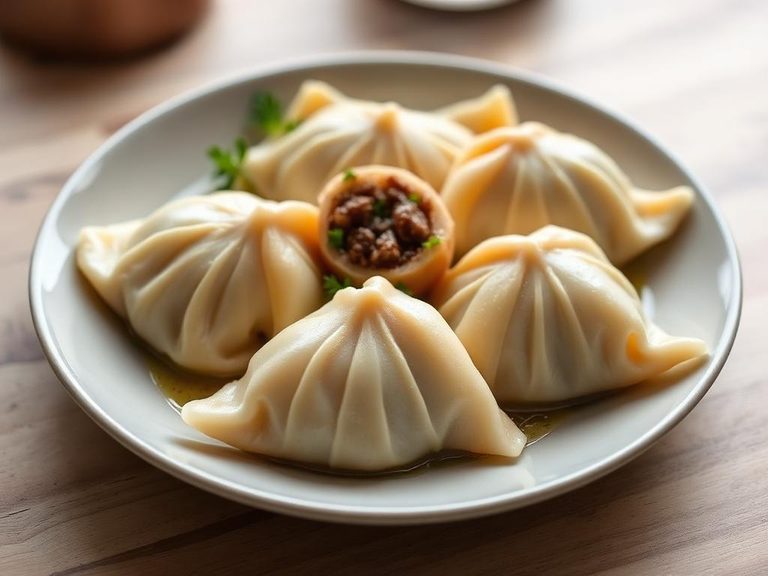
Pierogi z Mięsem are traditional Polish dumplings, typically filled with a savory mixture of minced pork, beef, or a combination, often seasoned with onion and garlic. They are made from a simple unleavened dough, boiled until tender, and then frequently pan-fried in butter for a golden, crispy exterior. This hearty dish is a staple of Polish cuisine, enjoyed as a main course or a substantial snack.
🍽️ Nutrition at a glance
As a combination of dough and meat filling, these pierogi are a good source of carbohydrates for energy and protein for muscle maintenance, with a moderate amount of fat, especially if pan-fried. A typical serving of about four to five pierogi provides a balanced mix of these macronutrients, along with iron from the meat, and contains roughly 400-600 calories.
Nutrition breakdown
| Calories | 450 kcal |
| Protein | 18 g |
| Carbs | 52 g |
| Fat | 18 g |
| Fiber | 3 g |
| Sugar | 3 g |
| Sodium | 780 mg |
| Iron | 3.2 mg |
| Potassium | 280 mg |
| Phosphorus | 190 mg |
| Zinc | 2.8 mg |
| Niacin (B3) | 4.5 mg |
| Thiamin (B1) | 0.4 mg |
| Vitamin B6 | 0.3 mg |
| Folate | 65 mcg |
Per 4 pierogi (approx. 200 g) · estimated, varies by recipe
💡 What's interesting
Culturally, pierogi are a symbol of Polish hospitality and family gatherings, often made by hand in a communal, multi-generational activity. Nutritionally, they represent a complete, comforting meal in a single package, with the dough providing sustenance and the filling offering concentrated protein and flavor.