

Pasta with tomato-based sauce and cheese
Common food
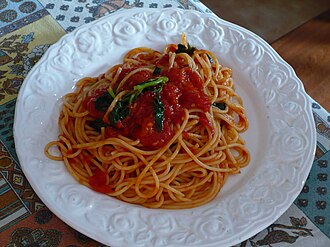
Photo: Wikipedia
A comforting staple of tender pasta coated in a vibrant, tangy tomato sauce and melted cheese, offering a satisfying balance of savory, sweet, and umami flavors. At just 119 kcal per 100g, it provides a light yet filling meal with a good source of carbohydrates for energy and a modest protein boost. The combination of lycopene-rich tomatoes and calcium from cheese makes it a surprisingly nutrient-dense comfort food.
Calorie split: 13% protein · 51% carbs · 37% fat
↓ Full nutrition💚 Why it's loved
People adore it for its comforting, nostalgic flavor that blends the acidity of tomatoes with the creamy richness of cheese, making it a universally appealing dish. Its versatility allows for endless variations, from simple weeknight meals to elaborate baked dishes, and it holds a special place in Italian and global cuisine as a symbol of home cooking.
⚠️ Watch-outs & how to enjoy it better
The dish can be high in sodium from cheese and sauce, and its refined carbohydrates may cause blood-sugar spikes, especially for those with insulin sensitivity. To counteract this, pair it with a side of leafy greens or lean protein like grilled chicken to slow digestion, and opt for whole-grain pasta or a smaller portion to manage glycemic impact. Additionally, some cheeses are high in saturated fat, so choosing lower-fat varieties or moderating cheese amounts can help.
Key benefits
- Rich in lycopene, an antioxidant linked to heart health
- Provides calcium and protein from cheese for bone support
- Moderate fiber content aids digestion
- Low-calorie base suitable for portion-controlled meals
- Versatile for adding vegetables or lean proteins
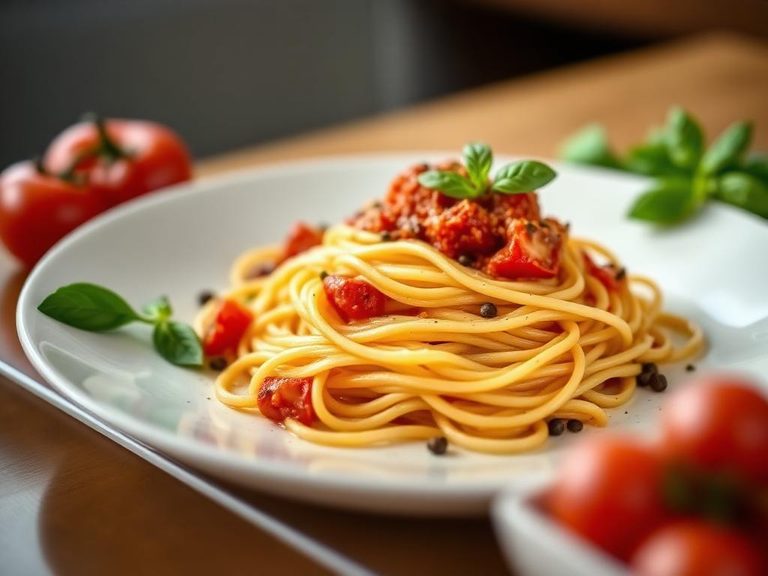
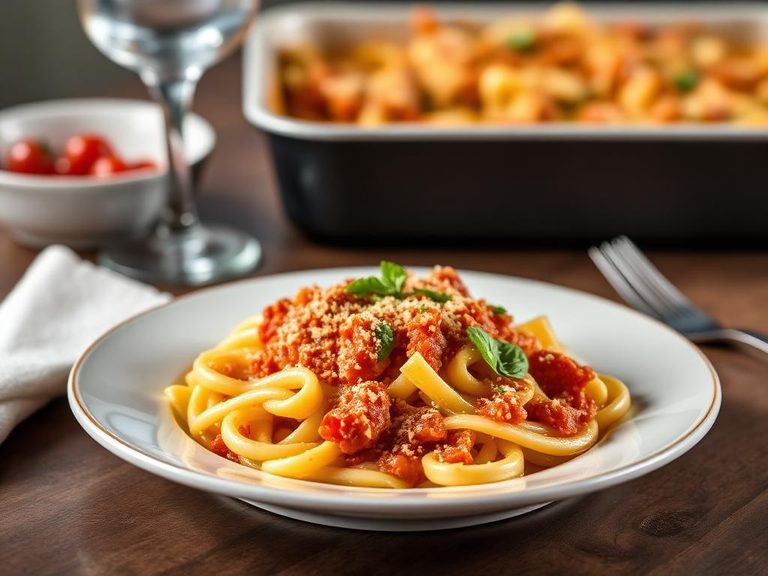
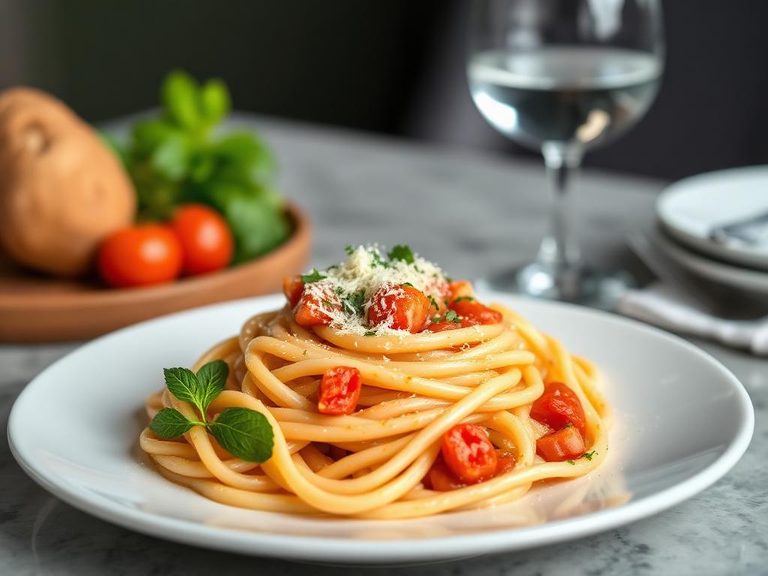
🍽️ Popular dishes
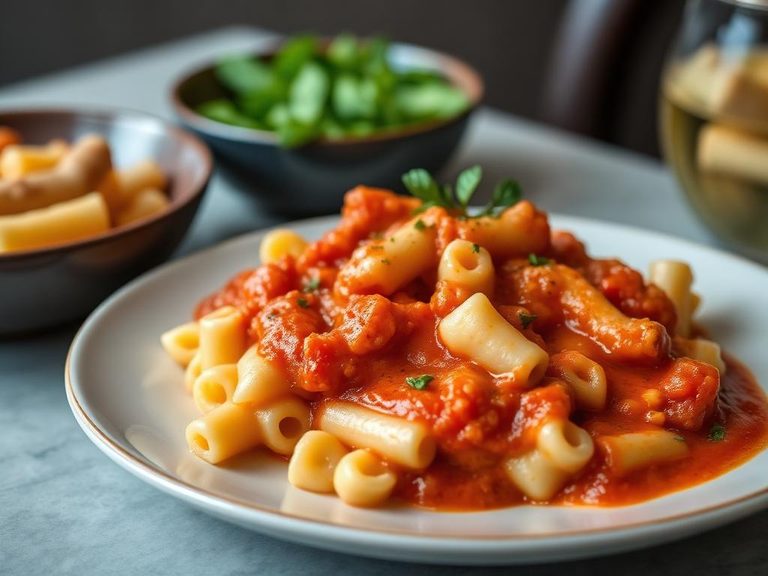
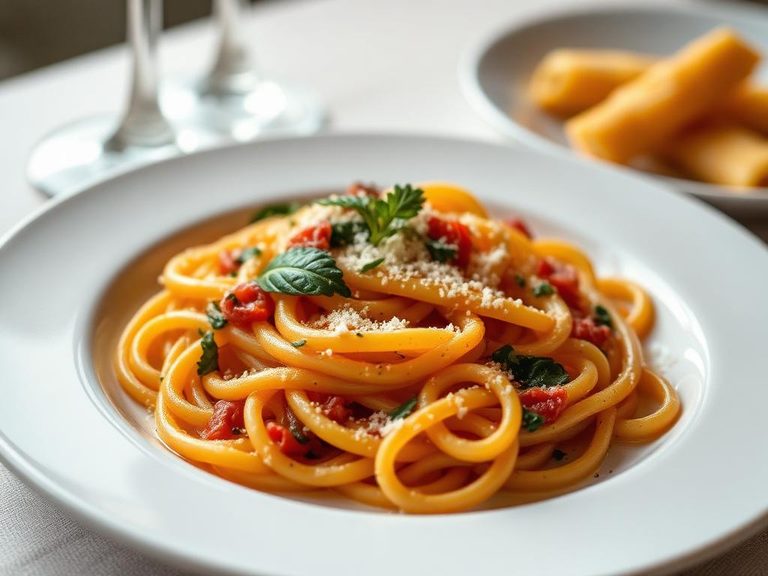
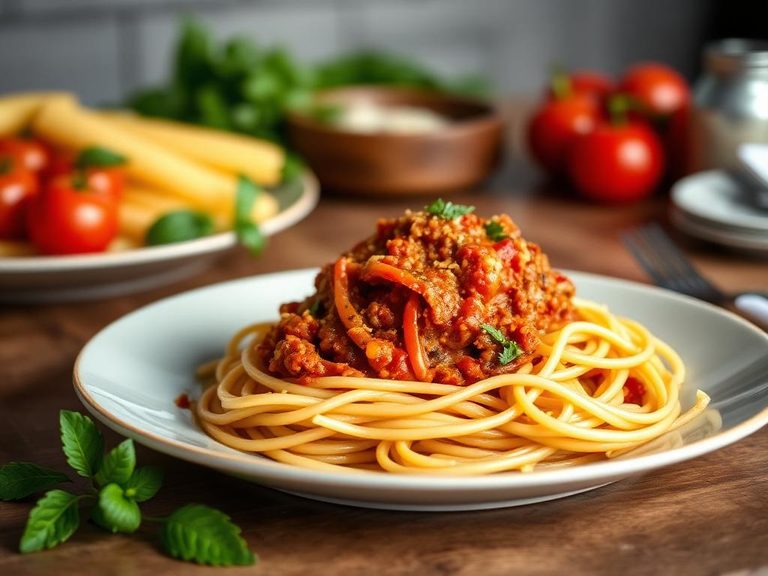
🌍 Where it's eaten
💡 Did you know?
The combination of tomato sauce and cheese on pasta became popular in Italy only in the 19th century, after tomatoes were introduced from the Americas and initially feared as poisonous.
Full nutrition (USDA data · scales with serving)
| Water | 74.9 g |
| Energy | 119 kcal |
| Protein | 3.7 g |
| Total lipid (fat) | 4.8 g |
| Carbohydrate, by difference | 15.0 g |
| Fiber, total dietary | 1.7 g |
| Total Sugars | 3.5 g |
| Calcium, Ca | 50.0 mg |
| Iron, Fe | 0.90 mg |
| Magnesium, Mg | 18.0 mg |
| Phosphorus, P | 59.0 mg |
| Potassium, K | 212 mg |
| Sodium, Na | 403 mg |
| Zinc, Zn | 0.45 mg |
| Copper, Cu | 0.08 mg |
| Selenium, Se | 10.6 ug |
| Vitamin C, total ascorbic acid | 1.2 mg |
| Thiamin | 0.10 mg |
| Riboflavin | 0.10 mg |
| Niacin | 2.9 mg |
| Vitamin B-6 | 0.12 mg |
| Folate, total | 32.0 ug |
| Folic acid | 21.0 ug |
| Folate, food | 11.0 ug |
| Folate, DFE | 47.0 ug |
| Choline, total | 11.1 mg |
| Vitamin B-12 | 0.05 ug |
| Vitamin B-12, added | 0.00 ug |
| Vitamin A, RAE | 33.0 ug |
| Retinol | 14.0 ug |
| Carotene, beta | 238 ug |
| Carotene, alpha | 0.00 ug |
| Cryptoxanthin, beta | 0.00 ug |
| Lycopene | 7734 ug |
| Lutein + zeaxanthin | 118 ug |
| Vitamin E (alpha-tocopherol) | 1.9 mg |
| Vitamin E, added | 0.00 mg |
| Vitamin D (D2 + D3) | 0.00 ug |
| Vitamin K (phylloquinone) | 10.7 ug |
| Alcohol, ethyl | 0.00 g |
| Caffeine | 0.00 mg |
| Theobromine | 0.00 mg |
Fat & fatty acid profile (per 100g)
| Fatty acids, total saturated | 1.3 g |
| SFA 4:0 | 0.03 g |
| SFA 6:0 | 0.02 g |
| SFA 8:0 | 0.02 g |
| SFA 10:0 | 0.04 g |
| SFA 12:0 | 0.04 g |
| SFA 14:0 | 0.14 g |
| SFA 16:0 | 0.70 g |
| SFA 18:0 | 0.24 g |
| Fatty acids, total monounsaturated | 1.5 g |
| MUFA 16:1 | 0.03 g |
| MUFA 18:1 | 1.5 g |
| MUFA 20:1 | 0.02 g |
| MUFA 22:1 | 0.00 g |
| Fatty acids, total polyunsaturated | 1.3 g |
| PUFA 18:2 | 1.1 g |
| PUFA 18:3 | 0.15 g |
| PUFA 18:4 | 0.00 g |
| PUFA 20:4 | 0.00 g |
| PUFA 20:5 n-3 (EPA) | 0.00 g |
| PUFA 22:5 n-3 (DPA) | 0.00 g |
| PUFA 22:6 n-3 (DHA) | 0.00 g |
| Cholesterol | 6.0 mg |
FAQ
Is pasta with tomato sauce and cheese healthy?
It can be a balanced meal when portion-controlled, offering carbs for energy, protein from cheese, and antioxidants from tomatoes, but watch for sodium and refined carbs.
How can I make it more nutritious?
Add vegetables like spinach or bell peppers, use whole-grain pasta, and choose low-fat cheese to boost fiber and reduce saturated fat.
What are common allergens in this dish?
Gluten from pasta and dairy from cheese are common allergens; consider gluten-free pasta and dairy-free cheese alternatives if needed.
Can it fit into a weight-loss diet?
Yes, by controlling portions (e.g., 100-150g servings) and pairing with protein or fiber-rich sides to enhance satiety without excess calories.
Nutrient density (calculated · NRF9.3)
Nutrient Rich Foods index: beneficial nutrients (protein, fiber, vitamins, minerals) minus saturated fat, added sugar & sodium, per 100 kcal.
NRF9.3 index — Fulgoni, Keast & Drewnowski, 2009. Computed from USDA nutrients.
Weight-loss friendliness (composite index)
Energy density 1.19 kcal/g · 13% calories from protein · 1.7 g fiber · 3.5 g sugar per 100 g.
Composite of energy density (Rolls et al., 1999), protein & fiber satiety, minus sugar. A calculated heuristic — ranks satiety-per-calorie, not a clinical measure.
Dietary load (calculated from USDA values)
Potential renal acid load. Positive = acid-forming, negative = alkaline-forming.
Sodium-to-potassium ratio: 1.90 (lower is better — aim for ≤ 1)
Sodium:potassium per WHO potassium guidance. Computed from USDA nutrients.