

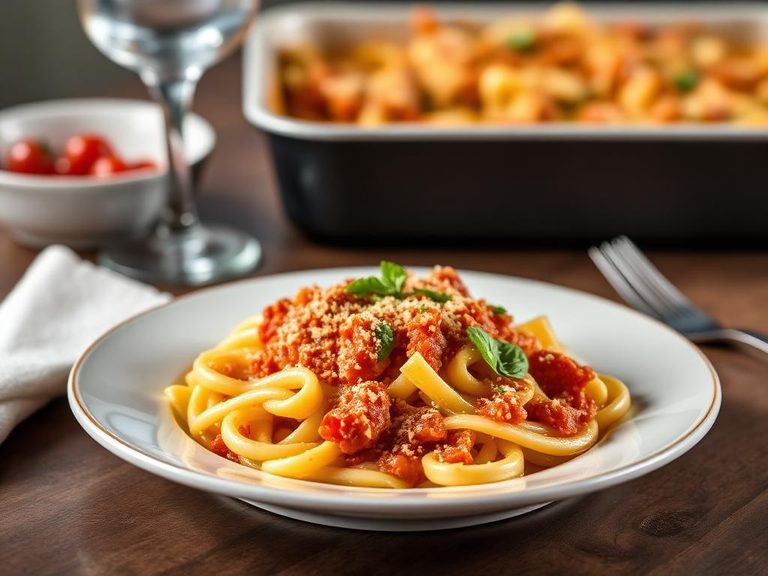
Pasta with tomato-based sauce, restaurant
Common food
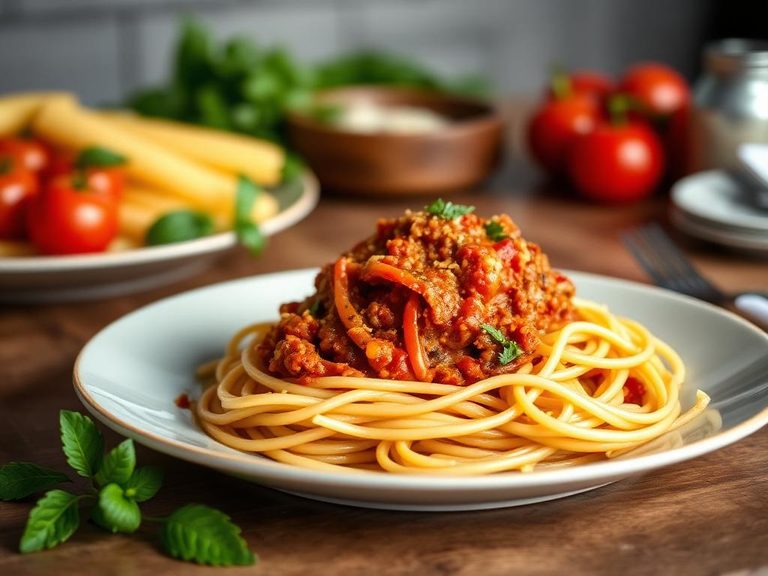
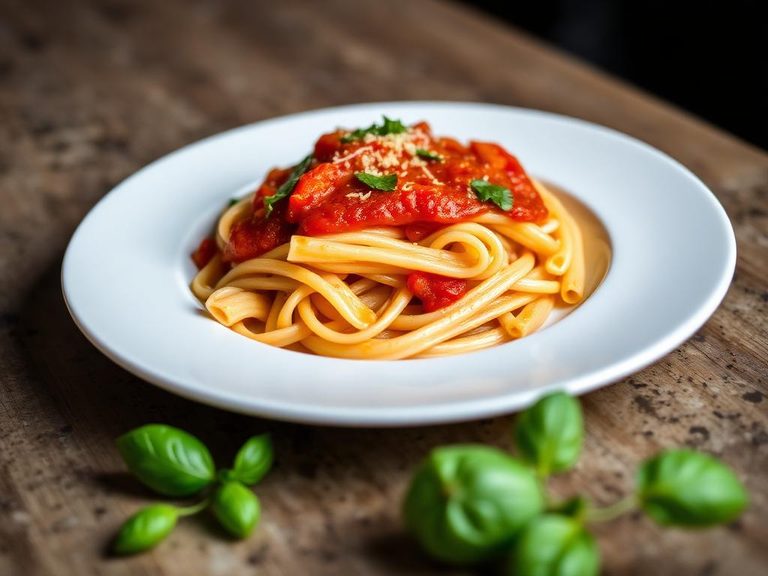
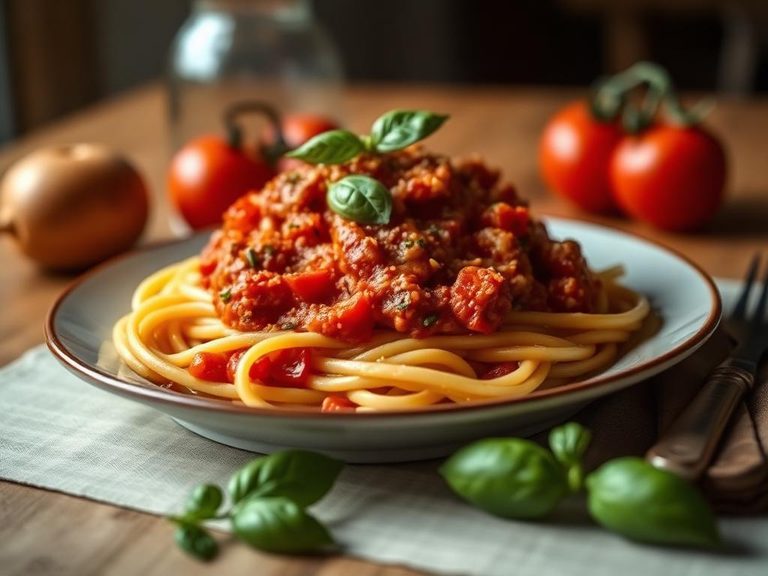
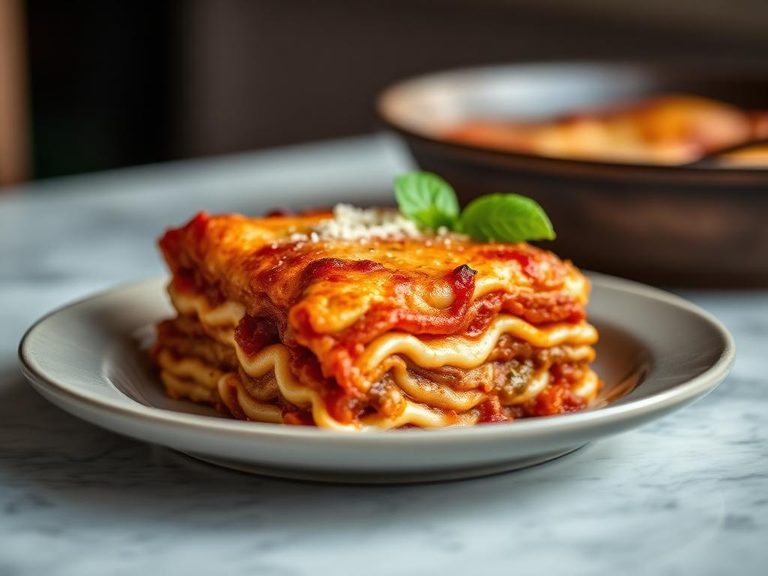
A comforting plate of pasta coated in a vibrant, savory tomato-based sauce, offering a satisfying balance of tender noodles and rich, slightly tangy flavor. Each 100g serving provides a moderate 160 kcal, with a good carbohydrate base for energy and a touch of fiber from the tomatoes. It's a classic, hearty meal that feels both indulgent and wholesome.
Calorie split: 9% protein · 46% carbs · 45% fat
↓ Full nutrition💚 Why it's loved
People adore it for its comforting, familiar taste and incredible versatility—it's a blank canvas for countless variations. It's deeply embedded in culinary culture, representing home cooking, simplicity, and the joy of a satisfying, warm meal.
⚠️ Watch-outs & how to enjoy it better
The refined carbohydrate content can lead to blood-sugar spikes, especially if the sauce is high in added sugar or the portion is large. To counteract this, pair it with a side of protein (like chicken or beans) and non-starchy vegetables, and consider choosing whole-wheat pasta for a lower glycemic impact. Some restaurant sauces can also be high in sodium.
Key benefits
- Good source of quick energy from carbohydrates.
- Contains lycopene, an antioxidant from cooked tomatoes.
- Provides a moderate amount of plant-based protein.
- Can be a source of dietary fiber, especially with whole-grain pasta.
- Versatile base for adding vegetables and lean proteins.
🍽️ Popular dishes
🌍 Where it's eaten
💡 Did you know?
The tomato, a key ingredient in the sauce, was once feared as poisonous in Europe and was grown only as an ornamental plant for nearly two centuries before being embraced in the kitchen.
Full nutrition (USDA data · scales with serving)
| Water | 68.8 g |
| Energy | 160 kcal |
| Protein | 3.4 g |
| Total lipid (fat) | 8.0 g |
| Carbohydrate, by difference | 18.4 g |
| Fiber, total dietary | 1.7 g |
| Total Sugars | 2.7 g |
| Calcium, Ca | 16.0 mg |
| Iron, Fe | 0.97 mg |
| Magnesium, Mg | 17.0 mg |
| Phosphorus, P | 43.0 mg |
| Potassium, K | 163 mg |
| Sodium, Na | 387 mg |
| Zinc, Zn | 0.33 mg |
| Copper, Cu | 0.08 mg |
| Selenium, Se | 13.3 ug |
| Vitamin C, total ascorbic acid | 0.90 mg |
| Thiamin | 0.14 mg |
| Riboflavin | 0.09 mg |
| Niacin | 2.6 mg |
| Vitamin B-6 | 0.10 mg |
| Folate, total | 41.0 ug |
| Folic acid | 32.0 ug |
| Folate, food | 9.0 ug |
| Folate, DFE | 63.0 ug |
| Choline, total | 9.2 mg |
| Vitamin B-12 | 0.00 ug |
| Vitamin B-12, added | 0.00 ug |
| Vitamin A, RAE | 14.0 ug |
| Retinol | 0.00 ug |
| Carotene, beta | 174 ug |
| Carotene, alpha | 0.00 ug |
| Cryptoxanthin, beta | 0.00 ug |
| Lycopene | 5664 ug |
| Lutein + zeaxanthin | 88.0 ug |
| Vitamin E (alpha-tocopherol) | 2.4 mg |
| Vitamin E, added | 0.00 mg |
| Vitamin D (D2 + D3) | 0.00 ug |
| Vitamin K (phylloquinone) | 13.1 ug |
| Alcohol, ethyl | 0.00 g |
| Caffeine | 0.00 mg |
| Theobromine | 0.00 mg |
Fat & fatty acid profile (per 100g)
| Fatty acids, total saturated | 1.1 g |
| SFA 4:0 | 0.00 g |
| SFA 6:0 | 0.00 g |
| SFA 8:0 | 0.00 g |
| SFA 10:0 | 0.00 g |
| SFA 12:0 | 0.00 g |
| SFA 14:0 | 0.01 g |
| SFA 16:0 | 0.78 g |
| SFA 18:0 | 0.22 g |
| Fatty acids, total monounsaturated | 3.1 g |
| MUFA 16:1 | 0.03 g |
| MUFA 18:1 | 3.1 g |
| MUFA 20:1 | 0.05 g |
| MUFA 22:1 | 0.00 g |
| Fatty acids, total polyunsaturated | 3.0 g |
| PUFA 18:2 | 2.7 g |
| PUFA 18:3 | 0.35 g |
| PUFA 18:4 | 0.00 g |
| PUFA 20:4 | 0.00 g |
| PUFA 20:5 n-3 (EPA) | 0.00 g |
| PUFA 22:5 n-3 (DPA) | 0.00 g |
| PUFA 22:6 n-3 (DHA) | 0.00 g |
| Cholesterol | 1.0 mg |
FAQ
Is pasta with tomato sauce healthy?
It can be a part of a healthy diet. It provides energy, some nutrients like lycopene, and is lower in fat than cream-based sauces. The overall healthiness depends on portion size, the specific sauce recipe (watch for added sugar and salt), and what you pair it with.
Why does restaurant pasta taste better than homemade?
Restaurants often use more fat (like butter or oil) and salt to enhance flavor, and they may finish the pasta by tossing it directly in the sauce with a splash of starchy pasta water, which helps the sauce cling perfectly to each strand.
How can I make it more nutritious?
Boost nutrition by using whole-grain or legume-based pasta, adding plenty of vegetables (like spinach, bell peppers, or mushrooms) to the sauce, and including a lean protein source such as grilled chicken, beans, or lentils.
Nutrient density (calculated · NRF9.3)
Nutrient Rich Foods index: beneficial nutrients (protein, fiber, vitamins, minerals) minus saturated fat, added sugar & sodium, per 100 kcal.
NRF9.3 index — Fulgoni, Keast & Drewnowski, 2009. Computed from USDA nutrients.
Weight-loss friendliness (composite index)
Energy density 1.60 kcal/g · 9% calories from protein · 1.7 g fiber · 2.7 g sugar per 100 g.
Composite of energy density (Rolls et al., 1999), protein & fiber satiety, minus sugar. A calculated heuristic — ranks satiety-per-calorie, not a clinical measure.
Dietary load (calculated from USDA values)
Potential renal acid load. Positive = acid-forming, negative = alkaline-forming.
Sodium-to-potassium ratio: 2.37 (lower is better — aim for ≤ 1)
Sodium:potassium per WHO potassium guidance. Computed from USDA nutrients.