

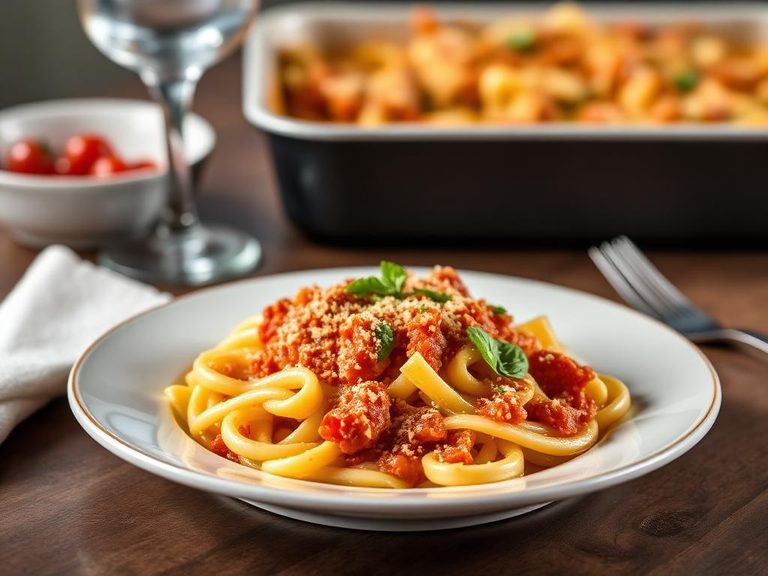
Pasta with tomato-based sauce, and added vegetables, restaurant
Common food

Photo: Wikipedia
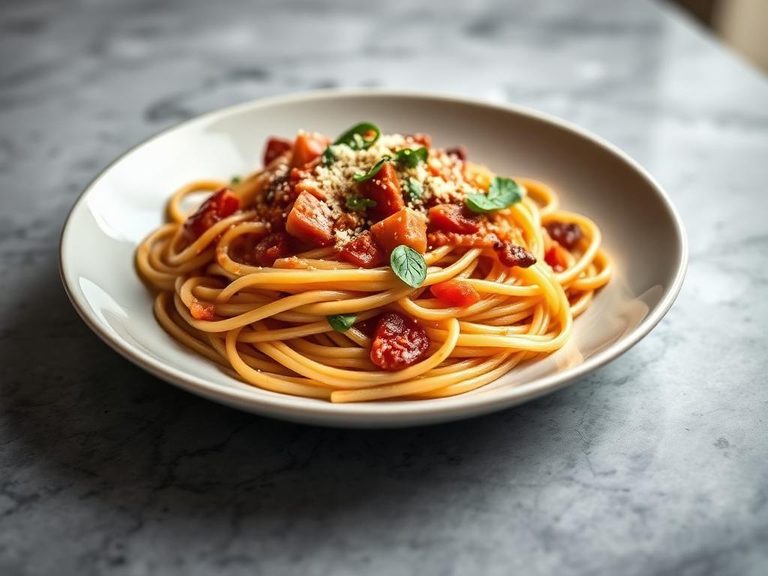
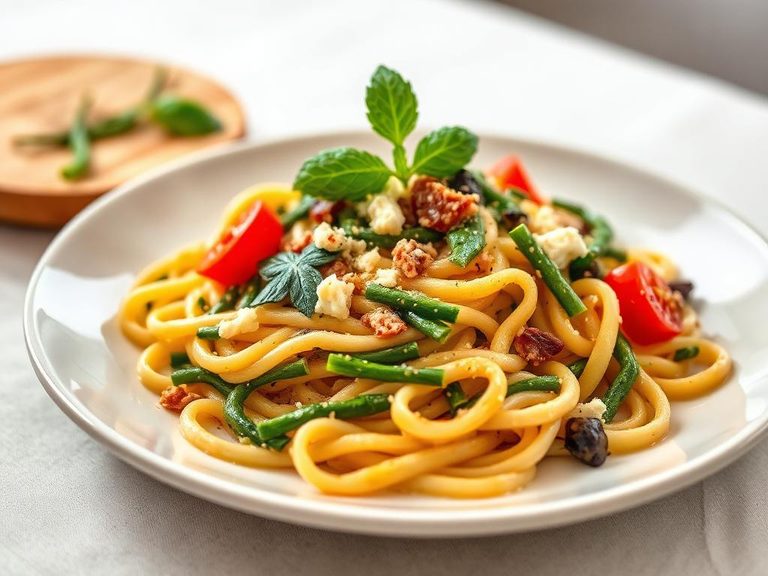
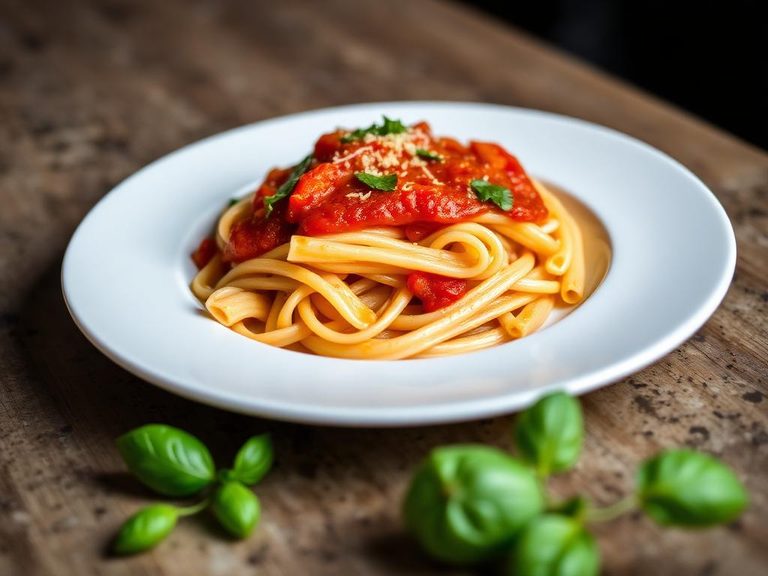
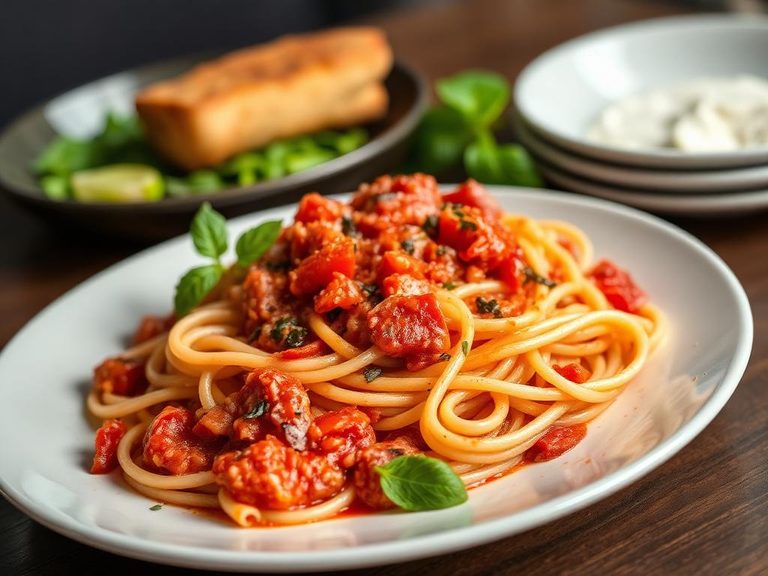
A comforting plate of pasta coated in a rich, tangy tomato sauce studded with tender vegetables like bell peppers, zucchini, or onions. The sauce clings to the al dente noodles, offering a savory, slightly sweet flavor with a satisfying, hearty texture. Nutritionally, it's a balanced meal with moderate calories, providing a good source of carbohydrates for energy and some protein.
Calorie split: 9% protein · 46% carbs · 45% fat
↓ Full nutrition💚 Why it's loved
It's a universally beloved comfort food, celebrated for its deeply satisfying umami flavor from the tomatoes and the customizable nature of the vegetable mix. Its cultural significance as a staple of Italian and Italian-American cuisine makes it a nostalgic and reliable crowd-pleaser.
⚠️ Watch-outs & how to enjoy it better
The refined pasta and tomato sauce can cause a quicker blood sugar rise compared to whole-grain versions. To counteract this, pair it with a side of grilled chicken, beans, or a leafy green salad to add protein and fiber, which slows digestion. Be mindful of sodium content in restaurant sauces; you can request sauce on the side to control the amount.
Key benefits
- Provides complex carbohydrates for sustained energy
- Contains lycopene from cooked tomatoes, an antioxidant
- Vegetable additions contribute dietary fiber and vitamins
- Moderate calorie density supports portion control
- A versatile base for adding lean proteins or extra vegetables
🍽️ Popular dishes
🌍 Where it's eaten
💡 Did you know?
The classic combination of pasta and tomato sauce wasn't popularized until the late 18th or early 19th century in Naples, as tomatoes were initially viewed with suspicion in Europe.
Full nutrition (USDA data · scales with serving)
| Water | 69.3 g |
| Energy | 158 kcal |
| Protein | 3.5 g |
| Total lipid (fat) | 7.8 g |
| Carbohydrate, by difference | 18.1 g |
| Fiber, total dietary | 1.6 g |
| Total Sugars | 2.5 g |
| Calcium, Ca | 14.0 mg |
| Iron, Fe | 0.93 mg |
| Magnesium, Mg | 16.0 mg |
| Phosphorus, P | 46.0 mg |
| Potassium, K | 162 mg |
| Sodium, Na | 343 mg |
| Zinc, Zn | 0.35 mg |
| Copper, Cu | 0.10 mg |
| Selenium, Se | 13.9 ug |
| Vitamin C, total ascorbic acid | 5.4 mg |
| Thiamin | 0.14 mg |
| Riboflavin | 0.11 mg |
| Niacin | 2.3 mg |
| Vitamin B-6 | 0.10 mg |
| Folate, total | 43.0 ug |
| Folic acid | 32.0 ug |
| Folate, food | 11.0 ug |
| Folate, DFE | 65.0 ug |
| Choline, total | 9.1 mg |
| Vitamin B-12 | 0.00 ug |
| Vitamin B-12, added | 0.00 ug |
| Vitamin A, RAE | 15.0 ug |
| Retinol | 0.00 ug |
| Carotene, beta | 175 ug |
| Carotene, alpha | 1.0 ug |
| Cryptoxanthin, beta | 10.0 ug |
| Lycopene | 4331 ug |
| Lutein + zeaxanthin | 122 ug |
| Vitamin E (alpha-tocopherol) | 2.2 mg |
| Vitamin E, added | 0.00 mg |
| Vitamin D (D2 + D3) | 0.00 ug |
| Vitamin K (phylloquinone) | 12.1 ug |
| Alcohol, ethyl | 0.00 g |
| Caffeine | 0.00 mg |
| Theobromine | 0.00 mg |
Fat & fatty acid profile (per 100g)
| Fatty acids, total saturated | 1.1 g |
| SFA 4:0 | 0.00 g |
| SFA 6:0 | 0.00 g |
| SFA 8:0 | 0.00 g |
| SFA 10:0 | 0.00 g |
| SFA 12:0 | 0.00 g |
| SFA 14:0 | 0.01 g |
| SFA 16:0 | 0.77 g |
| SFA 18:0 | 0.22 g |
| Fatty acids, total monounsaturated | 3.1 g |
| MUFA 16:1 | 0.03 g |
| MUFA 18:1 | 3.0 g |
| MUFA 20:1 | 0.05 g |
| MUFA 22:1 | 0.00 g |
| Fatty acids, total polyunsaturated | 3.0 g |
| PUFA 18:2 | 2.6 g |
| PUFA 18:3 | 0.34 g |
| PUFA 18:4 | 0.00 g |
| PUFA 20:4 | 0.00 g |
| PUFA 20:5 n-3 (EPA) | 0.00 g |
| PUFA 22:5 n-3 (DPA) | 0.00 g |
| PUFA 22:6 n-3 (DHA) | 0.00 g |
| Cholesterol | 1.0 mg |
FAQ
Is this dish considered healthy?
It can be a balanced part of a healthy diet. It offers energy from carbs and nutrients from tomatoes and vegetables. For a healthier version, look for whole-grain pasta and sauces low in added sugar and sodium.
How can I make it more filling?
Increase the protein and fiber content by adding lean ground turkey, lentils, chickpeas, or a generous side of steamed broccoli or spinach. Using whole-wheat pasta also adds more fiber.
What's the best way to store leftovers?
Store in an airtight container in the refrigerator for up to 3-4 days. The pasta may absorb some sauce, so you might need to add a splash of water when reheating to restore moisture.
Nutrient density (calculated · NRF9.3)
Nutrient Rich Foods index: beneficial nutrients (protein, fiber, vitamins, minerals) minus saturated fat, added sugar & sodium, per 100 kcal.
NRF9.3 index — Fulgoni, Keast & Drewnowski, 2009. Computed from USDA nutrients.
Weight-loss friendliness (composite index)
Energy density 1.58 kcal/g · 9% calories from protein · 1.6 g fiber · 2.5 g sugar per 100 g.
Composite of energy density (Rolls et al., 1999), protein & fiber satiety, minus sugar. A calculated heuristic — ranks satiety-per-calorie, not a clinical measure.
Dietary load (calculated from USDA values)
Potential renal acid load. Positive = acid-forming, negative = alkaline-forming.
Sodium-to-potassium ratio: 2.12 (lower is better — aim for ≤ 1)
Sodium:potassium per WHO potassium guidance. Computed from USDA nutrients.