

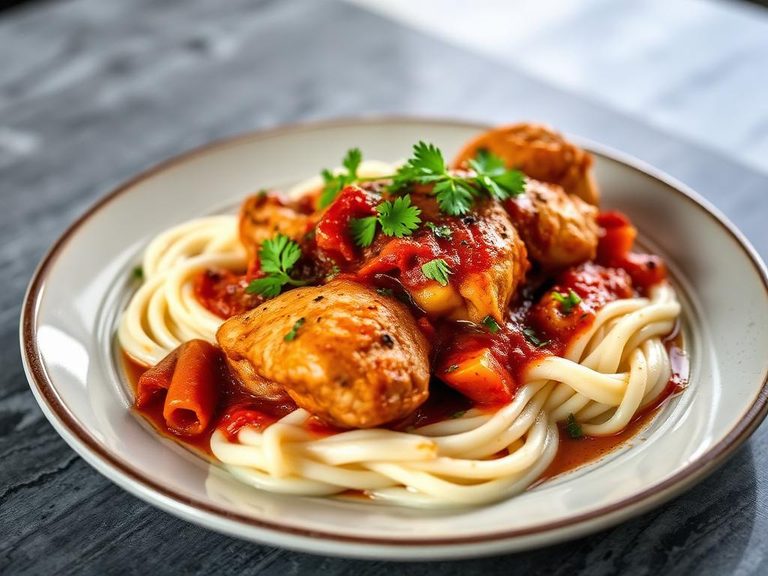
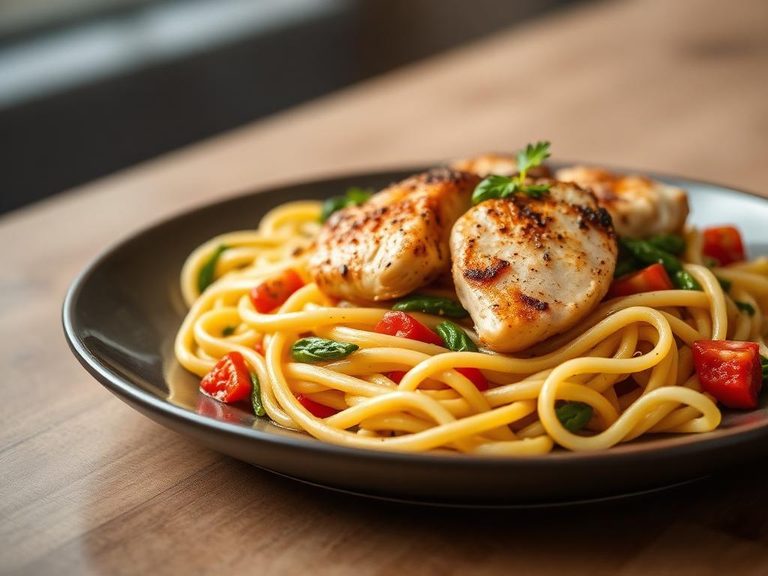
Pasta with tomato-based sauce, poultry, and added vegetables, restaurant
Common food

Photo: Wikipedia
A comforting plate of tender pasta coated in a vibrant, savory tomato-based sauce, studded with juicy poultry and colorful vegetables. The texture is a satisfying mix of al dente noodles, tender meat, and soft-cooked veggies, all brought together by the bright acidity of the tomatoes. At 169 kcal per 100g, it offers a balanced meal with a good protein-to-carb ratio.
Calorie split: 13% protein · 42% carbs · 45% fat
↓ Full nutrition💚 Why it's loved
People adore this dish for its universal comfort-food appeal and the harmonious blend of savory, tangy, and umami flavors. It's incredibly versatile, easily adapted with whatever vegetables or protein are on hand, making it a staple in home kitchens and restaurants worldwide.
⚠️ Watch-outs & how to enjoy it better
The dish can be high in sodium, especially from restaurant sauces and added salt, and the refined pasta may cause blood-sugar spikes for some. To counteract this, choose whole-wheat pasta for more fiber, request sauce on the side to control portion, and pair it with a leafy green salad to slow digestion.
Key benefits
- Good source of lean protein from poultry
- Provides energy from complex carbohydrates in pasta
- Contains vitamins and antioxidants from tomatoes and vegetables
- Relatively low in calories for a complete meal
- Fiber from vegetables and pasta supports digestion
🍽️ Popular dishes
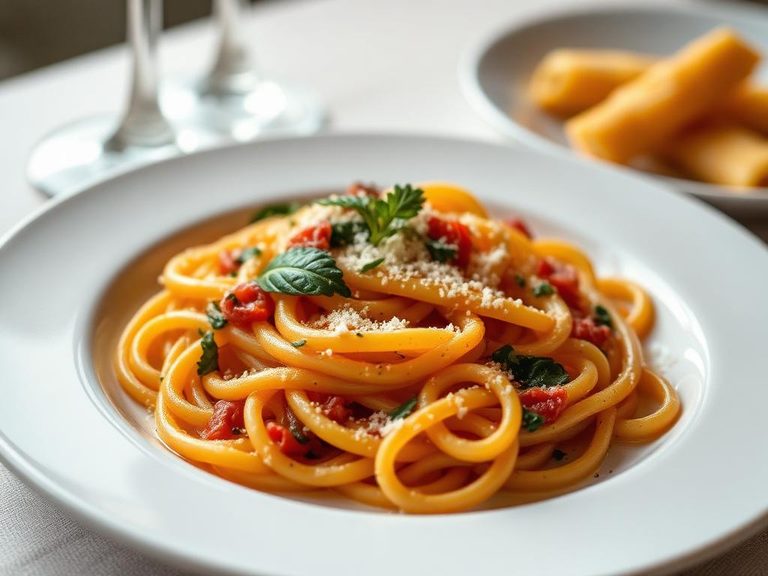
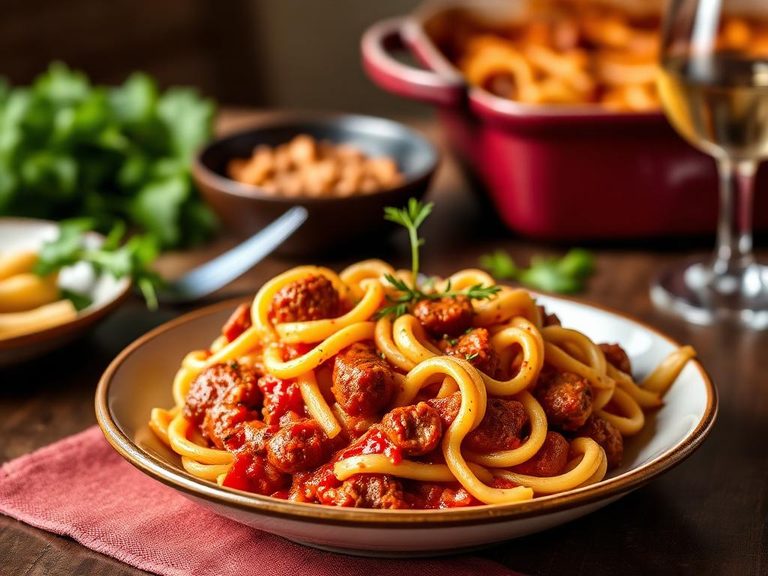
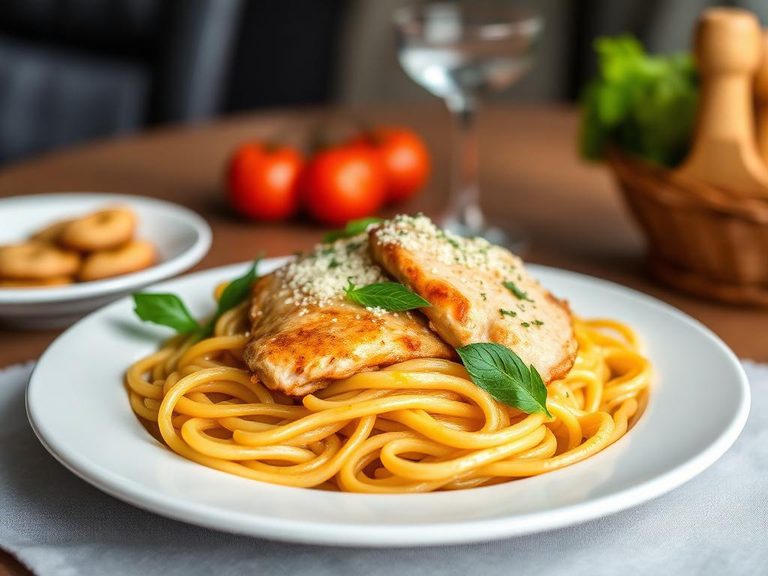
🌍 Where it's eaten
💡 Did you know?
The combination of tomatoes and pasta is a New World-Old World fusion; tomatoes were only introduced to Italian cuisine in the 16th century after being brought from the Americas.
Full nutrition (USDA data · scales with serving)
| Water | 67.2 g |
| Energy | 169 kcal |
| Protein | 5.6 g |
| Total lipid (fat) | 8.4 g |
| Carbohydrate, by difference | 17.5 g |
| Fiber, total dietary | 1.5 g |
| Total Sugars | 2.1 g |
| Calcium, Ca | 14.0 mg |
| Iron, Fe | 0.96 mg |
| Magnesium, Mg | 17.0 mg |
| Phosphorus, P | 63.0 mg |
| Potassium, K | 160 mg |
| Sodium, Na | 347 mg |
| Zinc, Zn | 0.52 mg |
| Copper, Cu | 0.10 mg |
| Selenium, Se | 15.9 ug |
| Vitamin C, total ascorbic acid | 4.4 mg |
| Thiamin | 0.15 mg |
| Riboflavin | 0.12 mg |
| Niacin | 2.8 mg |
| Vitamin B-6 | 0.12 mg |
| Folate, total | 42.0 ug |
| Folic acid | 32.0 ug |
| Folate, food | 10.0 ug |
| Folate, DFE | 64.0 ug |
| Choline, total | 13.7 mg |
| Vitamin B-12 | 0.09 ug |
| Vitamin B-12, added | 0.00 ug |
| Vitamin A, RAE | 14.0 ug |
| Retinol | 1.0 ug |
| Carotene, beta | 142 ug |
| Carotene, alpha | 1.0 ug |
| Cryptoxanthin, beta | 8.0 ug |
| Lycopene | 3519 ug |
| Lutein + zeaxanthin | 100 ug |
| Vitamin E (alpha-tocopherol) | 2.1 mg |
| Vitamin E, added | 0.00 mg |
| Vitamin D (D2 + D3) | 0.00 ug |
| Vitamin K (phylloquinone) | 11.1 ug |
| Alcohol, ethyl | 0.00 g |
| Caffeine | 0.00 mg |
| Theobromine | 0.00 mg |
Fat & fatty acid profile (per 100g)
| Fatty acids, total saturated | 1.2 g |
| SFA 4:0 | 0.00 g |
| SFA 6:0 | 0.00 g |
| SFA 8:0 | 0.00 g |
| SFA 10:0 | 0.00 g |
| SFA 12:0 | 0.00 g |
| SFA 14:0 | 0.01 g |
| SFA 16:0 | 0.88 g |
| SFA 18:0 | 0.25 g |
| Fatty acids, total monounsaturated | 3.3 g |
| MUFA 16:1 | 0.05 g |
| MUFA 18:1 | 3.2 g |
| MUFA 20:1 | 0.05 g |
| MUFA 22:1 | 0.00 g |
| Fatty acids, total polyunsaturated | 3.1 g |
| PUFA 18:2 | 2.8 g |
| PUFA 18:3 | 0.34 g |
| PUFA 18:4 | 0.00 g |
| PUFA 20:4 | 0.01 g |
| PUFA 20:5 n-3 (EPA) | 0.00 g |
| PUFA 22:5 n-3 (DPA) | 0.00 g |
| PUFA 22:6 n-3 (DHA) | 0.00 g |
| Cholesterol | 8.0 mg |
FAQ
Is this dish considered healthy?
It can be a balanced meal, providing protein, carbs, and vegetables. Its healthiness depends on portion size, the type of pasta used, and the sauce's sodium and oil content. Opting for whole-wheat pasta and loading up on vegetables improves its nutritional profile.
Can I make this dish gluten-free?
Yes, simply substitute the traditional wheat pasta with a gluten-free alternative made from rice, corn, or legumes. Ensure the sauce and any other added ingredients are also certified gluten-free.
What kind of poultry works best?
Chicken breast or thigh are most common due to their mild flavor and tender texture when cooked. Ground turkey or lean pork are also popular alternatives that blend well with the tomato sauce.
Nutrient density (calculated · NRF9.3)
Nutrient Rich Foods index: beneficial nutrients (protein, fiber, vitamins, minerals) minus saturated fat, added sugar & sodium, per 100 kcal.
NRF9.3 index — Fulgoni, Keast & Drewnowski, 2009. Computed from USDA nutrients.
Weight-loss friendliness (composite index)
Energy density 1.69 kcal/g · 13% calories from protein · 1.5 g fiber · 2.1 g sugar per 100 g.
Composite of energy density (Rolls et al., 1999), protein & fiber satiety, minus sugar. A calculated heuristic — ranks satiety-per-calorie, not a clinical measure.
Dietary load (calculated from USDA values)
Potential renal acid load. Positive = acid-forming, negative = alkaline-forming.
Sodium-to-potassium ratio: 2.17 (lower is better — aim for ≤ 1)
Sodium:potassium per WHO potassium guidance. Computed from USDA nutrients.