

Papaya juice, 100%
Common food

Photo: Wikipedia
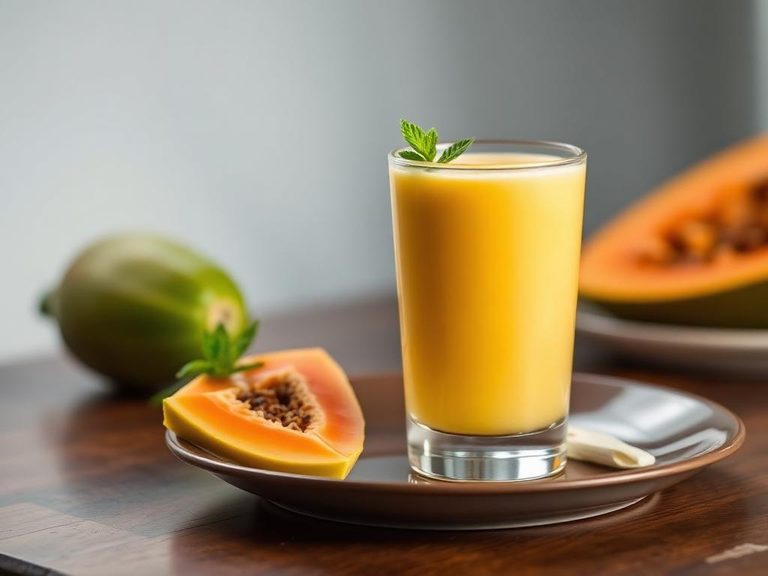
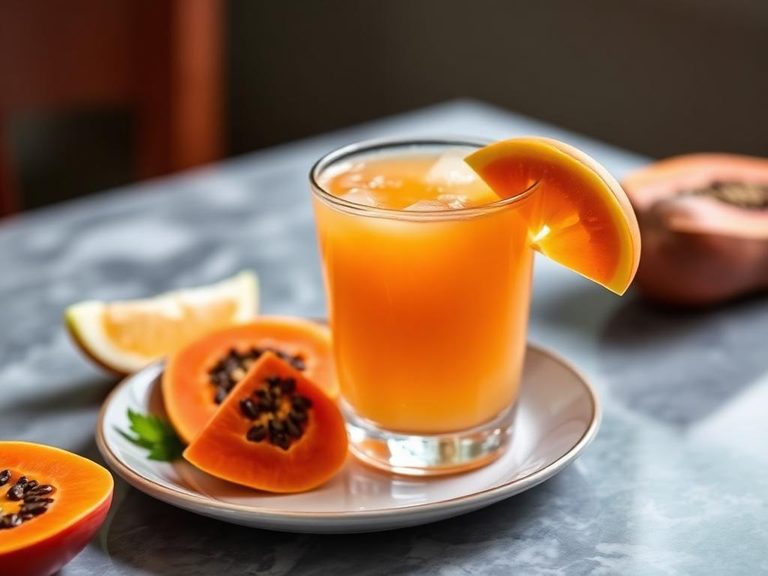
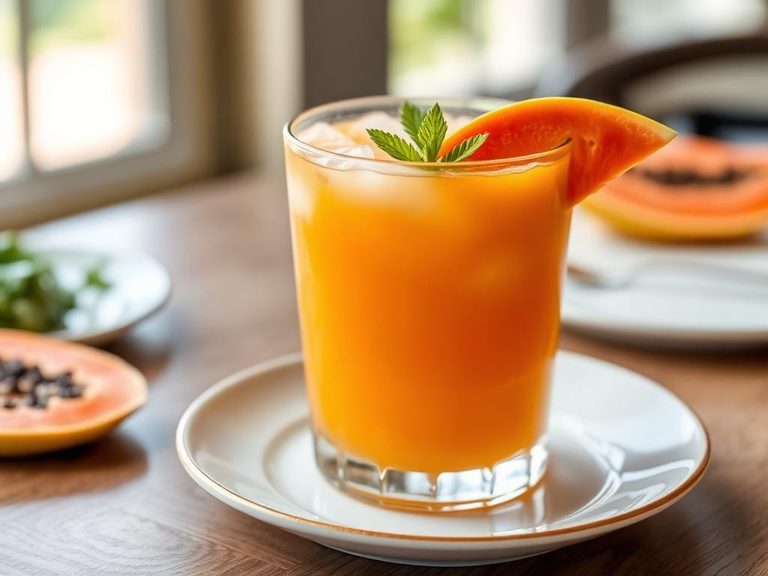
A vibrant, sun-kissed nectar with a silky, slightly viscous texture and a sweet-tart tropical flavor reminiscent of mango and melon. Its brilliant orange hue signals a powerhouse of beta-carotene, while its naturally occurring sugar provides a quick, refreshing energy boost. This 100% juice captures the essence of ripe papaya in its purest, most drinkable form.
Calorie split: 1% protein · 97% carbs · 2% fat
↓ Full nutrition💚 Why it's loved
People adore it for its uniquely smooth, lush mouthfeel and the perfect balance of tropical sweetness with a gentle, tangy finish. It's a beloved staple in many cultures, enjoyed chilled on its own or as a base for vibrant smoothies and cocktails.
⚠️ Watch-outs & how to enjoy it better
The natural sugar content (nearly 14g per 100g) can cause a rapid blood-sugar spike, making it less ideal for those managing diabetes or seeking low-glycemic options. To counteract this, pair it with a source of protein or healthy fat (like a handful of nuts or a dollop of Greek yogurt) to slow sugar absorption, or dilute it with water or unsweetened sparkling water.
Key benefits
- Rich in beta-carotene, which the body converts to vitamin A for eye health.
- Contains the enzyme papain, which can aid in protein digestion.
- Provides a good source of vitamin C, an antioxidant that supports immune function.
- Offers quick, natural energy from its carbohydrate content.
- Hydrating and low in fat, making it a light beverage choice.
🍽️ Popular dishes
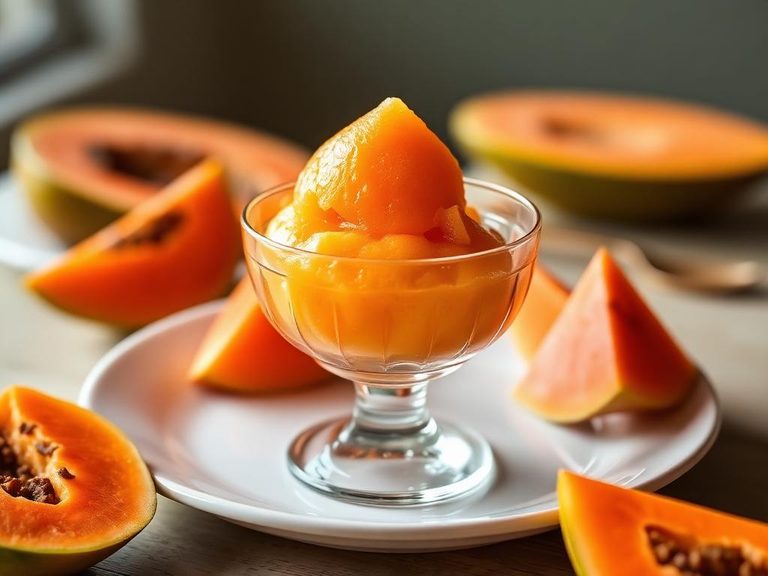
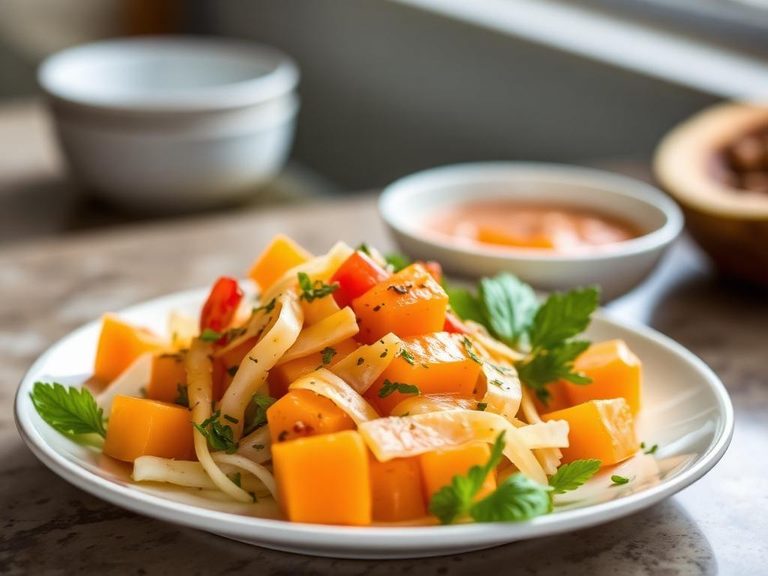
🌍 Where it's eaten
💡 Did you know?
The black, gelatinous seeds of the papaya fruit, though not typically juiced, are edible and have a sharp, peppery flavor often compared to watercress or mustard.
Full nutrition (USDA data · scales with serving)
| Water | 85.0 g |
| Energy | 57.0 kcal |
| Protein | 0.17 g |
| Total lipid (fat) | 0.15 g |
| Carbohydrate, by difference | 14.5 g |
| Fiber, total dietary | 0.60 g |
| Total Sugars | 13.9 g |
| Calcium, Ca | 10.0 mg |
| Iron, Fe | 0.34 mg |
| Magnesium, Mg | 3.0 mg |
| Phosphorus, P | 0.00 mg |
| Potassium, K | 31.0 mg |
| Sodium, Na | 5.0 mg |
| Zinc, Zn | 0.15 mg |
| Copper, Cu | 0.01 mg |
| Selenium, Se | 0.30 ug |
| Vitamin C, total ascorbic acid | 3.0 mg |
| Thiamin | 0.01 mg |
| Riboflavin | 0.00 mg |
| Niacin | 0.15 mg |
| Vitamin B-6 | 0.01 mg |
| Folate, total | 2.0 ug |
| Folic acid | 0.00 ug |
| Folate, food | 2.0 ug |
| Folate, DFE | 2.0 ug |
| Choline, total | 2.0 mg |
| Vitamin B-12 | 0.00 ug |
| Vitamin B-12, added | 0.00 ug |
| Vitamin A, RAE | 18.0 ug |
| Retinol | 0.00 ug |
| Carotene, beta | 91.0 ug |
| Carotene, alpha | 0.00 ug |
| Cryptoxanthin, beta | 251 ug |
| Lycopene | 0.00 ug |
| Lutein + zeaxanthin | 25.0 ug |
| Vitamin E (alpha-tocopherol) | 0.24 mg |
| Vitamin E, added | 0.00 mg |
| Vitamin D (D2 + D3) | 0.00 ug |
| Vitamin K (phylloquinone) | 0.80 ug |
| Alcohol, ethyl | 0.00 g |
| Caffeine | 0.00 mg |
| Theobromine | 0.00 mg |
Fat & fatty acid profile (per 100g)
| Fatty acids, total saturated | 0.05 g |
| SFA 4:0 | 0.00 g |
| SFA 6:0 | 0.00 g |
| SFA 8:0 | 0.00 g |
| SFA 10:0 | 0.00 g |
| SFA 12:0 | 0.00 g |
| SFA 14:0 | 0.01 g |
| SFA 16:0 | 0.04 g |
| SFA 18:0 | 0.00 g |
| Fatty acids, total monounsaturated | 0.04 g |
| MUFA 16:1 | 0.02 g |
| MUFA 18:1 | 0.02 g |
| MUFA 20:1 | 0.00 g |
| MUFA 22:1 | 0.00 g |
| Fatty acids, total polyunsaturated | 0.04 g |
| PUFA 18:2 | 0.01 g |
| PUFA 18:3 | 0.03 g |
| PUFA 18:4 | 0.00 g |
| PUFA 20:4 | 0.00 g |
| PUFA 20:5 n-3 (EPA) | 0.00 g |
| PUFA 22:5 n-3 (DPA) | 0.00 g |
| PUFA 22:6 n-3 (DHA) | 0.00 g |
| Cholesterol | 0.00 mg |
FAQ
Is papaya juice the same as eating the whole fruit?
No. Juicing removes most of the fibrous pulp, concentrating the sugars and calories while significantly reducing the dietary fiber content. Eating the whole fruit provides more satiety and a slower sugar release.
Can I use papaya juice in savory cooking?
Absolutely. Its natural sweetness and enzymatic properties make it an excellent tenderizer for marinades, especially for meats like chicken or pork. It also adds a bright, fruity note to salsas and dressings.
How should I store fresh papaya juice?
Store it in an airtight container in the refrigerator and consume within 2-3 days for optimal freshness and nutrient retention. It can also be frozen in ice cube trays for later use in smoothies.
Nutrient density (calculated · NRF9.3)
Nutrient Rich Foods index: beneficial nutrients (protein, fiber, vitamins, minerals) minus saturated fat, added sugar & sodium, per 100 kcal.
NRF9.3 index — Fulgoni, Keast & Drewnowski, 2009. Computed from USDA nutrients.
Weight-loss friendliness (composite index)
Energy density 0.57 kcal/g · 1% calories from protein · 0.6 g fiber · 13.9 g sugar per 100 g.
Composite of energy density (Rolls et al., 1999), protein & fiber satiety, minus sugar. A calculated heuristic — ranks satiety-per-calorie, not a clinical measure.
Dietary load (calculated from USDA values)
Potential renal acid load. Positive = acid-forming, negative = alkaline-forming.
Sodium-to-potassium ratio: 0.16 (lower is better — aim for ≤ 1)
Sodium:potassium per WHO potassium guidance. Computed from USDA nutrients.