

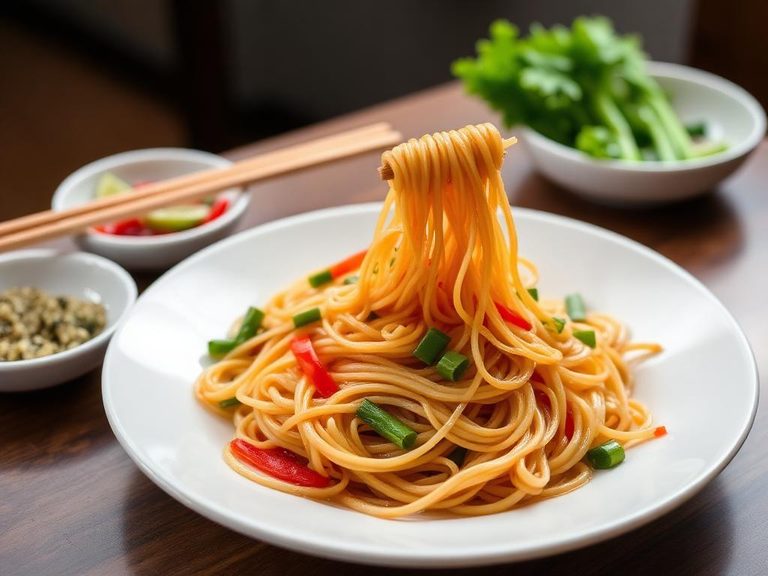
Pad Thai with chicken
Common food

Photo: Wikipedia
Pad Thai with chicken is a vibrant stir-fried noodle dish where chewy rice noodles are tossed in a tangy-sweet tamarind sauce with tender chicken, crunchy peanuts, and fresh lime. Its texture is a delightful contrast of soft noodles, firm protein, and crisp bean sprouts, creating a balanced bite that is savory, slightly sour, and subtly sweet. Nutritionally, it offers a moderate calorie count with a good protein boost from the chicken, making it a more substantial option than vegetable-only versions.
Calorie split: 21% protein · 36% carbs · 43% fat
↓ Full nutrition💚 Why it's loved
People adore Pad Thai for its complex, harmonious flavor profile—sweet, sour, salty, and savory all at once—and its satisfying texture from the combination of noodles, protein, and crunchy toppings. It's a beloved staple of Thai street food culture, offering a comforting yet exciting meal that's both familiar and exotic to many palates.
⚠️ Watch-outs & how to enjoy it better
The dish can be high in sodium from fish sauce and soy sauce, and the tamarind sauce may cause blood-sugar spikes due to added sugars. To counteract, pair it with extra vegetables or a side salad to increase fiber, use a smaller portion of noodles, and opt for low-sodium sauces when possible. Those with gluten sensitivities should be cautious, as some sauces may contain gluten; using tamari or gluten-free soy sauce is a simple swap.
Key benefits
- Good source of protein from chicken, supporting muscle maintenance.
- Provides quick energy from carbohydrates in rice noodles.
- Contains fiber and micronutrients from bean sprouts and vegetables.
- Balanced macronutrient profile (protein, carbs, fat) for a satisfying meal.
🍽️ Popular dishes
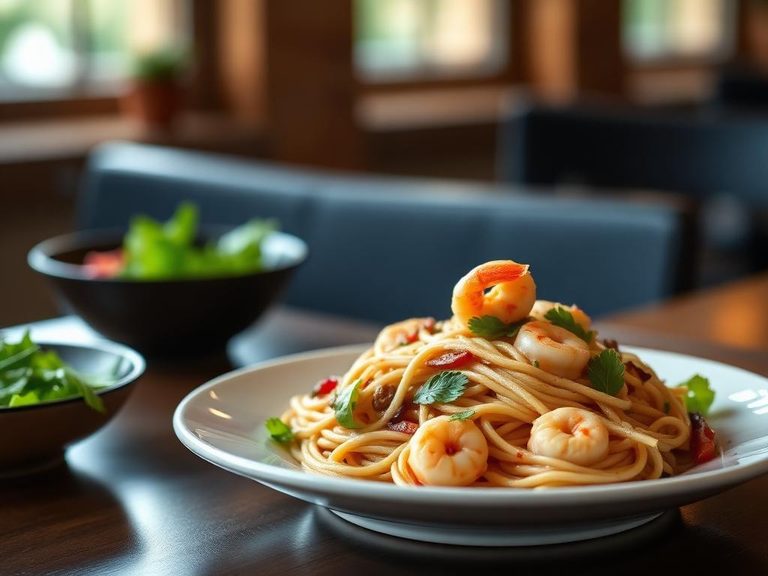
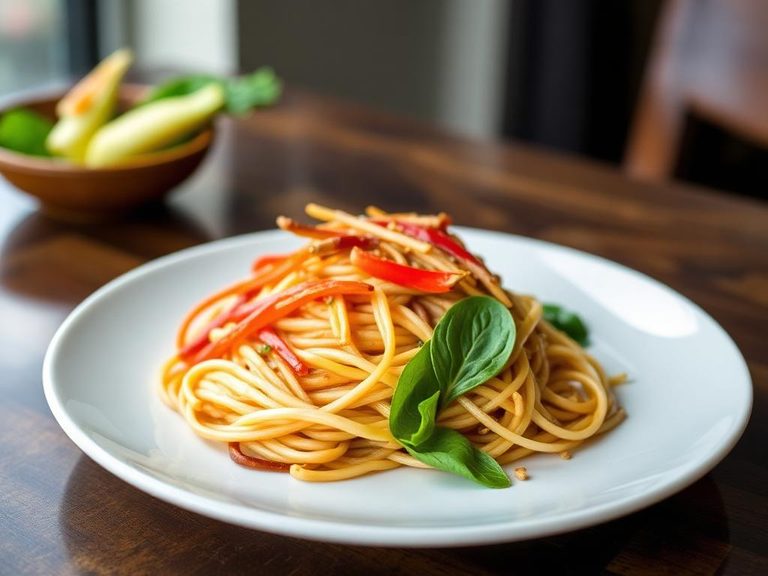
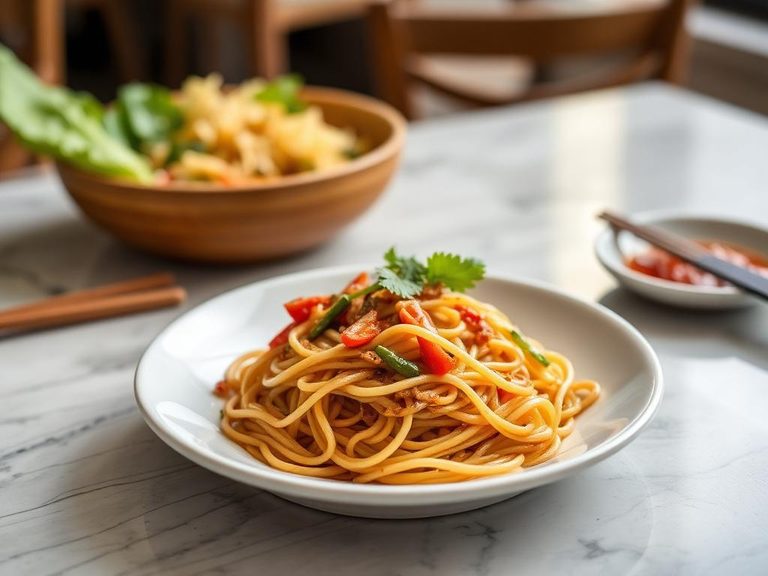
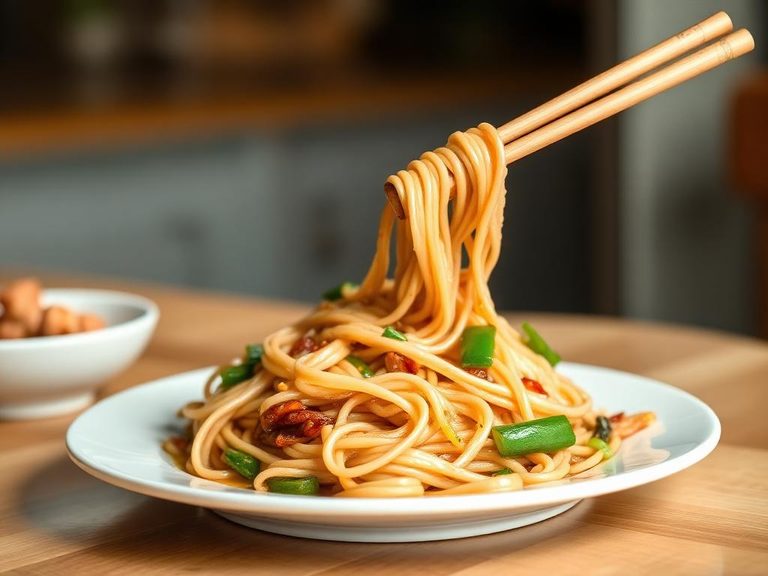
🌍 Where it's eaten
💡 Did you know?
Pad Thai was popularized in Thailand in the 1940s as part of a national campaign by Prime Minister Plaek Phibunsongkhram to promote Thai identity and reduce rice consumption during a shortage.
Full nutrition (USDA data · scales with serving)
| Water | 68.6 g |
| Energy | 154 kcal |
| Protein | 8.1 g |
| Total lipid (fat) | 7.5 g |
| Carbohydrate, by difference | 14.4 g |
| Fiber, total dietary | 1.2 g |
| Total Sugars | 4.1 g |
| Calcium, Ca | 21.0 mg |
| Iron, Fe | 0.68 mg |
| Magnesium, Mg | 25.0 mg |
| Phosphorus, P | 91.0 mg |
| Potassium, K | 152 mg |
| Sodium, Na | 384 mg |
| Zinc, Zn | 0.69 mg |
| Copper, Cu | 0.09 mg |
| Selenium, Se | 8.9 ug |
| Vitamin C, total ascorbic acid | 4.8 mg |
| Thiamin | 0.05 mg |
| Riboflavin | 0.10 mg |
| Niacin | 2.2 mg |
| Vitamin B-6 | 0.11 mg |
| Folate, total | 24.0 ug |
| Folic acid | 0.00 ug |
| Folate, food | 24.0 ug |
| Folate, DFE | 24.0 ug |
| Choline, total | 37.8 mg |
| Vitamin B-12 | 0.14 ug |
| Vitamin B-12, added | 0.00 ug |
| Vitamin A, RAE | 18.0 ug |
| Retinol | 14.0 ug |
| Carotene, beta | 53.0 ug |
| Carotene, alpha | 1.0 ug |
| Cryptoxanthin, beta | 8.0 ug |
| Lycopene | 0.00 ug |
| Lutein + zeaxanthin | 88.0 ug |
| Vitamin E (alpha-tocopherol) | 1.1 mg |
| Vitamin E, added | 0.00 mg |
| Vitamin D (D2 + D3) | 0.20 ug |
| Vitamin K (phylloquinone) | 19.9 ug |
| Alcohol, ethyl | 0.00 g |
| Caffeine | 0.00 mg |
| Theobromine | 0.00 mg |
Fat & fatty acid profile (per 100g)
| Fatty acids, total saturated | 1.3 g |
| SFA 4:0 | 0.00 g |
| SFA 6:0 | 0.00 g |
| SFA 8:0 | 0.00 g |
| SFA 10:0 | 0.00 g |
| SFA 12:0 | 0.00 g |
| SFA 14:0 | 0.01 g |
| SFA 16:0 | 0.91 g |
| SFA 18:0 | 0.26 g |
| Fatty acids, total monounsaturated | 3.3 g |
| MUFA 16:1 | 0.11 g |
| MUFA 18:1 | 3.1 g |
| MUFA 20:1 | 0.05 g |
| MUFA 22:1 | 0.00 g |
| Fatty acids, total polyunsaturated | 2.1 g |
| PUFA 18:2 | 1.9 g |
| PUFA 18:3 | 0.18 g |
| PUFA 18:4 | 0.00 g |
| PUFA 20:4 | 0.00 g |
| PUFA 20:5 n-3 (EPA) | 0.00 g |
| PUFA 22:5 n-3 (DPA) | 0.00 g |
| PUFA 22:6 n-3 (DHA) | 0.00 g |
| Cholesterol | 48.0 mg |
FAQ
Is Pad Thai with chicken gluten-free?
It can be if made with gluten-free soy sauce or tamari, but traditional versions may contain gluten in the sauce or noodles. Always check ingredients or ask for a gluten-free preparation.
How can I make Pad Thai healthier at home?
Use less oil, add more vegetables like bell peppers and broccoli, choose lean chicken breast, and reduce sugar in the sauce. You can also use whole-grain rice noodles for extra fiber.
What gives Pad Thai its signature tangy flavor?
The tangy flavor comes from tamarind paste, which is mixed with fish sauce and sugar to create the classic Pad Thai sauce. It's the key ingredient that balances sweet, sour, and salty notes.
Nutrient density (calculated · NRF9.3)
Nutrient Rich Foods index: beneficial nutrients (protein, fiber, vitamins, minerals) minus saturated fat, added sugar & sodium, per 100 kcal.
NRF9.3 index — Fulgoni, Keast & Drewnowski, 2009. Computed from USDA nutrients.
Weight-loss friendliness (composite index)
Energy density 1.54 kcal/g · 21% calories from protein · 1.2 g fiber · 4.1 g sugar per 100 g.
Composite of energy density (Rolls et al., 1999), protein & fiber satiety, minus sugar. A calculated heuristic — ranks satiety-per-calorie, not a clinical measure.
Dietary load (calculated from USDA values)
Potential renal acid load. Positive = acid-forming, negative = alkaline-forming.
Sodium-to-potassium ratio: 2.53 (lower is better — aim for ≤ 1)
Sodium:potassium per WHO potassium guidance. Computed from USDA nutrients.