

Pad Thai with seafood
Common food

Photo: Wikipedia
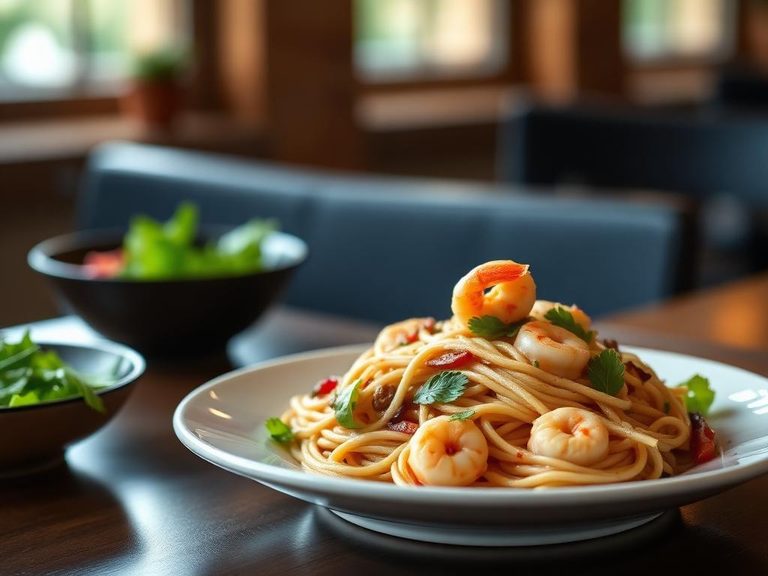
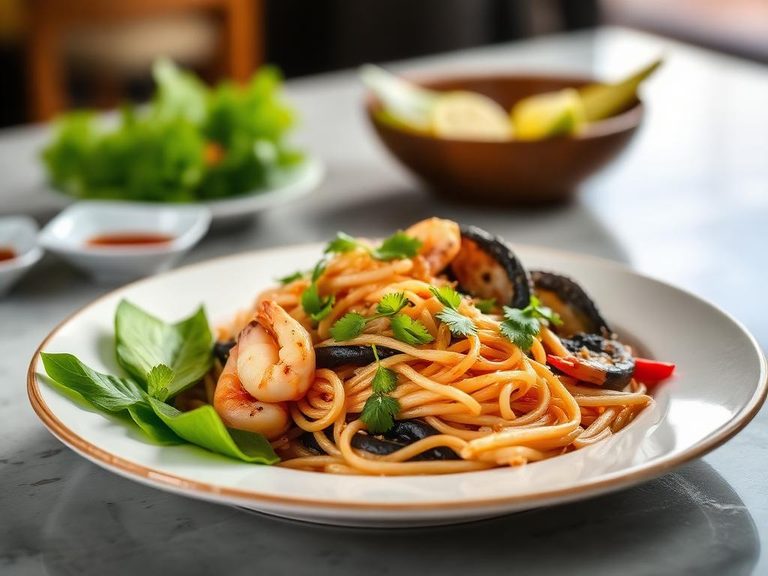
Pad Thai with seafood is a vibrant, stir-fried rice noodle dish from Thailand, tossed with shrimp, squid, and sometimes mussels in a sweet, sour, and savory tamarind-based sauce. Its texture is a delightful contrast of soft, chewy noodles with tender seafood and crunchy peanuts. For a 100g serving, it provides a moderate 147 kcal with a balanced mix of protein (6.84g) and carbohydrates (15.05g).
Calorie split: 18% protein · 40% carbs · 41% fat
↓ Full nutrition💚 Why it's loved
People love it for the iconic 'big four' flavor profile—sweet, sour, salty, and umami—that makes every bite complex and satisfying. It's also celebrated for its versatility, easily adapted with different proteins and vegetables, and its deep roots as a beloved street food staple in Thai culture.
⚠️ Watch-outs & how to enjoy it better
The dish can be high in sodium from fish sauce and added salt, and the sweet sauce may cause a blood-sugar spike for some. Those with shellfish allergies must avoid it entirely. To counteract, pair it with extra vegetables like bean sprouts or broccoli to increase fiber, and use a lighter hand with the sauce or request it on the side.
Key benefits
- Good source of lean protein from seafood.
- Provides energy from complex carbohydrates in rice noodles.
- Contains tamarind, which offers some antioxidants.
- A balanced one-dish meal with protein, carbs, and fats.
- Can be a good source of selenium and zinc from seafood.
🍽️ Popular dishes
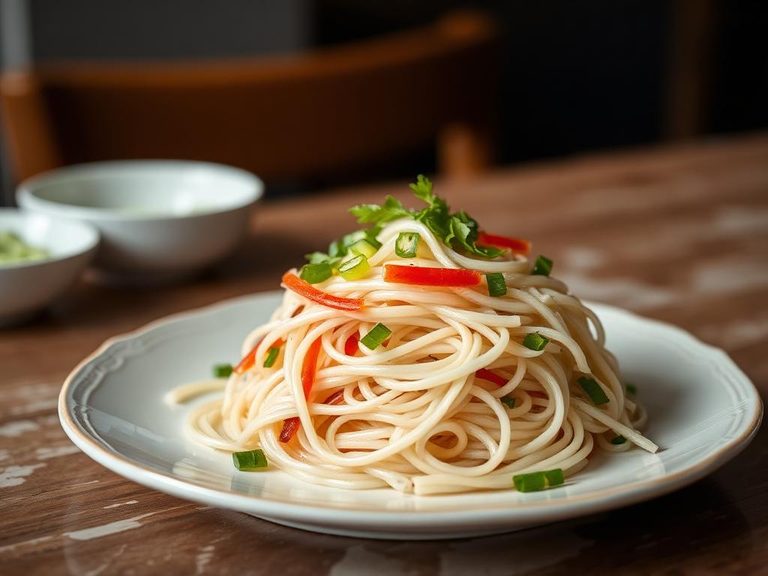
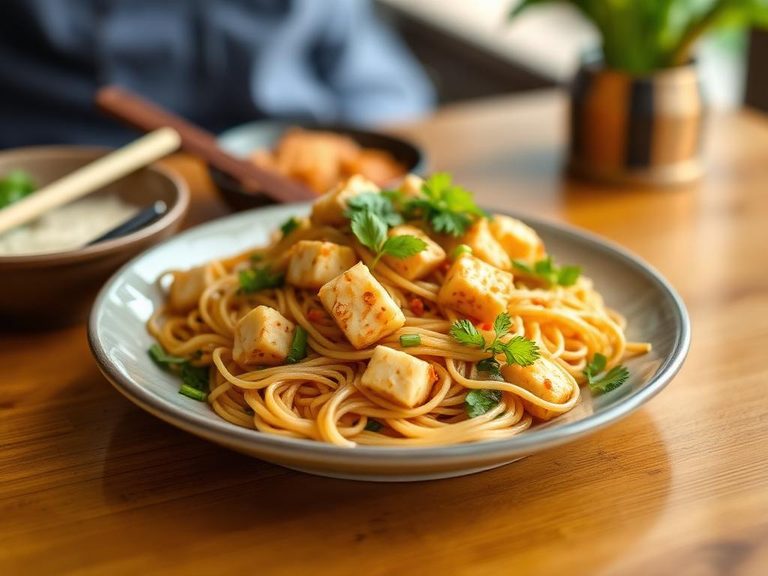
🌍 Where it's eaten
💡 Did you know?
Despite its ancient roots, Pad Thai was popularized as a national dish in the 1930s-40s by Thailand's prime minister as part of a nation-building campaign to promote rice noodle consumption and reduce domestic rice consumption.
Full nutrition (USDA data · scales with serving)
| Water | 69.7 g |
| Energy | 147 kcal |
| Protein | 6.8 g |
| Total lipid (fat) | 6.8 g |
| Carbohydrate, by difference | 15.1 g |
| Fiber, total dietary | 1.2 g |
| Total Sugars | 4.2 g |
| Calcium, Ca | 33.0 mg |
| Iron, Fe | 0.61 mg |
| Magnesium, Mg | 27.0 mg |
| Phosphorus, P | 95.0 mg |
| Potassium, K | 130 mg |
| Sodium, Na | 349 mg |
| Zinc, Zn | 0.65 mg |
| Copper, Cu | 0.12 mg |
| Selenium, Se | 12.1 ug |
| Vitamin C, total ascorbic acid | 4.9 mg |
| Thiamin | 0.04 mg |
| Riboflavin | 0.07 mg |
| Niacin | 1.3 mg |
| Vitamin B-6 | 0.11 mg |
| Folate, total | 26.0 ug |
| Folic acid | 0.00 ug |
| Folate, food | 26.0 ug |
| Folate, DFE | 26.0 ug |
| Choline, total | 47.0 mg |
| Vitamin B-12 | 0.33 ug |
| Vitamin B-12, added | 0.00 ug |
| Vitamin A, RAE | 31.0 ug |
| Retinol | 26.0 ug |
| Carotene, beta | 55.0 ug |
| Carotene, alpha | 1.0 ug |
| Cryptoxanthin, beta | 8.0 ug |
| Lycopene | 0.00 ug |
| Lutein + zeaxanthin | 91.0 ug |
| Vitamin E (alpha-tocopherol) | 1.4 mg |
| Vitamin E, added | 0.00 mg |
| Vitamin D (D2 + D3) | 0.20 ug |
| Vitamin K (phylloquinone) | 20.6 ug |
| Alcohol, ethyl | 0.00 g |
| Caffeine | 0.00 mg |
| Theobromine | 0.00 mg |
Fat & fatty acid profile (per 100g)
| Fatty acids, total saturated | 1.1 g |
| SFA 4:0 | 0.00 g |
| SFA 6:0 | 0.00 g |
| SFA 8:0 | 0.00 g |
| SFA 10:0 | 0.00 g |
| SFA 12:0 | 0.00 g |
| SFA 14:0 | 0.01 g |
| SFA 16:0 | 0.74 g |
| SFA 18:0 | 0.24 g |
| Fatty acids, total monounsaturated | 2.9 g |
| MUFA 16:1 | 0.04 g |
| MUFA 18:1 | 2.8 g |
| MUFA 20:1 | 0.05 g |
| MUFA 22:1 | 0.00 g |
| Fatty acids, total polyunsaturated | 2.1 g |
| PUFA 18:2 | 1.8 g |
| PUFA 18:3 | 0.18 g |
| PUFA 18:4 | 0.00 g |
| PUFA 20:4 | 0.01 g |
| PUFA 20:5 n-3 (EPA) | 0.02 g |
| PUFA 22:5 n-3 (DPA) | 0.00 g |
| PUFA 22:6 n-3 (DHA) | 0.02 g |
| Cholesterol | 60.0 mg |
FAQ
Is Pad Thai with seafood healthy?
It can be a balanced meal offering protein, carbs, and fats, but it's often high in sodium and added sugar. Its healthiness depends heavily on portion size and preparation—homemade versions allow for better control over these elements.
What is the main protein in Pad Thai with seafood?
The most common proteins are shrimp (prawns) and squid. Some versions may also include mussels, crab, or a combination.
Why is Pad Thai sometimes served with a lime wedge and crushed peanuts?
The lime wedge adds a fresh, acidic brightness to cut through the richness, while the crushed peanuts provide a crucial textural crunch and nutty flavor that complements the soft noodles and tender seafood.
Nutrient density (calculated · NRF9.3)
Nutrient Rich Foods index: beneficial nutrients (protein, fiber, vitamins, minerals) minus saturated fat, added sugar & sodium, per 100 kcal.
NRF9.3 index — Fulgoni, Keast & Drewnowski, 2009. Computed from USDA nutrients.
Weight-loss friendliness (composite index)
Energy density 1.47 kcal/g · 19% calories from protein · 1.2 g fiber · 4.2 g sugar per 100 g.
Composite of energy density (Rolls et al., 1999), protein & fiber satiety, minus sugar. A calculated heuristic — ranks satiety-per-calorie, not a clinical measure.
Dietary load (calculated from USDA values)
Potential renal acid load. Positive = acid-forming, negative = alkaline-forming.
Sodium-to-potassium ratio: 2.68 (lower is better — aim for ≤ 1)
Sodium:potassium per WHO potassium guidance. Computed from USDA nutrients.