

Pad Thai, NFS
Common food

Photo: Wikipedia
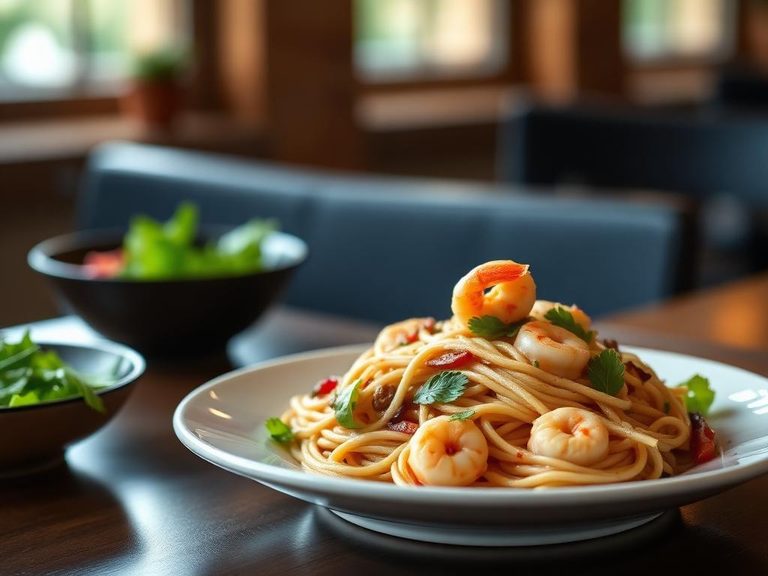
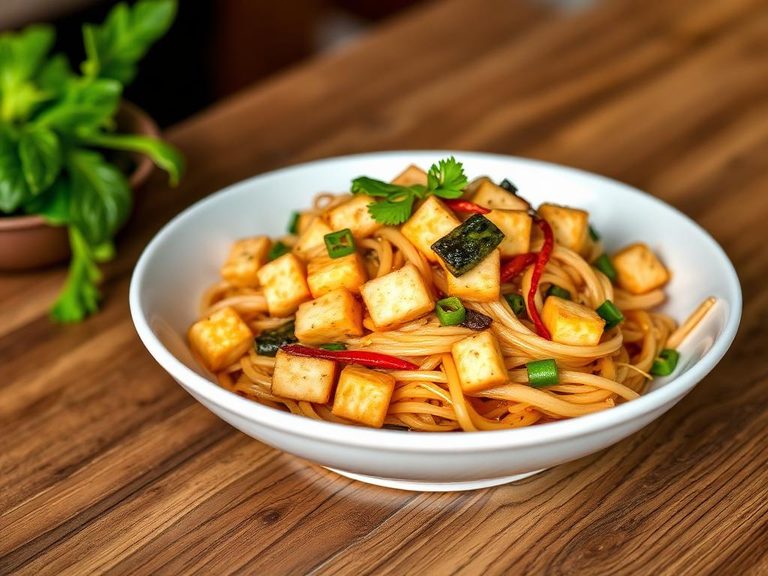
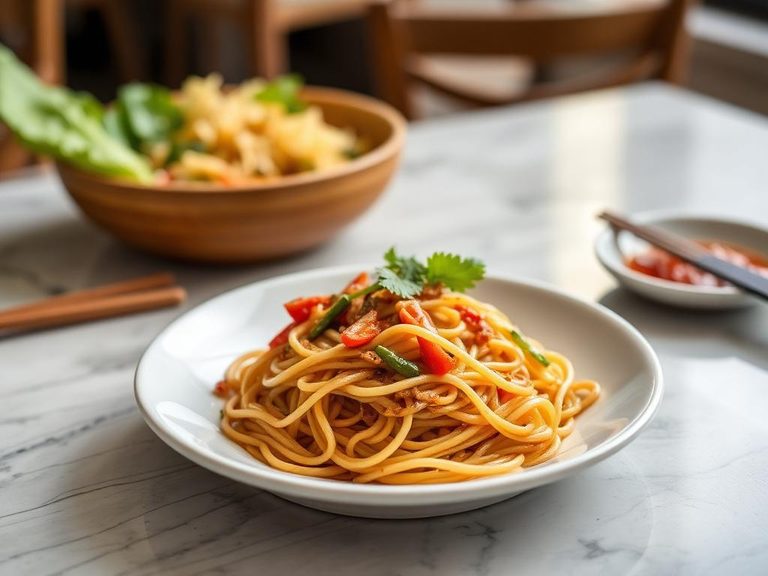
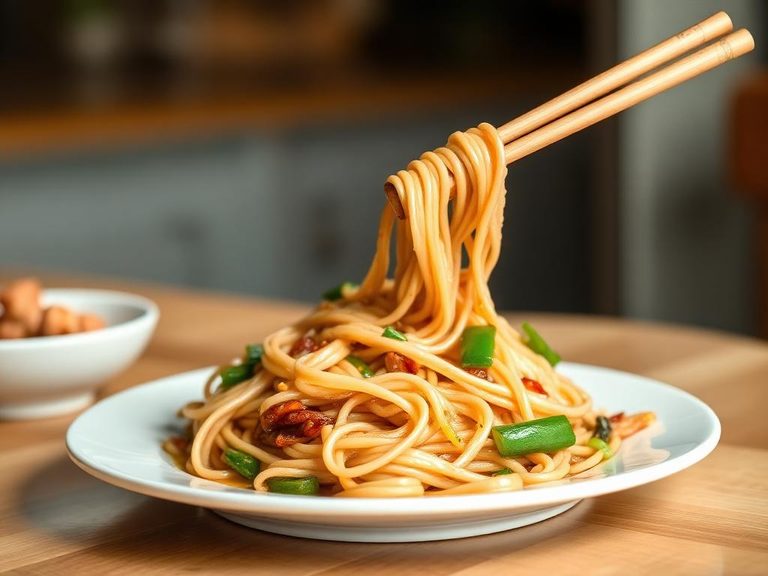
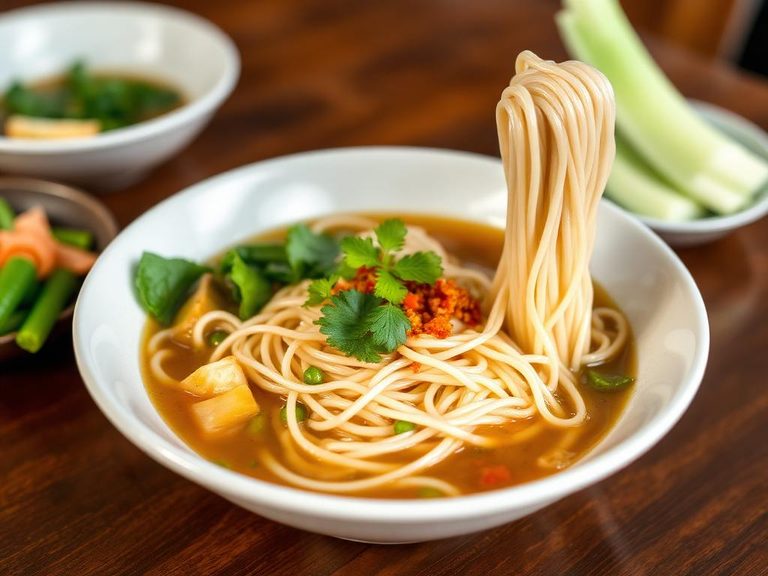
Pad Thai is a stir-fried rice noodle dish from Thailand, characterized by a harmonious balance of sweet, sour, salty, and savory flavors with a satisfying chewy texture from the noodles. Its signature taste comes from a tamarind-based sauce, often complemented by crushed peanuts and fresh lime. Nutritionally, it provides a moderate calorie base with a notable protein content from ingredients like tofu, shrimp, or chicken.
Calorie split: 21% protein · 36% carbs · 43% fat
↓ Full nutrition💚 Why it's loved
People love Pad Thai for its complex, addictive flavor profile that hits every taste bud, and its versatility as a customizable street food or restaurant staple. It's a beloved cultural icon that represents the vibrant, balanced essence of Thai cuisine.
⚠️ Watch-outs & how to enjoy it better
The dish can be high in sodium from fish sauce and added sugar from the tamarind sauce, which may concern those monitoring blood pressure or blood sugar. To mitigate this, request less sauce, add extra vegetables for volume, and pair with a side of steamed greens to increase fiber and slow sugar absorption.
Key benefits
- Good source of plant-based protein when made with tofu
- Provides quick energy from carbohydrate-rich rice noodles
- Contains fiber and micronutrients from bean sprouts and vegetables
- Balanced macronutrient profile supports satiety
🍽️ Popular dishes
🌍 Where it's eaten
💡 Did you know?
Despite its ancient roots, Pad Thai was popularized as a national dish in the 1930s-40s as part of a government-led campaign to reduce rice consumption and foster national identity.
Full nutrition (USDA data · scales with serving)
| Water | 68.6 g |
| Energy | 154 kcal |
| Protein | 8.1 g |
| Total lipid (fat) | 7.5 g |
| Carbohydrate, by difference | 14.4 g |
| Fiber, total dietary | 1.2 g |
| Total Sugars | 4.1 g |
| Calcium, Ca | 21.0 mg |
| Iron, Fe | 0.68 mg |
| Magnesium, Mg | 25.0 mg |
| Phosphorus, P | 91.0 mg |
| Potassium, K | 152 mg |
| Sodium, Na | 384 mg |
| Zinc, Zn | 0.69 mg |
| Copper, Cu | 0.09 mg |
| Selenium, Se | 8.9 ug |
| Vitamin C, total ascorbic acid | 4.8 mg |
| Thiamin | 0.05 mg |
| Riboflavin | 0.10 mg |
| Niacin | 2.2 mg |
| Vitamin B-6 | 0.11 mg |
| Folate, total | 24.0 ug |
| Folic acid | 0.00 ug |
| Folate, food | 24.0 ug |
| Folate, DFE | 24.0 ug |
| Choline, total | 37.8 mg |
| Vitamin B-12 | 0.14 ug |
| Vitamin B-12, added | 0.00 ug |
| Vitamin A, RAE | 18.0 ug |
| Retinol | 14.0 ug |
| Carotene, beta | 53.0 ug |
| Carotene, alpha | 1.0 ug |
| Cryptoxanthin, beta | 8.0 ug |
| Lycopene | 0.00 ug |
| Lutein + zeaxanthin | 88.0 ug |
| Vitamin E (alpha-tocopherol) | 1.1 mg |
| Vitamin E, added | 0.00 mg |
| Vitamin D (D2 + D3) | 0.20 ug |
| Vitamin K (phylloquinone) | 19.9 ug |
| Alcohol, ethyl | 0.00 g |
| Caffeine | 0.00 mg |
| Theobromine | 0.00 mg |
Fat & fatty acid profile (per 100g)
| Fatty acids, total saturated | 1.3 g |
| SFA 4:0 | 0.00 g |
| SFA 6:0 | 0.00 g |
| SFA 8:0 | 0.00 g |
| SFA 10:0 | 0.00 g |
| SFA 12:0 | 0.00 g |
| SFA 14:0 | 0.01 g |
| SFA 16:0 | 0.91 g |
| SFA 18:0 | 0.26 g |
| Fatty acids, total monounsaturated | 3.3 g |
| MUFA 16:1 | 0.11 g |
| MUFA 18:1 | 3.1 g |
| MUFA 20:1 | 0.05 g |
| MUFA 22:1 | 0.00 g |
| Fatty acids, total polyunsaturated | 2.1 g |
| PUFA 18:2 | 1.9 g |
| PUFA 18:3 | 0.18 g |
| PUFA 18:4 | 0.00 g |
| PUFA 20:4 | 0.00 g |
| PUFA 20:5 n-3 (EPA) | 0.00 g |
| PUFA 22:5 n-3 (DPA) | 0.00 g |
| PUFA 22:6 n-3 (DHA) | 0.00 g |
| Cholesterol | 48.0 mg |
FAQ
Is Pad Thai gluten-free?
Authentic Pad Thai is typically gluten-free as it uses rice noodles. However, always check sauces for added soy sauce or thickeners that may contain wheat.
Why is my homemade Pad Thai not sticky or clumpy?
The key is to use room-temperature, pliable rice noodles (soaked, not boiled) and to stir-fry quickly over very high heat in a single layer to prevent steaming.
What makes the sauce taste authentic?
The balance of tamarind paste (sour), fish sauce (salty/umami), and palm sugar (sweet) is crucial. Many authentic recipes also include a touch of vinegar or lime juice for brightness.
Nutrient density (calculated · NRF9.3)
Nutrient Rich Foods index: beneficial nutrients (protein, fiber, vitamins, minerals) minus saturated fat, added sugar & sodium, per 100 kcal.
NRF9.3 index — Fulgoni, Keast & Drewnowski, 2009. Computed from USDA nutrients.
Weight-loss friendliness (composite index)
Energy density 1.54 kcal/g · 21% calories from protein · 1.2 g fiber · 4.1 g sugar per 100 g.
Composite of energy density (Rolls et al., 1999), protein & fiber satiety, minus sugar. A calculated heuristic — ranks satiety-per-calorie, not a clinical measure.
Dietary load (calculated from USDA values)
Potential renal acid load. Positive = acid-forming, negative = alkaline-forming.
Sodium-to-potassium ratio: 2.53 (lower is better — aim for ≤ 1)
Sodium:potassium per WHO potassium guidance. Computed from USDA nutrients.