

Olive tapenade
Common food

Photo: Wikipedia
Olive tapenade is a rich, savory spread made from finely chopped or puréed olives, capers, and olive oil. It boasts a bold, briny, and slightly salty flavor with a coarse, spreadable texture. Nutritionally, it is a high-fat, low-protein condiment, with nearly all its calories coming from heart-healthy monounsaturated fats.
Calorie split: 1% protein · 6% carbs · 93% fat
↓ Full nutrition💚 Why it's loved
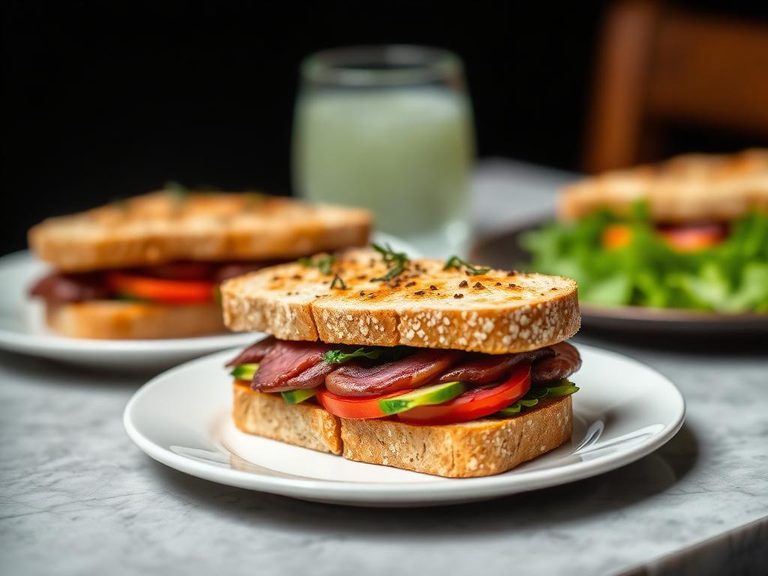
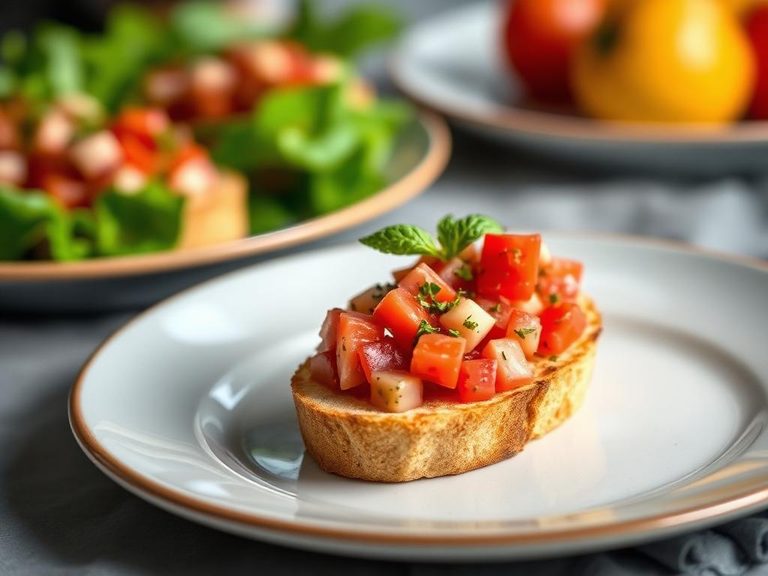
People love its intense, umami-packed flavor that instantly elevates simple foods like bread, crackers, or grilled vegetables. Its versatility as a dip, spread, or sauce makes it a staple in Mediterranean cuisine and a favorite for entertaining.
⚠️ Watch-outs & how to enjoy it better
Its high sodium and fat content can be a concern for those monitoring salt intake or calorie consumption. To counteract this, use it sparingly as a flavor accent rather than a main dish, and pair it with fresh, crunchy vegetables or whole-grain crackers to add volume and fiber.
Key benefits
- Excellent source of monounsaturated fats from olives and olive oil.
- Contains antioxidants like vitamin E and polyphenols from olives.
- Provides dietary fiber, aiding in digestive health.
- A flavorful, low-sugar way to add depth to dishes.
🍽️ Popular dishes
🌍 Where it's eaten
💡 Did you know?
The word 'tapenade' comes from the Provençal word for capers, 'tapenas,' highlighting that capers are the traditional key ingredient alongside olives.
Full nutrition (USDA data · scales with serving)
| Water | 62.6 g |
| Energy | 282 kcal |
| Protein | 0.73 g |
| Total lipid (fat) | 30.1 g |
| Carbohydrate, by difference | 4.2 g |
| Fiber, total dietary | 1.8 g |
| Total Sugars | 0.16 g |
| Calcium, Ca | 60.0 mg |
| Iron, Fe | 3.4 mg |
| Magnesium, Mg | 5.0 mg |
| Phosphorus, P | 3.0 mg |
| Potassium, K | 17.0 mg |
| Sodium, Na | 835 mg |
| Zinc, Zn | 0.12 mg |
| Copper, Cu | 0.16 mg |
| Selenium, Se | 0.70 ug |
| Vitamin C, total ascorbic acid | 0.40 mg |
| Thiamin | 0.01 mg |
| Riboflavin | 0.00 mg |
| Niacin | 0.09 mg |
| Vitamin B-6 | 0.01 mg |
| Folate, total | 1.0 ug |
| Folic acid | 0.00 ug |
| Folate, food | 1.0 ug |
| Folate, DFE | 1.0 ug |
| Choline, total | 9.5 mg |
| Vitamin B-12 | 0.00 ug |
| Vitamin B-12, added | 0.00 ug |
| Vitamin A, RAE | 14.0 ug |
| Retinol | 0.00 ug |
| Carotene, beta | 168 ug |
| Carotene, alpha | 0.00 ug |
| Cryptoxanthin, beta | 3.0 ug |
| Lycopene | 0.00 ug |
| Lutein + zeaxanthin | 408 ug |
| Vitamin E (alpha-tocopherol) | 6.1 mg |
| Vitamin E, added | 0.00 mg |
| Vitamin D (D2 + D3) | 0.00 ug |
| Vitamin K (phylloquinone) | 6.3 ug |
| Alcohol, ethyl | 0.00 g |
| Caffeine | 0.00 mg |
| Theobromine | 0.00 mg |
Fat & fatty acid profile (per 100g)
| Fatty acids, total saturated | 4.9 g |
| SFA 4:0 | 0.00 g |
| SFA 6:0 | 0.00 g |
| SFA 8:0 | 0.00 g |
| SFA 10:0 | 0.00 g |
| SFA 12:0 | 0.00 g |
| SFA 14:0 | 0.00 g |
| SFA 16:0 | 3.8 g |
| SFA 18:0 | 0.78 g |
| Fatty acids, total monounsaturated | 20.9 g |
| MUFA 16:1 | 0.33 g |
| MUFA 18:1 | 20.5 g |
| MUFA 20:1 | 0.09 g |
| MUFA 22:1 | 0.00 g |
| Fatty acids, total polyunsaturated | 2.6 g |
| PUFA 18:2 | 2.4 g |
| PUFA 18:3 | 0.15 g |
| PUFA 18:4 | 0.00 g |
| PUFA 20:4 | 0.00 g |
| PUFA 20:5 n-3 (EPA) | 0.00 g |
| PUFA 22:5 n-3 (DPA) | 0.00 g |
| PUFA 22:6 n-3 (DHA) | 0.00 g |
| Cholesterol | 0.00 mg |
FAQ
Is olive tapenade vegan?
Yes, traditional olive tapenade made from olives, capers, olive oil, and herbs is vegan. Always check labels for any added cheese or anchovies in commercial versions.
How long does homemade tapenade last?
Stored in an airtight container in the refrigerator, homemade tapenade will keep for about 1-2 weeks. A layer of olive oil on top can help preserve it longer.
Can I make tapenade without capers?
Yes, you can omit capers for a milder flavor. Increase the olives or add a small amount of lemon juice to compensate for the briny, tangy note.
Nutrient density (calculated · NRF9.3)
Nutrient Rich Foods index: beneficial nutrients (protein, fiber, vitamins, minerals) minus saturated fat, added sugar & sodium, per 100 kcal.
NRF9.3 index — Fulgoni, Keast & Drewnowski, 2009. Computed from USDA nutrients.
Weight-loss friendliness (composite index)
Energy density 2.82 kcal/g · 1% calories from protein · 1.8 g fiber · 0.2 g sugar per 100 g.
Composite of energy density (Rolls et al., 1999), protein & fiber satiety, minus sugar. A calculated heuristic — ranks satiety-per-calorie, not a clinical measure.
Dietary load (calculated from USDA values)
Potential renal acid load. Positive = acid-forming, negative = alkaline-forming.
Sodium-to-potassium ratio: 49.12 (lower is better — aim for ≤ 1)
Sodium:potassium per WHO potassium guidance. Computed from USDA nutrients.