

Meat with tomato-based sauce
Common food

Photo: Wikipedia
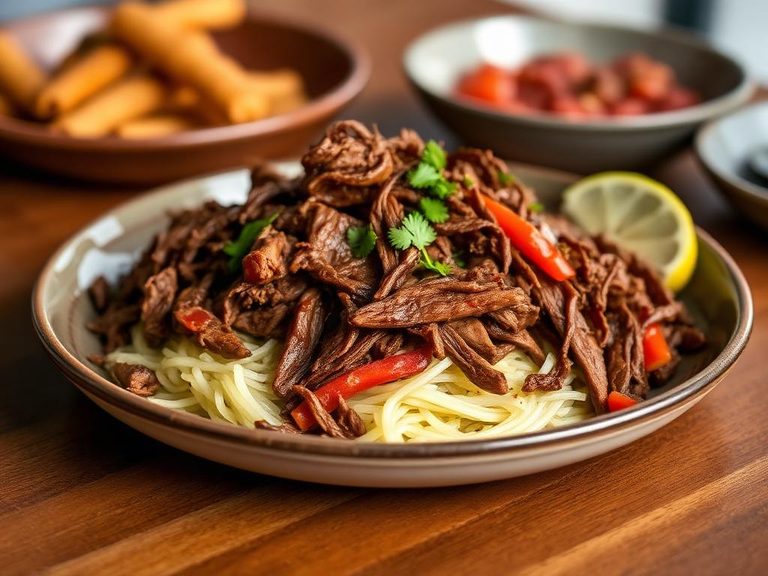
This is a savory dish of tender meat—often beef, pork, or chicken—simmered in a rich, tangy tomato sauce that clings to every bite. The texture is typically tender with a slight chew, while the sauce offers a bright, acidic contrast to the savory protein. Nutritionally, it's a powerhouse of protein with minimal carbs, making it a staple for high-protein, low-carb diets.
Calorie split: 58% protein · 4% carbs · 38% fat
↓ Full nutrition💚 Why it's loved
People adore it for its deep, comforting umami flavor that's both hearty and bright, and its incredible versatility—it works in pasta, rice bowls, tacos, or over polenta. It's a global comfort food, evoking home-cooked meals from Italian Sunday dinners to Latin American stews.
⚠️ Watch-outs & how to enjoy it better
The dish can be high in sodium depending on the sauce and seasoning, which may concern those monitoring blood pressure. To counteract this, use low-sodium broth or canned tomatoes and add herbs like basil or oregano for flavor. If the meat is fatty, trimming excess fat or choosing lean cuts like sirloin can reduce saturated fat intake.
Key benefits
- Excellent source of high-quality protein for muscle repair
- Naturally low in carbohydrates and sugars
- Contains lycopene, an antioxidant from cooked tomatoes
- Provides iron and B vitamins from the meat
- Satiating meal that supports blood sugar stability
🍽️ Popular dishes
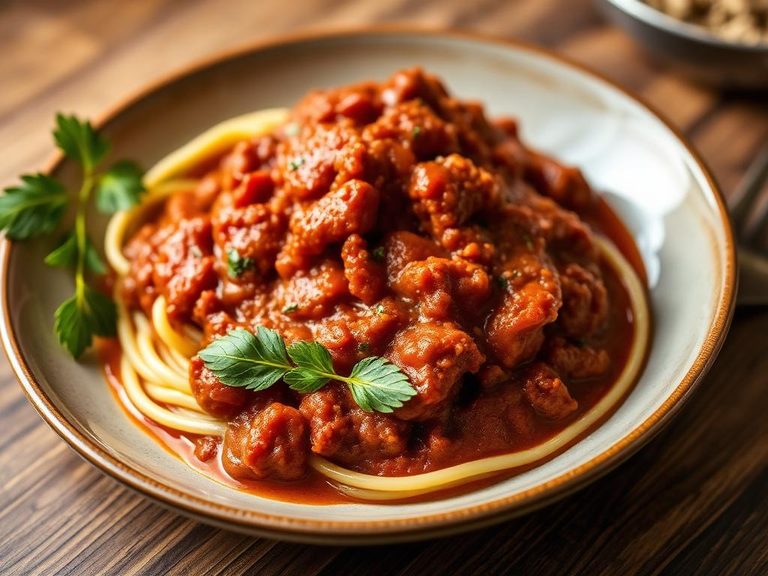
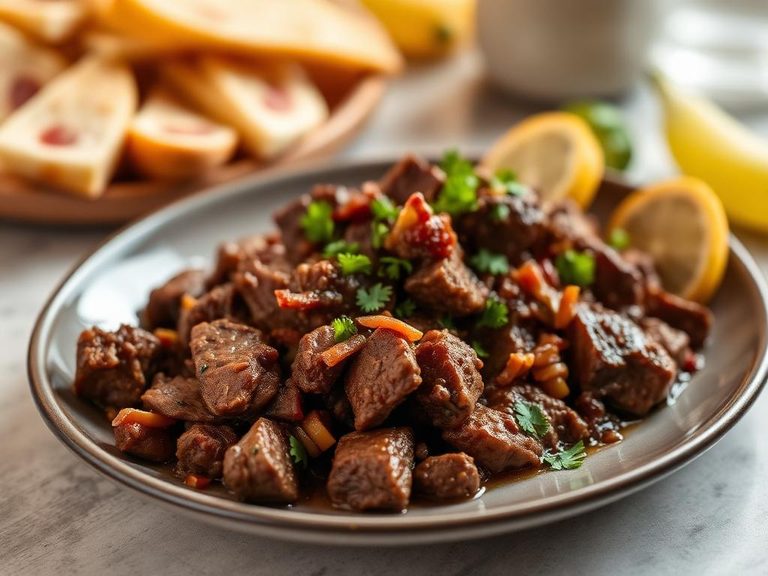
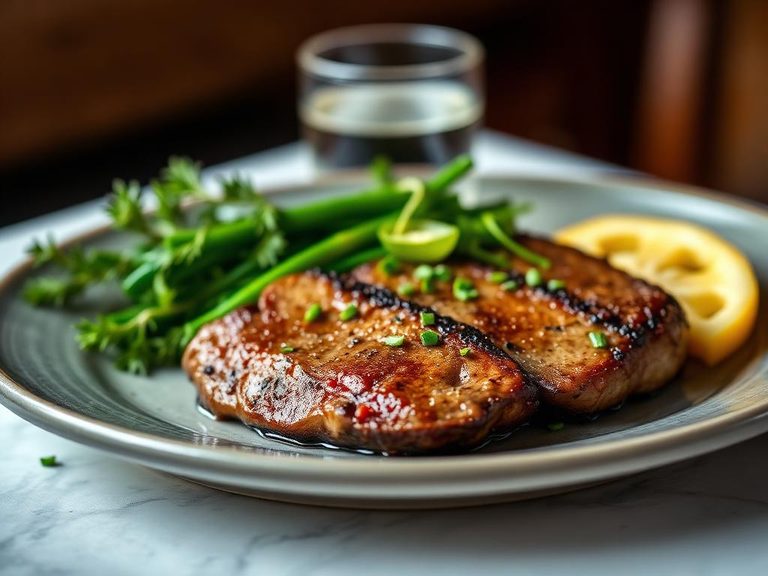

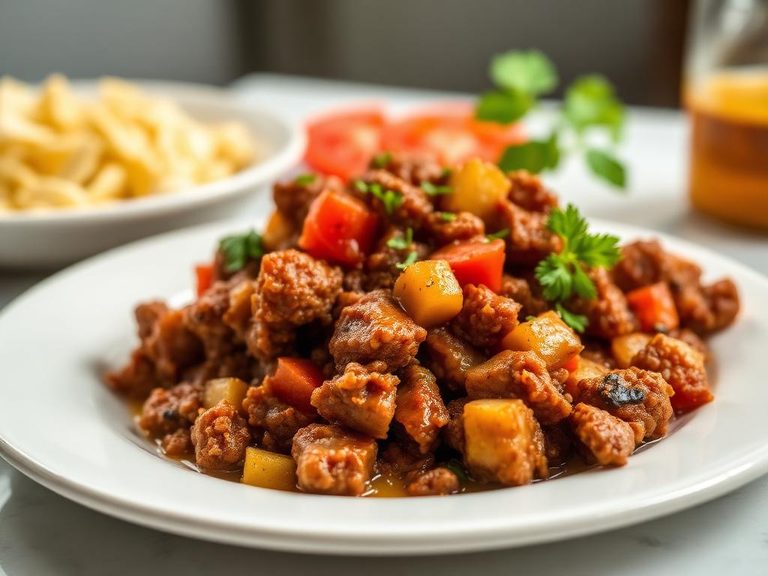
🌍 Where it's eaten
💡 Did you know?
The combination of meat and tomato sauce became widespread in Europe only after tomatoes, native to the Americas, were introduced in the 16th century and initially feared as poisonous.
Full nutrition (USDA data · scales with serving)
| Water | 68.8 g |
| Energy | 149 kcal |
| Protein | 21.7 g |
| Total lipid (fat) | 6.4 g |
| Carbohydrate, by difference | 1.6 g |
| Fiber, total dietary | 0.40 g |
| Total Sugars | 1.1 g |
| Calcium, Ca | 9.0 mg |
| Iron, Fe | 2.0 mg |
| Magnesium, Mg | 18.0 mg |
| Phosphorus, P | 143 mg |
| Potassium, K | 264 mg |
| Sodium, Na | 355 mg |
| Zinc, Zn | 3.7 mg |
| Copper, Cu | 0.09 mg |
| Selenium, Se | 22.3 ug |
| Vitamin C, total ascorbic acid | 2.0 mg |
| Thiamin | 0.06 mg |
| Riboflavin | 0.13 mg |
| Niacin | 4.0 mg |
| Vitamin B-6 | 0.31 mg |
| Folate, total | 9.0 ug |
| Folic acid | 0.00 ug |
| Folate, food | 9.0 ug |
| Folate, DFE | 9.0 ug |
| Choline, total | 84.0 mg |
| Vitamin B-12 | 1.2 ug |
| Vitamin B-12, added | 0.00 ug |
| Vitamin A, RAE | 6.0 ug |
| Retinol | 0.00 ug |
| Carotene, beta | 73.0 ug |
| Carotene, alpha | 0.00 ug |
| Cryptoxanthin, beta | 1.0 ug |
| Lycopene | 3941 ug |
| Lutein + zeaxanthin | 7.0 ug |
| Vitamin E (alpha-tocopherol) | 0.73 mg |
| Vitamin E, added | 0.00 mg |
| Vitamin D (D2 + D3) | 0.10 ug |
| Vitamin K (phylloquinone) | 1.9 ug |
| Alcohol, ethyl | 0.00 g |
| Caffeine | 0.00 mg |
| Theobromine | 0.00 mg |
Fat & fatty acid profile (per 100g)
| Fatty acids, total saturated | 2.4 g |
| SFA 4:0 | 0.00 g |
| SFA 6:0 | 0.00 g |
| SFA 8:0 | 0.00 g |
| SFA 10:0 | 0.01 g |
| SFA 12:0 | 0.01 g |
| SFA 14:0 | 0.19 g |
| SFA 16:0 | 1.5 g |
| SFA 18:0 | 0.69 g |
| Fatty acids, total monounsaturated | 2.7 g |
| MUFA 16:1 | 0.27 g |
| MUFA 18:1 | 2.4 g |
| MUFA 20:1 | 0.01 g |
| MUFA 22:1 | 0.00 g |
| Fatty acids, total polyunsaturated | 0.29 g |
| PUFA 18:2 | 0.20 g |
| PUFA 18:3 | 0.06 g |
| PUFA 18:4 | 0.00 g |
| PUFA 20:4 | 0.01 g |
| PUFA 20:5 n-3 (EPA) | 0.00 g |
| PUFA 22:5 n-3 (DPA) | 0.01 g |
| PUFA 22:6 n-3 (DHA) | 0.00 g |
| Cholesterol | 63.0 mg |
FAQ
Is this dish keto-friendly?
Yes, it's very low in carbs (under 2g per 100g), making it suitable for ketogenic diets when served without high-carb sides like pasta or rice.
Can I use ground meat instead of chunks?
Absolutely. Ground beef, turkey, or pork works well and cooks faster, though the texture will be different—more crumbly than chunky.
How do I prevent the sauce from being too acidic?
Add a pinch of sugar or a diced carrot while simmering to balance the tomato's acidity, or use a splash of cream or butter at the end.
Nutrient density (calculated · NRF9.3)
Nutrient Rich Foods index: beneficial nutrients (protein, fiber, vitamins, minerals) minus saturated fat, added sugar & sodium, per 100 kcal.
NRF9.3 index — Fulgoni, Keast & Drewnowski, 2009. Computed from USDA nutrients.
Weight-loss friendliness (composite index)
Energy density 1.49 kcal/g · 58% calories from protein · 0.4 g fiber · 1.1 g sugar per 100 g.
Composite of energy density (Rolls et al., 1999), protein & fiber satiety, minus sugar. A calculated heuristic — ranks satiety-per-calorie, not a clinical measure.
Dietary load (calculated from USDA values)
Potential renal acid load. Positive = acid-forming, negative = alkaline-forming.
Sodium-to-potassium ratio: 1.34 (lower is better — aim for ≤ 1)
Sodium:potassium per WHO potassium guidance. Computed from USDA nutrients.