

Mayonnaise-type salad dressing
Common food
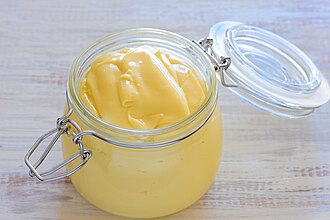
Photo: Wikipedia
Mayonnaise-type salad dressing is a creamy, emulsified blend that coats ingredients with a rich, tangy, and slightly sweet flavor. Its smooth, velvety texture comes from a base of oil, egg yolk, and vinegar or lemon juice, often with added sugar and seasonings. Nutritionally, it's a calorie-dense condiment, primarily providing energy from fat.
Calorie split: 1% protein · 23% carbs · 76% fat
↓ Full nutrition💚 Why it's loved
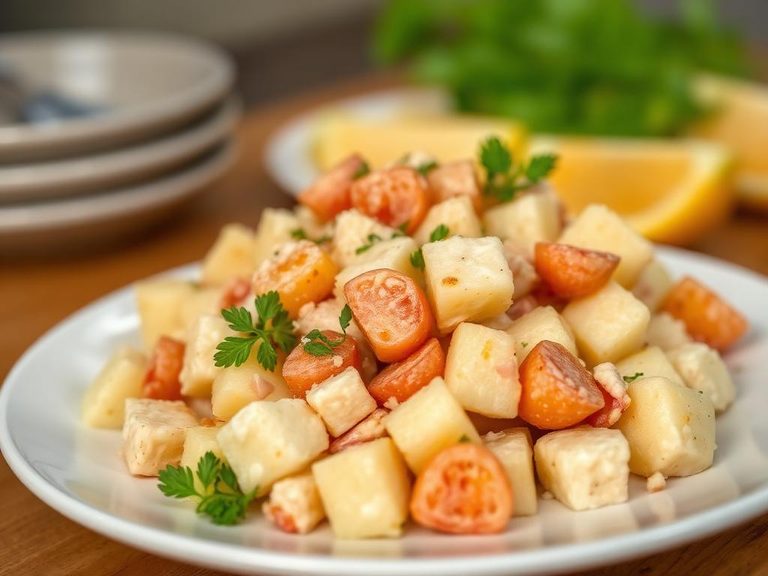
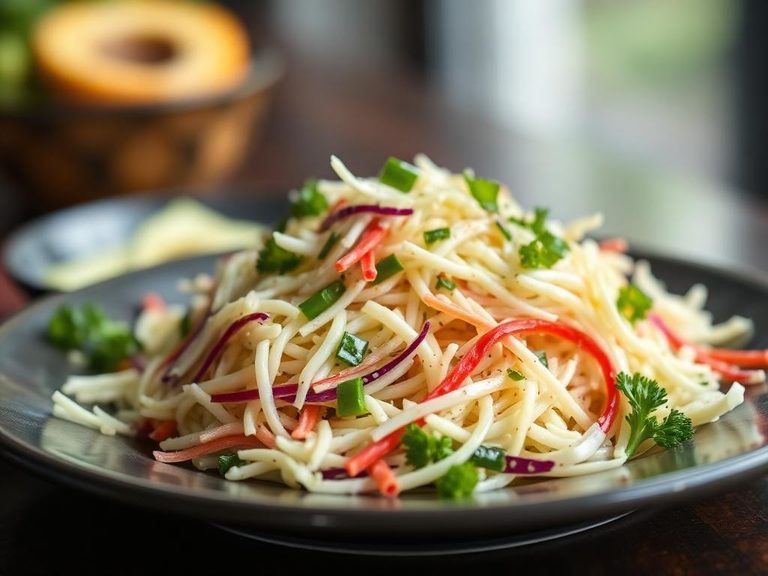
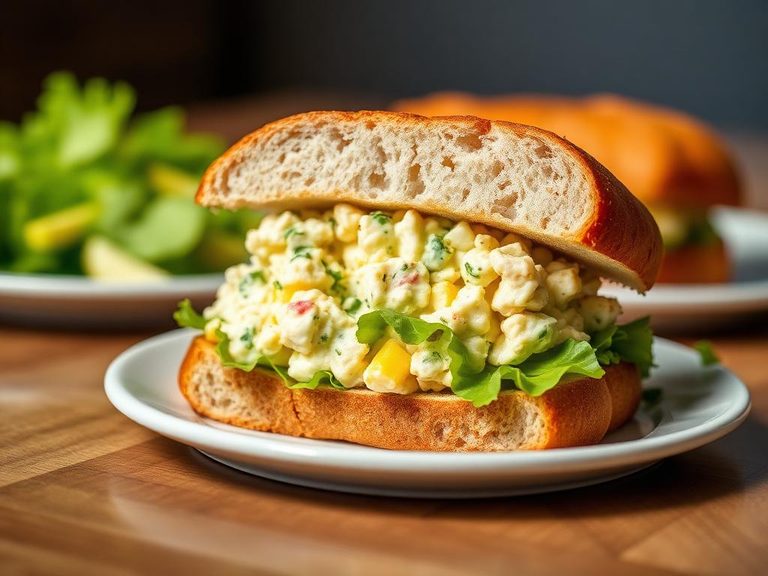
People love it for its ability to transform simple ingredients into a cohesive, satisfying dish, offering a creamy counterpoint to crisp vegetables and savory proteins. Its versatility makes it a staple in countless cuisines, from classic American potato salad to Japanese ramen toppings.
⚠️ Watch-outs & how to enjoy it better
Its high fat and calorie density can be a concern for those managing weight or heart health, and the added sugar can contribute to blood sugar spikes. Those with egg allergies must avoid traditional versions. To counteract, use it sparingly as a flavor enhancer rather than a main component, and pair it with high-fiber vegetables or lean protein to slow digestion and improve satiety.
Key benefits
- Provides a quick source of dietary fat for energy.
- Enhances the palatability and enjoyment of vegetables and lean proteins.
- Acts as a binding agent in salads and sandwiches.
- Contains small amounts of fat-soluble vitamins from its oil and egg yolk base.
🍽️ Popular dishes
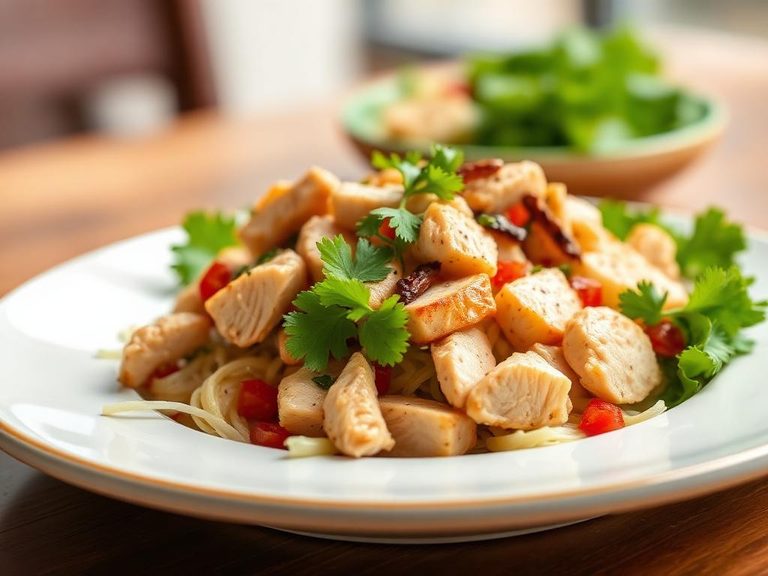
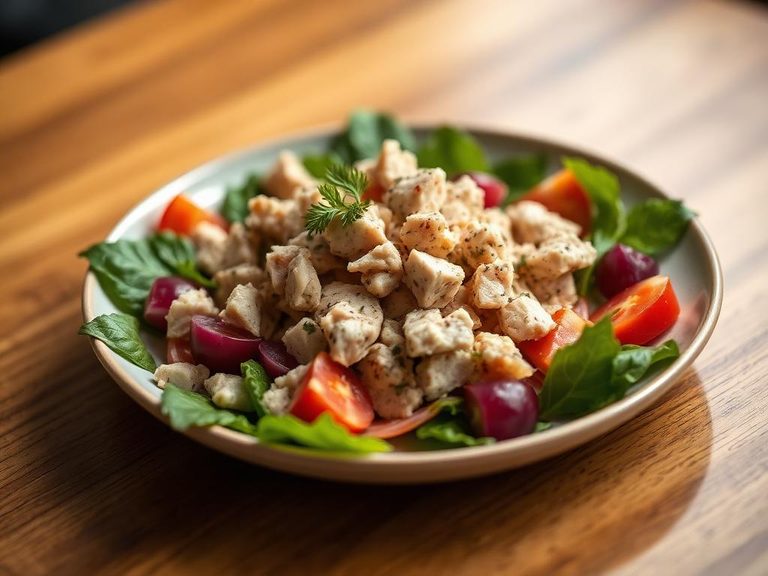
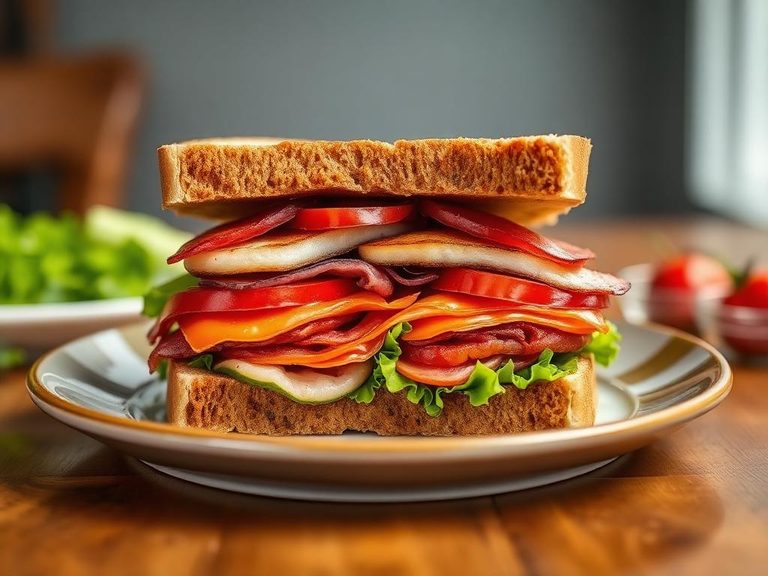
🌍 Where it's eaten
💡 Did you know?
The modern emulsified mayonnaise we know today was likely perfected in the mid-19th century, but its precursors, like the Roman sauce 'moretum,' also involved pounding oil and other ingredients into a creamy paste.
Full nutrition (USDA data · scales with serving)
| Water | 61.2 g |
| Energy | 250 kcal |
| Protein | 0.65 g |
| Total lipid (fat) | 21.6 g |
| Carbohydrate, by difference | 14.8 g |
| Fiber, total dietary | 0.00 g |
| Total Sugars | 10.0 g |
| Calcium, Ca | 5.0 mg |
| Iron, Fe | 0.12 mg |
| Magnesium, Mg | 2.0 mg |
| Phosphorus, P | 13.0 mg |
| Potassium, K | 36.0 mg |
| Sodium, Na | 653 mg |
| Zinc, Zn | 0.07 mg |
| Copper, Cu | 0.01 mg |
| Selenium, Se | 0.40 ug |
| Vitamin C, total ascorbic acid | 0.00 mg |
| Thiamin | 0.01 mg |
| Riboflavin | 0.03 mg |
| Niacin | 0.00 mg |
| Vitamin B-6 | 0.01 mg |
| Folate, total | 6.0 ug |
| Folic acid | 0.00 ug |
| Folate, food | 6.0 ug |
| Folate, DFE | 6.0 ug |
| Choline, total | 14.6 mg |
| Vitamin B-12 | 0.04 ug |
| Vitamin B-12, added | 0.00 ug |
| Vitamin A, RAE | 5.0 ug |
| Retinol | 5.0 ug |
| Carotene, beta | 6.0 ug |
| Carotene, alpha | 0.00 ug |
| Cryptoxanthin, beta | 4.0 ug |
| Lycopene | 0.00 ug |
| Lutein + zeaxanthin | 28.0 ug |
| Vitamin E (alpha-tocopherol) | 1.6 mg |
| Vitamin E, added | 0.00 mg |
| Vitamin D (D2 + D3) | 0.00 ug |
| Vitamin K (phylloquinone) | 42.2 ug |
| Alcohol, ethyl | 0.00 g |
| Caffeine | 0.00 mg |
| Theobromine | 0.00 mg |
Fat & fatty acid profile (per 100g)
| Fatty acids, total saturated | 3.4 g |
| SFA 4:0 | 0.00 g |
| SFA 6:0 | 0.00 g |
| SFA 8:0 | 0.00 g |
| SFA 10:0 | 0.00 g |
| SFA 12:0 | 0.00 g |
| SFA 14:0 | 0.02 g |
| SFA 16:0 | 2.2 g |
| SFA 18:0 | 0.99 g |
| Fatty acids, total monounsaturated | 5.1 g |
| MUFA 16:1 | 0.03 g |
| MUFA 18:1 | 4.9 g |
| MUFA 20:1 | 0.07 g |
| MUFA 22:1 | 0.03 g |
| Fatty acids, total polyunsaturated | 12.2 g |
| PUFA 18:2 | 10.7 g |
| PUFA 18:3 | 1.4 g |
| PUFA 18:4 | 0.00 g |
| PUFA 20:4 | 0.02 g |
| PUFA 20:5 n-3 (EPA) | 0.00 g |
| PUFA 22:5 n-3 (DPA) | 0.00 g |
| PUFA 22:6 n-3 (DHA) | 0.00 g |
| Cholesterol | 19.0 mg |
FAQ
What's the difference between mayonnaise and mayonnaise-type salad dressing?
True mayonnaise is defined by law (e.g., in the US) to contain at least 65% oil and must be made with egg yolk. 'Mayonnaise-type salad dressing' often has a lower oil content, may include other ingredients like water, starch, or different emulsifiers, and can have added sugar and thickeners for a more pourable consistency.
Is it high in cholesterol?
Yes, traditional versions contain egg yolks, which are a source of dietary cholesterol. However, for most people, the saturated and trans fats in the dressing have a greater impact on blood cholesterol levels than the cholesterol in the food itself.
Can I use it for cooking or just as a topping?
It's primarily a condiment or salad ingredient. While it can be used in some baked goods for moisture or as a base for creamy sauces, high-heat cooking like frying can cause it to break and separate due to its emulsion structure.
Nutrient density (calculated · NRF9.3)
Nutrient Rich Foods index: beneficial nutrients (protein, fiber, vitamins, minerals) minus saturated fat, added sugar & sodium, per 100 kcal.
NRF9.3 index — Fulgoni, Keast & Drewnowski, 2009. Computed from USDA nutrients.
Weight-loss friendliness (composite index)
Energy density 2.50 kcal/g · 1% calories from protein · 0.0 g fiber · 10.0 g sugar per 100 g.
Composite of energy density (Rolls et al., 1999), protein & fiber satiety, minus sugar. A calculated heuristic — ranks satiety-per-calorie, not a clinical measure.
Dietary load (calculated from USDA values)
Potential renal acid load. Positive = acid-forming, negative = alkaline-forming.
Sodium-to-potassium ratio: 18.14 (lower is better — aim for ≤ 1)
Sodium:potassium per WHO potassium guidance. Computed from USDA nutrients.