

Macaroni or noodles with cheese, made from reduced fat packaged mix, unprepared
Whole food · Meals, Entrees, and Side Dishes

Photo: Wikipedia
This is the uncooked, dry pasta and powdered cheese mix from a classic boxed kit, a staple of quick American comfort food. The pasta is typically small, curved macaroni, and the cheese sauce is a smooth, salty, and intensely savory orange powder. Nutritionally, it's a calorie-dense, carb-heavy base that provides a quick energy boost.
Calorie split: 18% protein · 70% carbs · 12% fat
↓ Full nutrition💚 Why it's loved
People love it for its unmatched convenience and the deeply nostalgic, salty, umami-rich flavor of its processed cheese sauce. Its mild taste and soft texture make it a universally palatable comfort food, especially for children.
⚠️ Watch-outs & how to enjoy it better
The mix is typically high in sodium and refined carbohydrates, which can contribute to blood sugar spikes and may not be suitable for low-sodium or low-glycemic diets. To counteract this, pair it with a side of steamed broccoli or a simple green salad to add fiber, and consider using only half the cheese powder to reduce sodium intake.
Key benefits
- Provides a quick, convenient source of calories and carbohydrates.
- Offers a modest amount of protein from the enriched wheat pasta.
- Fortified with iron and B vitamins like folate from the pasta.
- Shelf-stable and requires minimal preparation.
- A familiar, nostalgic comfort food for many.
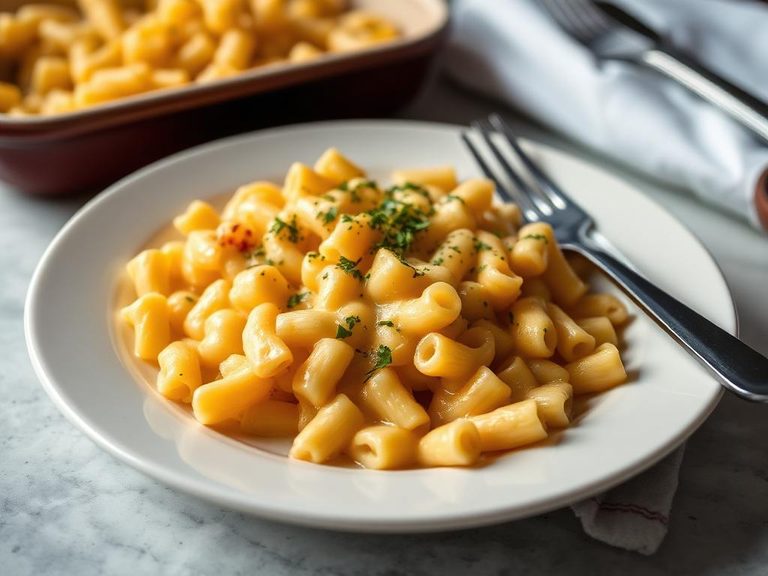
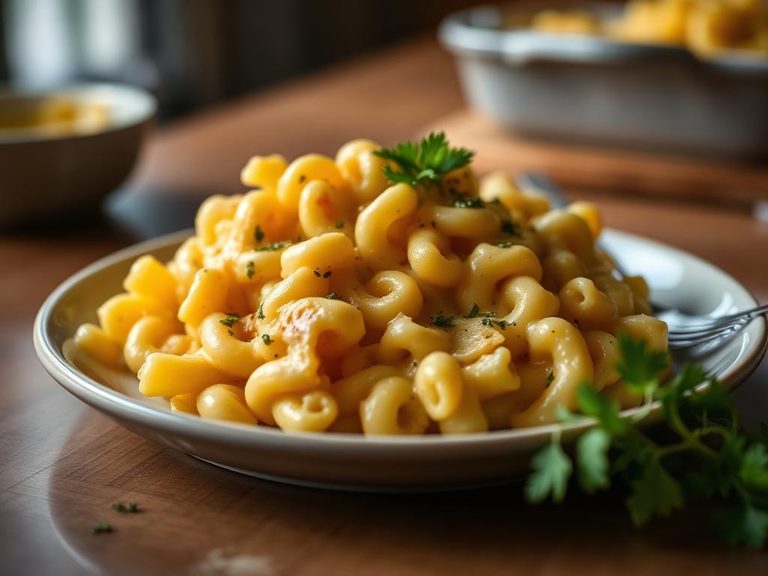
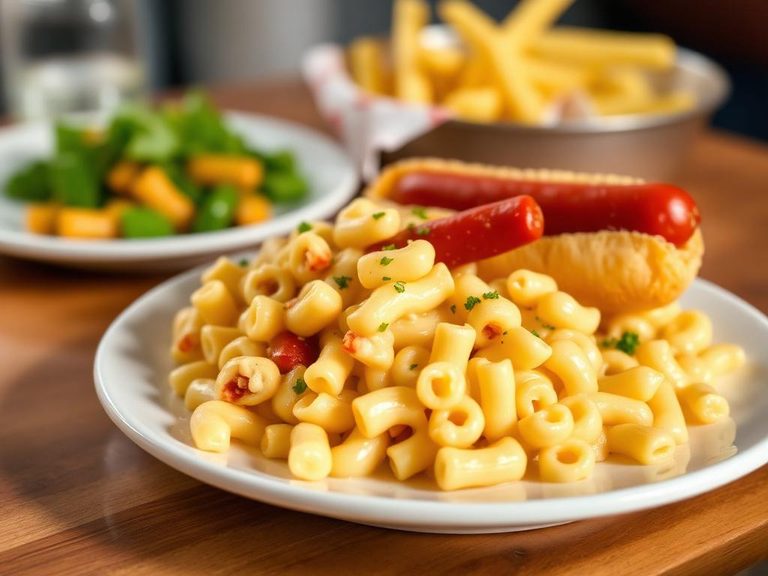
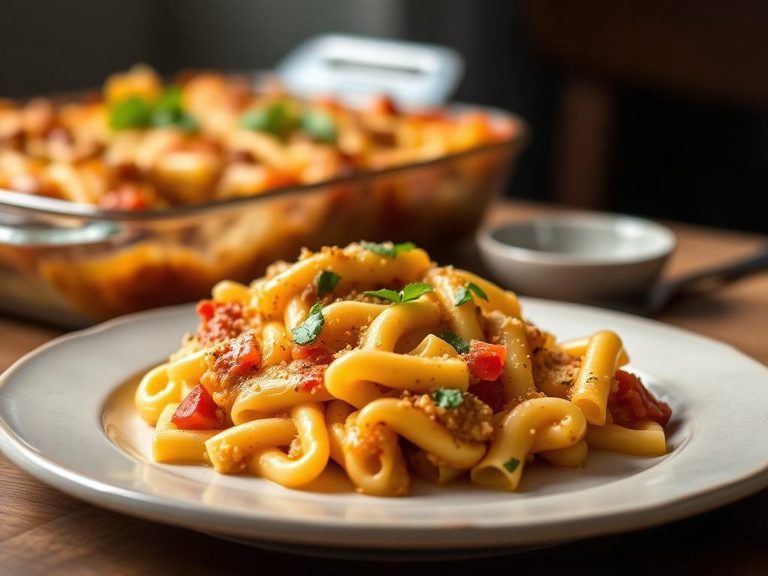
🍽️ Popular dishes
🌍 Where it's eaten
💡 Did you know?
The first commercially successful boxed macaroni and cheese was introduced by Kraft in 1937, during the Great Depression, and its sales doubled within two years due to its low cost and long shelf life.
Full nutrition (USDA data · scales with serving)
| Water | 27.7 g |
| Energy | 297 kcal |
| Energy | 1242 kj |
| Protein | 13.1 g |
| Total lipid (fat) | 4.0 g |
| Ash | 3.1 g |
| Carbohydrate, by difference | 52.1 g |
| Fiber, total dietary | 2.0 g |
| Total Sugars | 5.0 g |
| Calcium, Ca | 202 mg |
| Iron, Fe | 1.8 mg |
| Magnesium, Mg | 35.0 mg |
| Phosphorus, P | 403 mg |
| Potassium, K | 203 mg |
| Sodium, Na | 867 mg |
| Zinc, Zn | 1.3 mg |
| Copper, Cu | 0.17 mg |
| Selenium, Se | 38.1 ug |
| Vitamin C, total ascorbic acid | 0.00 mg |
| Thiamin | 0.54 mg |
| Riboflavin | 0.38 mg |
| Niacin | 4.1 mg |
| Vitamin B-6 | 0.12 mg |
| Folate, total | 138 ug |
| Folic acid | 123 ug |
| Folate, food | 15.0 ug |
| Folate, DFE | 224 ug |
| Choline, total | 25.4 mg |
| Vitamin B-12 | 0.40 ug |
| Vitamin B-12, added | 0.00 ug |
| Vitamin A, RAE | 30.0 ug |
| Retinol | 30.0 ug |
| Carotene, beta | 5.0 ug |
| Carotene, alpha | 0.00 ug |
| Cryptoxanthin, beta | 1.0 ug |
| Vitamin A, IU | 101 iu |
| Lycopene | 0.00 ug |
| Lutein + zeaxanthin | 7.0 ug |
| Vitamin E (alpha-tocopherol) | 0.56 mg |
| Vitamin E, added | 0.00 mg |
| Vitamin D (D2 + D3), International Units | 0.00 iu |
| Vitamin D (D2 + D3) | 0.00 ug |
| Vitamin K (phylloquinone) | 2.2 ug |
| Alcohol, ethyl | 0.00 g |
| Caffeine | 0.00 mg |
| Theobromine | 0.00 mg |
Fat & fatty acid profile (per 100g)
| Fatty acids, total saturated | 0.41 g |
| SFA 4:0 | 0.01 g |
| SFA 6:0 | 0.00 g |
| SFA 8:0 | 0.00 g |
| SFA 10:0 | 0.01 g |
| SFA 12:0 | 0.01 g |
| SFA 14:0 | 0.02 g |
| SFA 16:0 | 0.26 g |
| SFA 18:0 | 0.10 g |
| Fatty acids, total monounsaturated | 2.3 g |
| MUFA 16:1 | 0.01 g |
| MUFA 18:1 | 2.2 g |
| MUFA 20:1 | 0.05 g |
| MUFA 22:1 | 0.00 g |
| Fatty acids, total polyunsaturated | 1.1 g |
| PUFA 18:2 | 0.79 g |
| PUFA 18:3 | 0.33 g |
| PUFA 18:4 | 0.00 g |
| PUFA 20:4 | 0.00 g |
| PUFA 20:5 n-3 (EPA) | 0.00 g |
| PUFA 22:5 n-3 (DPA) | 0.00 g |
| PUFA 22:6 n-3 (DHA) | 0.00 g |
| Fatty acids, total trans | 0.00 g |
| Cholesterol | 15.0 mg |
FAQ
How do I make it from the box taste better?
Try adding a tablespoon of butter or milk for creaminess, a dash of mustard powder or paprika for depth, or stirring in cooked peas, tuna, or broccoli for texture and nutrition.
Is it the same as homemade mac and cheese?
No. The boxed mix uses a processed cheese powder (often containing whey, milk fat, and emulsifiers) for instant sauce, while homemade versions typically use a roux-based béchamel sauce with real melted cheese.
Can I use the pasta from the box for other recipes?
Absolutely. The dry macaroni can be boiled and used in any recipe calling for small pasta, like pasta salads, soups, or casseroles. Discard or save the cheese powder for another use.
Nutrient density (calculated · NRF9.3)
Nutrient Rich Foods index: beneficial nutrients (protein, fiber, vitamins, minerals) minus saturated fat, added sugar & sodium, per 100 kcal.
NRF9.3 index — Fulgoni, Keast & Drewnowski, 2009. Computed from USDA nutrients.
Weight-loss friendliness (composite index)
Energy density 2.97 kcal/g · 18% calories from protein · 2.0 g fiber · 5.0 g sugar per 100 g.
Composite of energy density (Rolls et al., 1999), protein & fiber satiety, minus sugar. A calculated heuristic — ranks satiety-per-calorie, not a clinical measure.
Dietary load (calculated from USDA values)
Potential renal acid load. Positive = acid-forming, negative = alkaline-forming.
Sodium-to-potassium ratio: 4.27 (lower is better — aim for ≤ 1)
Sodium:potassium per WHO potassium guidance. Computed from USDA nutrients.