

Macaroni or noodles with cheese, made from packaged mix
Common food
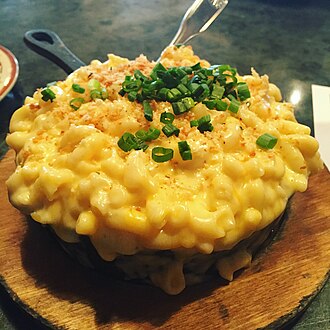
Photo: Wikipedia
This is the iconic, creamy comfort food made from elbow macaroni pasta tossed in a vibrant, often powdery cheese sauce. The texture is soft and yielding, with a rich, salty, and distinctly umami flavor from the processed cheese blend. Nutritionally, it's a calorie-dense source of quick energy from carbs and fats, with a modest protein boost.
Calorie split: 10% protein · 49% carbs · 40% fat
↓ Full nutrition💚 Why it's loved
People adore it for its nostalgic, foolproof comfort and the satisfying, creamy coating that clings to every pasta curve. Its mild, savory flavor makes it a universally appealing side dish or simple meal, especially for children and those seeking familiar, warming food.
⚠️ Watch-outs & how to enjoy it better
The high sodium and refined carbohydrate content can lead to blood sugar spikes and water retention. To counteract this, pair a smaller portion with a fiber-rich vegetable like steamed broccoli or a lean protein like grilled chicken to slow digestion and improve satiety.
Key benefits
- Provides quick, easily digestible energy from carbohydrates
- Offers a convenient and shelf-stable meal solution
- Contains a moderate amount of protein for muscle maintenance
- Can be a palatable way to increase calorie intake for some individuals
- Often fortified with vitamins and minerals like calcium and iron
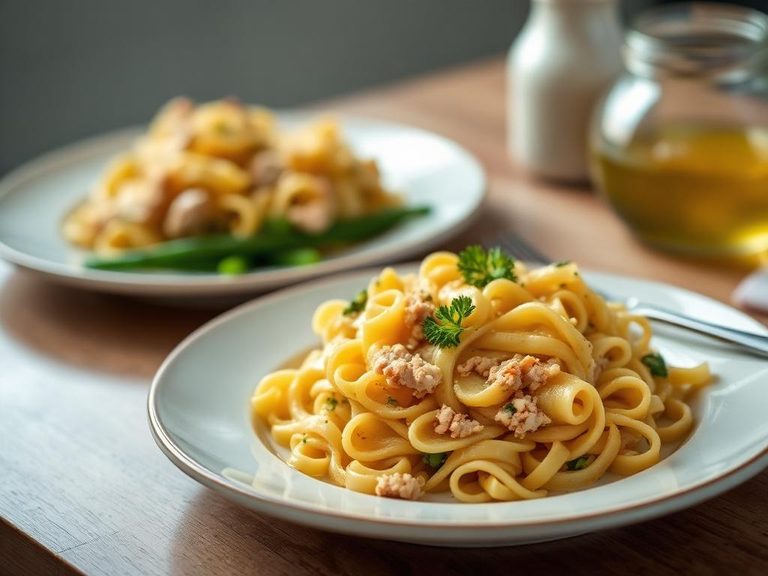
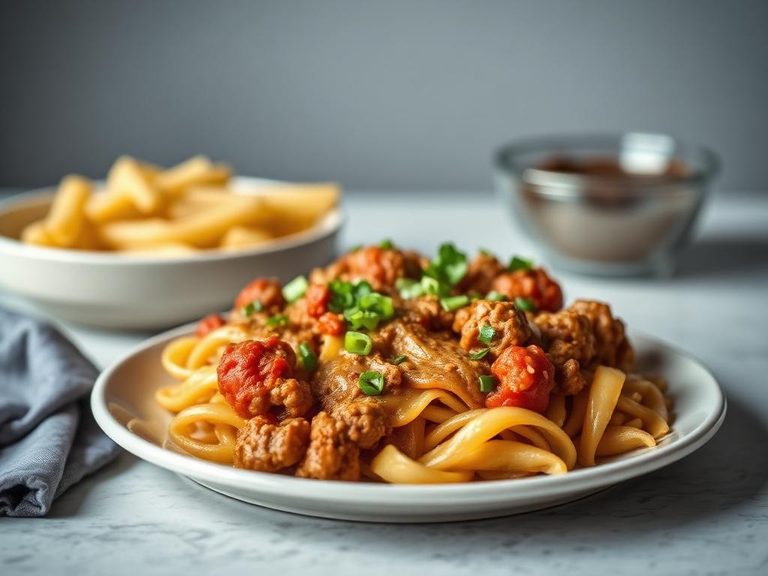
🍽️ Popular dishes
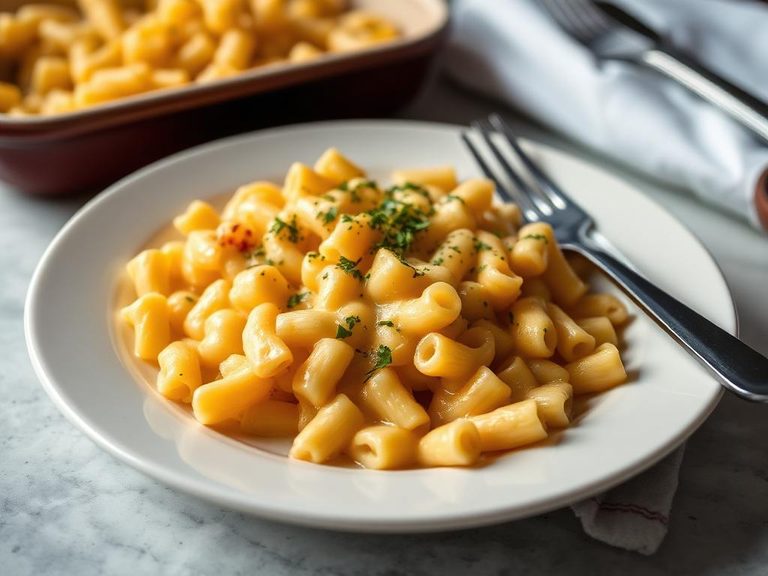
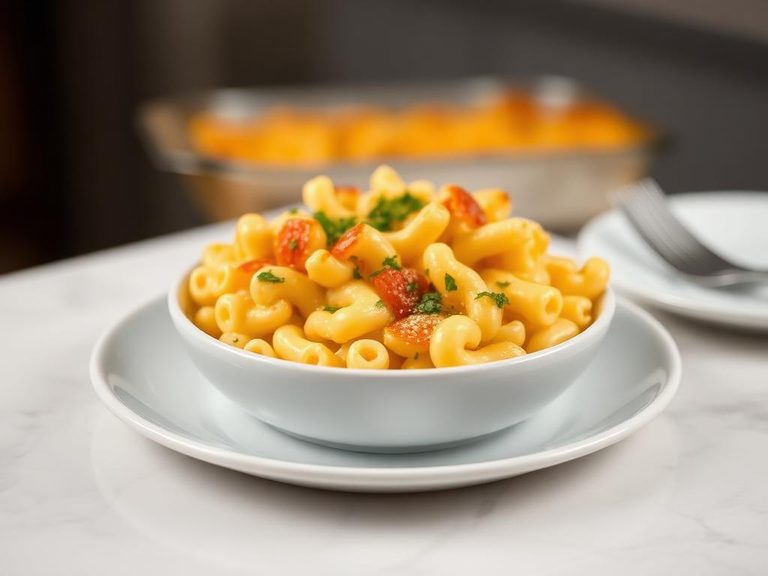
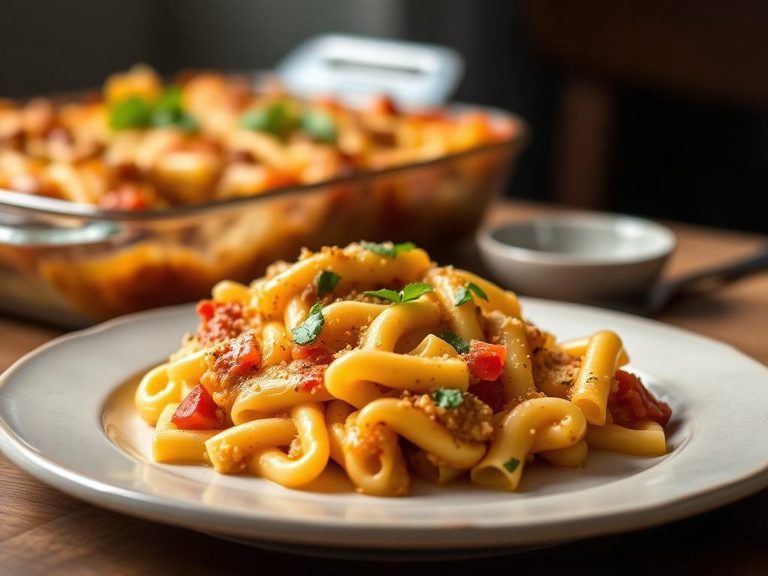
🌍 Where it's eaten
💡 Did you know?
Kraft introduced the first pre-packaged macaroni and cheese in 1937 during the Great Depression, selling 9 million boxes in its first year.
Full nutrition (USDA data · scales with serving)
| Water | 64.0 g |
| Energy | 179 kcal |
| Protein | 4.6 g |
| Total lipid (fat) | 8.0 g |
| Carbohydrate, by difference | 22.2 g |
| Fiber, total dietary | 1.0 g |
| Total Sugars | 3.5 g |
| Calcium, Ca | 58.0 mg |
| Iron, Fe | 0.64 mg |
| Magnesium, Mg | 15.0 mg |
| Phosphorus, P | 98.0 mg |
| Potassium, K | 49.0 mg |
| Sodium, Na | 161 mg |
| Zinc, Zn | 0.43 mg |
| Copper, Cu | 0.06 mg |
| Selenium, Se | 14.9 ug |
| Vitamin C, total ascorbic acid | 0.20 mg |
| Thiamin | 0.21 mg |
| Riboflavin | 0.16 mg |
| Niacin | 0.79 mg |
| Vitamin B-6 | 0.14 mg |
| Folate, total | 45.0 ug |
| Folic acid | 40.0 ug |
| Folate, food | 4.0 ug |
| Folate, DFE | 73.0 ug |
| Choline, total | 13.4 mg |
| Vitamin B-12 | 0.28 ug |
| Vitamin B-12, added | 0.00 ug |
| Vitamin A, RAE | 77.0 ug |
| Retinol | 74.0 ug |
| Carotene, beta | 31.0 ug |
| Carotene, alpha | 0.00 ug |
| Cryptoxanthin, beta | 0.00 ug |
| Lycopene | 0.00 ug |
| Lutein + zeaxanthin | 4.0 ug |
| Vitamin E (alpha-tocopherol) | 0.65 mg |
| Vitamin E, added | 0.00 mg |
| Vitamin D (D2 + D3) | 0.20 ug |
| Vitamin K (phylloquinone) | 3.8 ug |
| Alcohol, ethyl | 0.00 g |
| Caffeine | 0.00 mg |
| Theobromine | 0.00 mg |
Fat & fatty acid profile (per 100g)
| Fatty acids, total saturated | 3.2 g |
| SFA 4:0 | 0.11 g |
| SFA 6:0 | 0.08 g |
| SFA 8:0 | 0.04 g |
| SFA 10:0 | 0.10 g |
| SFA 12:0 | 0.12 g |
| SFA 14:0 | 0.44 g |
| SFA 16:0 | 1.6 g |
| SFA 18:0 | 0.63 g |
| Fatty acids, total monounsaturated | 1.9 g |
| MUFA 16:1 | 0.06 g |
| MUFA 18:1 | 1.8 g |
| MUFA 20:1 | 0.01 g |
| MUFA 22:1 | 0.00 g |
| Fatty acids, total polyunsaturated | 1.3 g |
| PUFA 18:2 | 1.2 g |
| PUFA 18:3 | 0.10 g |
| PUFA 18:4 | 0.00 g |
| PUFA 20:4 | 0.01 g |
| PUFA 20:5 n-3 (EPA) | 0.00 g |
| PUFA 22:5 n-3 (DPA) | 0.00 g |
| PUFA 22:6 n-3 (DHA) | 0.00 g |
| Cholesterol | 15.0 mg |
FAQ
Is this the same as homemade mac and cheese?
No. The packaged mix uses processed cheese powder (often with emulsifiers and preservatives) for a very consistent, salty flavor and bright color, unlike the nuanced taste of a homemade sauce made from real cheese, milk, and butter.
Why is the sauce so powdery and bright orange?
The powder is a blend of cheese solids, whey, milkfat, and food coloring like annatto or paprika extract. The bright color is a marketing choice to signal 'cheesy' flavor, not a natural cheese hue.
Can I make it healthier?
Yes. Use only half the cheese sauce packet, stir in pureed butternut squash or cauliflower for creaminess, and mix in lean protein and vegetables. This boosts nutrients and reduces sodium per serving.
Is it suitable for vegetarians?
Many brands are, but always check the label. Some cheese powders contain animal-derived rennet. Look for 'vegetarian' certification or brands using microbial enzymes.
Nutrient density (calculated · NRF9.3)
Nutrient Rich Foods index: beneficial nutrients (protein, fiber, vitamins, minerals) minus saturated fat, added sugar & sodium, per 100 kcal.
NRF9.3 index — Fulgoni, Keast & Drewnowski, 2009. Computed from USDA nutrients.
Weight-loss friendliness (composite index)
Energy density 1.79 kcal/g · 10% calories from protein · 1.0 g fiber · 3.5 g sugar per 100 g.
Composite of energy density (Rolls et al., 1999), protein & fiber satiety, minus sugar. A calculated heuristic — ranks satiety-per-calorie, not a clinical measure.
Dietary load (calculated from USDA values)
Potential renal acid load. Positive = acid-forming, negative = alkaline-forming.
Sodium-to-potassium ratio: 3.29 (lower is better — aim for ≤ 1)
Sodium:potassium per WHO potassium guidance. Computed from USDA nutrients.