

Lomi salmon
Common food

Photo: Wikipedia
Lomi salmon is a vibrant Hawaiian side dish made from fresh salmon cured with sea salt and mixed with diced tomatoes and onions. Its taste is a refreshing balance of salty, tangy, and mildly sweet, with a soft, flaky texture that is both satisfying and light. Nutritionally, it is a lean source of protein and offers a good dose of omega-3 fatty acids, making it a heart-healthy choice.
Calorie split: 50% protein · 22% carbs · 28% fat
↓ Full nutrition💚 Why it's loved
People love Lomi salmon for its unique, refreshing flavor that perfectly complements rich, savory dishes like kalua pig or poi. It is a beloved staple in Hawaiian cuisine, often served at luaus and family gatherings, symbolizing a connection to the islands' culinary heritage.
⚠️ Watch-outs & how to enjoy it better
The high sodium content from the curing process can be a concern for those monitoring salt intake. To mitigate this, use low-sodium salt or rinse the salmon briefly before mixing. Additionally, pairing it with potassium-rich foods like sweet potatoes can help balance sodium levels.
Key benefits
- Rich in high-quality protein for muscle maintenance
- Provides heart-healthy omega-3 fatty acids
- Low in calories and carbohydrates
- Good source of dietary fiber and vitamins from tomatoes
- Naturally gluten-free and dairy-free
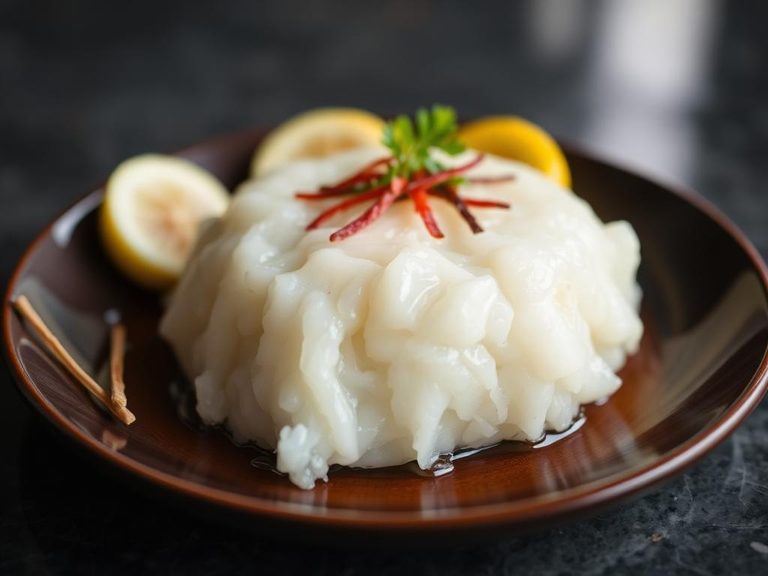
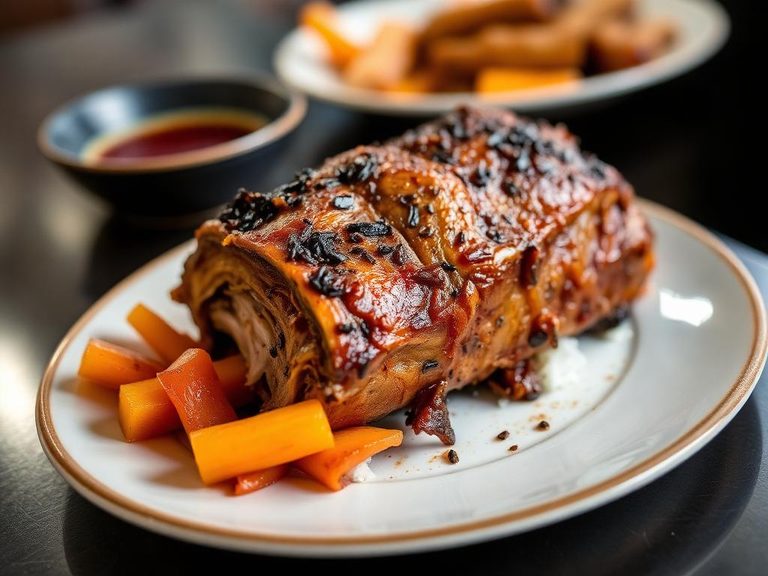
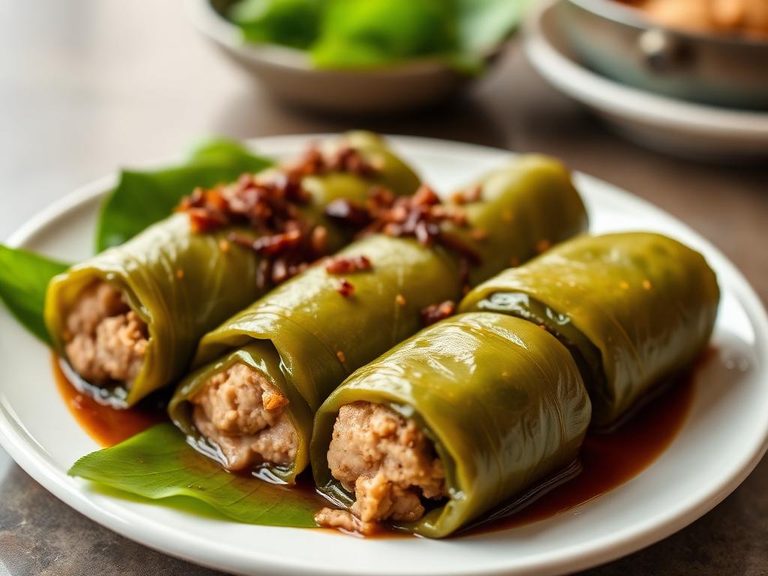
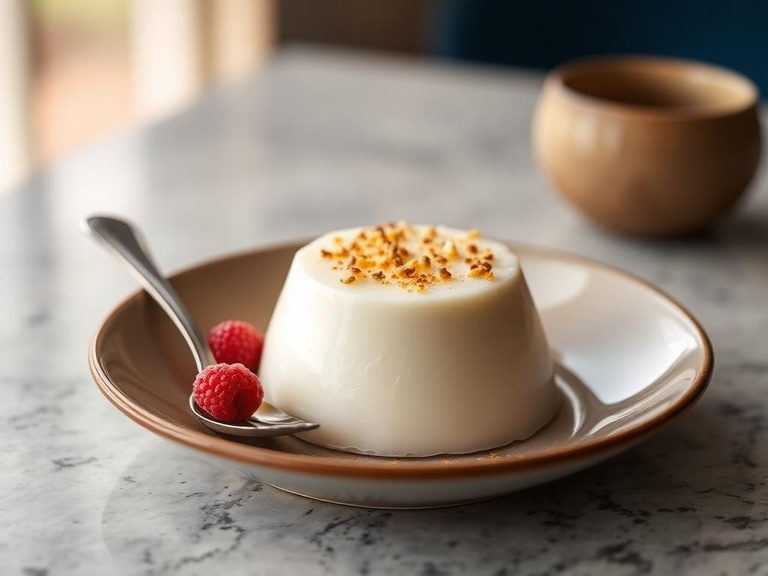
🍽️ Popular dishes
🌍 Where it's eaten
💡 Did you know?
Lomi salmon was originally introduced to Hawaii by Western sailors in the 19th century, who brought salted salmon as a preserved food, and it was adapted into a local dish with native ingredients like tomatoes and onions.
Full nutrition (USDA data · scales with serving)
| Water | 86.5 g |
| Energy | 60.0 kcal |
| Protein | 7.5 g |
| Total lipid (fat) | 1.9 g |
| Carbohydrate, by difference | 3.3 g |
| Fiber, total dietary | 1.0 g |
| Total Sugars | 1.8 g |
| Calcium, Ca | 88.0 mg |
| Iron, Fe | 0.51 mg |
| Magnesium, Mg | 18.0 mg |
| Phosphorus, P | 135 mg |
| Potassium, K | 270 mg |
| Sodium, Na | 145 mg |
| Zinc, Zn | 0.40 mg |
| Copper, Cu | 0.06 mg |
| Selenium, Se | 11.7 ug |
| Vitamin C, total ascorbic acid | 8.9 mg |
| Thiamin | 0.04 mg |
| Riboflavin | 0.08 mg |
| Niacin | 2.6 mg |
| Vitamin B-6 | 0.16 mg |
| Folate, total | 20.0 ug |
| Folic acid | 0.00 ug |
| Folate, food | 20.0 ug |
| Folate, DFE | 20.0 ug |
| Choline, total | 34.9 mg |
| Vitamin B-12 | 1.5 ug |
| Vitamin B-12, added | 0.00 ug |
| Vitamin A, RAE | 30.0 ug |
| Retinol | 6.0 ug |
| Carotene, beta | 268 ug |
| Carotene, alpha | 48.0 ug |
| Cryptoxanthin, beta | 0.00 ug |
| Lycopene | 1219 ug |
| Lutein + zeaxanthin | 164 ug |
| Vitamin E (alpha-tocopherol) | 0.53 mg |
| Vitamin E, added | 0.00 mg |
| Vitamin D (D2 + D3) | 4.8 ug |
| Vitamin K (phylloquinone) | 23.1 ug |
| Alcohol, ethyl | 0.00 g |
| Caffeine | 0.00 mg |
| Theobromine | 0.00 mg |
Fat & fatty acid profile (per 100g)
| Fatty acids, total saturated | 0.32 g |
| SFA 4:0 | 0.00 g |
| SFA 6:0 | 0.00 g |
| SFA 8:0 | 0.00 g |
| SFA 10:0 | 0.00 g |
| SFA 12:0 | 0.00 g |
| SFA 14:0 | 0.06 g |
| SFA 16:0 | 0.20 g |
| SFA 18:0 | 0.04 g |
| Fatty acids, total monounsaturated | 0.44 g |
| MUFA 16:1 | 0.05 g |
| MUFA 18:1 | 0.21 g |
| MUFA 20:1 | 0.15 g |
| MUFA 22:1 | 0.02 g |
| Fatty acids, total polyunsaturated | 0.54 g |
| PUFA 18:2 | 0.08 g |
| PUFA 18:3 | 0.02 g |
| PUFA 18:4 | 0.05 g |
| PUFA 20:4 | 0.01 g |
| PUFA 20:5 n-3 (EPA) | 0.11 g |
| PUFA 22:5 n-3 (DPA) | 0.03 g |
| PUFA 22:6 n-3 (DHA) | 0.23 g |
| Cholesterol | 19.0 mg |
FAQ
Is Lomi salmon raw or cooked?
Lomi salmon is typically made with raw salmon that is cured with salt, similar to ceviche, but it is not cooked with heat. The curing process firms the fish and gives it a safe, palatable texture.
Can I make Lomi salmon with smoked salmon?
While traditional Lomi salmon uses fresh, salt-cured salmon, some variations use smoked salmon for a different flavor profile. However, the texture and taste will differ from the classic version.
How long does Lomi salmon last in the fridge?
Lomi salmon should be consumed within 2-3 days when stored in an airtight container in the refrigerator. It is best served fresh and does not freeze well due to changes in texture.
Nutrient density (calculated · NRF9.3)
Nutrient Rich Foods index: beneficial nutrients (protein, fiber, vitamins, minerals) minus saturated fat, added sugar & sodium, per 100 kcal.
NRF9.3 index — Fulgoni, Keast & Drewnowski, 2009. Computed from USDA nutrients.
Weight-loss friendliness (composite index)
Energy density 0.60 kcal/g · 50% calories from protein · 1.0 g fiber · 1.8 g sugar per 100 g.
Composite of energy density (Rolls et al., 1999), protein & fiber satiety, minus sugar. A calculated heuristic — ranks satiety-per-calorie, not a clinical measure.
Dietary load (calculated from USDA values)
Potential renal acid load. Positive = acid-forming, negative = alkaline-forming.
Sodium-to-potassium ratio: 0.54 (lower is better — aim for ≤ 1)
Sodium:potassium per WHO potassium guidance. Computed from USDA nutrients.