

Lefse
Common food

Photo: Wikipedia
Lefse is a traditional Norwegian soft flatbread, typically made from potatoes, flour, butter, and cream or milk. It has a delicate, pliable texture and a mild, slightly sweet flavor that acts as a perfect canvas for both sweet and savory toppings. Nutritionally, it's a moderate source of energy, primarily from carbohydrates, with a small amount of protein and fat.
Calorie split: 8% protein · 66% carbs · 26% fat
↓ Full nutrition💚 Why it's loved
People love lefse for its comforting, buttery flavor and soft, foldable texture that makes it ideal for wrapping fillings. It's deeply tied to Nordic heritage, especially Christmas traditions, evoking nostalgia and family gatherings.
⚠️ Watch-outs & how to enjoy it better
Due to its high carbohydrate content and low fiber, it can cause blood sugar spikes, making it less suitable for those managing diabetes. To counteract this, pair it with protein-rich toppings like smoked salmon, meatballs, or a dollop of Greek yogurt to slow digestion and balance the meal.
Key benefits
- Provides quick energy from its carbohydrate content.
- Contains some dietary fiber, aiding in digestion.
- A versatile base for both sweet and savory meals.
- A culturally significant food for celebrations and holidays.
- Can be made with simple, whole ingredients.
🍽️ Popular dishes
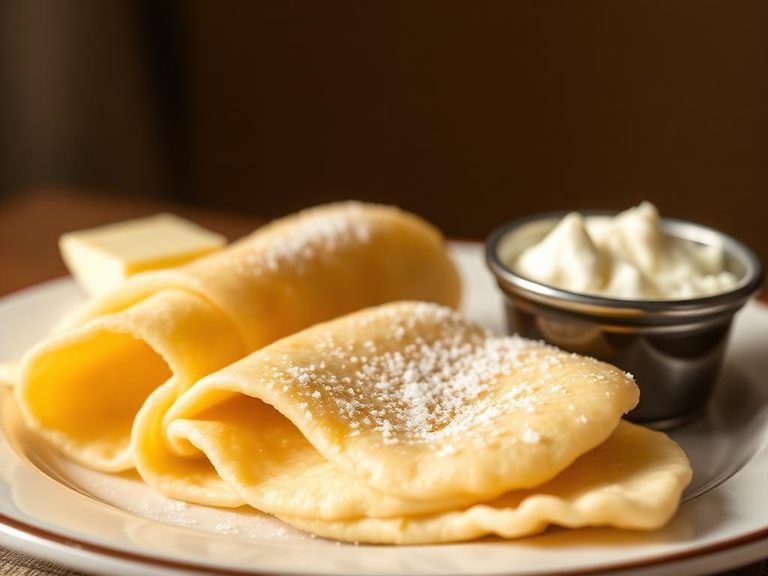
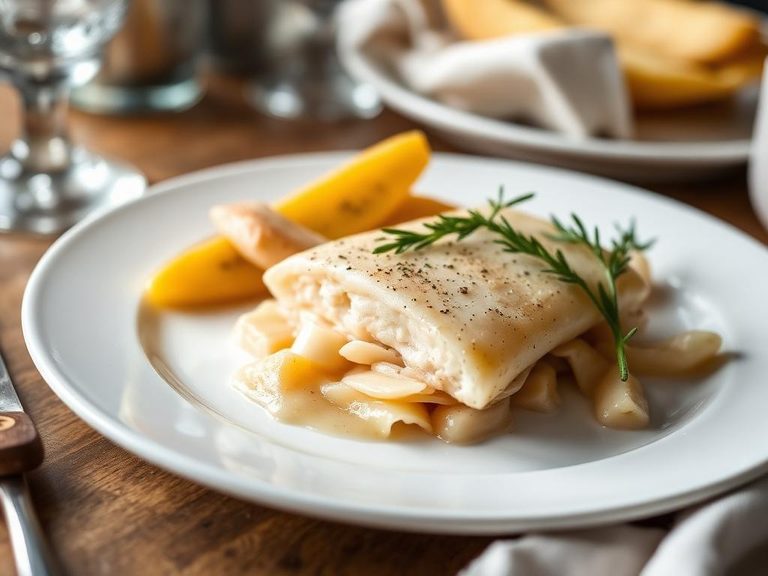
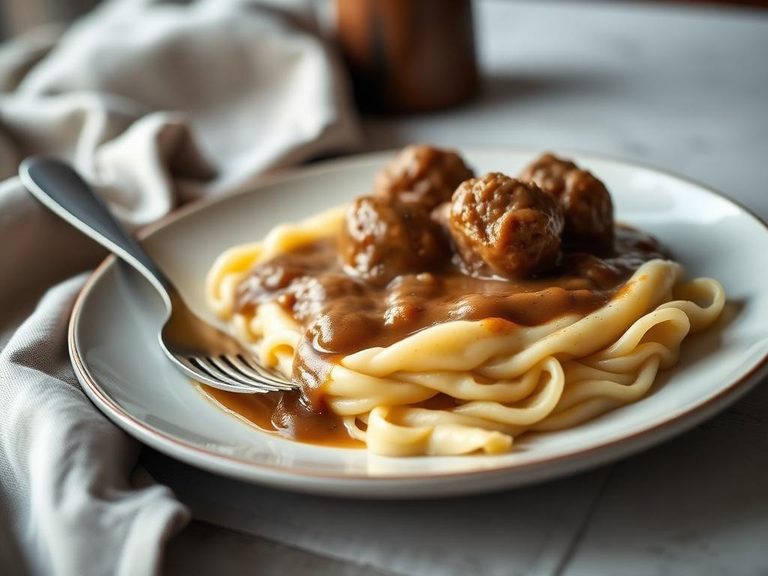



🌍 Where it's eaten
💡 Did you know?
Traditional lefse is cooked on a large, ridged griddle called a 'lefse griddle' or 'takke,' and the long wooden turning stick ('lefse stick') is essential for flipping the delicate bread without tearing it.
Full nutrition (USDA data · scales with serving)
| Water | 51.8 g |
| Energy | 218 kcal |
| Protein | 4.4 g |
| Total lipid (fat) | 6.3 g |
| Carbohydrate, by difference | 36.4 g |
| Fiber, total dietary | 2.0 g |
| Total Sugars | 2.3 g |
| Calcium, Ca | 18.0 mg |
| Iron, Fe | 1.8 mg |
| Magnesium, Mg | 22.0 mg |
| Phosphorus, P | 64.0 mg |
| Potassium, K | 271 mg |
| Sodium, Na | 172 mg |
| Zinc, Zn | 0.40 mg |
| Copper, Cu | 0.16 mg |
| Selenium, Se | 4.8 ug |
| Vitamin C, total ascorbic acid | 4.8 mg |
| Thiamin | 0.27 mg |
| Riboflavin | 0.14 mg |
| Niacin | 2.6 mg |
| Vitamin B-6 | 0.27 mg |
| Folate, total | 37.0 ug |
| Folic acid | 26.0 ug |
| Folate, food | 11.0 ug |
| Folate, DFE | 55.0 ug |
| Choline, total | 13.7 mg |
| Vitamin B-12 | 0.01 ug |
| Vitamin B-12, added | 0.00 ug |
| Vitamin A, RAE | 56.0 ug |
| Retinol | 54.0 ug |
| Carotene, beta | 24.0 ug |
| Carotene, alpha | 0.00 ug |
| Cryptoxanthin, beta | 0.00 ug |
| Lycopene | 0.00 ug |
| Lutein + zeaxanthin | 11.0 ug |
| Vitamin E (alpha-tocopherol) | 0.47 mg |
| Vitamin E, added | 0.00 mg |
| Vitamin D (D2 + D3) | 0.20 ug |
| Vitamin K (phylloquinone) | 4.4 ug |
| Alcohol, ethyl | 0.00 g |
| Caffeine | 0.00 mg |
| Theobromine | 0.00 mg |
Fat & fatty acid profile (per 100g)
| Fatty acids, total saturated | 2.7 g |
| SFA 4:0 | 0.10 g |
| SFA 6:0 | 0.07 g |
| SFA 8:0 | 0.04 g |
| SFA 10:0 | 0.10 g |
| SFA 12:0 | 0.12 g |
| SFA 14:0 | 0.38 g |
| SFA 16:0 | 1.3 g |
| SFA 18:0 | 0.52 g |
| Fatty acids, total monounsaturated | 1.5 g |
| MUFA 16:1 | 0.06 g |
| MUFA 18:1 | 1.4 g |
| MUFA 20:1 | 0.01 g |
| MUFA 22:1 | 0.00 g |
| Fatty acids, total polyunsaturated | 0.92 g |
| PUFA 18:2 | 0.83 g |
| PUFA 18:3 | 0.09 g |
| PUFA 18:4 | 0.00 g |
| PUFA 20:4 | 0.01 g |
| PUFA 20:5 n-3 (EPA) | 0.00 g |
| PUFA 22:5 n-3 (DPA) | 0.00 g |
| PUFA 22:6 n-3 (DHA) | 0.00 g |
| Cholesterol | 13.0 mg |
FAQ
What is lefse made from?
The most common recipe uses riced potatoes, all-purpose flour, butter, and cream or milk. Some variations include sugar and salt.
How is lefse different from a tortilla?
Lefse is potato-based, giving it a softer, more delicate texture and a subtly sweet, buttery flavor, whereas tortillas are typically corn or wheat-based and have a more neutral taste.
Can lefse be frozen?
Yes, lefse freezes exceptionally well. Separate pieces with parchment paper, place in a freezer bag, and it will keep for months. Thaw at room temperature.
Nutrient density (calculated · NRF9.3)
Nutrient Rich Foods index: beneficial nutrients (protein, fiber, vitamins, minerals) minus saturated fat, added sugar & sodium, per 100 kcal.
NRF9.3 index — Fulgoni, Keast & Drewnowski, 2009. Computed from USDA nutrients.
Weight-loss friendliness (composite index)
Energy density 2.18 kcal/g · 8% calories from protein · 2.0 g fiber · 2.3 g sugar per 100 g.
Composite of energy density (Rolls et al., 1999), protein & fiber satiety, minus sugar. A calculated heuristic — ranks satiety-per-calorie, not a clinical measure.
Dietary load (calculated from USDA values)
Potential renal acid load. Positive = acid-forming, negative = alkaline-forming.
Sodium-to-potassium ratio: 0.63 (lower is better — aim for ≤ 1)
Sodium:potassium per WHO potassium guidance. Computed from USDA nutrients.