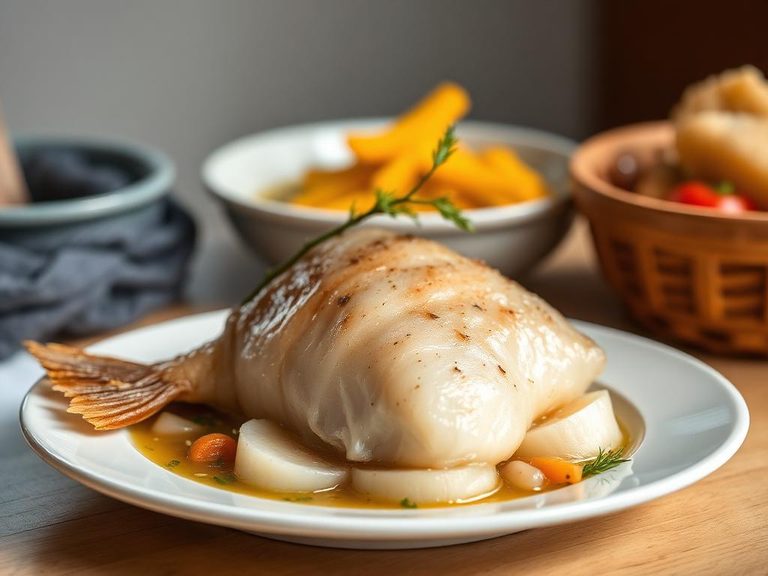
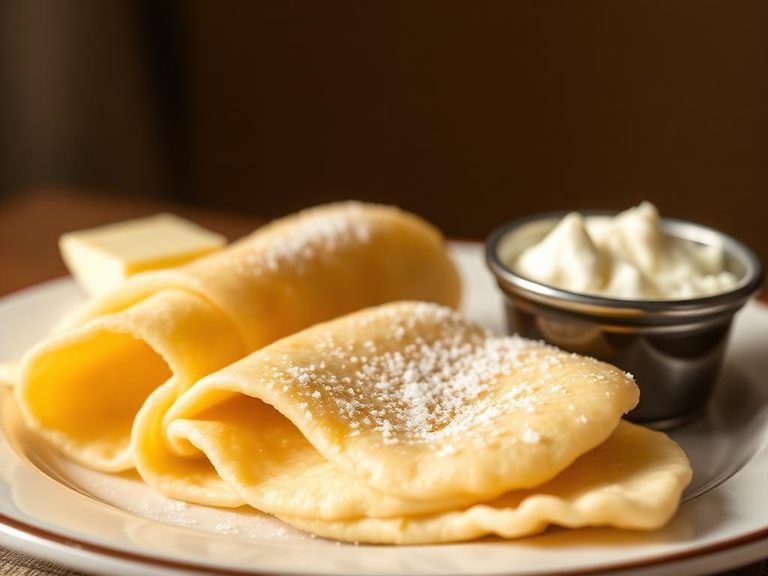
Lefse with lutefisk
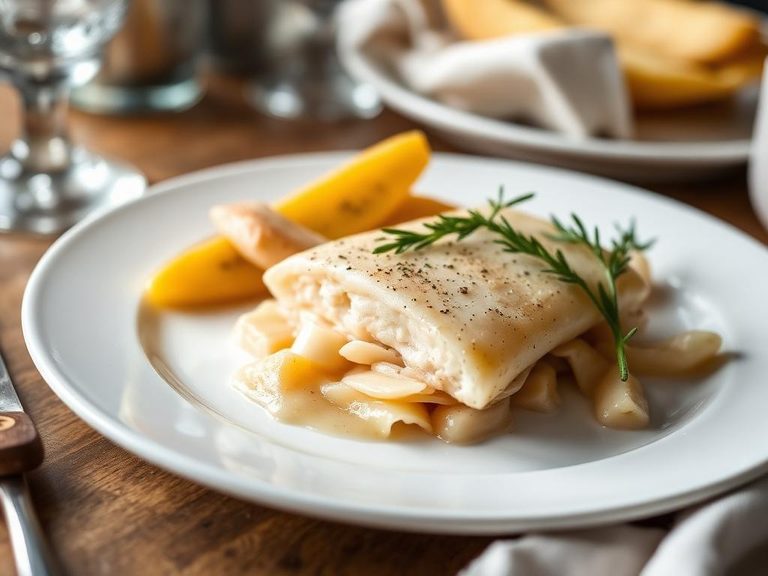
Lefse with lutefisk is a traditional Scandinavian dish combining soft, potato-based flatbread (lefse) with dried whitefish (lutefisk) rehydrated in lye. It's a staple of Norwegian and Swedish holiday cuisine, often served with butter, salt, and pepper. The pairing creates a unique blend of mild, creamy textures and subtle oceanic flavors.
🍽️ Nutrition at a glance
This dish is moderately high in protein from the fish and carbohydrates from the lefse, with a low to moderate fat content depending on butter usage. It provides key nutrients like omega-3 fatty acids, vitamin D, and potassium, with a rough calorie estimate of 300-400 kcal per serving.
Nutrition breakdown
| Calories | 350 kcal |
| Protein | 30 g |
| Carbs | 35 g |
| Fat | 10 g |
| Fiber | 2 g |
| Sugar | 1 g |
| Sodium | 450 mg |
| Vitamin D | 10 µg |
| Omega-3 Fatty Acids | 1.2 g |
| Potassium | 550 mg |
| Phosphorus | 350 mg |
| Selenium | 40 µg |
| Vitamin B12 | 2.5 µg |
| Niacin (B3) | 5 mg |
| Magnesium | 45 mg |
Per 1 lefse (60 g) with 100 g lutefisk and 10 g butter · estimated, varies by recipe
💡 What's interesting
Culturally, lutefisk's lye-curing process is a centuries-old preservation method that gives it a distinctive gelatinous texture, while lefse represents the heart of Nordic home cooking. Nutritionally, it's a rare combination of high-quality marine protein and starchy comfort food, offering a balance of land and sea sustenance.