

Infant formula, MEAD JOHNSON, ENFAMIL, LIPIL, low iron, liquid concentrate, with ARA and DHA
Whole food · Baby Foods

Photo: Wikipedia
This is a liquid concentrate infant formula designed to be diluted with water before feeding. It has a smooth, creamy texture and a mildly sweet, milky flavor profile. Nutritionally, it provides a balanced mix of fats, proteins, and carbohydrates, with added DHA and ARA for brain and eye development.
Calorie split: 8% protein · 43% carbs · 49% fat
↓ Full nutrition💚 Why it's loved
Parents appreciate the convenience of the liquid concentrate format for precise mixing and its trusted brand reputation. The formula is often chosen for its gentle composition and specific nutrient profile tailored for infant growth.
⚠️ Watch-outs & how to enjoy it better
As a formula, it lacks the dynamic antibodies and benefits of breast milk. The low-iron content means it is not suitable for all infants and may require iron supplementation depending on a pediatrician's advice. Always consult a healthcare provider before use, especially for infants with specific health conditions.
Key benefits
- Provides complete nutrition for infants when breast milk is not available
- Enriched with DHA and ARA, fats important for brain and vision development
- Liquid concentrate format is easy to mix and store
- Low-iron formula, often used under specific medical guidance
🍽️ Popular dishes

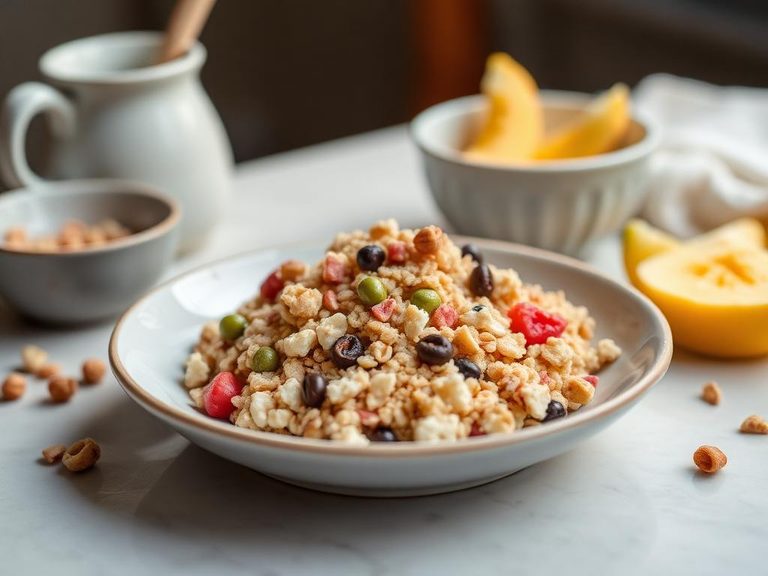
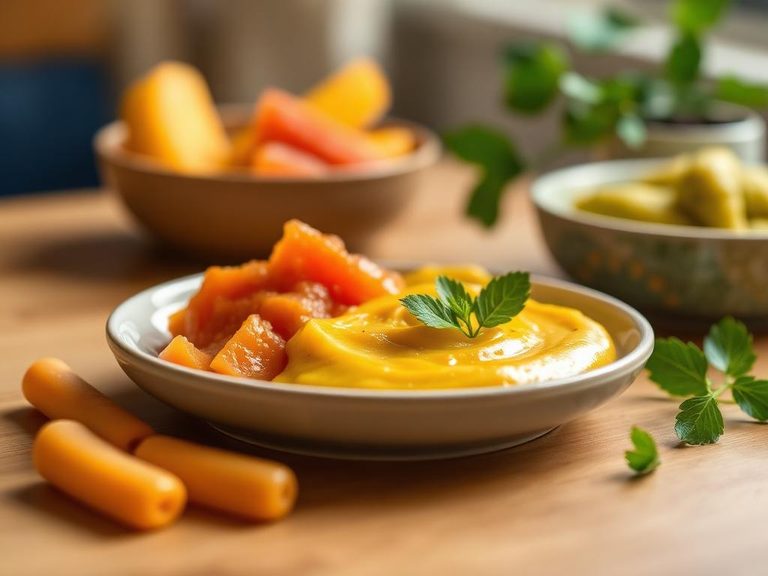

🌍 Where it's eaten
💡 Did you know?
The DHA and ARA in this formula are often derived from fungal oils, not directly from fish oil, to provide a consistent and purified source of these essential fatty acids.
Full nutrition (USDA data · scales with serving)
| Water | 75.3 g |
| Energy | 131 kcal |
| Energy | 547 kj |
| Protein | 2.8 g |
| Total lipid (fat) | 7.2 g |
| Ash | 0.72 g |
| Carbohydrate, by difference | 14.2 g |
| Fiber, total dietary | 0.00 g |
| Total Sugars | 14.2 g |
| Calcium, Ca | 102 mg |
| Iron, Fe | 0.92 mg |
| Magnesium, Mg | 11.0 mg |
| Phosphorus, P | 70.0 mg |
| Potassium, K | 142 mg |
| Sodium, Na | 39.0 mg |
| Zinc, Zn | 1.3 mg |
| Copper, Cu | 0.10 mg |
| Selenium, Se | 3.6 ug |
| Vitamin C, total ascorbic acid | 15.8 mg |
| Thiamin | 0.10 mg |
| Riboflavin | 0.18 mg |
| Niacin | 1.3 mg |
| Vitamin B-6 | 0.08 mg |
| Folate, total | 21.0 ug |
| Folic acid | 21.0 ug |
| Folate, food | 0.00 ug |
| Folate, DFE | 36.0 ug |
| Choline, total | 17.0 mg |
| Vitamin B-12 | 0.39 ug |
| Vitamin B-12, added | 0.39 ug |
| Vitamin A, RAE | 118 ug |
| Retinol | 118 ug |
| Carotene, beta | 0.00 ug |
| Carotene, alpha | 0.00 ug |
| Cryptoxanthin, beta | 0.00 ug |
| Vitamin A, IU | 394 iu |
| Lycopene | 0.00 ug |
| Lutein + zeaxanthin | 0.00 ug |
| Vitamin E (alpha-tocopherol) | 1.2 mg |
| Vitamin E, added | 1.2 mg |
| Vitamin D (D2 + D3), International Units | 79.0 iu |
| Vitamin D (D2 + D3) | 2.0 ug |
| Vitamin K (phylloquinone) | 10.0 ug |
| Alcohol, ethyl | 0.00 g |
| Caffeine | 0.00 mg |
| Theobromine | 0.00 mg |
Fat & fatty acid profile (per 100g)
| Fatty acids, total saturated | 3.1 g |
| SFA 4:0 | 0.00 g |
| SFA 6:0 | 0.02 g |
| SFA 8:0 | 0.12 g |
| SFA 10:0 | 0.08 g |
| SFA 12:0 | 0.67 g |
| SFA 14:0 | 0.30 g |
| SFA 16:0 | 1.6 g |
| SFA 18:0 | 0.30 g |
| Fatty acids, total monounsaturated | 2.7 g |
| MUFA 16:1 | 0.02 g |
| MUFA 18:1 | 2.7 g |
| MUFA 20:1 | 0.00 g |
| MUFA 22:1 | 0.00 g |
| Fatty acids, total polyunsaturated | 1.4 g |
| PUFA 18:2 | 1.2 g |
| PUFA 18:3 | 0.12 g |
| PUFA 18:4 | 0.00 g |
| PUFA 20:4 | 0.04 g |
| PUFA 20:5 n-3 (EPA) | 0.00 g |
| PUFA 22:5 n-3 (DPA) | 0.00 g |
| PUFA 22:6 n-3 (DHA) | 0.02 g |
| Cholesterol | 2.0 mg |
FAQ
What does 'low iron' mean in this formula?
It indicates a lower iron content compared to standard formulas. This may be recommended for specific medical reasons, but iron supplementation is often necessary for most infants after a certain age.
How is liquid concentrate different from powder or ready-to-feed?
It's a pre-mixed liquid that must be diluted with water before use. It's more concentrated than ready-to-feed but less convenient than powder. It avoids the need for measuring powder and dissolving it.
Is this formula suitable for all babies?
No. Formula choice should be based on an infant's specific needs and a pediatrician's recommendation. Low-iron formulas are not appropriate for all infants and may require additional iron supplementation.
Nutrient density (calculated · NRF9.3)
Nutrient Rich Foods index: beneficial nutrients (protein, fiber, vitamins, minerals) minus saturated fat, added sugar & sodium, per 100 kcal.
NRF9.3 index — Fulgoni, Keast & Drewnowski, 2009. Computed from USDA nutrients.
Weight-loss friendliness (composite index)
Energy density 1.31 kcal/g · 8% calories from protein · 0.0 g fiber · 14.2 g sugar per 100 g.
Composite of energy density (Rolls et al., 1999), protein & fiber satiety, minus sugar. A calculated heuristic — ranks satiety-per-calorie, not a clinical measure.
Dietary load (calculated from USDA values)
Potential renal acid load. Positive = acid-forming, negative = alkaline-forming.
Sodium-to-potassium ratio: 0.27 (lower is better — aim for ≤ 1)
Sodium:potassium per WHO potassium guidance. Computed from USDA nutrients.