

Infant formula, amino acids
Common food

Photo: Wikipedia
Infant formula, amino acids is a specialized, hypoallergenic liquid or powder designed for infants with severe cow's milk protein allergies or multiple food intolerances. It has a thin, watery consistency and a distinct, often slightly bitter or medicinal taste that is less sweet than standard formulas. Nutritionally, it provides a precise balance of essential amino acids, carbohydrates, and fats to support growth, with a notably high sugar content of 6.6g per 100g.
Calorie split: 11% protein · 44% carbs · 46% fat
↓ Full nutrition💚 Why it's loved
Parents and caregivers value it for its life-saving role in managing severe infant allergies, allowing babies to thrive when standard formulas fail. Its medical precision and reliability provide peace of mind in critical nutritional situations.
⚠️ Watch-outs & how to enjoy it better
The high sugar content (6.6g/100g) can contribute to rapid blood-sugar spikes if not properly managed, and the taste is often unpalatable to infants initially. To counteract, ensure proper dilution as directed, and consult a pediatrician about transitioning to complementary foods with balanced macronutrients to moderate sugar intake.
Key benefits
- Hypoallergenic for severe milk protein allergies
- Provides complete essential amino acid profile
- Supports infant growth and development
- Easier to digest for sensitive gastrointestinal systems
- Formulated to meet strict nutritional standards
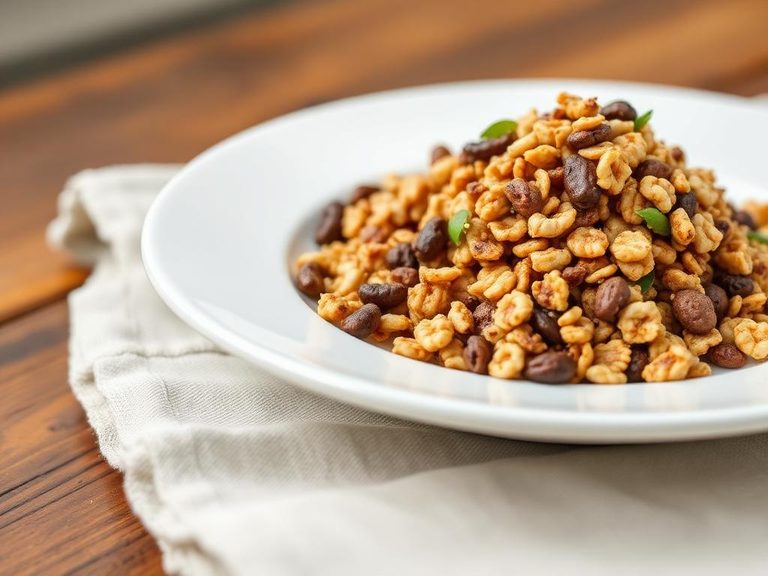
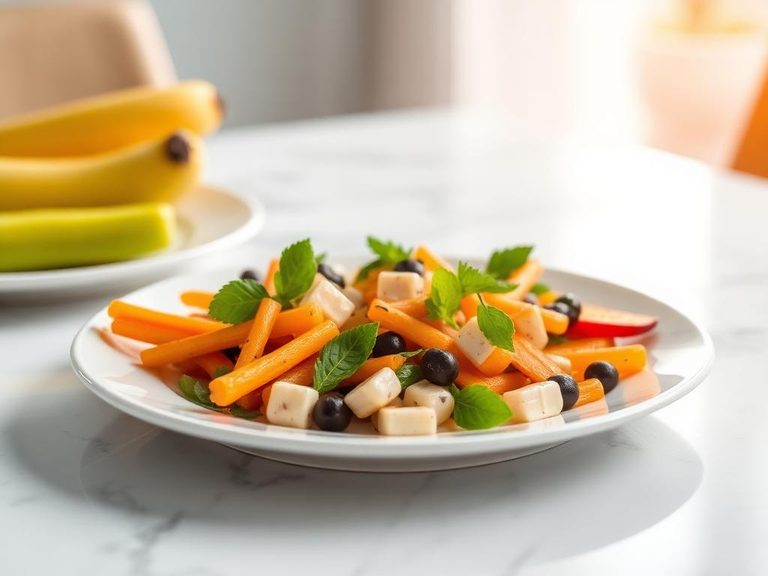
🍽️ Popular dishes


🌍 Where it's eaten
💡 Did you know?
Amino acid-based formulas were first developed in the 1980s and are often referred to as 'elemental formulas' because they contain proteins broken down into their simplest amino acid components.
Full nutrition (USDA data · scales with serving)
| Water | 87.2 g |
| Energy | 66.0 kcal |
| Protein | 1.8 g |
| Total lipid (fat) | 3.4 g |
| Carbohydrate, by difference | 7.2 g |
| Fiber, total dietary | 0.00 g |
| Total Sugars | 6.6 g |
| Calcium, Ca | 61.0 mg |
| Iron, Fe | 1.2 mg |
| Magnesium, Mg | 7.0 mg |
| Phosphorus, P | 34.0 mg |
| Potassium, K | 71.0 mg |
| Sodium, Na | 30.0 mg |
| Zinc, Zn | 0.65 mg |
| Copper, Cu | 0.05 mg |
| Selenium, Se | 1.8 ug |
| Vitamin C, total ascorbic acid | 7.8 mg |
| Thiamin | 0.05 mg |
| Riboflavin | 0.06 mg |
| Niacin | 0.65 mg |
| Vitamin B-6 | 0.04 mg |
| Folate, total | 10.0 ug |
| Folic acid | 10.0 ug |
| Folate, food | 0.00 ug |
| Folate, DFE | 18.0 ug |
| Choline, total | 15.4 mg |
| Vitamin B-12 | 0.19 ug |
| Vitamin B-12, added | 0.19 ug |
| Vitamin A, RAE | 58.0 ug |
| Retinol | 58.0 ug |
| Carotene, beta | 0.00 ug |
| Carotene, alpha | 0.00 ug |
| Cryptoxanthin, beta | 0.00 ug |
| Lycopene | 0.00 ug |
| Lutein + zeaxanthin | 0.00 ug |
| Vitamin E (alpha-tocopherol) | 0.58 mg |
| Vitamin E, added | 0.58 mg |
| Vitamin D (D2 + D3) | 0.80 ug |
| Vitamin K (phylloquinone) | 5.8 ug |
| Alcohol, ethyl | 0.00 g |
| Caffeine | 0.00 mg |
| Theobromine | 0.00 mg |
Fat & fatty acid profile (per 100g)
| Fatty acids, total saturated | 1.3 g |
| SFA 4:0 | 0.00 g |
| SFA 6:0 | 0.00 g |
| SFA 8:0 | 0.78 g |
| SFA 10:0 | 0.30 g |
| SFA 12:0 | 0.00 g |
| SFA 14:0 | 0.00 g |
| SFA 16:0 | 0.15 g |
| SFA 18:0 | 0.08 g |
| Fatty acids, total monounsaturated | 1.1 g |
| MUFA 16:1 | 0.00 g |
| MUFA 18:1 | 1.1 g |
| MUFA 20:1 | 0.01 g |
| MUFA 22:1 | 0.00 g |
| Fatty acids, total polyunsaturated | 0.71 g |
| PUFA 18:2 | 0.56 g |
| PUFA 18:3 | 0.05 g |
| PUFA 18:4 | 0.00 g |
| PUFA 20:4 | 0.02 g |
| PUFA 20:5 n-3 (EPA) | 0.00 g |
| PUFA 22:5 n-3 (DPA) | 0.00 g |
| PUFA 22:6 n-3 (DHA) | 0.01 g |
| Cholesterol | 0.00 mg |
FAQ
What is amino acid infant formula used for?
It is used for infants with severe cow's milk protein allergy, multiple food intolerances, or other conditions where standard formulas are not tolerated.
How does it differ from regular infant formula?
It contains free amino acids instead of intact proteins, making it hypoallergenic and easier to digest for sensitive infants.
Is it safe for long-term use?
Yes, when used under medical supervision, it provides complete nutrition for infants who cannot tolerate other formulas.
Nutrient density (calculated · NRF9.3)
Nutrient Rich Foods index: beneficial nutrients (protein, fiber, vitamins, minerals) minus saturated fat, added sugar & sodium, per 100 kcal.
NRF9.3 index — Fulgoni, Keast & Drewnowski, 2009. Computed from USDA nutrients.
Weight-loss friendliness (composite index)
Energy density 0.66 kcal/g · 11% calories from protein · 0.0 g fiber · 6.6 g sugar per 100 g.
Composite of energy density (Rolls et al., 1999), protein & fiber satiety, minus sugar. A calculated heuristic — ranks satiety-per-calorie, not a clinical measure.
Dietary load (calculated from USDA values)
Potential renal acid load. Positive = acid-forming, negative = alkaline-forming.
Sodium-to-potassium ratio: 0.42 (lower is better — aim for ≤ 1)
Sodium:potassium per WHO potassium guidance. Computed from USDA nutrients.