

Infant formula, Enfamil Infant, ready-to-feed
Common food

Photo: Wikipedia
This is a sterile, nutritionally complete liquid meal designed for infants, offering a consistent, mild, and slightly sweet taste with a smooth, milk-like texture. It provides a balanced energy source, with a macronutrient profile carefully calibrated to support early growth and development.
Calorie split: 8% protein · 44% carbs · 47% fat
↓ Full nutrition💚 Why it's loved
Parents and caregivers appreciate the absolute ease and peace of mind it offers, especially during nighttime feedings or while traveling. Its familiar, consistent taste is often well-accepted by infants.
⚠️ Watch-outs & how to enjoy it better
The primary downside is the cost compared to powder and the environmental impact of single-use packaging. For infants with specific sensitivities, the standard formulation may not be suitable, and it should be used under pediatric guidance.
Key benefits
- Ready-to-serve convenience, no mixing required.
- Sterile and shelf-stable until opened.
- Provides a consistent source of DHA for brain development.
- Formulated to be gentle on an infant's digestive system.
- Offers a balanced ratio of protein, carbohydrates, and fats.
🍽️ Popular dishes
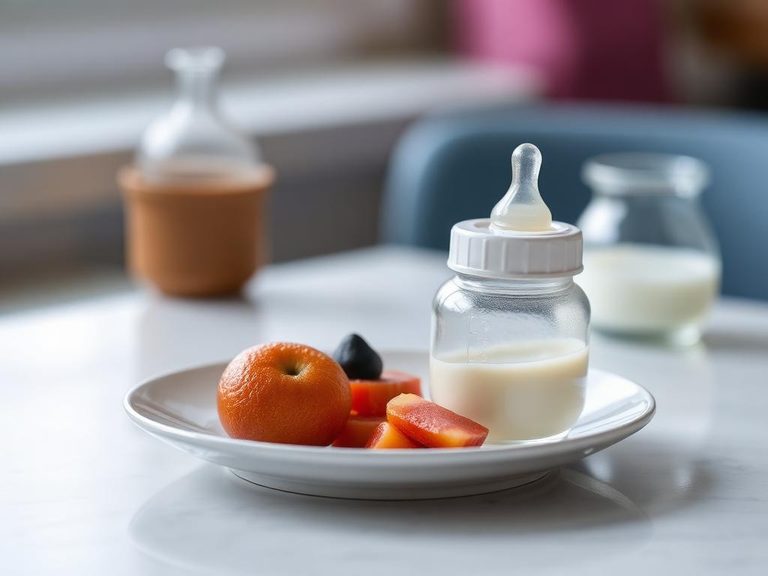
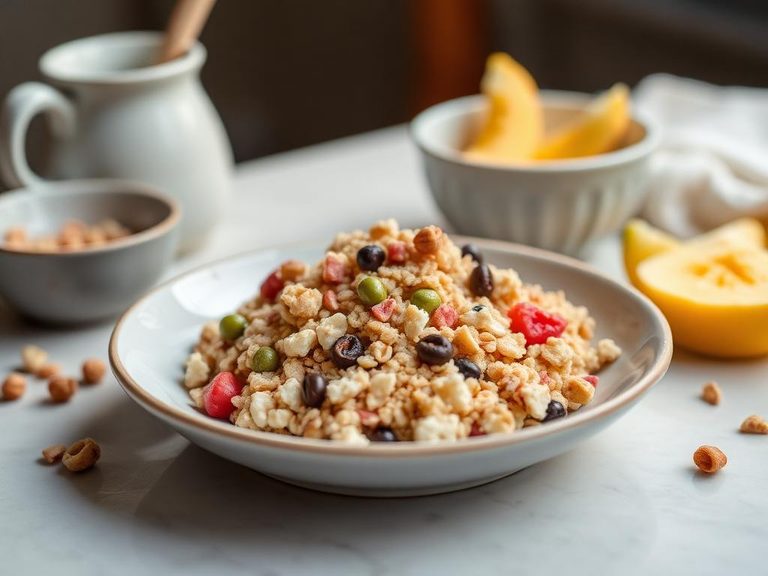
🌍 Where it's eaten
💡 Did you know?
The 'ready-to-feed' version is typically sterile through a process called ultra-high temperature (UHT) processing, which heats the liquid to over 280°F (138°C) for a few seconds, killing all microbes without preservatives.
Full nutrition (USDA data · scales with serving)
| Water | 87.3 g |
| Energy | 66.0 kcal |
| Protein | 1.4 g |
| Total lipid (fat) | 3.5 g |
| Carbohydrate, by difference | 7.4 g |
| Fiber, total dietary | 0.00 g |
| Total Sugars | 7.4 g |
| Calcium, Ca | 50.0 mg |
| Iron, Fe | 1.2 mg |
| Magnesium, Mg | 5.0 mg |
| Phosphorus, P | 28.0 mg |
| Potassium, K | 71.0 mg |
| Sodium, Na | 18.0 mg |
| Zinc, Zn | 0.66 mg |
| Copper, Cu | 0.05 mg |
| Selenium, Se | 1.9 ug |
| Vitamin C, total ascorbic acid | 8.0 mg |
| Thiamin | 0.05 mg |
| Riboflavin | 0.09 mg |
| Niacin | 0.65 mg |
| Vitamin B-6 | 0.04 mg |
| Folate, total | 10.0 ug |
| Folic acid | 10.0 ug |
| Folate, food | 0.00 ug |
| Folate, DFE | 18.0 ug |
| Choline, total | 15.7 mg |
| Vitamin B-12 | 0.20 ug |
| Vitamin B-12, added | 0.20 ug |
| Vitamin A, RAE | 59.0 ug |
| Retinol | 59.0 ug |
| Carotene, beta | 0.00 ug |
| Carotene, alpha | 0.00 ug |
| Cryptoxanthin, beta | 0.00 ug |
| Lycopene | 0.00 ug |
| Lutein + zeaxanthin | 0.00 ug |
| Vitamin E (alpha-tocopherol) | 0.89 mg |
| Vitamin E, added | 0.89 mg |
| Vitamin D (D2 + D3) | 1.0 ug |
| Vitamin K (phylloquinone) | 6.0 ug |
| Alcohol, ethyl | 0.00 g |
| Caffeine | 0.00 mg |
| Theobromine | 0.00 mg |
Fat & fatty acid profile (per 100g)
| Fatty acids, total saturated | 1.4 g |
| SFA 4:0 | 0.00 g |
| SFA 6:0 | 0.01 g |
| SFA 8:0 | 0.06 g |
| SFA 10:0 | 0.04 g |
| SFA 12:0 | 0.31 g |
| SFA 14:0 | 0.14 g |
| SFA 16:0 | 0.75 g |
| SFA 18:0 | 0.14 g |
| Fatty acids, total monounsaturated | 1.3 g |
| MUFA 16:1 | 0.01 g |
| MUFA 18:1 | 1.3 g |
| MUFA 20:1 | 0.01 g |
| MUFA 22:1 | 0.01 g |
| Fatty acids, total polyunsaturated | 0.68 g |
| PUFA 18:2 | 0.59 g |
| PUFA 18:3 | 0.06 g |
| PUFA 18:4 | 0.00 g |
| PUFA 20:4 | 0.02 g |
| PUFA 20:5 n-3 (EPA) | 0.00 g |
| PUFA 22:5 n-3 (DPA) | 0.00 g |
| PUFA 22:6 n-3 (DHA) | 0.01 g |
| Cholesterol | 0.00 mg |
FAQ
How is this different from the powdered version?
The ready-to-feed liquid is pre-mixed and sterile, offering maximum convenience. The powder is more economical and has a longer shelf life but requires careful preparation with safe water.
Can I warm it up?
Yes, you can warm a bottle by placing it in a bowl of warm water or using a bottle warmer. Never use a microwave, as it can create dangerous hot spots.
How long does it last after opening?
Once opened, the bottle should be covered, refrigerated, and used within 48 hours. Discard any unused formula after that time.
Nutrient density (calculated · NRF9.3)
Nutrient Rich Foods index: beneficial nutrients (protein, fiber, vitamins, minerals) minus saturated fat, added sugar & sodium, per 100 kcal.
NRF9.3 index — Fulgoni, Keast & Drewnowski, 2009. Computed from USDA nutrients.
Weight-loss friendliness (composite index)
Energy density 0.66 kcal/g · 8% calories from protein · 0.0 g fiber · 7.4 g sugar per 100 g.
Composite of energy density (Rolls et al., 1999), protein & fiber satiety, minus sugar. A calculated heuristic — ranks satiety-per-calorie, not a clinical measure.
Dietary load (calculated from USDA values)
Potential renal acid load. Positive = acid-forming, negative = alkaline-forming.
Sodium-to-potassium ratio: 0.25 (lower is better — aim for ≤ 1)
Sodium:potassium per WHO potassium guidance. Computed from USDA nutrients.