

Honey mustard dip
Common food

Photo: Wikipedia
Honey mustard dip is a smooth, emulsified condiment that balances the bright, tangy punch of mustard with the rich sweetness of honey. Its texture is typically creamy and pourable, ranging from thin and glossy to thick and clingy, depending on the base (mayonnaise, yogurt, or sour cream). Nutritionally, it is a high-energy, high-fat, and high-sugar accompaniment, delivering significant calories and sugar in small servings.
Calorie split: 3% protein · 37% carbs · 60% fat
↓ Full nutrition💚 Why it's loved
People adore honey mustard dip for its universally appealing sweet-and-tangy flavor profile that effortlessly bridges the gap between savory and sweet. Its versatility is legendary—it's equally at home as a salad dressing, a glaze for roasted chicken, or the essential dip for crispy chicken tenders and soft pretzels.
⚠️ Watch-outs & how to enjoy it better
The primary downside is its high sugar and calorie density, which can contribute to blood-sugar spikes if consumed in large amounts, especially by individuals managing diabetes. To mitigate this, practice strict portion control (a tablespoon or two) and pair it with high-fiber or protein-rich foods like grilled chicken, hard-boiled eggs, or raw broccoli to slow sugar absorption.
Key benefits
- Provides quick energy from simple carbohydrates (sugar).
- Contains compounds from mustard seeds, like selenium and magnesium.
- Acts as a palatable vehicle for less-liked foods (e.g., raw vegetables).
- Offers a complex flavor profile (sweet, tangy, spicy) to enhance meals.
🍽️ Popular dishes


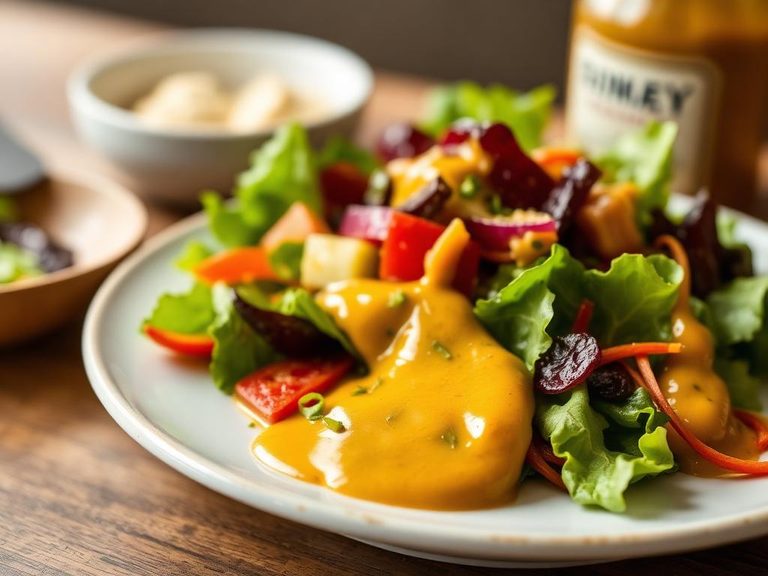
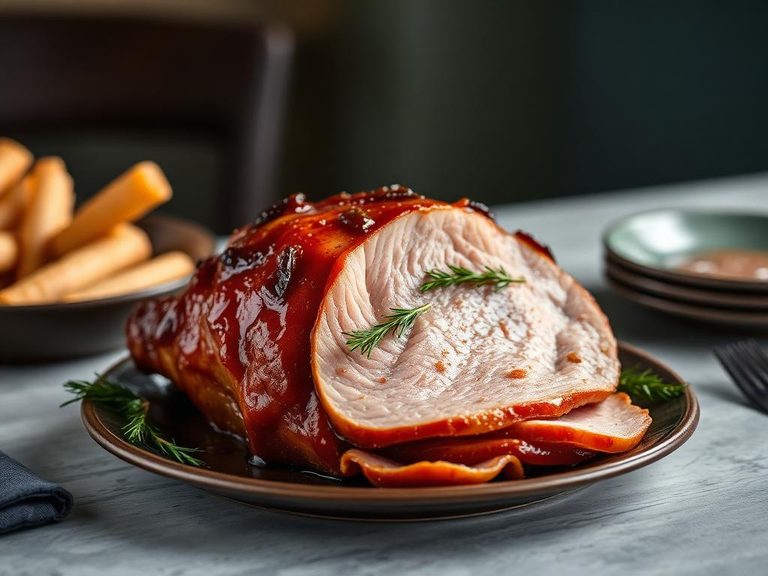


🌍 Where it's eaten
💡 Did you know?
The classic 'honey mustard' pairing is a relatively modern culinary invention, as honey and mustard were used separately in ancient Roman and Egyptian cuisines long before they were combined into a single dip.
Full nutrition (USDA data · scales with serving)
| Water | 51.9 g |
| Energy | 275 kcal |
| Protein | 1.8 g |
| Total lipid (fat) | 18.0 g |
| Carbohydrate, by difference | 25.2 g |
| Fiber, total dietary | 1.0 g |
| Total Sugars | 24.1 g |
| Calcium, Ca | 24.0 mg |
| Iron, Fe | 0.61 mg |
| Magnesium, Mg | 13.0 mg |
| Phosphorus, P | 47.0 mg |
| Potassium, K | 64.0 mg |
| Sodium, Na | 509 mg |
| Zinc, Zn | 0.28 mg |
| Copper, Cu | 0.03 mg |
| Selenium, Se | 10.9 ug |
| Vitamin C, total ascorbic acid | 0.10 mg |
| Thiamin | 0.05 mg |
| Riboflavin | 0.04 mg |
| Niacin | 0.13 mg |
| Vitamin B-6 | 0.03 mg |
| Folate, total | 9.0 ug |
| Folic acid | 0.00 ug |
| Folate, food | 9.0 ug |
| Folate, DFE | 9.0 ug |
| Choline, total | 44.1 mg |
| Vitamin B-12 | 0.09 ug |
| Vitamin B-12, added | 0.00 ug |
| Vitamin A, RAE | 19.0 ug |
| Retinol | 18.0 ug |
| Carotene, beta | 11.0 ug |
| Carotene, alpha | 2.0 ug |
| Cryptoxanthin, beta | 8.0 ug |
| Lycopene | 0.00 ug |
| Lutein + zeaxanthin | 79.0 ug |
| Vitamin E (alpha-tocopherol) | 3.3 mg |
| Vitamin E, added | 0.00 mg |
| Vitamin D (D2 + D3) | 0.30 ug |
| Vitamin K (phylloquinone) | 16.2 ug |
| Alcohol, ethyl | 0.00 g |
| Caffeine | 0.00 mg |
| Theobromine | 0.00 mg |
Fat & fatty acid profile (per 100g)
| Fatty acids, total saturated | 2.6 g |
| SFA 4:0 | 0.00 g |
| SFA 6:0 | 0.00 g |
| SFA 8:0 | 0.00 g |
| SFA 10:0 | 0.00 g |
| SFA 12:0 | 0.00 g |
| SFA 14:0 | 0.01 g |
| SFA 16:0 | 1.9 g |
| SFA 18:0 | 0.58 g |
| Fatty acids, total monounsaturated | 7.9 g |
| MUFA 16:1 | 0.10 g |
| MUFA 18:1 | 7.2 g |
| MUFA 20:1 | 0.19 g |
| MUFA 22:1 | 0.30 g |
| Fatty acids, total polyunsaturated | 6.5 g |
| PUFA 18:2 | 5.6 g |
| PUFA 18:3 | 0.80 g |
| PUFA 18:4 | 0.00 g |
| PUFA 20:4 | 0.02 g |
| PUFA 20:5 n-3 (EPA) | 0.00 g |
| PUFA 22:5 n-3 (DPA) | 0.00 g |
| PUFA 22:6 n-3 (DHA) | 0.01 g |
| Cholesterol | 51.0 mg |
FAQ
Is honey mustard dip the same as honey mustard dressing?
Not exactly. While the flavor base is similar, a dip is generally thicker and richer (often with a mayonnaise or sour cream base) for clinging to foods, whereas a dressing is thinner and pourable for coating salads.
Can I make a healthier version at home?
Yes. You can significantly reduce sugar and fat by using a base of plain Greek yogurt, mixing in Dijon mustard, a small amount of honey, and spices like paprika or garlic powder.
What's the best way to store leftover honey mustard dip?
Store it in an airtight container in the refrigerator. Most homemade versions will keep well for 3-5 days. The texture may thicken slightly when chilled.
Nutrient density (calculated · NRF9.3)
Nutrient Rich Foods index: beneficial nutrients (protein, fiber, vitamins, minerals) minus saturated fat, added sugar & sodium, per 100 kcal.
NRF9.3 index — Fulgoni, Keast & Drewnowski, 2009. Computed from USDA nutrients.
Weight-loss friendliness (composite index)
Energy density 2.75 kcal/g · 3% calories from protein · 1.0 g fiber · 24.1 g sugar per 100 g.
Composite of energy density (Rolls et al., 1999), protein & fiber satiety, minus sugar. A calculated heuristic — ranks satiety-per-calorie, not a clinical measure.
Dietary load (calculated from USDA values)
Potential renal acid load. Positive = acid-forming, negative = alkaline-forming.
Sodium-to-potassium ratio: 7.95 (lower is better — aim for ≤ 1)
Sodium:potassium per WHO potassium guidance. Computed from USDA nutrients.