

Honey Mustard Salad Dressing
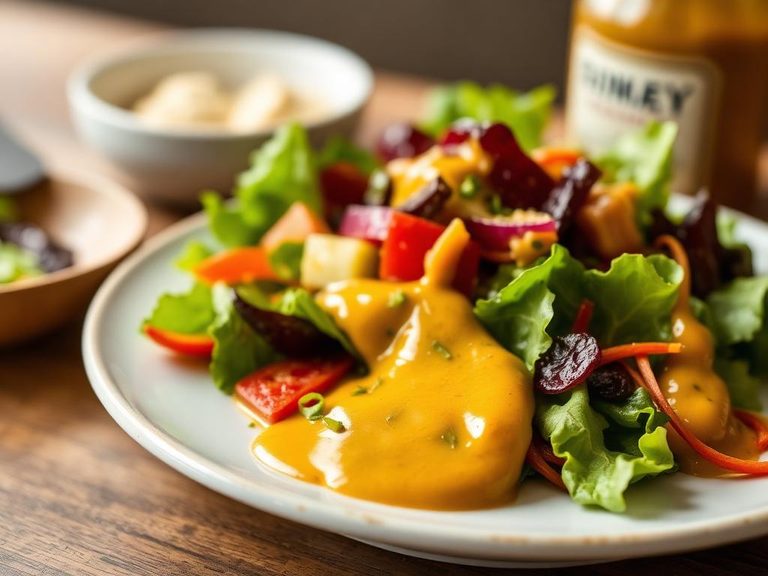
Honey Mustard Salad Dressing is a popular, creamy condiment that blends the sweetness of honey with the tangy, sharp kick of mustard. It typically includes ingredients like honey, Dijon or whole-grain mustard, mayonnaise or yogurt for creaminess, and a splash of vinegar or lemon juice. While its exact origins are debated, it's widely considered a modern American creation that has become a staple in Western cuisine.
🍽️ Nutrition at a glance
This dressing is generally high in fat and sugar, with a moderate calorie count of around 100-150 calories per two-tablespoon serving. It provides quick energy from carbohydrates (sugar) and some fat, but is not a significant source of protein, vitamins, or minerals.
Nutrition breakdown
| Calories | 120 kcal |
| Protein | 0.2 g |
| Carbs | 5.5 g |
| Fat | 11.5 g |
| Fiber | 0.2 g |
| Sugar | 5 g |
| Sodium | 320 mg |
| Potassium | 15 mg |
| Vitamin E | 1.2 mg |
| Vitamin K | 8 µg |
| Calcium | 5 mg |
| Iron | 0.1 mg |
| Magnesium | 2 mg |
| Phosphorus | 10 mg |
| Manganese | 0.05 mg |
Per 2 tablespoons (30 g) · estimated, varies by recipe
💡 What's interesting
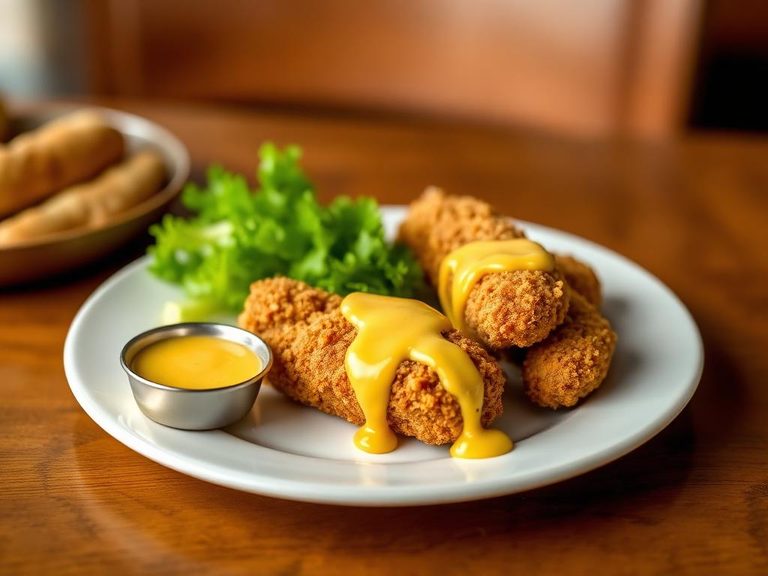
Culturally, honey mustard represents a perfect balance of contrasting flavors—sweet and savory—that makes it exceptionally versatile, used not just on salads but as a dip for chicken tenders, pretzels, and appetizers. Nutritionally, its appeal lies in this flavor balance, which can make healthier foods like raw vegetables more palatable, though it's best used in moderation due to its calorie density.
🍽️ Related dishes



AI estimate may be inaccurate · Terms