

Grape leaves, canned
Whole food · Vegetables and Vegetable Products

Photo: Wikipedia
Canned grape leaves are tender, brined leaves with a distinct tangy, slightly earthy flavor and a soft, pliable texture perfect for wrapping. They are a low-calorie, high-fiber ingredient, offering nearly 10 grams of dietary fiber per 100 grams, which is exceptional for a vegetable product.
Calorie split: 21% protein · 57% carbs · 22% fat
↓ Full nutrition💚 Why it's loved
People adore grape leaves for their unique, savory flavor that perfectly complements rich fillings like rice, herbs, and meat. They are the essential wrapper for iconic dishes like dolmas, making them a beloved staple in Mediterranean, Middle Eastern, and Balkan cuisines.
⚠️ Watch-outs & how to enjoy it better
Canned grape leaves are typically packed in a high-sodium brine, which can be a concern for those monitoring salt intake. To counteract this, always rinse the leaves thoroughly under cold water before use. Their tartness, from natural oxalic acid, can also be intense for some; pairing them with fatty ingredients like olive oil or meat in the filling helps balance the flavor.
Key benefits
- Excellent source of dietary fiber (9.9g per 100g)
- Very low in calories (69 kcal per 100g)
- Good plant-based protein content (4.27g per 100g)
- Contains no added sugar
- Rich in antioxidants like flavonoids and polyphenols
🍽️ Popular dishes
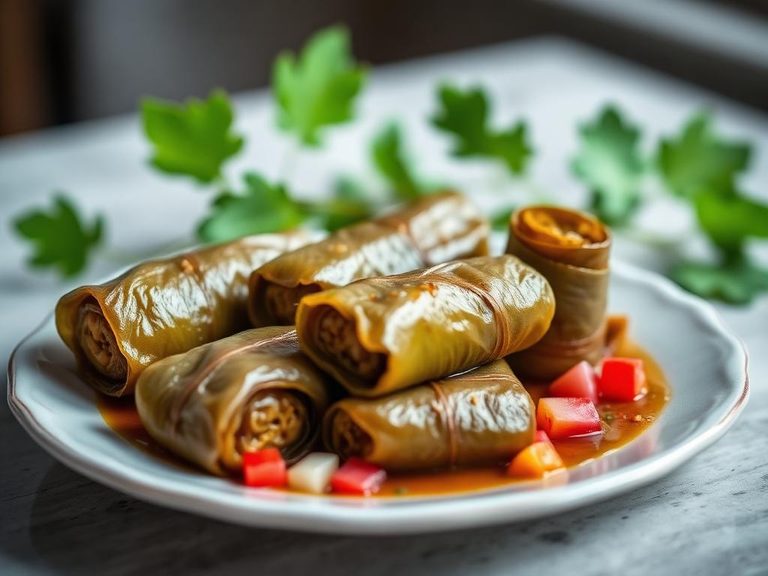
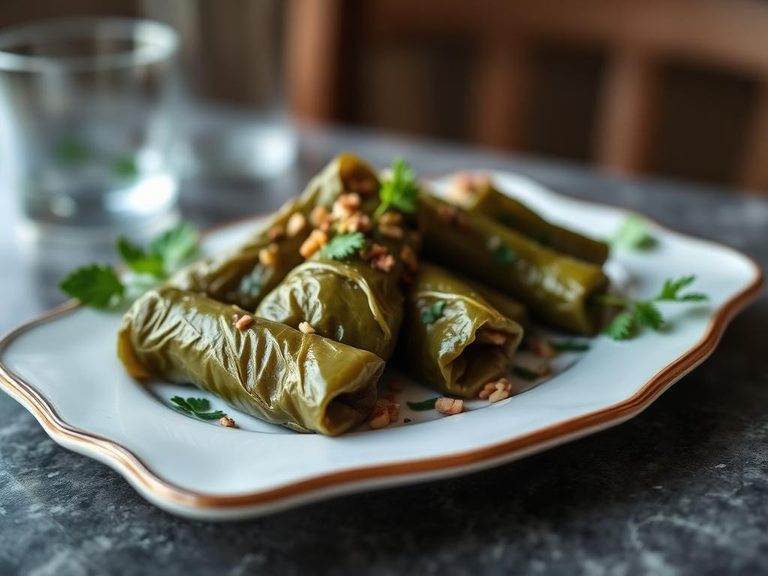
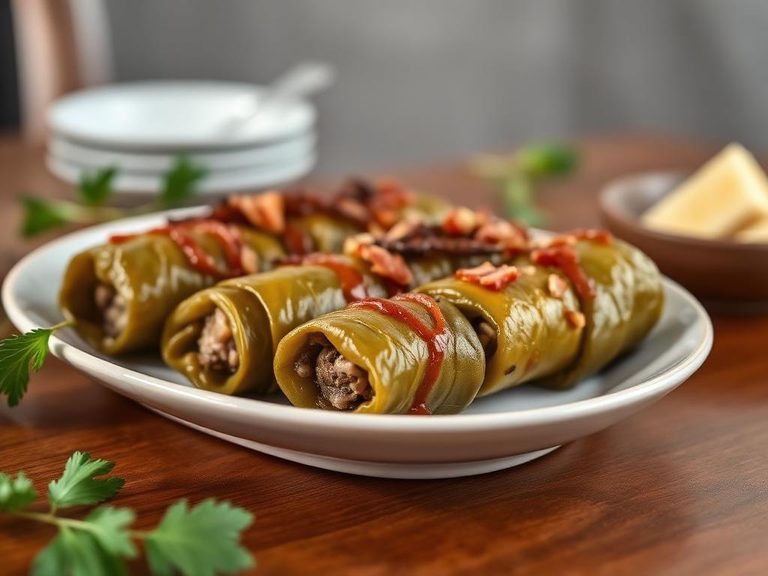
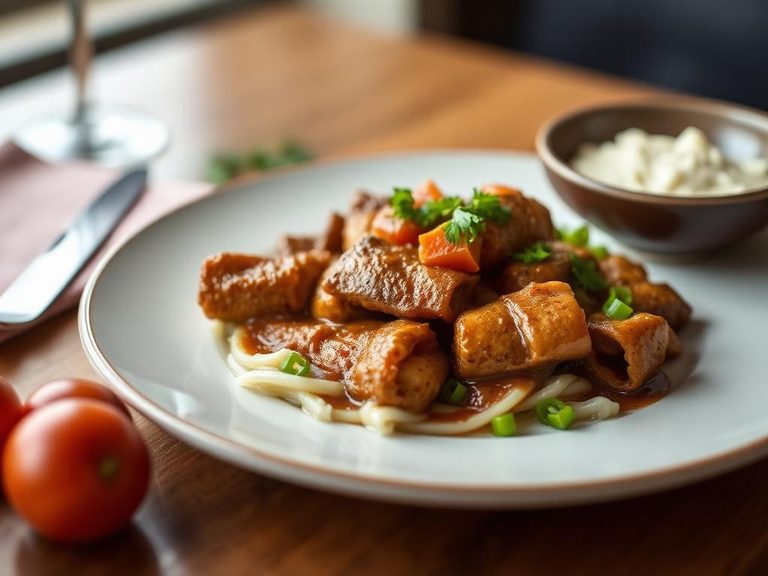
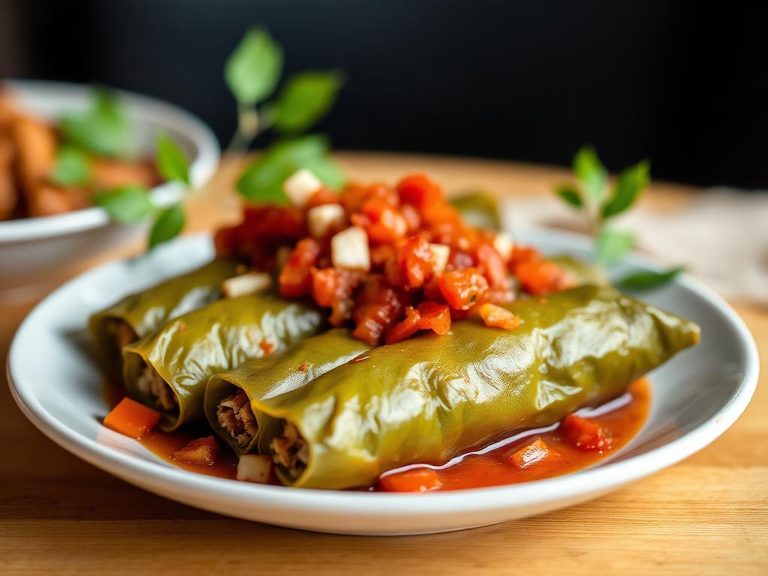
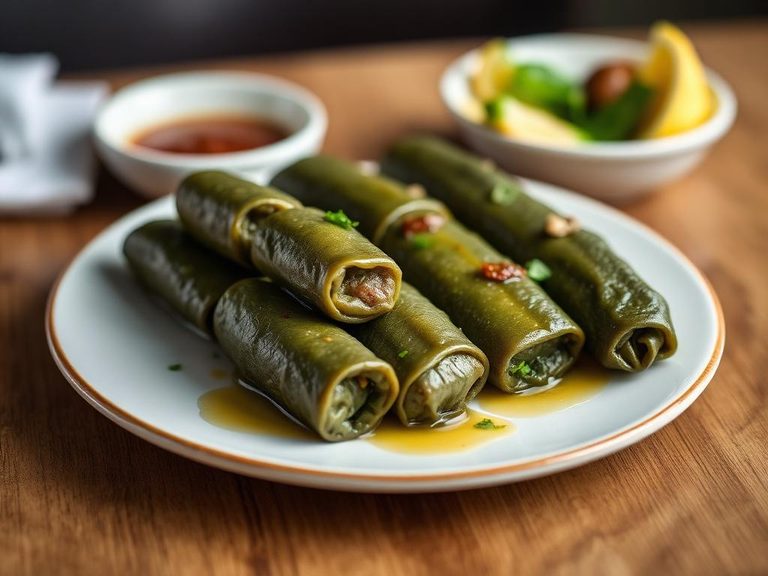
🌍 Where it's eaten
💡 Did you know?
The practice of wrapping food in leaves is ancient, but the specific use of grape leaves for dolmas is believed to have been perfected in the royal kitchens of the Ottoman Empire.
Full nutrition (USDA data · scales with serving)
| Water | 76.1 g |
| Energy | 69.0 kcal |
| Energy | 287 kj |
| Protein | 4.3 g |
| Total lipid (fat) | 2.0 g |
| Ash | 6.0 g |
| Carbohydrate, by difference | 11.7 g |
| Fiber, total dietary | 9.9 g |
| Calcium, Ca | 289 mg |
| Iron, Fe | 3.0 mg |
| Magnesium, Mg | 14.0 mg |
| Phosphorus, P | 34.0 mg |
| Potassium, K | 29.0 mg |
| Sodium, Na | 2853 mg |
| Zinc, Zn | 0.40 mg |
| Copper, Cu | 1.8 mg |
| Manganese, Mn | 0.29 mg |
| Selenium, Se | 0.90 ug |
| Vitamin C, total ascorbic acid | 11.3 mg |
| Thiamin | 0.06 mg |
| Riboflavin | 0.36 mg |
| Niacin | 4.5 mg |
| Pantothenic acid | 4.3 mg |
| Vitamin B-6 | 0.14 mg |
| Folate, total | 78.0 ug |
| Folic acid | 0.00 ug |
| Folate, food | 78.0 ug |
| Folate, DFE | 78.0 ug |
| Vitamin B-12 | 0.00 ug |
| Vitamin A, RAE | 263 ug |
| Retinol | 0.00 ug |
| Carotene, beta | 2838 ug |
| Carotene, alpha | 629 ug |
| Cryptoxanthin, beta | 0.00 ug |
| Vitamin A, IU | 5253 iu |
| Lycopene | 0.00 ug |
| Lutein + zeaxanthin | 1487 ug |
| Vitamin E (alpha-tocopherol) | 1.8 mg |
| Vitamin D (D2 + D3), International Units | 0.00 iu |
| Vitamin D (D2 + D3) | 0.00 ug |
| Vitamin K (phylloquinone) | 97.3 ug |
| Alcohol, ethyl | 0.00 g |
| Caffeine | 0.00 mg |
| Theobromine | 0.00 mg |
Fat & fatty acid profile (per 100g)
| Fatty acids, total saturated | 0.31 g |
| SFA 14:0 | 0.01 g |
| SFA 15:0 | 0.01 g |
| SFA 16:0 | 0.24 g |
| SFA 17:0 | 0.00 g |
| SFA 18:0 | 0.03 g |
| SFA 20:0 | 0.01 g |
| SFA 22:0 | 0.01 g |
| SFA 24:0 | 0.01 g |
| Fatty acids, total monounsaturated | 0.08 g |
| MUFA 14:1 | 0.00 g |
| MUFA 16:1 | 0.03 g |
| MUFA 18:1 | 0.04 g |
| Fatty acids, total polyunsaturated | 0.99 g |
| PUFA 18:2 | 0.15 g |
| PUFA 18:3 | 0.84 g |
| Fatty acids, total trans | 0.00 g |
| Cholesterol | 0.00 mg |
FAQ
Do I need to cook canned grape leaves before using them?
No, they are already blanched and preserved. You simply need to rinse them to remove excess brine, then they are ready to be stuffed and cooked in your recipe.
What's the difference between grape leaves and vine leaves?
They are the same thing. 'Vine leaves' is a more general term, but in the context of dolmas, it almost always refers to the leaves of the grape vine (Vitis vinifera).
How should I store leftover canned grape leaves after opening?
Transfer any unused leaves and their brine to a clean, airtight container. They will keep in the refrigerator for up to a week. You can also freeze them in a single layer on a baking sheet before transferring to a bag for longer storage.
Nutrient density (calculated · NRF9.3)
Nutrient Rich Foods index: beneficial nutrients (protein, fiber, vitamins, minerals) minus saturated fat, added sugar & sodium, per 100 kcal.
NRF9.3 index — Fulgoni, Keast & Drewnowski, 2009. Computed from USDA nutrients.
Weight-loss friendliness (composite index)
Energy density 0.69 kcal/g · 25% calories from protein · 9.9 g fiber · 0.0 g sugar per 100 g.
Composite of energy density (Rolls et al., 1999), protein & fiber satiety, minus sugar. A calculated heuristic — ranks satiety-per-calorie, not a clinical measure.
Dietary load (calculated from USDA values)
Potential renal acid load. Positive = acid-forming, negative = alkaline-forming.
Sodium-to-potassium ratio: 98.38 (lower is better — aim for ≤ 1)
Sodium:potassium per WHO potassium guidance. Computed from USDA nutrients.