

Gnocchi, potato
Common food

Photo: Wikipedia
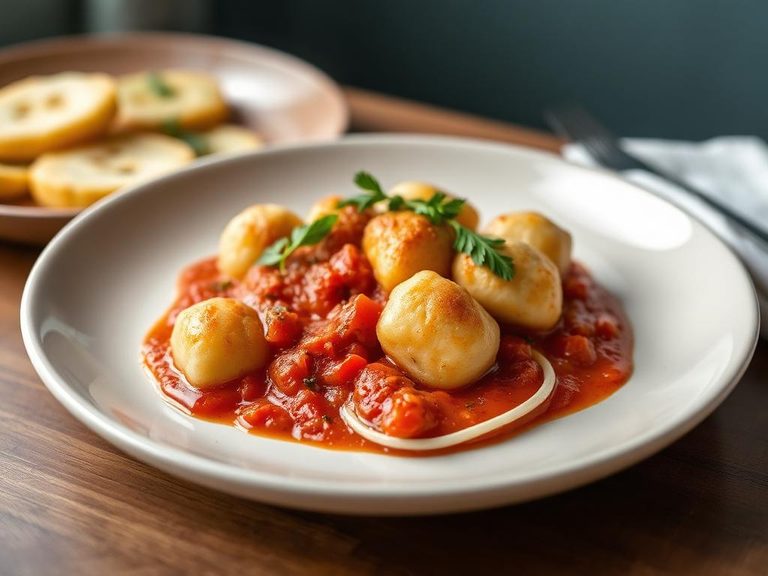
Gnocchi are small, pillowy dumplings traditionally made from potato, flour, and egg, offering a delightfully soft, chewy texture that melts in the mouth. They have a mild, starchy flavor that acts as a perfect canvas for bold sauces. Nutritionally, they provide a quick source of energy from carbohydrates with a moderate calorie count.
Calorie split: 7% protein · 51% carbs · 42% fat
↓ Full nutrition💚 Why it's loved
People adore gnocchi for their comforting, cloud-like texture and ability to absorb the flavors of accompanying sauces, from simple sage butter to rich ragù. They are a beloved staple in Italian home cooking, representing warmth and tradition.
⚠️ Watch-outs & how to enjoy it better
Their high carbohydrate and low fiber content can lead to blood sugar spikes, especially for those with insulin resistance. To counteract this, pair gnocchi with a source of protein (like chicken or beans) and healthy fats (like olive oil or cheese), and load the plate with non-starchy vegetables to slow digestion.
Key benefits
- Provides quick energy from complex carbohydrates
- Contains some protein for muscle maintenance
- Versatile base for nutrient-dense sauces and vegetables
- Can be a comforting, easy-to-digest food
- Offers a gluten-free option when made with specific flours
🍽️ Popular dishes
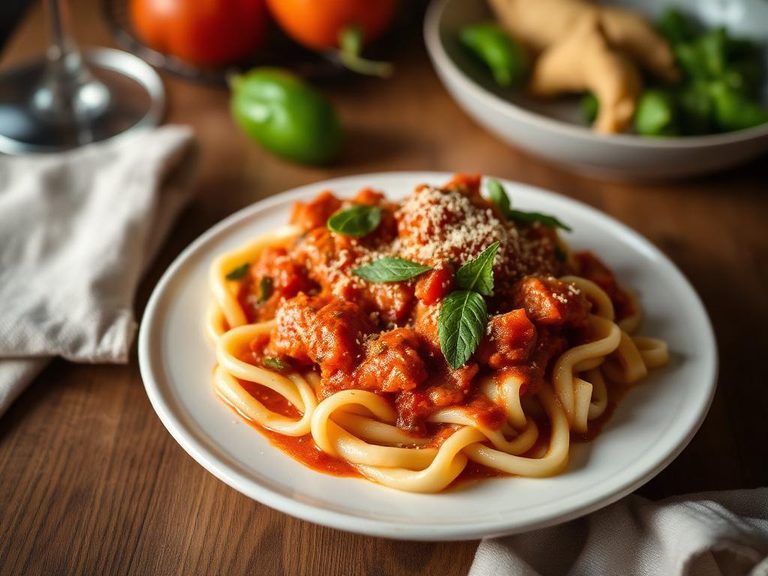
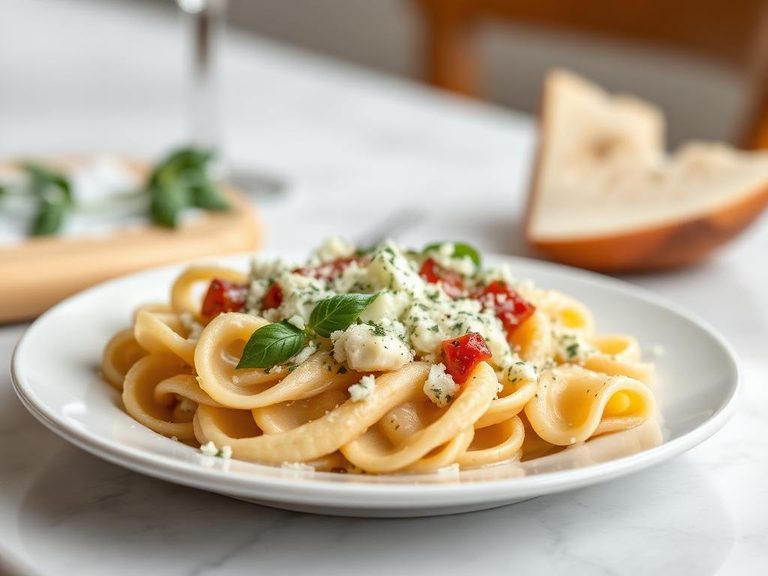
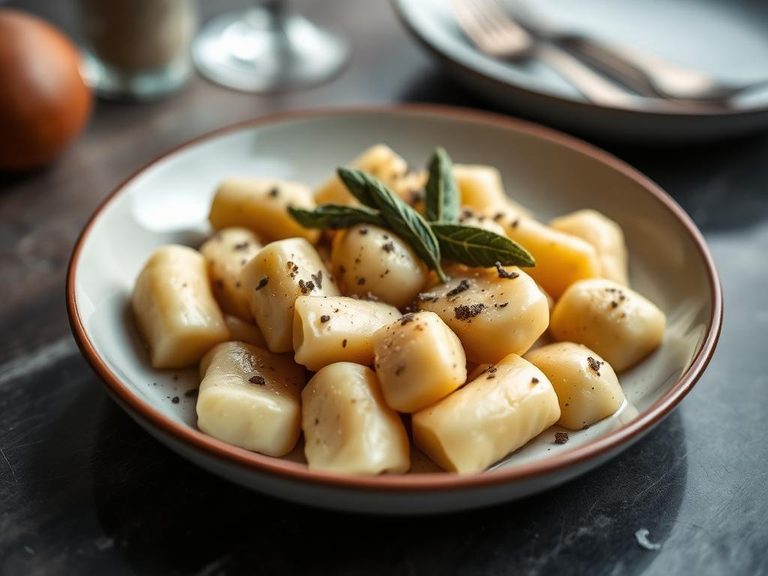
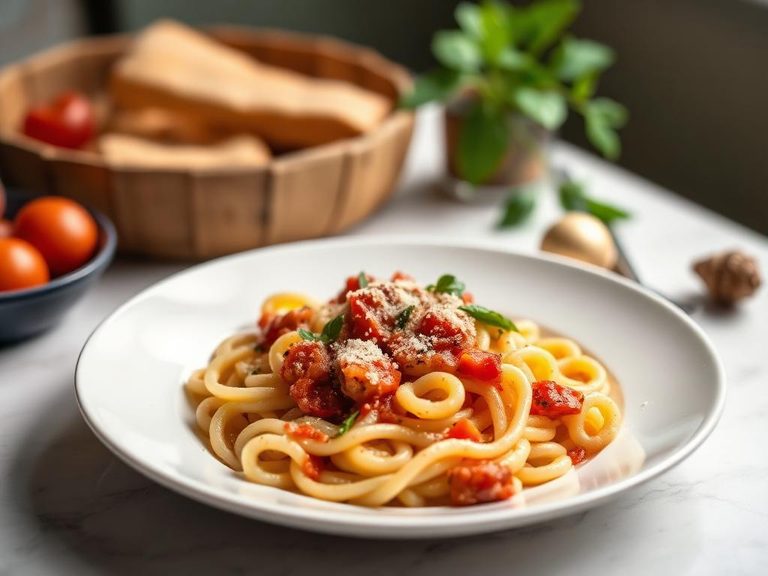
🌍 Where it's eaten
💡 Did you know?
While potato gnocchi is the most common today, the original Italian 'gnocchi' were often made from semolina flour or bread crumbs, with potato becoming popular only after the tuber was introduced to Europe from the Americas.
Full nutrition (USDA data · scales with serving)
| Water | 72.9 g |
| Energy | 135 kcal |
| Protein | 2.4 g |
| Total lipid (fat) | 6.3 g |
| Carbohydrate, by difference | 17.2 g |
| Fiber, total dietary | 1.0 g |
| Total Sugars | 0.99 g |
| Calcium, Ca | 22.0 mg |
| Iron, Fe | 0.83 mg |
| Magnesium, Mg | 12.0 mg |
| Phosphorus, P | 41.0 mg |
| Potassium, K | 139 mg |
| Sodium, Na | 279 mg |
| Zinc, Zn | 0.24 mg |
| Copper, Cu | 0.07 mg |
| Selenium, Se | 2.3 ug |
| Vitamin C, total ascorbic acid | 1.9 mg |
| Thiamin | 0.13 mg |
| Riboflavin | 0.07 mg |
| Niacin | 1.2 mg |
| Vitamin B-6 | 0.10 mg |
| Folate, total | 17.0 ug |
| Folic acid | 12.0 ug |
| Folate, food | 5.0 ug |
| Folate, DFE | 26.0 ug |
| Choline, total | 9.1 mg |
| Vitamin B-12 | 0.06 ug |
| Vitamin B-12, added | 0.00 ug |
| Vitamin A, RAE | 62.0 ug |
| Retinol | 60.0 ug |
| Carotene, beta | 27.0 ug |
| Carotene, alpha | 0.00 ug |
| Cryptoxanthin, beta | 4.0 ug |
| Lycopene | 0.00 ug |
| Lutein + zeaxanthin | 15.0 ug |
| Vitamin E (alpha-tocopherol) | 0.03 mg |
| Vitamin E, added | 0.00 mg |
| Vitamin D (D2 + D3) | 0.20 ug |
| Vitamin K (phylloquinone) | 1.3 ug |
| Alcohol, ethyl | 0.00 g |
| Caffeine | 0.00 mg |
| Theobromine | 0.00 mg |
Fat & fatty acid profile (per 100g)
| Fatty acids, total saturated | 3.4 g |
| SFA 4:0 | 0.15 g |
| SFA 6:0 | 0.11 g |
| SFA 8:0 | 0.06 g |
| SFA 10:0 | 0.14 g |
| SFA 12:0 | 0.17 g |
| SFA 14:0 | 0.53 g |
| SFA 16:0 | 1.6 g |
| SFA 18:0 | 0.56 g |
| Fatty acids, total monounsaturated | 1.3 g |
| MUFA 16:1 | 0.07 g |
| MUFA 18:1 | 1.1 g |
| MUFA 20:1 | 0.01 g |
| MUFA 22:1 | 0.00 g |
| Fatty acids, total polyunsaturated | 0.26 g |
| PUFA 18:2 | 0.23 g |
| PUFA 18:3 | 0.03 g |
| PUFA 18:4 | 0.00 g |
| PUFA 20:4 | 0.01 g |
| PUFA 20:5 n-3 (EPA) | 0.00 g |
| PUFA 22:5 n-3 (DPA) | 0.00 g |
| PUFA 22:6 n-3 (DHA) | 0.00 g |
| Cholesterol | 18.0 mg |
FAQ
Are gnocchi gluten-free?
Traditional gnocchi contain wheat flour, so they are not gluten-free. However, many brands now offer gluten-free versions using potato starch, rice flour, or other alternatives.
What's the difference between gnocchi and pasta?
Gnocchi are dumplings, typically made with potato and a small amount of flour, giving them a soft, pillowy texture. Pasta is made from durum wheat semolina and water (or egg), resulting in a firmer, chewier bite.
How do I prevent gnocchi from becoming gummy?
The key is to use minimal flour and handle the dough as little as possible. Overworking the dough develops gluten, leading to a tough, gummy texture. Also, ensure your potatoes are dry and riced, not mashed.
Nutrient density (calculated · NRF9.3)
Nutrient Rich Foods index: beneficial nutrients (protein, fiber, vitamins, minerals) minus saturated fat, added sugar & sodium, per 100 kcal.
NRF9.3 index — Fulgoni, Keast & Drewnowski, 2009. Computed from USDA nutrients.
Weight-loss friendliness (composite index)
Energy density 1.35 kcal/g · 7% calories from protein · 1.0 g fiber · 1.0 g sugar per 100 g.
Composite of energy density (Rolls et al., 1999), protein & fiber satiety, minus sugar. A calculated heuristic — ranks satiety-per-calorie, not a clinical measure.
Dietary load (calculated from USDA values)
Potential renal acid load. Positive = acid-forming, negative = alkaline-forming.
Sodium-to-potassium ratio: 2.01 (lower is better — aim for ≤ 1)
Sodium:potassium per WHO potassium guidance. Computed from USDA nutrients.