

Fruit salad, including citrus fruits, with nondairy whipped topping
Common food

Photo: Wikipedia
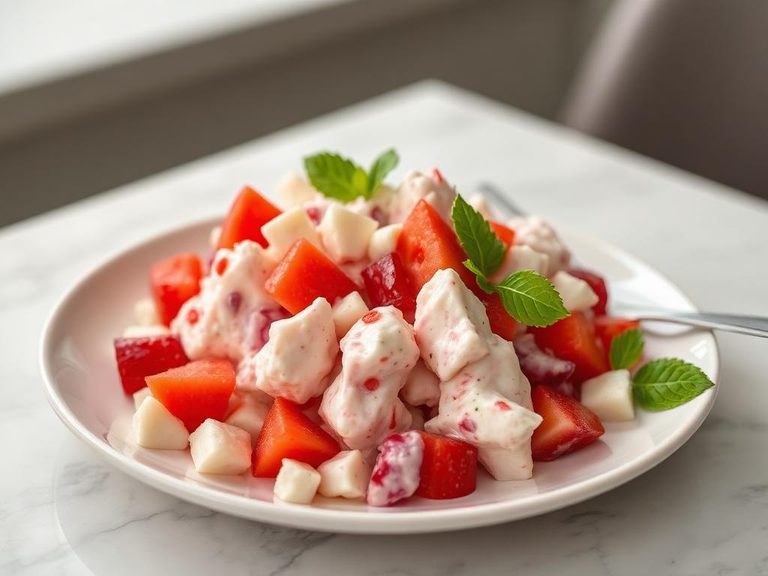
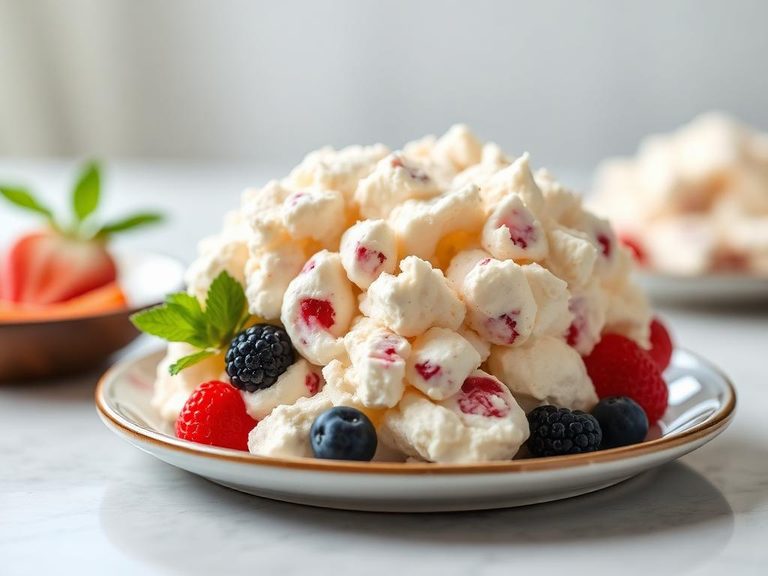
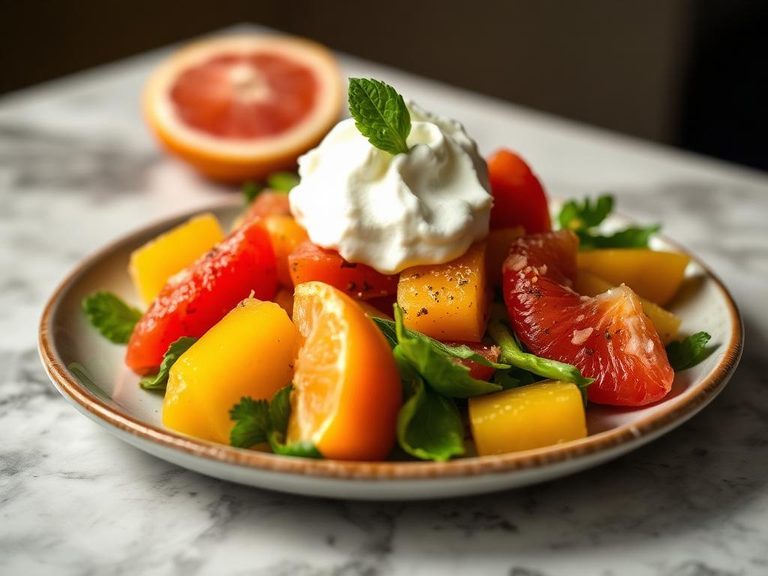
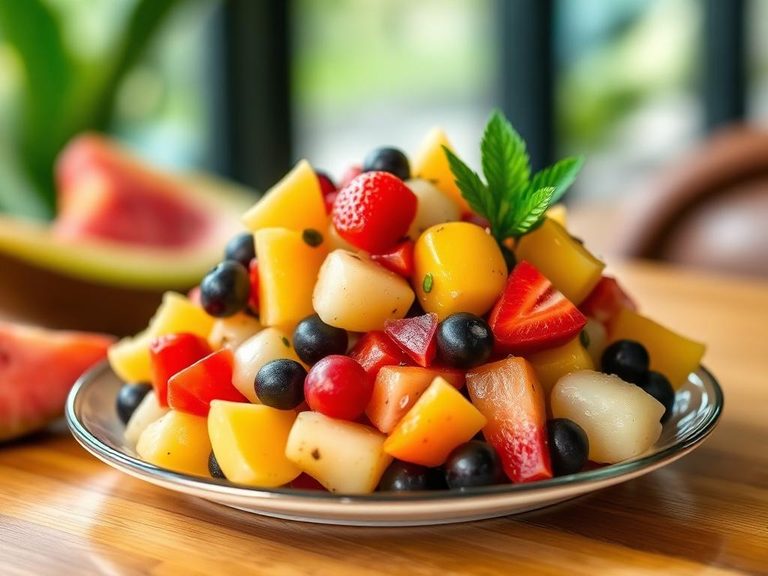
A vibrant medley of fresh citrus segments like orange, grapefruit, and mandarin, tossed with other seasonal fruits and crowned with a light, airy cloud of nondairy whipped topping. The texture is a delightful contrast between juicy, fibrous fruit and the smooth, sweet cream. At 148 kcal per 100g, it's a relatively light dessert where the fat from the topping provides a satisfying richness.
Calorie split: 5% protein · 44% carbs · 51% fat
↓ Full nutrition💚 Why it's loved
People love it for the refreshing burst of citrus acidity balanced by the sweet, creamy topping, making it a crowd-pleasing, no-bake dessert. Its versatility allows for endless seasonal fruit combinations, and it often evokes nostalgic, celebratory feelings from potlucks and holiday meals.
⚠️ Watch-outs & how to enjoy it better
The nondairy topping can be high in added sugars and refined vegetable oils, potentially causing blood-sugar spikes, and some brands contain common allergens like soy lecithin. To counteract, choose a topping with minimal ingredients, pair the salad with a source of protein or healthy fat (like nuts or Greek yogurt on the side), and practice portion control. Citrus fruits may also aggravate acid reflux in sensitive individuals.
Key benefits
- Good source of dietary fiber from whole fruit.
- Provides vitamin C from citrus components.
- Lower in saturated fat than dairy-based whipped cream.
- Quick source of natural sugars for energy.
- Offers hydration from high water-content fruits.
🍽️ Popular dishes
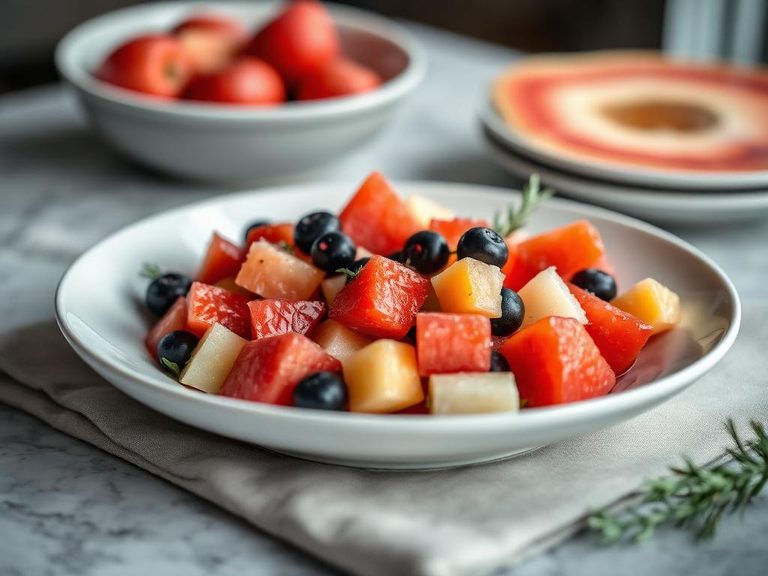
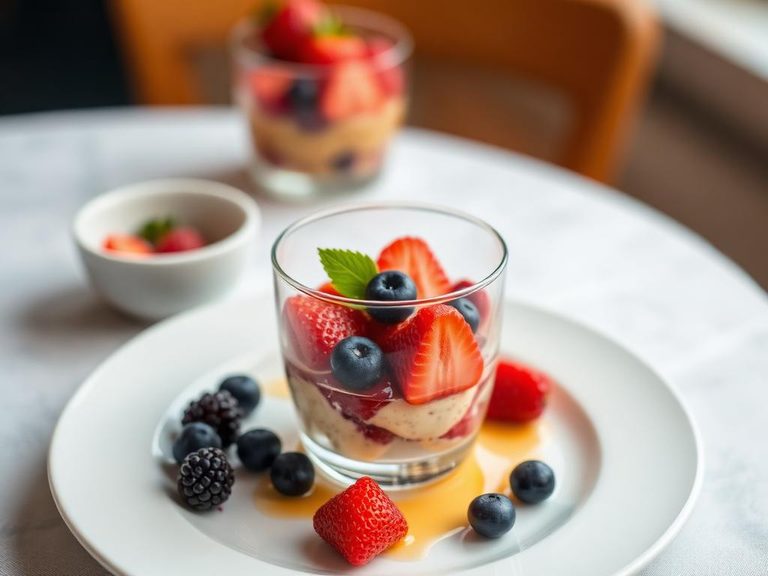
🌍 Where it's eaten
💡 Did you know?
The classic 'Ambrosia' salad, a close relative, was originally made with canned mandarin oranges, pineapple, and marshmallows, and its name comes from the Greek mythological food of the gods.
Full nutrition (USDA data · scales with serving)
| Water | 72.4 g |
| Energy | 148 kcal |
| Protein | 2.0 g |
| Total lipid (fat) | 8.4 g |
| Carbohydrate, by difference | 16.6 g |
| Fiber, total dietary | 2.1 g |
| Total Sugars | 12.5 g |
| Calcium, Ca | 23.0 mg |
| Iron, Fe | 0.29 mg |
| Magnesium, Mg | 24.0 mg |
| Phosphorus, P | 48.0 mg |
| Potassium, K | 216 mg |
| Sodium, Na | 3.0 mg |
| Zinc, Zn | 0.32 mg |
| Copper, Cu | 0.16 mg |
| Selenium, Se | 0.80 ug |
| Vitamin C, total ascorbic acid | 18.8 mg |
| Thiamin | 0.07 mg |
| Riboflavin | 0.04 mg |
| Niacin | 0.38 mg |
| Vitamin B-6 | 0.14 mg |
| Folate, total | 21.0 ug |
| Folic acid | 0.00 ug |
| Folate, food | 21.0 ug |
| Folate, DFE | 21.0 ug |
| Choline, total | 9.6 mg |
| Vitamin B-12 | 0.00 ug |
| Vitamin B-12, added | 0.00 ug |
| Vitamin A, RAE | 5.0 ug |
| Retinol | 0.00 ug |
| Carotene, beta | 40.0 ug |
| Carotene, alpha | 5.0 ug |
| Cryptoxanthin, beta | 34.0 ug |
| Lycopene | 0.00 ug |
| Lutein + zeaxanthin | 57.0 ug |
| Vitamin E (alpha-tocopherol) | 0.27 mg |
| Vitamin E, added | 0.00 mg |
| Vitamin D (D2 + D3) | 0.00 ug |
| Vitamin K (phylloquinone) | 3.1 ug |
| Alcohol, ethyl | 0.00 g |
| Caffeine | 0.00 mg |
| Theobromine | 0.00 mg |
Fat & fatty acid profile (per 100g)
| Fatty acids, total saturated | 2.3 g |
| SFA 4:0 | 0.00 g |
| SFA 6:0 | 0.00 g |
| SFA 8:0 | 0.05 g |
| SFA 10:0 | 0.07 g |
| SFA 12:0 | 0.67 g |
| SFA 14:0 | 0.29 g |
| SFA 16:0 | 0.68 g |
| SFA 18:0 | 0.50 g |
| Fatty acids, total monounsaturated | 1.0 g |
| MUFA 16:1 | 0.02 g |
| MUFA 18:1 | 0.92 g |
| MUFA 20:1 | 0.01 g |
| MUFA 22:1 | 0.00 g |
| Fatty acids, total polyunsaturated | 4.6 g |
| PUFA 18:2 | 3.5 g |
| PUFA 18:3 | 0.86 g |
| PUFA 18:4 | 0.00 g |
| PUFA 20:4 | 0.00 g |
| PUFA 20:5 n-3 (EPA) | 0.00 g |
| PUFA 22:5 n-3 (DPA) | 0.00 g |
| PUFA 22:6 n-3 (DHA) | 0.00 g |
| Cholesterol | 0.00 mg |
FAQ
Is this fruit salad vegan?
It can be, if the whipped topping is made from non-dairy ingredients like coconut or soy cream. Always check the label, as some 'nondairy' toppings may contain casein (a milk derivative).
How can I make it healthier?
Use fresh, whole fruits instead of canned (which often have added syrup), choose a whipped topping with no added sugars or hydrogenated oils, and consider adding a handful of nuts or seeds for extra protein and healthy fats.
Why does my fruit salad get watery?
Fruits release water when cut, especially if they are very ripe or have been sitting. To prevent this, toss the fruit with the topping just before serving, or use firmer fruits like apples and grapes alongside the citrus.
Nutrient density (calculated · NRF9.3)
Nutrient Rich Foods index: beneficial nutrients (protein, fiber, vitamins, minerals) minus saturated fat, added sugar & sodium, per 100 kcal.
NRF9.3 index — Fulgoni, Keast & Drewnowski, 2009. Computed from USDA nutrients.
Weight-loss friendliness (composite index)
Energy density 1.48 kcal/g · 5% calories from protein · 2.1 g fiber · 12.5 g sugar per 100 g.
Composite of energy density (Rolls et al., 1999), protein & fiber satiety, minus sugar. A calculated heuristic — ranks satiety-per-calorie, not a clinical measure.
Dietary load (calculated from USDA values)
Potential renal acid load. Positive = acid-forming, negative = alkaline-forming.
Sodium-to-potassium ratio: 0.01 (lower is better — aim for ≤ 1)
Sodium:potassium per WHO potassium guidance. Computed from USDA nutrients.