

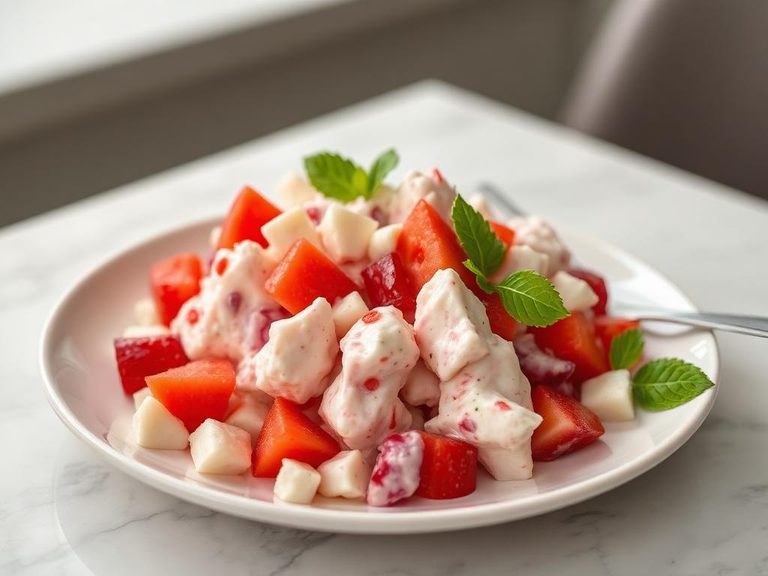
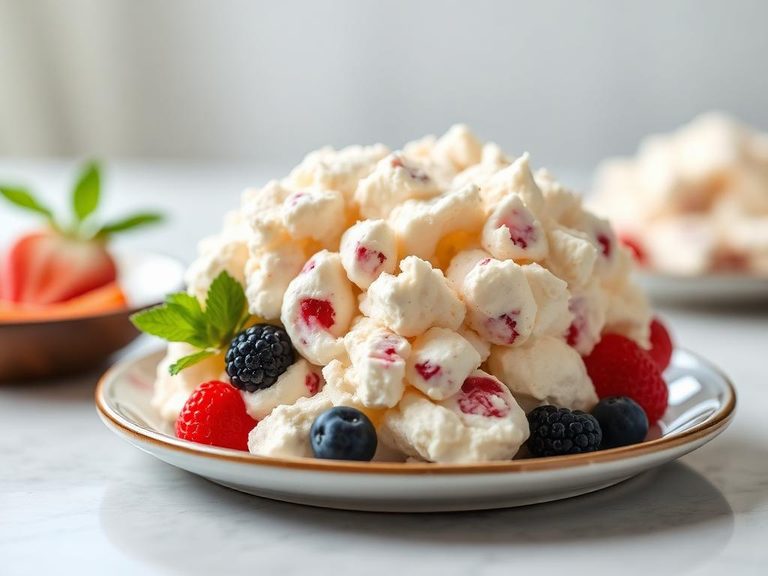
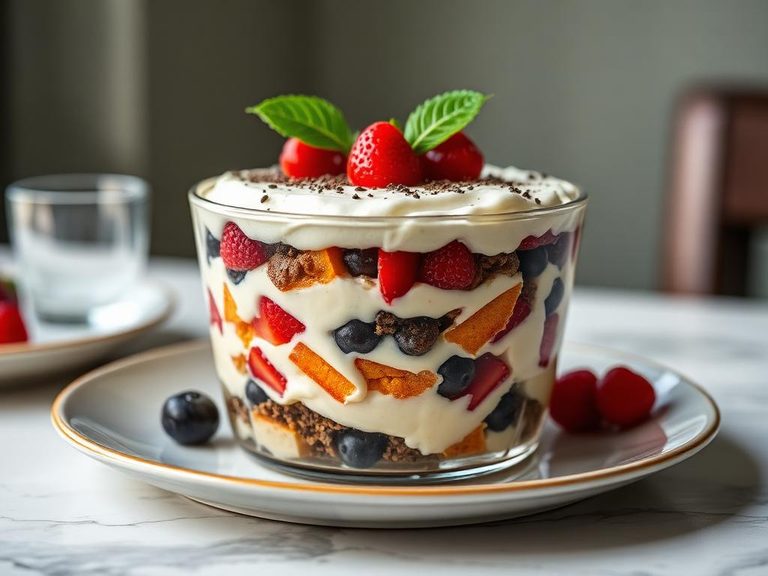
Fruit salad, excluding citrus fruits, with nondairy whipped topping
Common food

Photo: Wikipedia
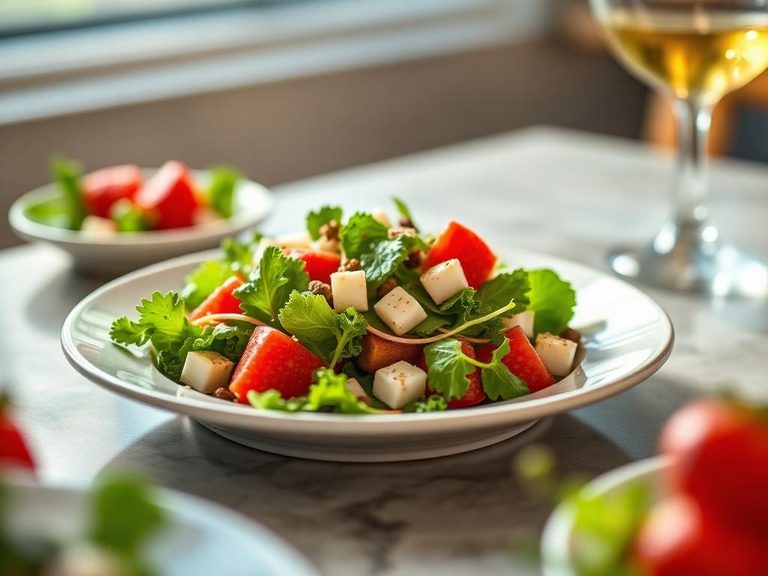
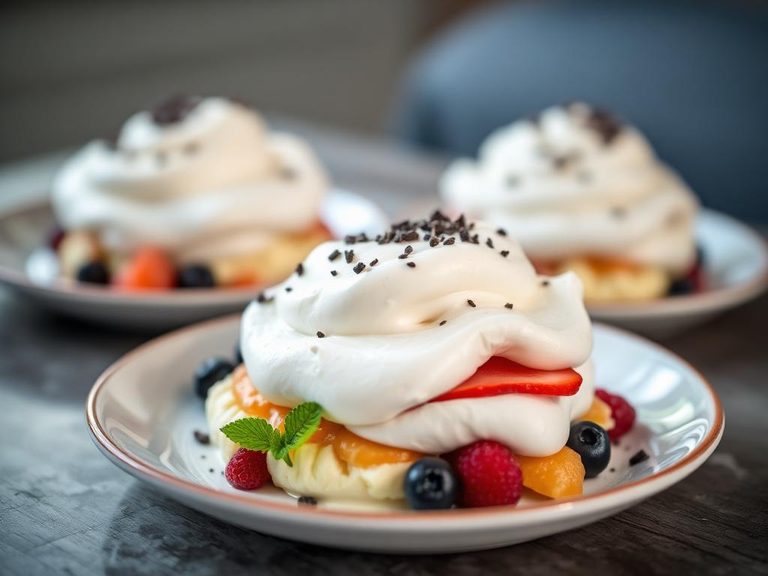
This is a vibrant, chilled medley of non-citrus fruits—think berries, melon, pineapple, and grapes—lightly folded with a cloud of sweet, airy nondairy whipped topping. The texture is a delightful contrast between juicy, tender fruit and the smooth, creamy topping. Nutritionally, it's a light, low-calorie treat primarily composed of natural sugars and fats from the topping.
Calorie split: 5% protein · 45% carbs · 50% fat
↓ Full nutrition💚 Why it's loved
People love it for its refreshing, sweet simplicity and the way it feels like a light, celebratory dessert without being heavy. It's incredibly versatile, easily adaptable to any seasonal fruit mix or dietary preference.
⚠️ Watch-outs & how to enjoy it better
The high sugar content from both fruit and topping can cause rapid blood-sugar spikes, making it less ideal for those managing diabetes. To counteract this, pair a smaller portion with a source of protein or healthy fat (like a handful of nuts) to slow sugar absorption.
Key benefits
- Provides a quick source of energy from natural fruit sugars.
- Offers a variety of vitamins and antioxidants from mixed fruits.
- Dairy-free, making it suitable for lactose-intolerant or vegan diets.
- Low in protein but a good source of hydration from the fruit.
🍽️ Popular dishes
🌍 Where it's eaten
💡 Did you know?
The classic 'Ambrosia Salad,' a forerunner of this style, was considered a luxurious delicacy in the late 19th century, often featuring exotic canned fruits and shredded coconut.
Full nutrition (USDA data · scales with serving)
| Water | 71.6 g |
| Energy | 153 kcal |
| Protein | 1.9 g |
| Total lipid (fat) | 8.7 g |
| Carbohydrate, by difference | 17.3 g |
| Fiber, total dietary | 1.7 g |
| Total Sugars | 13.1 g |
| Calcium, Ca | 16.0 mg |
| Iron, Fe | 0.28 mg |
| Magnesium, Mg | 25.0 mg |
| Phosphorus, P | 47.0 mg |
| Potassium, K | 205 mg |
| Sodium, Na | 3.0 mg |
| Zinc, Zn | 0.34 mg |
| Copper, Cu | 0.18 mg |
| Selenium, Se | 0.70 ug |
| Vitamin C, total ascorbic acid | 19.4 mg |
| Thiamin | 0.06 mg |
| Riboflavin | 0.04 mg |
| Niacin | 0.37 mg |
| Vitamin B-6 | 0.16 mg |
| Folate, total | 18.0 ug |
| Folic acid | 0.00 ug |
| Folate, food | 18.0 ug |
| Folate, DFE | 18.0 ug |
| Choline, total | 8.8 mg |
| Vitamin B-12 | 0.00 ug |
| Vitamin B-12, added | 0.00 ug |
| Vitamin A, RAE | 3.0 ug |
| Retinol | 0.00 ug |
| Carotene, beta | 30.0 ug |
| Carotene, alpha | 2.0 ug |
| Cryptoxanthin, beta | 2.0 ug |
| Lycopene | 0.00 ug |
| Lutein + zeaxanthin | 22.0 ug |
| Vitamin E (alpha-tocopherol) | 0.23 mg |
| Vitamin E, added | 0.00 mg |
| Vitamin D (D2 + D3) | 0.00 ug |
| Vitamin K (phylloquinone) | 3.4 ug |
| Alcohol, ethyl | 0.00 g |
| Caffeine | 0.00 mg |
| Theobromine | 0.00 mg |
Fat & fatty acid profile (per 100g)
| Fatty acids, total saturated | 2.3 g |
| SFA 4:0 | 0.00 g |
| SFA 6:0 | 0.00 g |
| SFA 8:0 | 0.05 g |
| SFA 10:0 | 0.07 g |
| SFA 12:0 | 0.69 g |
| SFA 14:0 | 0.29 g |
| SFA 16:0 | 0.69 g |
| SFA 18:0 | 0.52 g |
| Fatty acids, total monounsaturated | 1.0 g |
| MUFA 16:1 | 0.02 g |
| MUFA 18:1 | 0.94 g |
| MUFA 20:1 | 0.01 g |
| MUFA 22:1 | 0.00 g |
| Fatty acids, total polyunsaturated | 4.7 g |
| PUFA 18:2 | 3.6 g |
| PUFA 18:3 | 0.88 g |
| PUFA 18:4 | 0.00 g |
| PUFA 20:4 | 0.00 g |
| PUFA 20:5 n-3 (EPA) | 0.00 g |
| PUFA 22:5 n-3 (DPA) | 0.00 g |
| PUFA 22:6 n-3 (DHA) | 0.00 g |
| Cholesterol | 0.00 mg |
FAQ
Is this fruit salad vegan?
It can be, if the whipped topping is made from plant-based ingredients like coconut or soy cream. Always check the label of the topping for dairy derivatives like casein or whey.
Why is the fat content relatively high for a fruit dish?
The fat comes almost entirely from the nondairy whipped topping, which is typically based on hydrogenated vegetable oils or coconut cream to achieve its rich texture.
How can I make it healthier?
Use a light or sugar-free whipped topping, increase the ratio of fruit to topping, and choose lower-sugar fruits like berries over melons or grapes.
Nutrient density (calculated · NRF9.3)
Nutrient Rich Foods index: beneficial nutrients (protein, fiber, vitamins, minerals) minus saturated fat, added sugar & sodium, per 100 kcal.
NRF9.3 index — Fulgoni, Keast & Drewnowski, 2009. Computed from USDA nutrients.
Weight-loss friendliness (composite index)
Energy density 1.53 kcal/g · 5% calories from protein · 1.7 g fiber · 13.1 g sugar per 100 g.
Composite of energy density (Rolls et al., 1999), protein & fiber satiety, minus sugar. A calculated heuristic — ranks satiety-per-calorie, not a clinical measure.
Dietary load (calculated from USDA values)
Potential renal acid load. Positive = acid-forming, negative = alkaline-forming.
Sodium-to-potassium ratio: 0.01 (lower is better — aim for ≤ 1)
Sodium:potassium per WHO potassium guidance. Computed from USDA nutrients.