

Fruit salad, fresh or raw, excluding citrus fruits, no dressing
Common food

Photo: Wikipedia
A vibrant, refreshing medley of non-citrus fruits like berries, melons, and stone fruits, offering a crisp, juicy texture with a naturally sweet and sometimes tart flavor profile. It's a low-calorie, hydrating snack that provides quick energy from simple carbs and a modest amount of dietary fiber. This simple preparation highlights the pure, unadulterated taste of seasonal produce.
Calorie split: 4% protein · 93% carbs · 3% fat
↓ Full nutrition💚 Why it's loved
People adore it for its effortless versatility—it's a customizable canvas that can be sweet, tart, or tropical depending on the seasonal fruit mix. It's a universal symbol of freshness, often featured at summer picnics, brunches, and as a light, guilt-free dessert.
⚠️ Watch-outs & how to enjoy it better
The natural sugars can cause a rapid blood-sugar spike if consumed in large quantities, especially for individuals with diabetes or insulin resistance. To mitigate this, pair a portion with a source of protein or healthy fat (like a handful of nuts or a dollop of Greek yogurt) to slow sugar absorption. Also, be mindful of portion size if watching carbohydrate intake.
Key benefits
- Excellent source of hydration due to high water content in most fruits.
- Provides quick, natural energy from fruit sugars (fructose).
- Contains dietary fiber which aids in digestion and promotes satiety.
- Rich in vitamins (like vitamin C and A) and antioxidants from varied fruit types.
- Low in fat and sodium, making it a heart-healthy snack option.
🍽️ Popular dishes
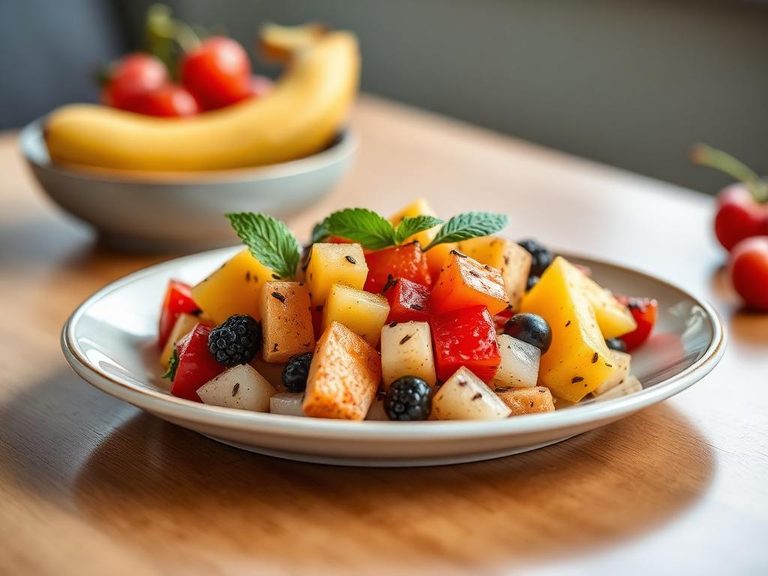 Macedonia de frutas (Latin American fruit salad)
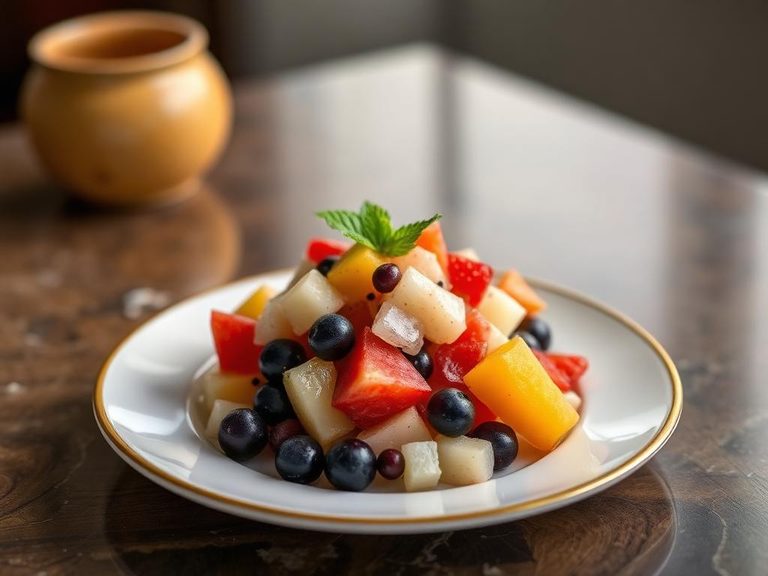 Fruit chaat (South Asian spiced fruit salad)
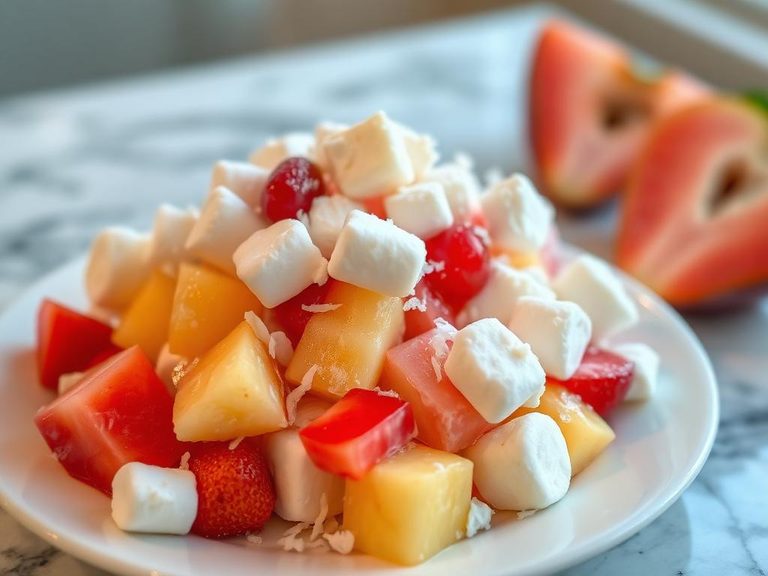 Ambrosia (American fruit salad with coconut and marshmallows)
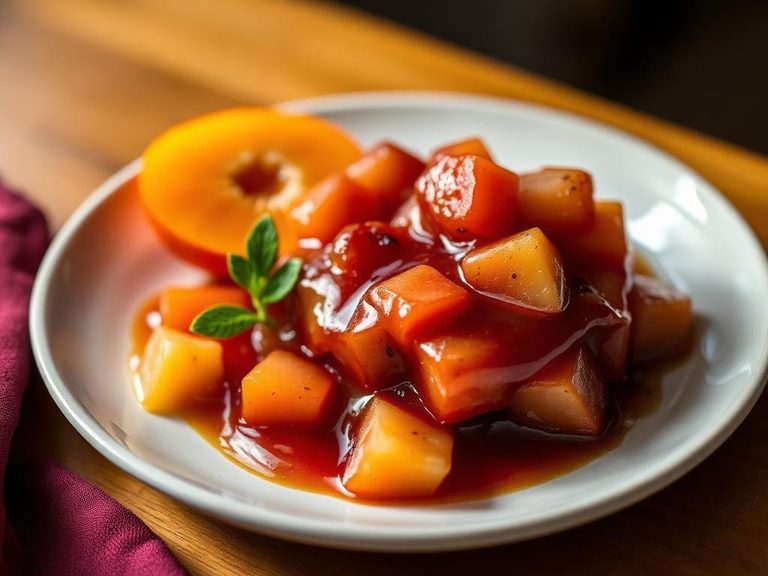 Compote (cooked fruit salad, often served warm)
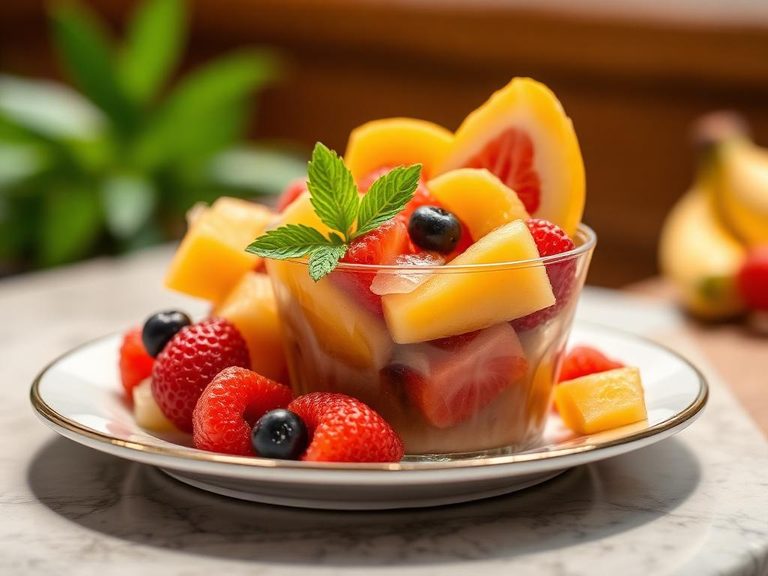 Fruit cup (common diner or cafeteria side)
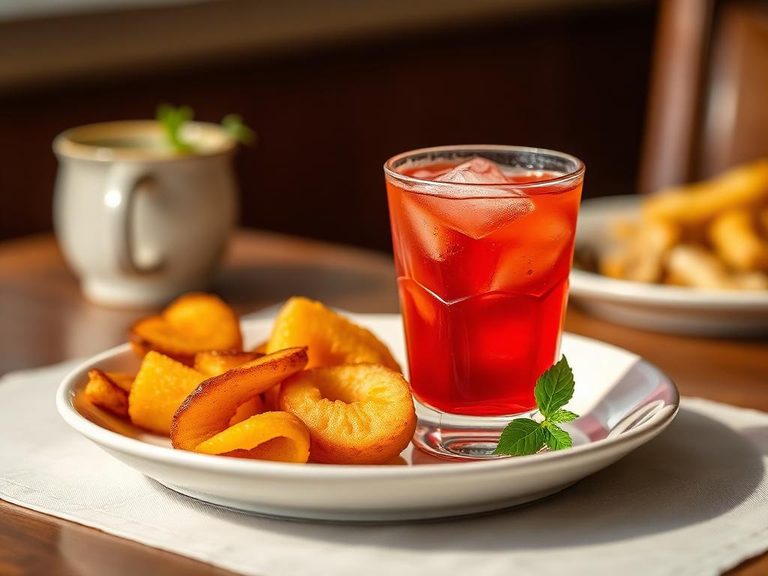 Shirley Temple (non-alcoholic drink garnished with fruit salad)
🌍 Where it's eaten
💡 Did you know?
The term 'fruit salad' was first recorded in print in 1813, and the dish gained massive popularity in the United States during the 1920s, partly due to the invention of Jell-O, which was often used as a base or binder for elaborate molded fruit salads.
Full nutrition (USDA data · scales with serving)
| Water | 84.8 g |
| Energy | 59.0 kcal |
| Protein | 0.64 g |
| Total lipid (fat) | 0.21 g |
| Carbohydrate, by difference | 13.9 g |
| Fiber, total dietary | 1.5 g |
| Total Sugars | 10.4 g |
| Calcium, Ca | 9.0 mg |
| Iron, Fe | 0.18 mg |
| Magnesium, Mg | 14.0 mg |
| Phosphorus, P | 19.0 mg |
| Potassium, K | 190 mg |
| Sodium, Na | 4.0 mg |
| Zinc, Zn | 0.14 mg |
| Copper, Cu | 0.06 mg |
| Selenium, Se | 0.30 ug |
| Vitamin C, total ascorbic acid | 19.7 mg |
| Thiamin | 0.04 mg |
| Riboflavin | 0.02 mg |
| Niacin | 0.38 mg |
| Vitamin B-6 | 0.08 mg |
| Folate, total | 8.0 ug |
| Folic acid | 0.00 ug |
| Folate, food | 8.0 ug |
| Folate, DFE | 8.0 ug |
| Choline, total | 6.2 mg |
| Vitamin B-12 | 0.00 ug |
| Vitamin B-12, added | 0.00 ug |
| Vitamin A, RAE | 31.0 ug |
| Retinol | 0.00 ug |
| Carotene, beta | 370 ug |
| Carotene, alpha | 2.0 ug |
| Cryptoxanthin, beta | 11.0 ug |
| Lycopene | 512 ug |
| Lutein + zeaxanthin | 30.0 ug |
| Vitamin E (alpha-tocopherol) | 0.16 mg |
| Vitamin E, added | 0.00 mg |
| Vitamin D (D2 + D3) | 0.00 ug |
| Vitamin K (phylloquinone) | 3.2 ug |
| Alcohol, ethyl | 0.00 g |
| Caffeine | 0.00 mg |
| Theobromine | 0.00 mg |
Fat & fatty acid profile (per 100g)
| Fatty acids, total saturated | 0.04 g |
| SFA 4:0 | 0.00 g |
| SFA 6:0 | 0.00 g |
| SFA 8:0 | 0.00 g |
| SFA 10:0 | 0.00 g |
| SFA 12:0 | 0.00 g |
| SFA 14:0 | 0.00 g |
| SFA 16:0 | 0.04 g |
| SFA 18:0 | 0.00 g |
| Fatty acids, total monounsaturated | 0.01 g |
| MUFA 16:1 | 0.00 g |
| MUFA 18:1 | 0.01 g |
| MUFA 20:1 | 0.00 g |
| MUFA 22:1 | 0.00 g |
| Fatty acids, total polyunsaturated | 0.05 g |
| PUFA 18:2 | 0.03 g |
| PUFA 18:3 | 0.01 g |
| PUFA 18:4 | 0.00 g |
| PUFA 20:4 | 0.00 g |
| PUFA 20:5 n-3 (EPA) | 0.00 g |
| PUFA 22:5 n-3 (DPA) | 0.00 g |
| PUFA 22:6 n-3 (DHA) | 0.00 g |
| Cholesterol | 0.00 mg |
FAQ
Does a fresh fruit salad have any added sugar?
A basic, fresh fruit salad as described contains no added sugars. All sweetness comes naturally from the fruit itself. However, some recipes or pre-made versions may add honey, syrup, or sugar, so it's best to check ingredients if buying prepared.
How can I keep my fruit salad from getting soggy?
To prevent sogginess, add delicate fruits like berries or bananas just before serving. You can also toss firmer fruits (like apples or pears) in a little lemon or pineapple juice to slow browning. Store the salad in an airtight container in the refrigerator for no more than 1-2 days for best texture.
Is fruit salad a good option for weight loss?
Yes, it can be. It's low in calories, high in water and fiber, which helps you feel full. The key is portion control and avoiding additions like sugary dressings, whipped cream, or high-fat toppings. Pairing it with a protein source can make it a more balanced and satisfying meal or snack.
Nutrient density (calculated · NRF9.3)
Nutrient Rich Foods index: beneficial nutrients (protein, fiber, vitamins, minerals) minus saturated fat, added sugar & sodium, per 100 kcal.
NRF9.3 index — Fulgoni, Keast & Drewnowski, 2009. Computed from USDA nutrients.
Weight-loss friendliness (composite index)
Energy density 0.59 kcal/g · 4% calories from protein · 1.5 g fiber · 10.4 g sugar per 100 g.
Composite of energy density (Rolls et al., 1999), protein & fiber satiety, minus sugar. A calculated heuristic — ranks satiety-per-calorie, not a clinical measure.
Dietary load (calculated from USDA values)
Potential renal acid load. Positive = acid-forming, negative = alkaline-forming.
Sodium-to-potassium ratio: 0.02 (lower is better — aim for ≤ 1)
Sodium:potassium per WHO potassium guidance. Computed from USDA nutrients.