

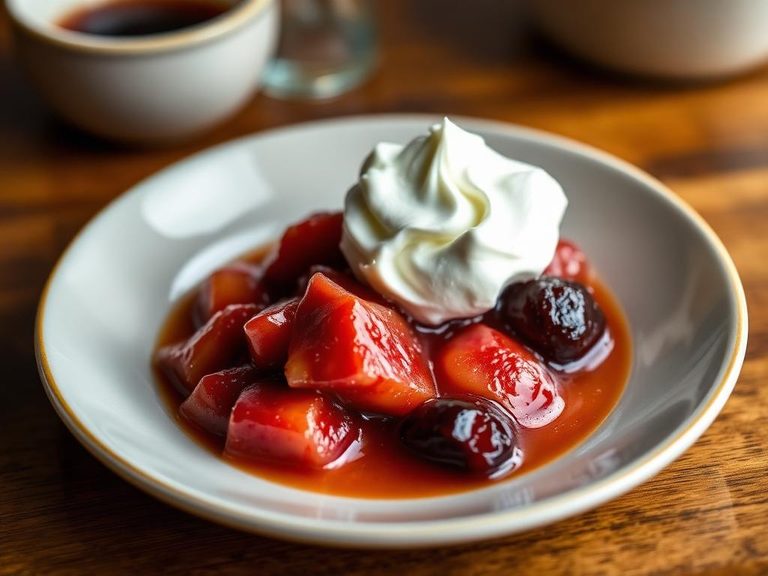
Fruit salad, excluding citrus fruits, with whipped cream
Common food

Photo: Wikipedia
A vibrant medley of fresh, juicy fruits like berries, melon, and stone fruits, tossed together and crowned with a dollop of sweet, airy whipped cream. The contrast between the crisp, tart fruit and the rich, smooth cream creates a delightful textural experience. Nutritionally, it offers a moderate energy boost from natural sugars and fats, with a small amount of fiber.
Calorie split: 5% protein · 37% carbs · 58% fat
↓ Full nutrition💚 Why it's loved
People love it for the perfect balance of sweet, fresh fruit and indulgent cream, making it a light yet satisfying treat. Its versatility allows for endless seasonal variations, from summer berries to autumn stone fruits.
⚠️ Watch-outs & how to enjoy it better
The combination of fruit sugars and added cream can cause a rapid blood sugar spike, which is a concern for those managing diabetes. To counteract this, pair the salad with a source of protein or extra fat (like nuts or Greek yogurt) and practice portion control, enjoying a smaller serving alongside a main meal.
Key benefits
- Provides quick energy from natural fruit sugars
- Contains dietary fiber for digestive health
- Offers vitamins and antioxidants from diverse fruits
- Whipped cream adds a source of dietary fat for satiety
- A refreshing, hydrating dessert option
🍽️ Popular dishes
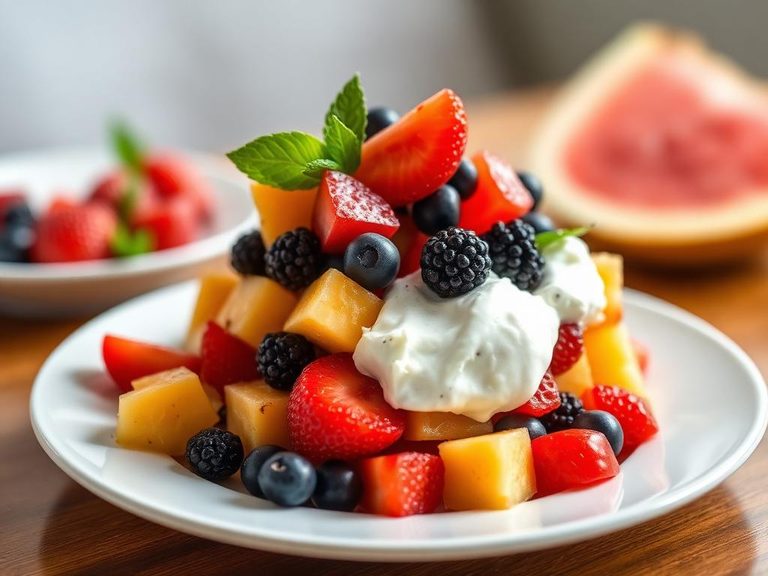
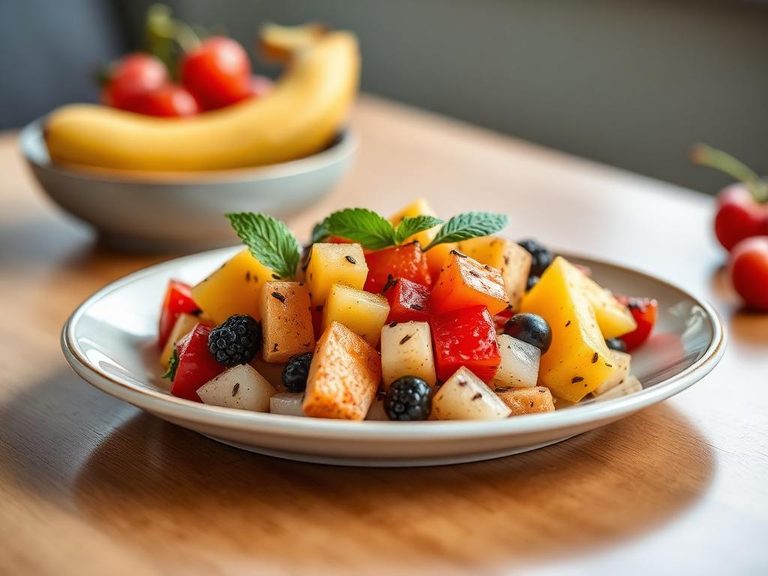
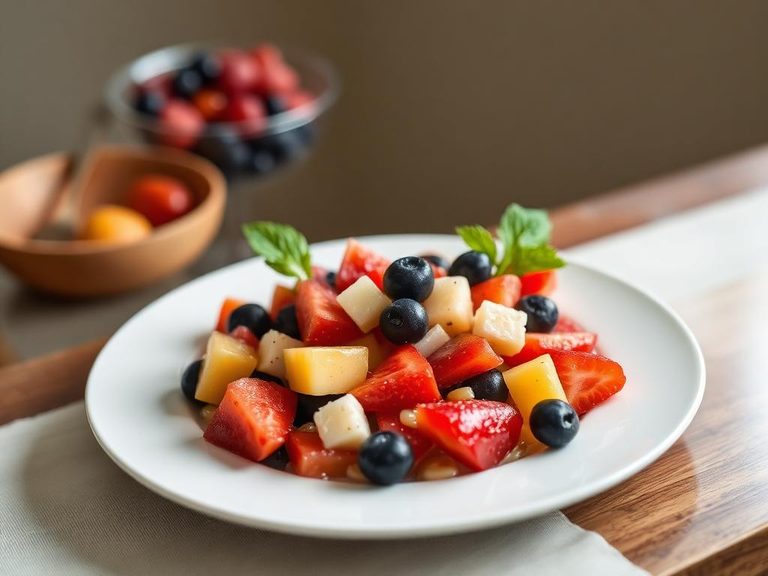
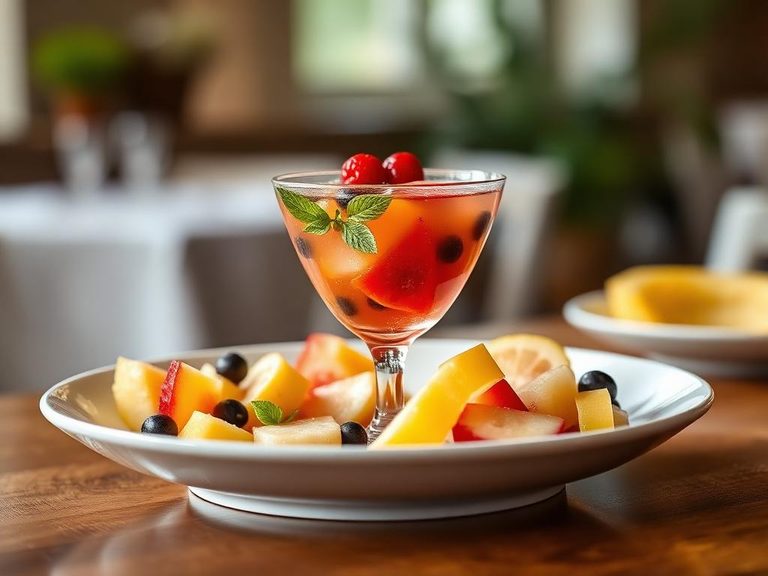
🌍 Where it's eaten
💡 Did you know?
The term 'fruit salad' was popularized in the 19th century, but the practice of mixing fruits with cream or custard dates back to medieval European banquets.
Full nutrition (USDA data · scales with serving)
| Water | 71.6 g |
| Energy | 164 kcal |
| Protein | 2.0 g |
| Total lipid (fat) | 10.6 g |
| Carbohydrate, by difference | 15.3 g |
| Fiber, total dietary | 1.6 g |
| Total Sugars | 11.1 g |
| Calcium, Ca | 22.0 mg |
| Iron, Fe | 0.26 mg |
| Magnesium, Mg | 25.0 mg |
| Phosphorus, P | 51.0 mg |
| Potassium, K | 206 mg |
| Sodium, Na | 3.0 mg |
| Zinc, Zn | 0.35 mg |
| Copper, Cu | 0.17 mg |
| Selenium, Se | 0.80 ug |
| Vitamin C, total ascorbic acid | 18.6 mg |
| Thiamin | 0.07 mg |
| Riboflavin | 0.06 mg |
| Niacin | 0.36 mg |
| Vitamin B-6 | 0.16 mg |
| Folate, total | 18.0 ug |
| Folic acid | 0.00 ug |
| Folate, food | 18.0 ug |
| Folate, DFE | 18.0 ug |
| Choline, total | 10.4 mg |
| Vitamin B-12 | 0.00 ug |
| Vitamin B-12, added | 0.00 ug |
| Vitamin A, RAE | 41.0 ug |
| Retinol | 39.0 ug |
| Carotene, beta | 22.0 ug |
| Carotene, alpha | 2.0 ug |
| Cryptoxanthin, beta | 2.0 ug |
| Lycopene | 0.00 ug |
| Lutein + zeaxanthin | 21.0 ug |
| Vitamin E (alpha-tocopherol) | 0.26 mg |
| Vitamin E, added | 0.00 mg |
| Vitamin D (D2 + D3) | 0.20 ug |
| Vitamin K (phylloquinone) | 3.1 ug |
| Alcohol, ethyl | 0.00 g |
| Caffeine | 0.00 mg |
| Theobromine | 0.00 mg |
Fat & fatty acid profile (per 100g)
| Fatty acids, total saturated | 3.0 g |
| SFA 4:0 | 0.09 g |
| SFA 6:0 | 0.07 g |
| SFA 8:0 | 0.05 g |
| SFA 10:0 | 0.11 g |
| SFA 12:0 | 0.13 g |
| SFA 14:0 | 0.40 g |
| SFA 16:0 | 1.5 g |
| SFA 18:0 | 0.53 g |
| Fatty acids, total monounsaturated | 1.7 g |
| MUFA 16:1 | 0.08 g |
| MUFA 18:1 | 1.7 g |
| MUFA 20:1 | 0.02 g |
| MUFA 22:1 | 0.00 g |
| Fatty acids, total polyunsaturated | 4.6 g |
| PUFA 18:2 | 3.5 g |
| PUFA 18:3 | 0.84 g |
| PUFA 18:4 | 0.00 g |
| PUFA 20:4 | 0.01 g |
| PUFA 20:5 n-3 (EPA) | 0.00 g |
| PUFA 22:5 n-3 (DPA) | 0.00 g |
| PUFA 22:6 n-3 (DHA) | 0.00 g |
| Cholesterol | 12.0 mg |
FAQ
Is fruit salad with whipped cream a healthy dessert?
It can be part of a balanced diet, offering vitamins, fiber, and hydration. However, the whipped cream adds saturated fat and calories, so moderation is key. Choosing a light whipped topping or using less cream can make it lighter.
How can I prevent the fruit from getting soggy?
Toss the fruit with the whipped cream just before serving. If preparing ahead, keep the fruit and cream separate and combine them at the last minute to maintain texture.
What fruits work best in this salad?
A mix of textures and flavors works well: juicy melons, crisp apples or pears, sweet berries, and soft stone fruits like peaches or nectarines. Avoid overly soft fruits like bananas, which can become mushy.
Nutrient density (calculated · NRF9.3)
Nutrient Rich Foods index: beneficial nutrients (protein, fiber, vitamins, minerals) minus saturated fat, added sugar & sodium, per 100 kcal.
NRF9.3 index — Fulgoni, Keast & Drewnowski, 2009. Computed from USDA nutrients.
Weight-loss friendliness (composite index)
Energy density 1.64 kcal/g · 5% calories from protein · 1.6 g fiber · 11.1 g sugar per 100 g.
Composite of energy density (Rolls et al., 1999), protein & fiber satiety, minus sugar. A calculated heuristic — ranks satiety-per-calorie, not a clinical measure.
Dietary load (calculated from USDA values)
Potential renal acid load. Positive = acid-forming, negative = alkaline-forming.
Sodium-to-potassium ratio: 0.01 (lower is better — aim for ≤ 1)
Sodium:potassium per WHO potassium guidance. Computed from USDA nutrients.