

Frozen margarita
Common food

Photo: Wikipedia
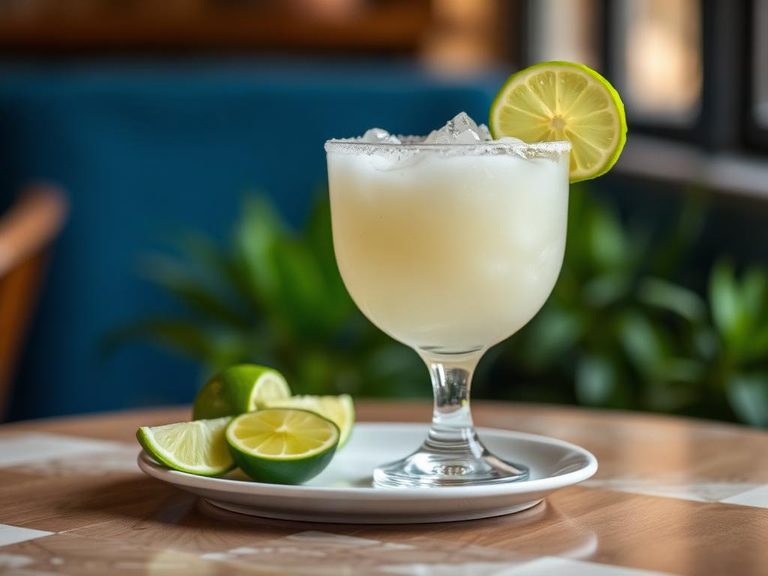
A frozen margarita is a slushy, blended cocktail that transforms the classic tequila, lime, and orange liqueur drink into a refreshing, ice-cold treat. Its texture is smooth and frosty, delivering a potent punch of sweet and tart flavors in every sip. Nutritionally, it's almost entirely composed of simple carbohydrates from sugar, with negligible protein, fat, or fiber.
Calorie split: 0% protein · 98% carbs · 1% fat
↓ Full nutrition💚 Why it's loved
People love it for its perfect balance of sweet, sour, and salty (from the rim), making it a quintessential summer or party drink. Its versatility allows for endless customizations with different fruits, salts, or tequila types, cementing its status as a fun, celebratory icon.
⚠️ Watch-outs & how to enjoy it better
The high sugar content can lead to rapid blood-sugar spikes and crashes, and the alcohol can contribute to dehydration and hangovers. To counteract this, enjoy it with a meal containing protein and healthy fats to slow sugar absorption, alternate with water, and practice strict portion control.
Key benefits
- Provides quick energy from carbohydrates
- Contains small amounts of vitamin C from lime juice
- Can be a low-fat cocktail option
- Offers hydration from its water and ice content
- May contain antioxidants from agave or citrus
🍽️ Popular dishes

🌍 Where it's eaten
💡 Did you know?
The original margarita was likely invented in the 1930s or 1940s, but the frozen version only became popular after the invention of the commercial blender in the 1940s.
Full nutrition (USDA data · scales with serving)
| Water | 75.1 g |
| Energy | 122 kcal |
| Protein | 0.08 g |
| Total lipid (fat) | 0.08 g |
| Carbohydrate, by difference | 16.1 g |
| Fiber, total dietary | 0.00 g |
| Total Sugars | 16.1 g |
| Calcium, Ca | 2.0 mg |
| Iron, Fe | 0.09 mg |
| Magnesium, Mg | 1.0 mg |
| Phosphorus, P | 5.0 mg |
| Potassium, K | 22.0 mg |
| Sodium, Na | 204 mg |
| Zinc, Zn | 0.06 mg |
| Copper, Cu | 0.01 mg |
| Selenium, Se | 0.30 ug |
| Vitamin C, total ascorbic acid | 2.0 mg |
| Thiamin | 0.01 mg |
| Riboflavin | 0.01 mg |
| Niacin | 0.00 mg |
| Vitamin B-6 | 0.00 mg |
| Folate, total | 0.00 ug |
| Folic acid | 0.00 ug |
| Folate, food | 0.00 ug |
| Folate, DFE | 0.00 ug |
| Choline, total | 0.70 mg |
| Vitamin B-12 | 0.00 ug |
| Vitamin B-12, added | 0.00 ug |
| Vitamin A, RAE | 0.00 ug |
| Retinol | 0.00 ug |
| Carotene, beta | 0.00 ug |
| Carotene, alpha | 0.00 ug |
| Cryptoxanthin, beta | 0.00 ug |
| Lycopene | 0.00 ug |
| Lutein + zeaxanthin | 0.00 ug |
| Vitamin E (alpha-tocopherol) | 0.00 mg |
| Vitamin E, added | 0.00 mg |
| Vitamin D (D2 + D3) | 0.00 ug |
| Vitamin K (phylloquinone) | 0.00 ug |
| Alcohol, ethyl | 8.2 g |
| Caffeine | 0.00 mg |
| Theobromine | 0.00 mg |
Fat & fatty acid profile (per 100g)
| Fatty acids, total saturated | 0.01 g |
| SFA 4:0 | 0.00 g |
| SFA 6:0 | 0.00 g |
| SFA 8:0 | 0.00 g |
| SFA 10:0 | 0.00 g |
| SFA 12:0 | 0.00 g |
| SFA 14:0 | 0.00 g |
| SFA 16:0 | 0.01 g |
| SFA 18:0 | 0.00 g |
| Fatty acids, total monounsaturated | 0.00 g |
| MUFA 16:1 | 0.00 g |
| MUFA 18:1 | 0.00 g |
| MUFA 20:1 | 0.00 g |
| MUFA 22:1 | 0.00 g |
| Fatty acids, total polyunsaturated | 0.01 g |
| PUFA 18:2 | 0.01 g |
| PUFA 18:3 | 0.00 g |
| PUFA 18:4 | 0.00 g |
| PUFA 20:4 | 0.00 g |
| PUFA 20:5 n-3 (EPA) | 0.00 g |
| PUFA 22:5 n-3 (DPA) | 0.00 g |
| PUFA 22:6 n-3 (DHA) | 0.00 g |
| Cholesterol | 0.00 mg |
FAQ
Is a frozen margarita gluten-free?
The core ingredients (tequila, lime, orange liqueur) are typically gluten-free, but cross-contamination is possible. Always check labels for flavored tequilas or pre-made mixes that may contain gluten.
How can I make a frozen margarita less sugary?
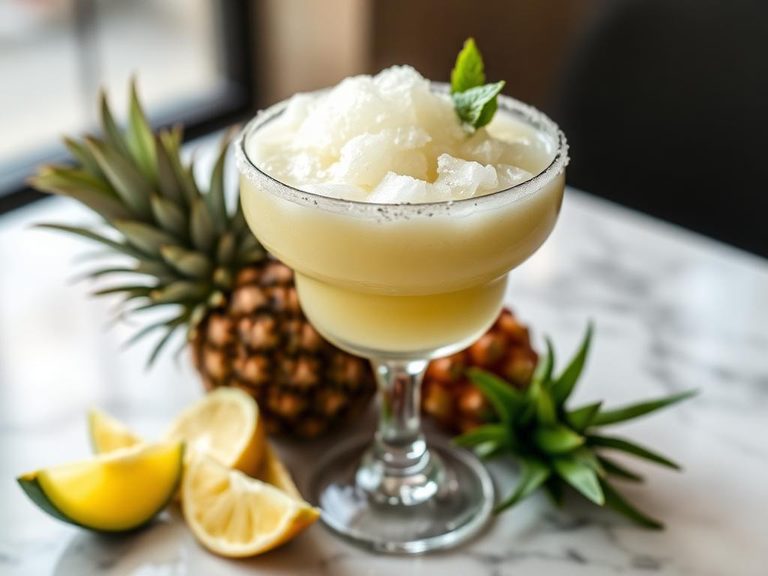
Use fresh lime juice, reduce added sugar or agave nectar, and opt for a naturally sweet fruit like mango or pineapple instead of sugary syrups.
What's the difference between a frozen and on-the-rocks margarita?
A frozen margarita is blended with ice into a slush, while an 'on-the-rocks' margarita is shaken with ice and served over fresh ice cubes, resulting in a less diluted, stronger drink.
Nutrient density (calculated · NRF9.3)
Nutrient Rich Foods index: beneficial nutrients (protein, fiber, vitamins, minerals) minus saturated fat, added sugar & sodium, per 100 kcal.
NRF9.3 index — Fulgoni, Keast & Drewnowski, 2009. Computed from USDA nutrients.
Weight-loss friendliness (composite index)
Energy density 1.22 kcal/g · 0% calories from protein · 0.0 g fiber · 16.1 g sugar per 100 g.
Composite of energy density (Rolls et al., 1999), protein & fiber satiety, minus sugar. A calculated heuristic — ranks satiety-per-calorie, not a clinical measure.
Dietary load (calculated from USDA values)
Potential renal acid load. Positive = acid-forming, negative = alkaline-forming.
Sodium-to-potassium ratio: 9.27 (lower is better — aim for ≤ 1)
Sodium:potassium per WHO potassium guidance. Computed from USDA nutrients.