

Frozen daiquiri
Common food

Photo: Wikipedia
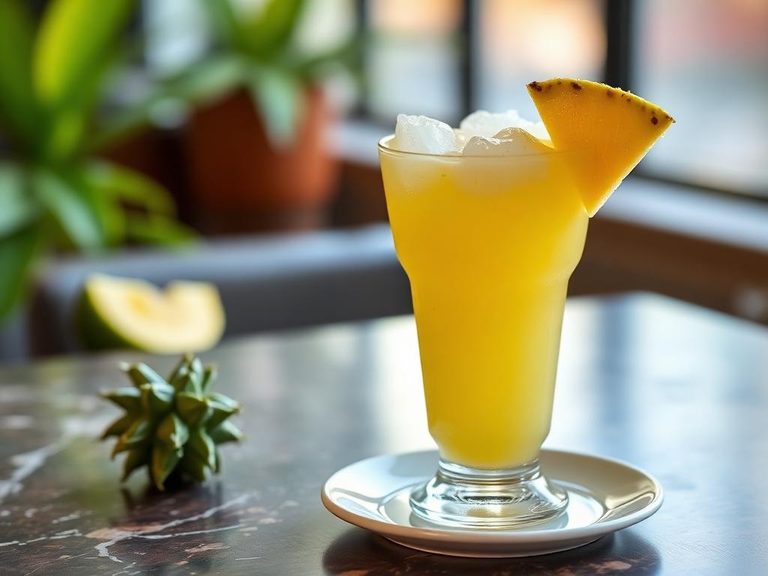
A frozen daiquiri is a blended, slushy cocktail traditionally made with rum, lime juice, and sugar, offering a refreshingly tart and sweet flavor with a smooth, icy texture. Nutritionally, it is almost entirely composed of simple carbohydrates, providing a quick source of energy with negligible protein or fat. Its vibrant, chilled profile makes it a classic warm-weather indulgence.
Calorie split: 0% protein · 99% carbs · 1% fat
↓ Full nutrition💚 Why it's loved
People love it for its perfect balance of sweet and tart flavors, which are delivered in a refreshing, slushy form ideal for cooling down. Its association with tropical vacations, relaxation, and social gatherings makes it a culturally iconic and versatile cocktail base.
⚠️ Watch-outs & how to enjoy it better
Its high sugar content can lead to rapid blood-sugar spikes and offers little nutritional benefit, making it a concern for those monitoring sugar intake or managing diabetes. To mitigate this, consider enjoying a smaller portion, pairing it with a protein-rich snack, or opting for a recipe that uses less added sugar or a sugar substitute.
Key benefits
- Provides quick energy from simple carbohydrates
- Contains a small amount of vitamin C from lime juice
- Served cold, aiding in hydration
- A well-known social and celebratory beverage
- Offers a consistent, familiar flavor profile
🍽️ Popular dishes
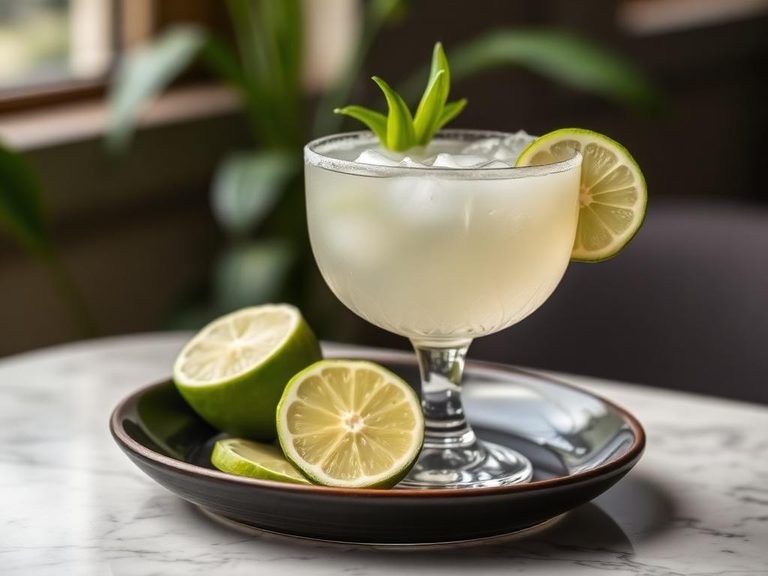
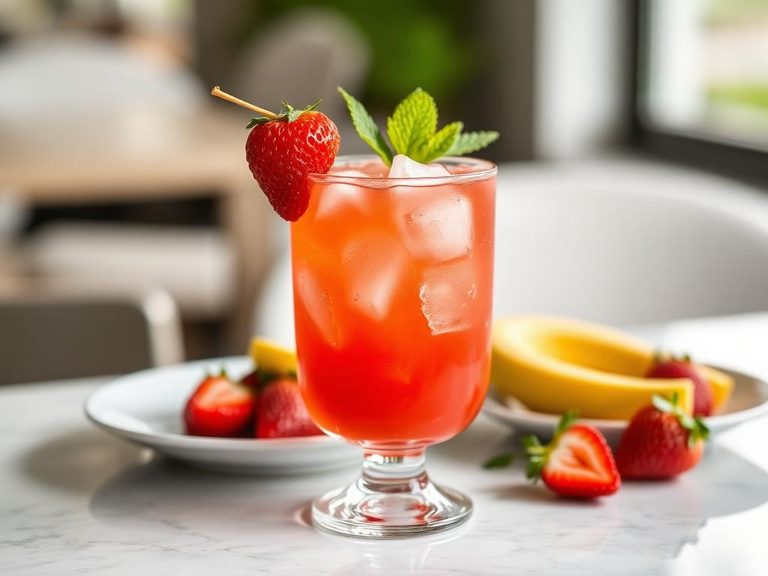
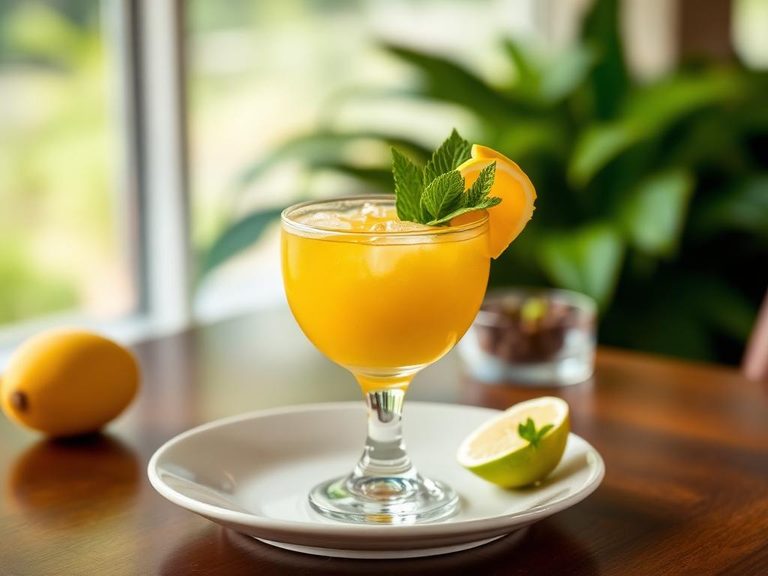
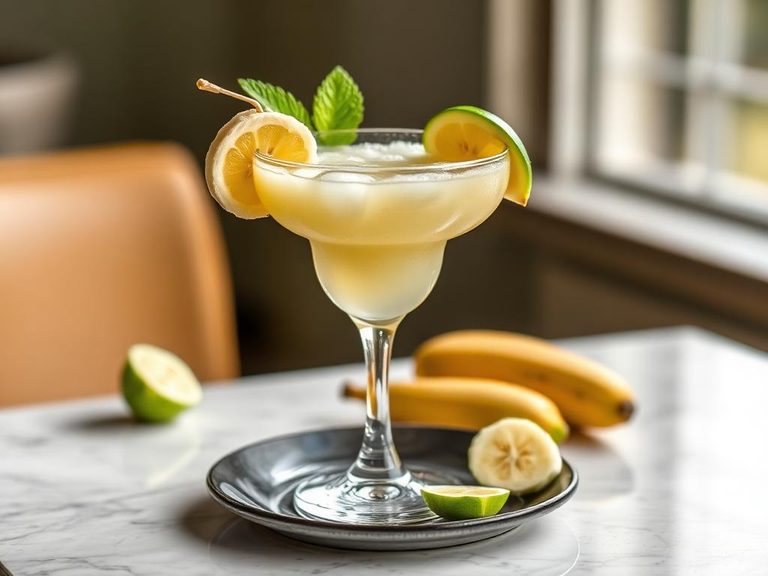
🌍 Where it's eaten
💡 Did you know?
The frozen daiquiri as we know it was popularized in the 1930s by an American mining engineer named Charles H. Baker Jr., who brought the recipe back from a trip to Cuba.
Full nutrition (USDA data · scales with serving)
| Water | 74.0 g |
| Energy | 127 kcal |
| Protein | 0.07 g |
| Total lipid (fat) | 0.08 g |
| Carbohydrate, by difference | 17.6 g |
| Fiber, total dietary | 0.00 g |
| Total Sugars | 17.6 g |
| Calcium, Ca | 1.0 mg |
| Iron, Fe | 0.11 mg |
| Magnesium, Mg | 1.0 mg |
| Phosphorus, P | 6.0 mg |
| Potassium, K | 21.0 mg |
| Sodium, Na | 76.0 mg |
| Zinc, Zn | 0.07 mg |
| Copper, Cu | 0.01 mg |
| Selenium, Se | 0.30 ug |
| Vitamin C, total ascorbic acid | 2.0 mg |
| Thiamin | 0.01 mg |
| Riboflavin | 0.01 mg |
| Niacin | 0.00 mg |
| Vitamin B-6 | 0.00 mg |
| Folate, total | 0.00 ug |
| Folic acid | 0.00 ug |
| Folate, food | 0.00 ug |
| Folate, DFE | 0.00 ug |
| Choline, total | 0.70 mg |
| Vitamin B-12 | 0.00 ug |
| Vitamin B-12, added | 0.00 ug |
| Vitamin A, RAE | 0.00 ug |
| Retinol | 0.00 ug |
| Carotene, beta | 0.00 ug |
| Carotene, alpha | 0.00 ug |
| Cryptoxanthin, beta | 0.00 ug |
| Lycopene | 0.00 ug |
| Lutein + zeaxanthin | 0.00 ug |
| Vitamin E (alpha-tocopherol) | 0.00 mg |
| Vitamin E, added | 0.00 mg |
| Vitamin D (D2 + D3) | 0.00 ug |
| Vitamin K (phylloquinone) | 0.00 ug |
| Alcohol, ethyl | 8.1 g |
| Caffeine | 0.00 mg |
| Theobromine | 0.00 mg |
Fat & fatty acid profile (per 100g)
| Fatty acids, total saturated | 0.01 g |
| SFA 4:0 | 0.00 g |
| SFA 6:0 | 0.00 g |
| SFA 8:0 | 0.00 g |
| SFA 10:0 | 0.00 g |
| SFA 12:0 | 0.00 g |
| SFA 14:0 | 0.00 g |
| SFA 16:0 | 0.01 g |
| SFA 18:0 | 0.00 g |
| Fatty acids, total monounsaturated | 0.00 g |
| MUFA 16:1 | 0.00 g |
| MUFA 18:1 | 0.00 g |
| MUFA 20:1 | 0.00 g |
| MUFA 22:1 | 0.00 g |
| Fatty acids, total polyunsaturated | 0.01 g |
| PUFA 18:2 | 0.01 g |
| PUFA 18:3 | 0.00 g |
| PUFA 18:4 | 0.00 g |
| PUFA 20:4 | 0.00 g |
| PUFA 20:5 n-3 (EPA) | 0.00 g |
| PUFA 22:5 n-3 (DPA) | 0.00 g |
| PUFA 22:6 n-3 (DHA) | 0.00 g |
| Cholesterol | 0.00 mg |
FAQ
Is a frozen daiquiri the same as a margarita?
No. A classic daiquiri is made with rum, lime juice, and sugar, while a margarita uses tequila, lime juice, and orange liqueur. Their base spirits and flavor profiles are distinct.
Can I make a non-alcoholic version?
Yes, a 'virgin' or 'mocktail' daiquiri simply omits the rum and may increase the fruit juice or syrup content to maintain sweetness and volume.
Why is my homemade version not as smooth as a restaurant's?
Commercial blenders are often more powerful and can create a finer ice texture. Using crushed ice instead of cubes or blending longer can help achieve a smoother consistency at home.
Nutrient density (calculated · NRF9.3)
Nutrient Rich Foods index: beneficial nutrients (protein, fiber, vitamins, minerals) minus saturated fat, added sugar & sodium, per 100 kcal.
NRF9.3 index — Fulgoni, Keast & Drewnowski, 2009. Computed from USDA nutrients.
Weight-loss friendliness (composite index)
Energy density 1.27 kcal/g · 0% calories from protein · 0.0 g fiber · 17.6 g sugar per 100 g.
Composite of energy density (Rolls et al., 1999), protein & fiber satiety, minus sugar. A calculated heuristic — ranks satiety-per-calorie, not a clinical measure.
Dietary load (calculated from USDA values)
Potential renal acid load. Positive = acid-forming, negative = alkaline-forming.
Sodium-to-potassium ratio: 3.62 (lower is better — aim for ≤ 1)
Sodium:potassium per WHO potassium guidance. Computed from USDA nutrients.