

Daiquiri
Common food

Photo: Wikipedia
The Daiquiri is a classic rum-based cocktail, typically a blend of rum, lime juice, and sugar, shaken with ice and served chilled. Its taste is a crisp, refreshing balance of sweet and tart, with a smooth, slightly viscous texture from the shaken sugar and lime. Nutritionally, it is almost entirely composed of carbohydrates, specifically simple sugars, with negligible protein or fat.
Calorie split: 1% protein · 98% carbs · 1% fat
↓ Full nutrition💚 Why it's loved
People love the Daiquiri for its perfect balance of sweet and sour, offering a sophisticated yet approachable flavor that is both refreshing and invigorating. Its versatility allows for endless variations, from frozen to fruity, making it a staple in cocktail culture worldwide.
⚠️ Watch-outs & how to enjoy it better
The high sugar content can lead to blood sugar spikes, and the alcohol can cause dehydration and impair judgment. To counteract this, enjoy it in moderation, pair it with a protein-rich snack, and ensure you drink plenty of water alongside it.
Key benefits
- Provides a quick source of energy from carbohydrates.
- Lime juice contributes a small amount of vitamin C.
- Served chilled, it can be a refreshing palate cleanser.
- Simple, classic recipe with minimal ingredients.
🍽️ Popular dishes
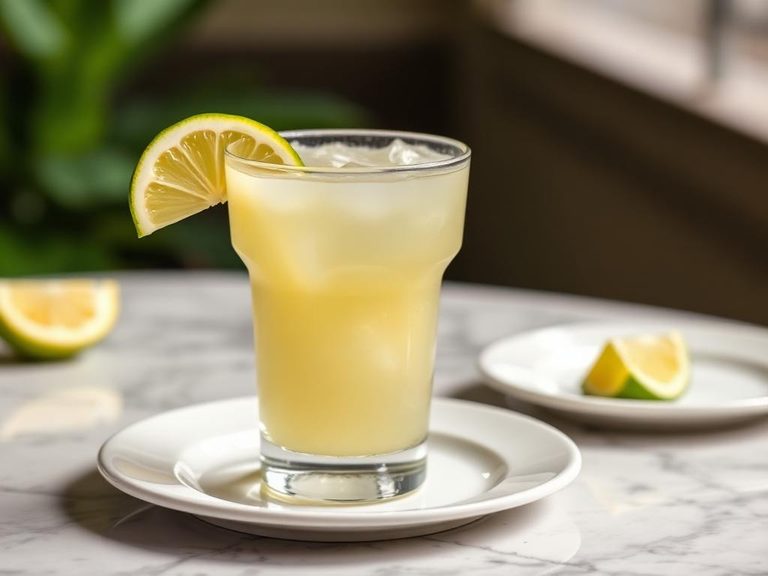
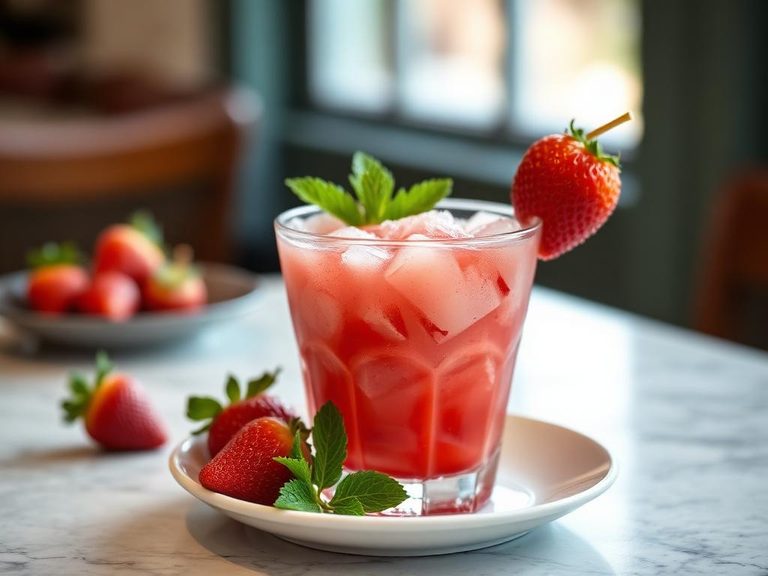
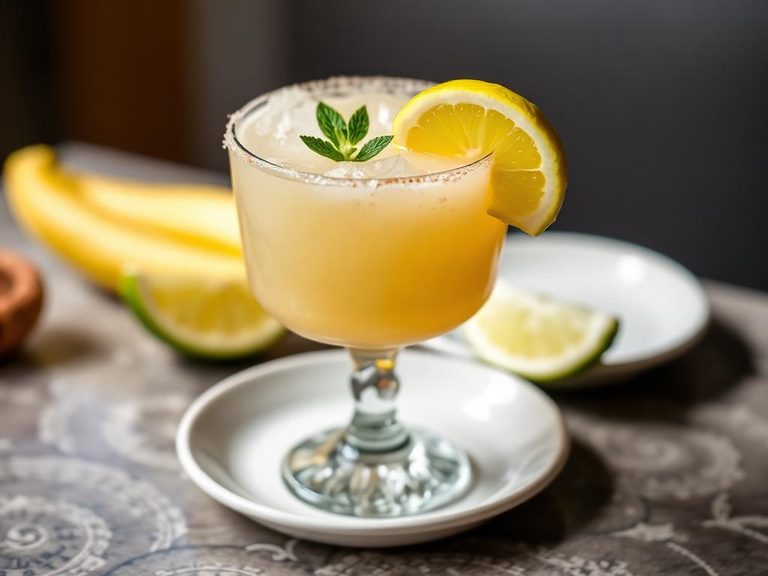
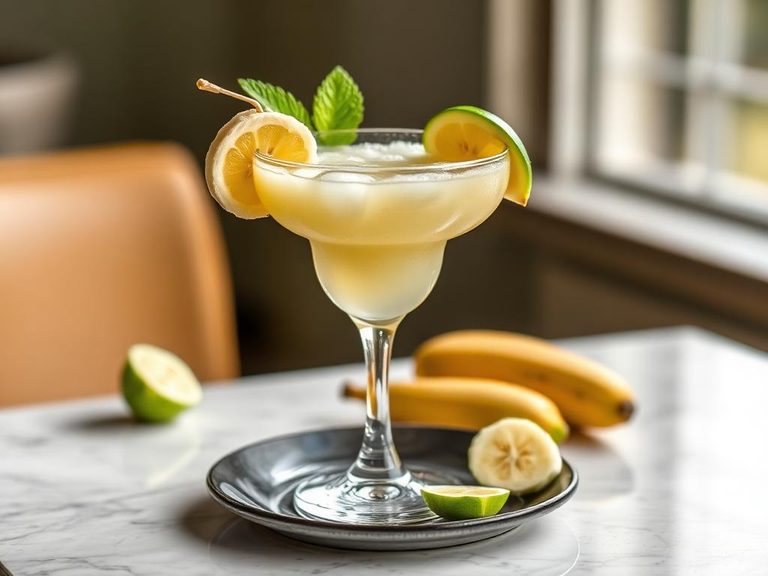
🌍 Where it's eaten
💡 Did you know?
The classic Daiquiri was reportedly invented around 1898 by an American mining engineer named Jennings Cox in the town of Daiquiri, Cuba, where he mixed rum, lime, and sugar to serve to guests.
Full nutrition (USDA data · scales with serving)
| Water | 75.9 g |
| Energy | 119 kcal |
| Protein | 0.09 g |
| Total lipid (fat) | 0.10 g |
| Carbohydrate, by difference | 15.6 g |
| Fiber, total dietary | 0.10 g |
| Total Sugars | 14.9 g |
| Calcium, Ca | 3.0 mg |
| Iron, Fe | 0.11 mg |
| Magnesium, Mg | 2.0 mg |
| Phosphorus, P | 6.0 mg |
| Potassium, K | 28.0 mg |
| Sodium, Na | 64.0 mg |
| Zinc, Zn | 0.06 mg |
| Copper, Cu | 0.01 mg |
| Selenium, Se | 0.30 ug |
| Vitamin C, total ascorbic acid | 2.5 mg |
| Thiamin | 0.01 mg |
| Riboflavin | 0.01 mg |
| Niacin | 0.03 mg |
| Vitamin B-6 | 0.00 mg |
| Folate, total | 1.0 ug |
| Folic acid | 0.00 ug |
| Folate, food | 1.0 ug |
| Folate, DFE | 1.0 ug |
| Choline, total | 1.2 mg |
| Vitamin B-12 | 0.00 ug |
| Vitamin B-12, added | 0.00 ug |
| Vitamin A, RAE | 0.00 ug |
| Retinol | 0.00 ug |
| Carotene, beta | 1.0 ug |
| Carotene, alpha | 0.00 ug |
| Cryptoxanthin, beta | 0.00 ug |
| Lycopene | 0.00 ug |
| Lutein + zeaxanthin | 0.00 ug |
| Vitamin E (alpha-tocopherol) | 0.02 mg |
| Vitamin E, added | 0.00 mg |
| Vitamin D (D2 + D3) | 0.00 ug |
| Vitamin K (phylloquinone) | 0.10 ug |
| Alcohol, ethyl | 8.1 g |
| Caffeine | 0.00 mg |
| Theobromine | 0.00 mg |
Fat & fatty acid profile (per 100g)
| Fatty acids, total saturated | 0.01 g |
| SFA 4:0 | 0.00 g |
| SFA 6:0 | 0.00 g |
| SFA 8:0 | 0.00 g |
| SFA 10:0 | 0.00 g |
| SFA 12:0 | 0.00 g |
| SFA 14:0 | 0.00 g |
| SFA 16:0 | 0.01 g |
| SFA 18:0 | 0.00 g |
| Fatty acids, total monounsaturated | 0.00 g |
| MUFA 16:1 | 0.00 g |
| MUFA 18:1 | 0.00 g |
| MUFA 20:1 | 0.00 g |
| MUFA 22:1 | 0.00 g |
| Fatty acids, total polyunsaturated | 0.02 g |
| PUFA 18:2 | 0.01 g |
| PUFA 18:3 | 0.01 g |
| PUFA 18:4 | 0.00 g |
| PUFA 20:4 | 0.00 g |
| PUFA 20:5 n-3 (EPA) | 0.00 g |
| PUFA 22:5 n-3 (DPA) | 0.00 g |
| PUFA 22:6 n-3 (DHA) | 0.00 g |
| Cholesterol | 0.00 mg |
FAQ
Is a Daiquiri gluten-free?
Yes, a classic Daiquiri made with rum, lime, and sugar is naturally gluten-free, as rum is distilled from sugarcane.
Can I make a Daiquiri without alcohol?
Absolutely, you can create a 'virgin' or 'mocktail' version by replacing the rum with additional lime juice, a splash of water, and a sweetener like simple syrup or agave.
What is the difference between a Daiquiri and a Margarita?
A Daiquiri is rum-based, while a Margarita is tequila-based. Both use lime juice and a sweetener, but the base spirit gives them distinct flavor profiles.
Nutrient density (calculated · NRF9.3)
Nutrient Rich Foods index: beneficial nutrients (protein, fiber, vitamins, minerals) minus saturated fat, added sugar & sodium, per 100 kcal.
NRF9.3 index — Fulgoni, Keast & Drewnowski, 2009. Computed from USDA nutrients.
Weight-loss friendliness (composite index)
Energy density 1.19 kcal/g · 0% calories from protein · 0.1 g fiber · 14.9 g sugar per 100 g.
Composite of energy density (Rolls et al., 1999), protein & fiber satiety, minus sugar. A calculated heuristic — ranks satiety-per-calorie, not a clinical measure.
Dietary load (calculated from USDA values)
Potential renal acid load. Positive = acid-forming, negative = alkaline-forming.
Sodium-to-potassium ratio: 2.29 (lower is better — aim for ≤ 1)
Sodium:potassium per WHO potassium guidance. Computed from USDA nutrients.