

Doughnut holes
Common food
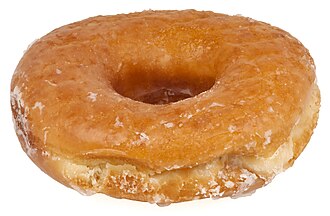
Photo: Wikipedia
Doughnut holes are bite-sized, spherical pieces of fried dough, offering a delightfully crisp exterior that gives way to a soft, airy, and slightly chewy interior. Their flavor is a classic balance of sweet, buttery dough and a coating of granulated sugar or a sweet glaze. Nutritionally, they are energy-dense, providing a quick source of carbohydrates and fats in a small, satisfying package.
Calorie split: 5% protein · 47% carbs · 48% fat
↓ Full nutrition💚 Why it's loved
People love doughnut holes for their perfect, poppable size and the satisfying textural contrast between the crunchy outside and the soft, cakey or yeast-raised inside. They are a versatile treat, often enjoyed plain, dusted with sugar, or dipped in a variety of sweet glazes and icings.
⚠️ Watch-outs & how to enjoy it better
The high sugar and refined carbohydrate content can lead to a rapid blood-sugar spike and subsequent crash. They are calorie-dense with low satiety, making it easy to overconsume. To counteract this, practice strict portion control (e.g., limit to 2-3 holes), pair with a source of protein or fat like a handful of nuts or Greek yogurt to slow digestion, and choose versions that are baked instead of fried when available.
Key benefits
- Provides a quick source of energy from carbohydrates and fats.
- Contains a small amount of protein from the wheat flour and egg in the dough.
- Offers a psychological boost and sense of indulgence as a treat.
- Highly portable and requires no utensils, making it a convenient snack.
🍽️ Popular dishes
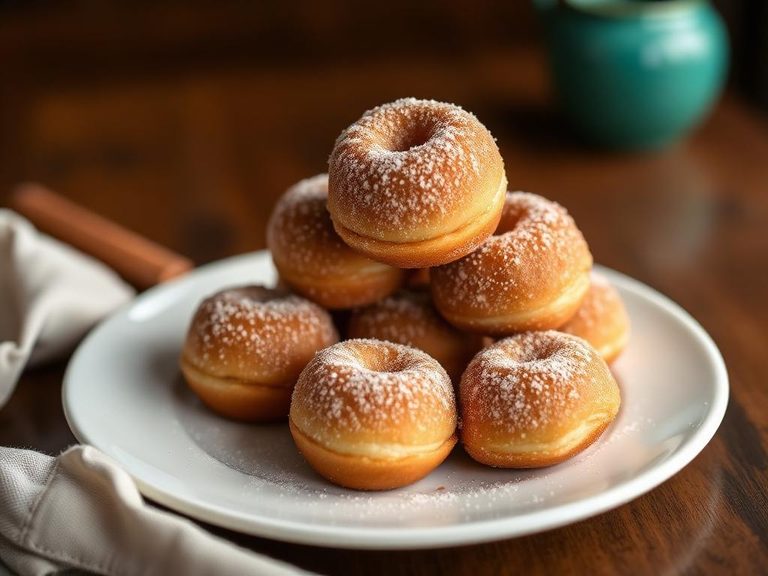
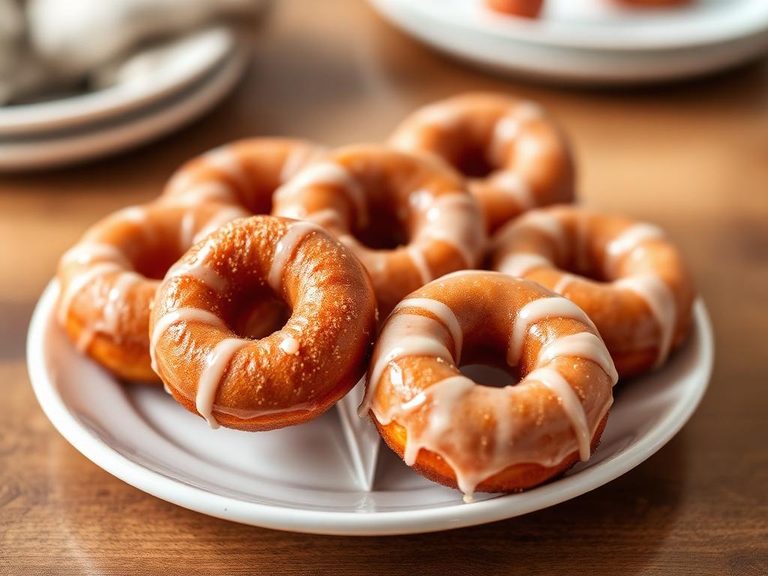
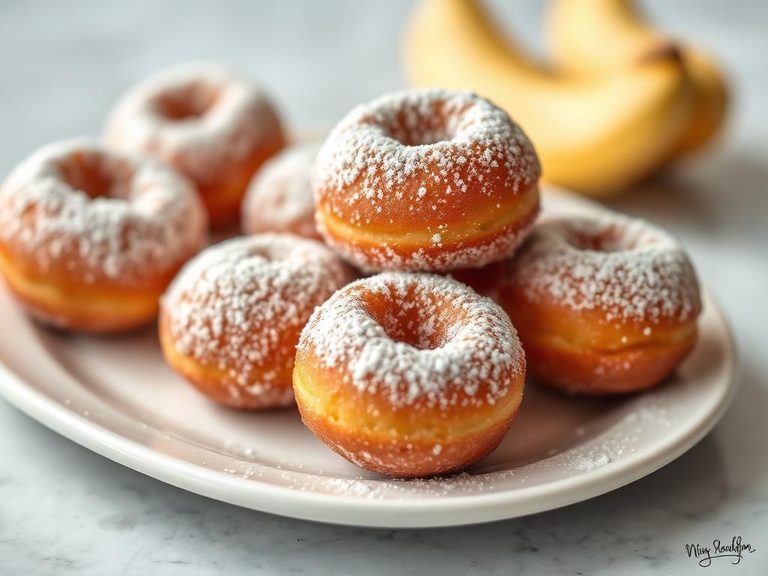
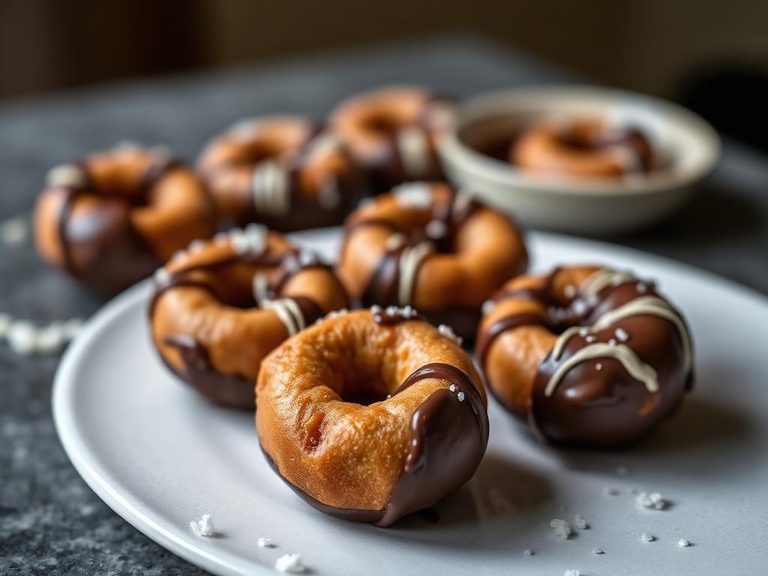

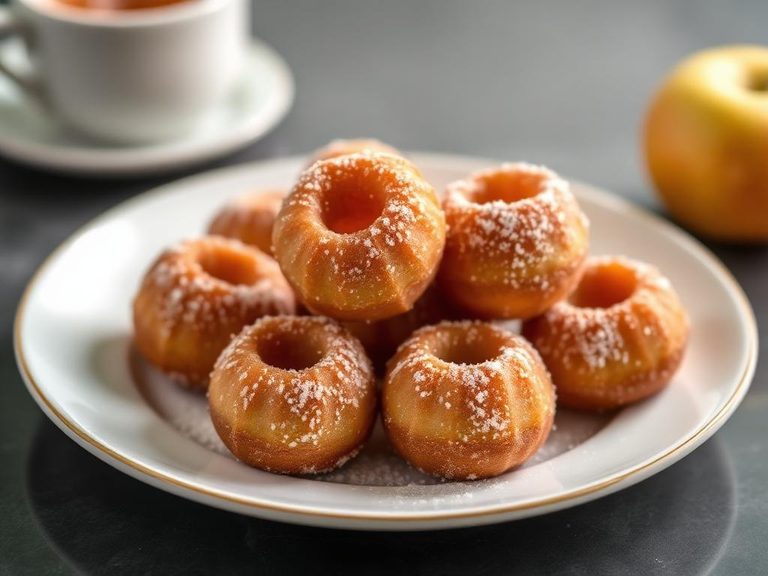
🌍 Where it's eaten
💡 Did you know?
The 'hole' in a doughnut is a relatively modern innovation; before the 1800s, doughnuts were solid, dense pastries, and the hole was popularized to ensure more even cooking.
Full nutrition (USDA data · scales with serving)
| Water | 20.6 g |
| Energy | 426 kcal |
| Protein | 5.5 g |
| Total lipid (fat) | 22.9 g |
| Carbohydrate, by difference | 49.5 g |
| Fiber, total dietary | 1.8 g |
| Total Sugars | 23.5 g |
| Calcium, Ca | 69.0 mg |
| Iron, Fe | 2.4 mg |
| Magnesium, Mg | 16.0 mg |
| Phosphorus, P | 178 mg |
| Potassium, K | 113 mg |
| Sodium, Na | 378 mg |
| Zinc, Zn | 0.54 mg |
| Copper, Cu | 0.09 mg |
| Selenium, Se | 12.5 ug |
| Vitamin C, total ascorbic acid | 0.60 mg |
| Thiamin | 0.34 mg |
| Riboflavin | 0.23 mg |
| Niacin | 2.6 mg |
| Vitamin B-6 | 0.04 mg |
| Folate, total | 96.0 ug |
| Folic acid | 69.0 ug |
| Folate, food | 27.0 ug |
| Folate, DFE | 144 ug |
| Choline, total | 31.8 mg |
| Vitamin B-12 | 0.08 ug |
| Vitamin B-12, added | 0.00 ug |
| Vitamin A, RAE | 4.0 ug |
| Retinol | 4.0 ug |
| Carotene, beta | 2.0 ug |
| Carotene, alpha | 0.00 ug |
| Cryptoxanthin, beta | 0.00 ug |
| Lycopene | 0.00 ug |
| Lutein + zeaxanthin | 27.0 ug |
| Vitamin E (alpha-tocopherol) | 1.6 mg |
| Vitamin E, added | 0.00 mg |
| Vitamin D (D2 + D3) | 0.00 ug |
| Vitamin K (phylloquinone) | 10.3 ug |
| Alcohol, ethyl | 0.00 g |
| Caffeine | 0.00 mg |
| Theobromine | 0.00 mg |
Fat & fatty acid profile (per 100g)
| Fatty acids, total saturated | 9.9 g |
| SFA 4:0 | 0.00 g |
| SFA 6:0 | 0.00 g |
| SFA 8:0 | 0.01 g |
| SFA 10:0 | 0.02 g |
| SFA 12:0 | 0.11 g |
| SFA 14:0 | 0.21 g |
| SFA 16:0 | 8.0 g |
| SFA 18:0 | 1.3 g |
| Fatty acids, total monounsaturated | 7.6 g |
| MUFA 16:1 | 0.04 g |
| MUFA 18:1 | 7.5 g |
| MUFA 20:1 | 0.05 g |
| MUFA 22:1 | 0.00 g |
| Fatty acids, total polyunsaturated | 3.6 g |
| PUFA 18:2 | 3.4 g |
| PUFA 18:3 | 0.22 g |
| PUFA 18:4 | 0.00 g |
| PUFA 20:4 | 0.01 g |
| PUFA 20:5 n-3 (EPA) | 0.00 g |
| PUFA 22:5 n-3 (DPA) | 0.00 g |
| PUFA 22:6 n-3 (DHA) | 0.01 g |
| Cholesterol | 20.0 mg |
FAQ
Are doughnut holes made from the same dough as full-sized doughnuts?
Yes, traditionally. The holes were either punched out from the center of ring doughnuts or formed from the excess dough scraps, ensuring no part of the dough went to waste.
What is the difference between a doughnut hole and a 'munchkin' or 'timbit'?
They are essentially the same thing. 'Munchkin' is a trademarked name used by Dunkin', and 'Timbit' is the trademarked name used by Tim Hortons for their version of a doughnut hole.
Can doughnut holes be made at home without a deep fryer?
Absolutely. They can be baked in a mini muffin tin or a dedicated doughnut hole pan for a lighter version, or pan-fried in a small amount of oil on the stovetop.
Nutrient density (calculated · NRF9.3)
Nutrient Rich Foods index: beneficial nutrients (protein, fiber, vitamins, minerals) minus saturated fat, added sugar & sodium, per 100 kcal.
NRF9.3 index — Fulgoni, Keast & Drewnowski, 2009. Computed from USDA nutrients.
Weight-loss friendliness (composite index)
Energy density 4.26 kcal/g · 5% calories from protein · 1.8 g fiber · 23.5 g sugar per 100 g.
Composite of energy density (Rolls et al., 1999), protein & fiber satiety, minus sugar. A calculated heuristic — ranks satiety-per-calorie, not a clinical measure.
Dietary load (calculated from USDA values)
Potential renal acid load. Positive = acid-forming, negative = alkaline-forming.
Sodium-to-potassium ratio: 3.35 (lower is better — aim for ≤ 1)
Sodium:potassium per WHO potassium guidance. Computed from USDA nutrients.