

Desserts, rennin, chocolate, dry mix
Whole food · Sweets

Photo: Wikipedia
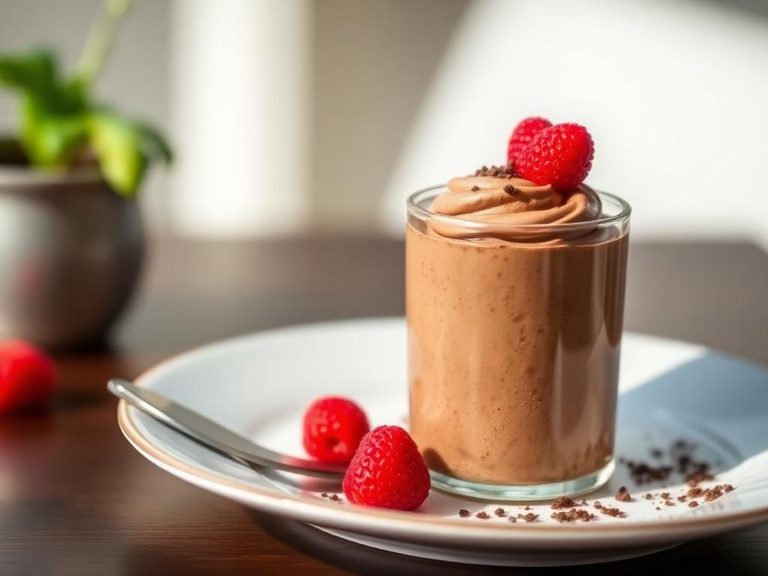
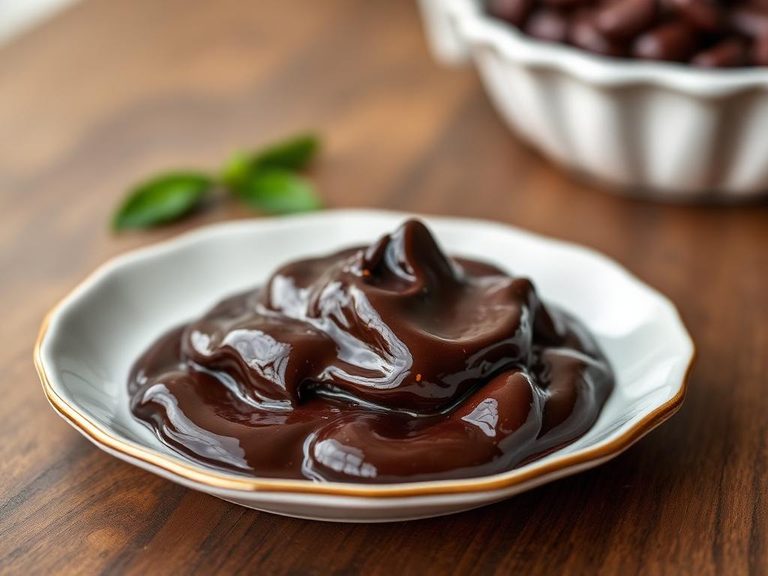
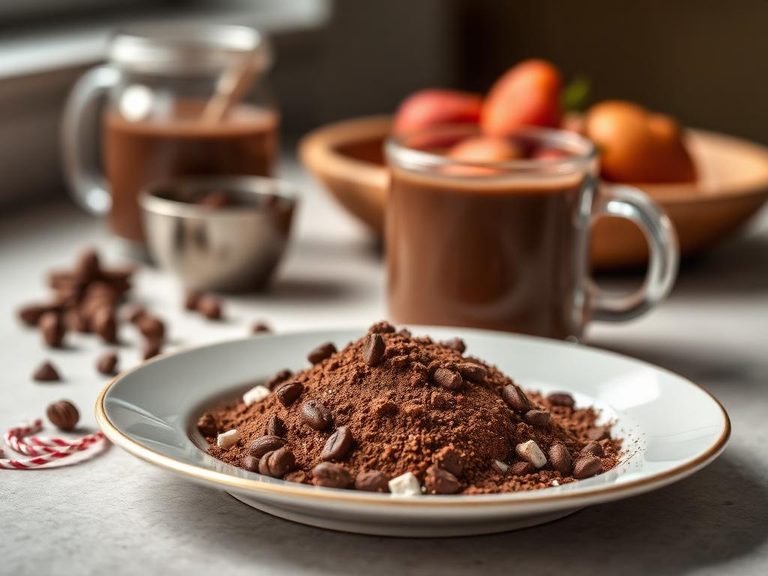
This is a versatile, shelf-stable powder that transforms into a rich, creamy chocolate dessert when mixed with milk. It typically yields a smooth, mousse-like texture with a deep cocoa flavor, offering a quick and satisfying sweet treat. Nutritionally, it's a concentrated source of carbohydrates, providing a substantial energy boost.
Calorie split: 2% protein · 90% carbs · 7% fat
↓ Full nutrition💚 Why it's loved
People love it for the instant gratification of a decadent chocolate dessert with minimal effort, evoking nostalgic comfort food. Its versatility allows for quick puddings, pie fillings, or a base for more elaborate creations.
⚠️ Watch-outs & how to enjoy it better
The primary downside is its very high carbohydrate content, which can cause a rapid blood-sugar spike, making it less suitable for those managing diabetes or insulin resistance. To counteract this, pair a small portion with a source of protein (like nuts or Greek yogurt) or healthy fat (like a dollop of whipped cream) to slow sugar absorption. Also, check labels for common allergens like milk or soy.
Key benefits
- Provides a quick and convenient source of energy.
- Offers a rich chocolate flavor without the need for melting or tempering chocolate.
- Shelf-stable and easy to store for long periods.
- Contains dietary fiber from cocoa and other ingredients.
- Can be easily customized with toppings or mix-ins.
🍽️ Popular dishes



🌍 Where it's eaten
💡 Did you know?
Many 'dry mix' puddings use rennin (an enzyme traditionally from calf stomachs) or other coagulants to set the dessert without requiring cooking, a technique that became popular for its convenience in mid-20th century home kitchens.
Full nutrition (USDA data · scales with serving)
| Water | 1.0 g |
| Energy | 363 kcal |
| Energy | 1519 kj |
| Protein | 2.4 g |
| Total lipid (fat) | 3.3 g |
| Ash | 1.4 g |
| Carbohydrate, by difference | 91.5 g |
| Fiber, total dietary | 5.1 g |
| Calcium, Ca | 166 mg |
| Iron, Fe | 2.5 mg |
| Magnesium, Mg | 81.0 mg |
| Phosphorus, P | 129 mg |
| Potassium, K | 430 mg |
| Sodium, Na | 187 mg |
| Zinc, Zn | 1.6 mg |
| Copper, Cu | 0.73 mg |
| Manganese, Mn | 0.64 mg |
| Selenium, Se | 2.9 ug |
| Vitamin C, total ascorbic acid | 0.00 mg |
| Thiamin | 0.01 mg |
| Riboflavin | 0.06 mg |
| Niacin | 0.31 mg |
| Pantothenic acid | 0.04 mg |
| Vitamin B-6 | 0.03 mg |
| Folate, total | 6.0 ug |
| Folic acid | 0.00 ug |
| Folate, food | 6.0 ug |
| Folate, DFE | 6.0 ug |
| Vitamin B-12 | 0.00 ug |
| Vitamin B-12, added | 0.00 ug |
| Vitamin A, RAE | 0.00 ug |
| Retinol | 0.00 ug |
| Vitamin A, IU | 3.0 iu |
| Caffeine | 13.0 mg |
| Theobromine | 424 mg |
Fat & fatty acid profile (per 100g)
| Fatty acids, total saturated | 1.9 g |
| SFA 14:0 | 0.00 g |
| SFA 16:0 | 0.84 g |
| SFA 18:0 | 1.1 g |
| Fatty acids, total monounsaturated | 1.1 g |
| MUFA 16:1 | 0.01 g |
| MUFA 18:1 | 1.1 g |
| Fatty acids, total polyunsaturated | 0.10 g |
| PUFA 18:2 | 0.09 g |
| PUFA 18:3 | 0.00 g |
| Cholesterol | 0.00 mg |
Amino acid profile (per 100g)
| Tryptophan | 0.03 g |
| Threonine | 0.09 g |
| Isoleucine | 0.09 g |
| Leucine | 0.14 g |
| Lysine | 0.12 g |
| Methionine | 0.02 g |
| Cystine | 0.03 g |
| Phenylalanine | 0.11 g |
| Tyrosine | 0.08 g |
| Valine | 0.13 g |
| Arginine | 0.15 g |
| Histidine | 0.04 g |
| Alanine | 0.13 g |
| Aspartic acid | 0.23 g |
| Glutamic acid | 0.35 g |
| Glycine | 0.19 g |
| Proline | 0.15 g |
| Serine | 0.10 g |
FAQ
What is rennin and is it vegetarian?
Rennin is an enzyme that curdles milk. Traditional rennin is animal-derived (from calves), making it non-vegetarian. However, many modern mixes use microbial or vegetable-based coagulants instead, so checking the label is key for vegetarians.
Why is the sugar listed as 0g when it's a dessert mix?
The 'sugar' listed on nutrition labels typically refers to added sugars. The sweetness in this dry mix likely comes from carbohydrates like maltodextrin or dextrose, which are classified differently from 'added sugars' like table sugar on some labels, or the serving size for the label may be for the dry powder before preparation.
Can I use water instead of milk to prepare it?
You can, but the result will be significantly less creamy and rich. Milk adds fat, protein, and lactose, which contribute to the classic smooth texture and fuller flavor of the prepared dessert.
Nutrient density (calculated · NRF9.3)
Nutrient Rich Foods index: beneficial nutrients (protein, fiber, vitamins, minerals) minus saturated fat, added sugar & sodium, per 100 kcal.
NRF9.3 index — Fulgoni, Keast & Drewnowski, 2009. Computed from USDA nutrients.
Weight-loss friendliness (composite index)
Energy density 3.63 kcal/g · 3% calories from protein · 5.1 g fiber · 0.0 g sugar per 100 g.
Composite of energy density (Rolls et al., 1999), protein & fiber satiety, minus sugar. A calculated heuristic — ranks satiety-per-calorie, not a clinical measure.
Dietary load (calculated from USDA values)
Potential renal acid load. Positive = acid-forming, negative = alkaline-forming.
Sodium-to-potassium ratio: 0.43 (lower is better — aim for ≤ 1)
Sodium:potassium per WHO potassium guidance. Computed from USDA nutrients.