

Crepe, fruit filled
Common food

Photo: Wikipedia
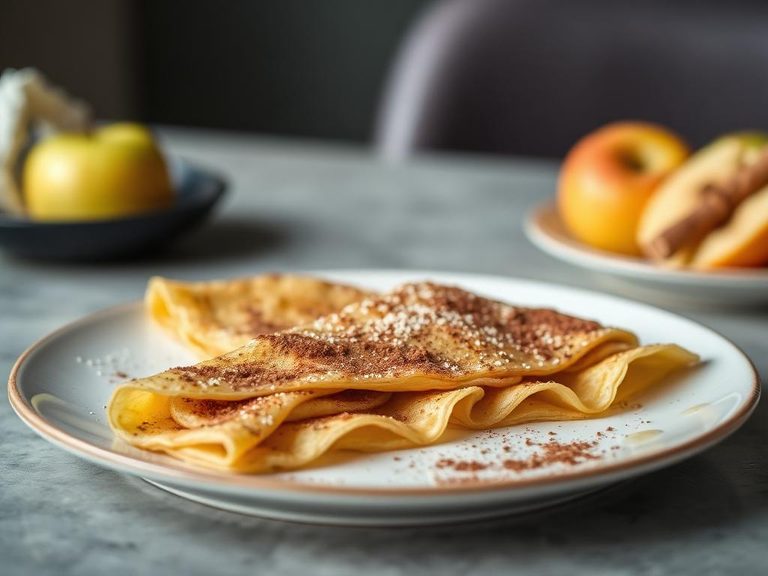
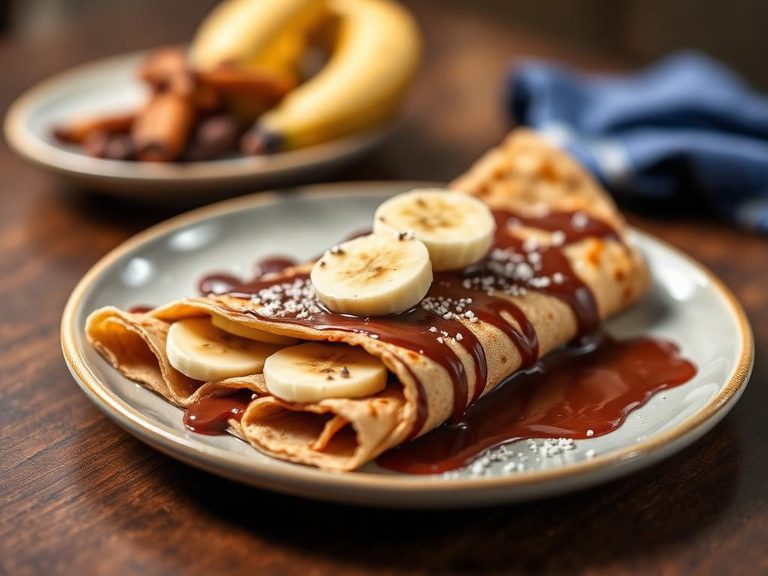
A delicate, paper-thin pancake, often made with flour, eggs, and milk, folded or rolled around a sweet fruit filling like strawberries, blueberries, or apples. The texture is soft and slightly chewy, with the fruit providing a burst of juicy freshness. Nutritionally, it offers a quick energy boost from its carbohydrate content, primarily from the fruit sugars.
Calorie split: 10% protein · 56% carbs · 34% fat
↓ Full nutrition💚 Why it's loved
People love it for the perfect contrast between the soft, eggy crepe and the bright, sweet-tart burst of fresh fruit. Its versatility makes it a beloved breakfast, dessert, or snack across many cultures, easily customized with seasonal fillings.
⚠️ Watch-outs & how to enjoy it better
The high sugar content, especially from the fruit and any added syrups, can lead to rapid blood sugar spikes. Those with gluten intolerance or egg allergies must avoid traditional versions. To mitigate sugar impact, pair with a source of protein (like Greek yogurt) or healthy fat (like a handful of nuts) and practice portion control.
Key benefits
- Quick source of energy from carbohydrates
- Provides some dietary fiber from the fruit filling
- Contains protein from eggs and milk in the batter
- Can be a vehicle for various nutrient-rich fruits
- Lighter and often lower in fat than many pastries
🍽️ Popular dishes



🌍 Where it's eaten
💡 Did you know?
The word 'crêpe' comes from the Latin 'crispa,' meaning 'curled,' referring to the thin pancake's characteristic wrinkled edges when cooked.
Full nutrition (USDA data · scales with serving)
| Water | 60.9 g |
| Energy | 188 kcal |
| Protein | 4.6 g |
| Total lipid (fat) | 7.1 g |
| Carbohydrate, by difference | 26.6 g |
| Fiber, total dietary | 1.2 g |
| Total Sugars | 16.0 g |
| Calcium, Ca | 51.0 mg |
| Iron, Fe | 1.0 mg |
| Magnesium, Mg | 11.0 mg |
| Phosphorus, P | 78.0 mg |
| Potassium, K | 117 mg |
| Sodium, Na | 176 mg |
| Zinc, Zn | 0.45 mg |
| Copper, Cu | 0.04 mg |
| Selenium, Se | 7.8 ug |
| Vitamin C, total ascorbic acid | 3.2 mg |
| Thiamin | 0.12 mg |
| Riboflavin | 0.17 mg |
| Niacin | 0.86 mg |
| Vitamin B-6 | 0.05 mg |
| Folate, total | 23.0 ug |
| Folic acid | 10.0 ug |
| Folate, food | 14.0 ug |
| Folate, DFE | 30.0 ug |
| Choline, total | 58.3 mg |
| Vitamin B-12 | 0.28 ug |
| Vitamin B-12, added | 0.00 ug |
| Vitamin A, RAE | 94.0 ug |
| Retinol | 90.0 ug |
| Carotene, beta | 47.0 ug |
| Carotene, alpha | 0.00 ug |
| Cryptoxanthin, beta | 2.0 ug |
| Lycopene | 0.00 ug |
| Lutein + zeaxanthin | 121 ug |
| Vitamin E (alpha-tocopherol) | 0.92 mg |
| Vitamin E, added | 0.00 mg |
| Vitamin D (D2 + D3) | 1.0 ug |
| Vitamin K (phylloquinone) | 12.9 ug |
| Alcohol, ethyl | 0.00 g |
| Caffeine | 0.00 mg |
| Theobromine | 0.00 mg |
Fat & fatty acid profile (per 100g)
| Fatty acids, total saturated | 1.8 g |
| SFA 4:0 | 0.01 g |
| SFA 6:0 | 0.01 g |
| SFA 8:0 | 0.01 g |
| SFA 10:0 | 0.02 g |
| SFA 12:0 | 0.02 g |
| SFA 14:0 | 0.07 g |
| SFA 16:0 | 1.1 g |
| SFA 18:0 | 0.55 g |
| Fatty acids, total monounsaturated | 2.9 g |
| MUFA 16:1 | 0.05 g |
| MUFA 18:1 | 2.9 g |
| MUFA 20:1 | 0.01 g |
| MUFA 22:1 | 0.00 g |
| Fatty acids, total polyunsaturated | 1.8 g |
| PUFA 18:2 | 1.6 g |
| PUFA 18:3 | 0.14 g |
| PUFA 18:4 | 0.00 g |
| PUFA 20:4 | 0.00 g |
| PUFA 20:5 n-3 (EPA) | 0.00 g |
| PUFA 22:5 n-3 (DPA) | 0.00 g |
| PUFA 22:6 n-3 (DHA) | 0.00 g |
| Cholesterol | 74.0 mg |
FAQ
What's the best fruit for a fruit-filled crepe?
Berries (strawberries, blueberries, raspberries) are classic for their balance of sweet and tart. Sliced bananas, sautéed apples or pears, and peaches are also excellent choices. The best fruit is often whatever is fresh and in season.
Can I make fruit-filled crepes ahead of time?
It's best to store the crepes and the fruit filling separately in the refrigerator. Assemble just before serving to prevent the crepe from becoming soggy from the fruit's moisture. You can reheat plain crepes gently in a pan or microwave.
How do I prevent my crepes from tearing when filling them?
Ensure your batter is smooth and thin enough, and cook the crepes on a properly heated, lightly greased non-stick pan. Let each crepe cook fully until the edges lift easily before flipping. Handle them gently when folding.
Nutrient density (calculated · NRF9.3)
Nutrient Rich Foods index: beneficial nutrients (protein, fiber, vitamins, minerals) minus saturated fat, added sugar & sodium, per 100 kcal.
NRF9.3 index — Fulgoni, Keast & Drewnowski, 2009. Computed from USDA nutrients.
Weight-loss friendliness (composite index)
Energy density 1.88 kcal/g · 10% calories from protein · 1.2 g fiber · 16.0 g sugar per 100 g.
Composite of energy density (Rolls et al., 1999), protein & fiber satiety, minus sugar. A calculated heuristic — ranks satiety-per-calorie, not a clinical measure.
Dietary load (calculated from USDA values)
Potential renal acid load. Positive = acid-forming, negative = alkaline-forming.
Sodium-to-potassium ratio: 1.50 (lower is better — aim for ≤ 1)
Sodium:potassium per WHO potassium guidance. Computed from USDA nutrients.