

Cranberries, raw
Common food

Photo: Wikipedia
Cranberries are small, round, glossy red berries with a tough skin and a juicy, tart interior that makes your mouth pucker. Their vibrant color and sharp, acidic flavor are iconic, especially in their raw form. Nutritionally, they are a low-calorie, high-fiber food with a notable concentration of antioxidants like proanthocyanidins.
Calorie split: 4% protein · 94% carbs · 2% fat
↓ Full nutrition💚 Why it's loved
People love cranberries for their intense, refreshing tartness that cuts through rich, sweet, or savory dishes. They are a cultural staple, especially in North America, where their seasonal harvest is celebrated in everything from holiday sauces to festive drinks.
⚠️ Watch-outs & how to enjoy it better
Raw cranberries are extremely tart and can be unpleasantly bitter on their own. Their acidity can be harsh on sensitive teeth or digestive systems. To counteract this, they are almost always cooked with sugar or paired with sweet ingredients, or dried and sweetened for snacking.
Key benefits
- Rich in unique antioxidants called proanthocyanidins.
- High in dietary fiber, aiding digestive health.
- Very low in calories and fat.
- A good source of Vitamin C and Vitamin K1.
- May support urinary tract health.
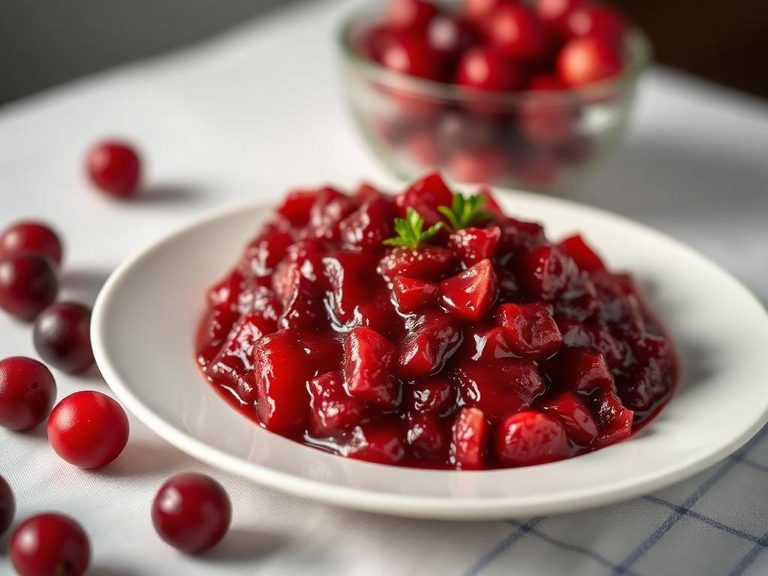
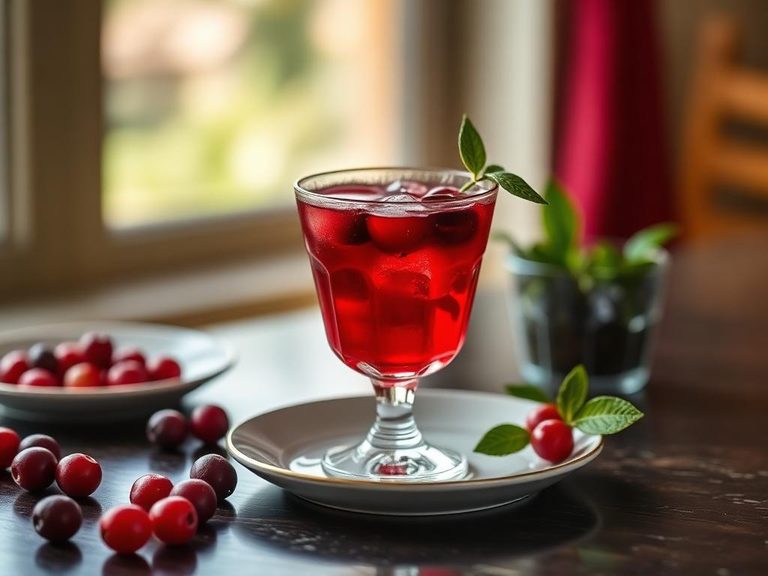
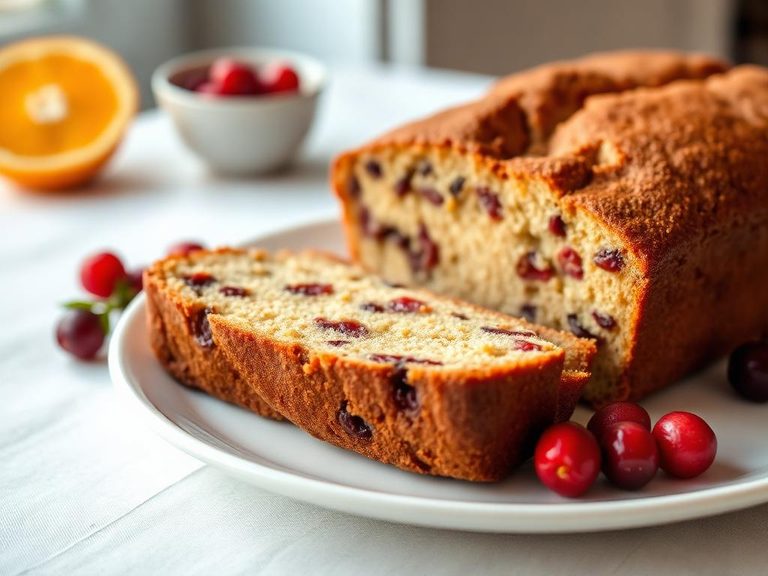
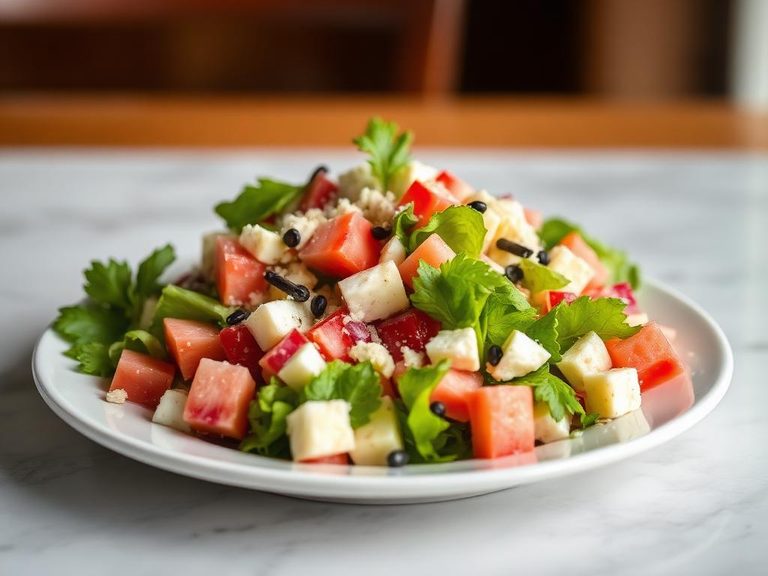
🍽️ Popular dishes
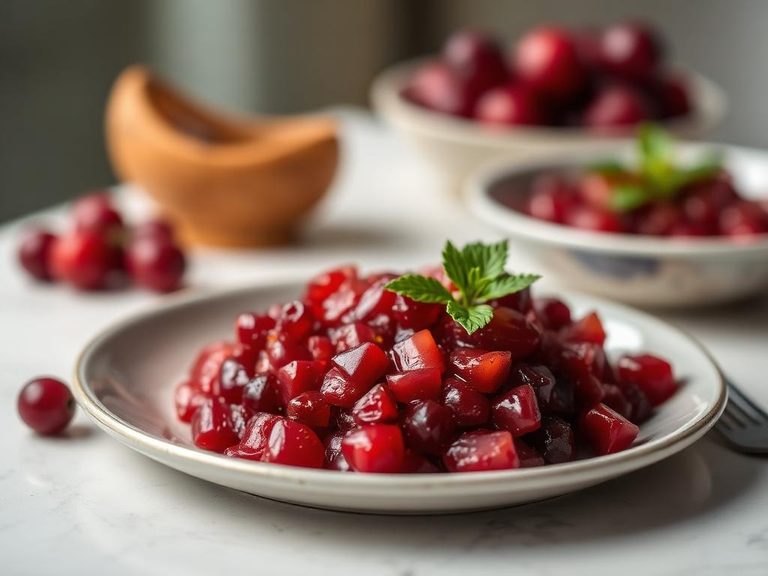
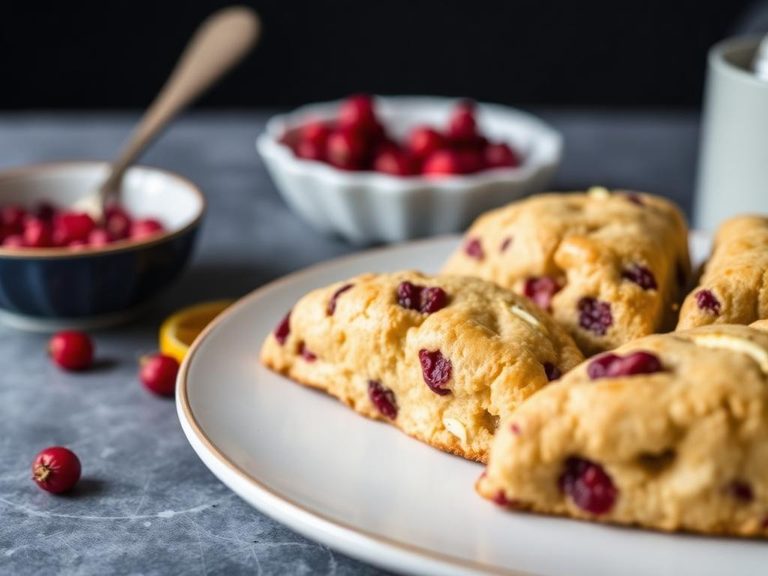
🌍 Where it's eaten
💡 Did you know?
Cranberries are one of only three native North American fruits that are commercially cultivated, and they bounce when fully ripe due to tiny air pockets inside the berry.
Full nutrition (USDA data · scales with serving)
| Water | 87.3 g |
| Energy | 46.0 kcal |
| Protein | 0.46 g |
| Total lipid (fat) | 0.13 g |
| Carbohydrate, by difference | 12.0 g |
| Fiber, total dietary | 3.6 g |
| Total Sugars | 4.3 g |
| Calcium, Ca | 8.0 mg |
| Iron, Fe | 0.23 mg |
| Magnesium, Mg | 6.0 mg |
| Phosphorus, P | 11.0 mg |
| Potassium, K | 80.0 mg |
| Sodium, Na | 2.0 mg |
| Zinc, Zn | 0.09 mg |
| Copper, Cu | 0.06 mg |
| Selenium, Se | 0.10 ug |
| Vitamin C, total ascorbic acid | 14.0 mg |
| Thiamin | 0.01 mg |
| Riboflavin | 0.02 mg |
| Niacin | 0.10 mg |
| Vitamin B-6 | 0.06 mg |
| Folate, total | 1.0 ug |
| Folic acid | 0.00 ug |
| Folate, food | 1.0 ug |
| Folate, DFE | 1.0 ug |
| Choline, total | 5.5 mg |
| Vitamin B-12 | 0.00 ug |
| Vitamin B-12, added | 0.00 ug |
| Vitamin A, RAE | 3.0 ug |
| Retinol | 0.00 ug |
| Carotene, beta | 38.0 ug |
| Carotene, alpha | 0.00 ug |
| Cryptoxanthin, beta | 0.00 ug |
| Lycopene | 0.00 ug |
| Lutein + zeaxanthin | 91.0 ug |
| Vitamin E (alpha-tocopherol) | 1.3 mg |
| Vitamin E, added | 0.00 mg |
| Vitamin D (D2 + D3) | 0.00 ug |
| Vitamin K (phylloquinone) | 5.0 ug |
| Alcohol, ethyl | 0.00 g |
| Caffeine | 0.00 mg |
| Theobromine | 0.00 mg |
Fat & fatty acid profile (per 100g)
| Fatty acids, total saturated | 0.01 g |
| SFA 4:0 | 0.00 g |
| SFA 6:0 | 0.00 g |
| SFA 8:0 | 0.00 g |
| SFA 10:0 | 0.00 g |
| SFA 12:0 | 0.00 g |
| SFA 14:0 | 0.00 g |
| SFA 16:0 | 0.01 g |
| SFA 18:0 | 0.00 g |
| Fatty acids, total monounsaturated | 0.02 g |
| MUFA 16:1 | 0.00 g |
| MUFA 18:1 | 0.02 g |
| MUFA 20:1 | 0.00 g |
| MUFA 22:1 | 0.00 g |
| Fatty acids, total polyunsaturated | 0.06 g |
| PUFA 18:2 | 0.03 g |
| PUFA 18:3 | 0.02 g |
| PUFA 18:4 | 0.00 g |
| PUFA 20:4 | 0.00 g |
| PUFA 20:5 n-3 (EPA) | 0.00 g |
| PUFA 22:5 n-3 (DPA) | 0.00 g |
| PUFA 22:6 n-3 (DHA) | 0.00 g |
| Cholesterol | 0.00 mg |
FAQ
Why are cranberries so tart?
Their sharp taste comes from high levels of organic acids, primarily citric and malic acid, which is a natural defense for the plant.
Can I eat cranberries raw?
Yes, they are safe to eat raw but are very sour and astringent. Most people prefer them cooked, sweetened, or dried.
What's the difference between fresh and frozen cranberries?
Nutritionally, they are very similar. Frozen berries are picked at peak ripeness and are excellent for cooking and baking, while fresh are seasonal.
Are dried cranberries healthy?
They retain antioxidants but are typically coated in sugar or oil, significantly increasing calories and sugar content compared to fresh or frozen.
Nutrient density (calculated · NRF9.3)
Nutrient Rich Foods index: beneficial nutrients (protein, fiber, vitamins, minerals) minus saturated fat, added sugar & sodium, per 100 kcal.
NRF9.3 index — Fulgoni, Keast & Drewnowski, 2009. Computed from USDA nutrients.
Weight-loss friendliness (composite index)
Energy density 0.46 kcal/g · 4% calories from protein · 3.6 g fiber · 4.3 g sugar per 100 g.
Composite of energy density (Rolls et al., 1999), protein & fiber satiety, minus sugar. A calculated heuristic — ranks satiety-per-calorie, not a clinical measure.
Dietary load (calculated from USDA values)
Potential renal acid load. Positive = acid-forming, negative = alkaline-forming.
Sodium-to-potassium ratio: 0.03 (lower is better — aim for ≤ 1)
Sodium:potassium per WHO potassium guidance. Computed from USDA nutrients.