

Cornmeal, yellow, self-rising, bolted, plain, enriched
Whole food · Cereal Grains and Pasta

Photo: Wikipedia
This is a finely milled, golden-yellow cornmeal that has been bolted (sifted) to remove bran and germ, then enriched with B vitamins and iron. It cooks into a tender, moist, and slightly crumbly texture with a sweet, earthy corn flavor. Nutritionally, it's a dense source of complex carbohydrates, providing steady energy with a notable 6.7g of fiber per 100g.
Calorie split: 10% protein · 82% carbs · 9% fat
↓ Full nutrition💚 Why it's loved
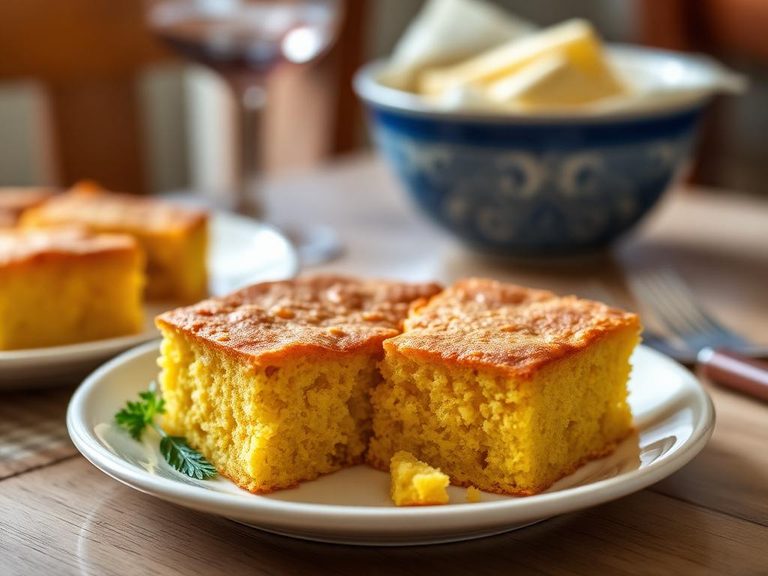
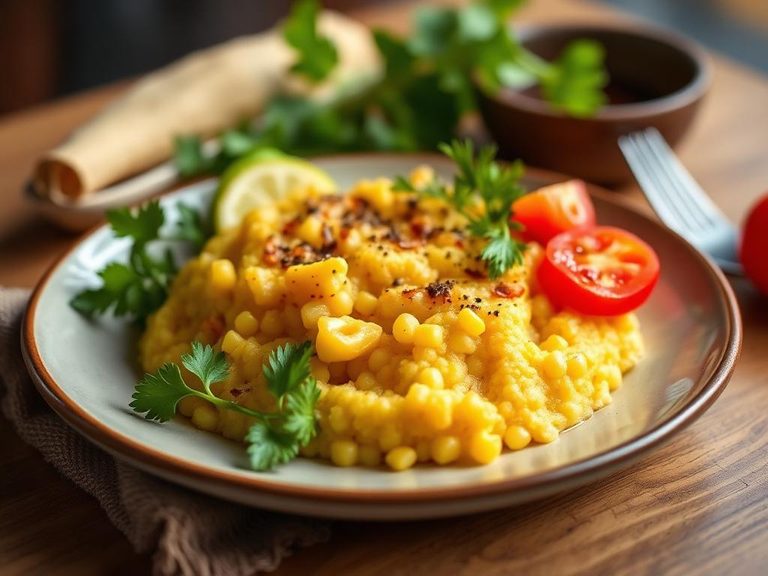
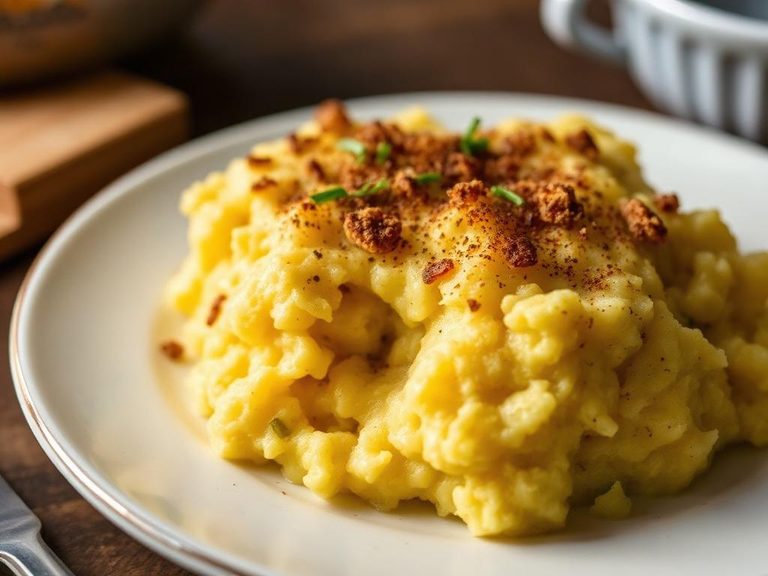
People adore its comforting, subtly sweet corn flavor and the tender, moist texture it brings to baked goods and porridges. Its versatility is key—it’s the humble backbone of iconic dishes from Southern cornbread to Italian polenta.
⚠️ Watch-outs & how to enjoy it better
As a refined grain, it can cause quicker blood-sugar spikes than whole-grain cornmeal. It's also a common allergen for those with corn sensitivities. To mitigate, pair it with protein and healthy fats (like eggs, cheese, or beans) and consider mixing it with whole-grain cornmeal for added fiber.
Key benefits
- Good source of dietary fiber for digestive health.
- Enriched with iron and B vitamins like thiamin and niacin.
- Naturally low in fat and contains no sugar.
- Provides complex carbohydrates for sustained energy.
- Versatile base for both sweet and savory dishes.
🍽️ Popular dishes



🌍 Where it's eaten
💡 Did you know?
The term 'bolted' refers to the historical process of bolting—passing the meal through a fine sieve or 'bolt' cloth—to achieve a smoother, finer texture for baking.
Full nutrition (USDA data · scales with serving)
| Water | 12.6 g |
| Energy | 334 kcal |
| Energy | 1397 kj |
| Protein | 8.3 g |
| Total lipid (fat) | 3.4 g |
| Ash | 5.5 g |
| Carbohydrate, by difference | 70.3 g |
| Fiber, total dietary | 6.7 g |
| Calcium, Ca | 361 mg |
| Iron, Fe | 5.8 mg |
| Magnesium, Mg | 86.0 mg |
| Phosphorus, P | 804 mg |
| Potassium, K | 255 mg |
| Sodium, Na | 1247 mg |
| Zinc, Zn | 2.0 mg |
| Copper, Cu | 0.15 mg |
| Manganese, Mn | 0.50 mg |
| Vitamin C, total ascorbic acid | 0.00 mg |
| Thiamin | 0.66 mg |
| Riboflavin | 0.40 mg |
| Niacin | 5.3 mg |
| Pantothenic acid | 0.42 mg |
| Vitamin B-6 | 0.54 mg |
| Folate, total | 233 ug |
| Folic acid | 176 ug |
| Folate, food | 57.0 ug |
| Folate, DFE | 356 ug |
| Vitamin B-12 | 0.00 ug |
| Vitamin A, RAE | 23.0 ug |
| Retinol | 0.00 ug |
| Vitamin A, IU | 469 iu |
| Vitamin D (D2 + D3), International Units | 0.00 iu |
| Vitamin D (D2 + D3) | 0.00 ug |
Fat & fatty acid profile (per 100g)
| Fatty acids, total saturated | 0.48 g |
| SFA 16:0 | 0.41 g |
| SFA 18:0 | 0.05 g |
| Fatty acids, total monounsaturated | 0.90 g |
| MUFA 16:1 | 0.00 g |
| MUFA 18:1 | 0.89 g |
| Fatty acids, total polyunsaturated | 1.6 g |
| PUFA 18:2 | 1.5 g |
| PUFA 18:3 | 0.05 g |
| Cholesterol | 0.00 mg |
Amino acid profile (per 100g)
| Tryptophan | 0.06 g |
| Threonine | 0.31 g |
| Isoleucine | 0.30 g |
| Leucine | 1.0 g |
| Lysine | 0.23 g |
| Methionine | 0.17 g |
| Cystine | 0.15 g |
| Phenylalanine | 0.41 g |
| Tyrosine | 0.34 g |
| Valine | 0.42 g |
| Arginine | 0.41 g |
| Histidine | 0.25 g |
| Alanine | 0.62 g |
| Aspartic acid | 0.58 g |
| Glutamic acid | 1.6 g |
| Glycine | 0.34 g |
| Proline | 0.72 g |
| Serine | 0.39 g |
FAQ
What's the difference between self-rising and regular cornmeal?
Self-rising cornmeal has baking powder and salt already mixed in, making it a convenient all-in-one for quick breads like cornbread. Regular cornmeal requires you to add these leavening agents yourself.
Can I use this for making polenta?
Yes, though traditional Italian polenta is often made with coarser, stone-ground cornmeal. This finer, enriched version will cook faster and yield a smoother, less textured polenta.
Why is it 'enriched'?
Enrichment means that during processing, certain nutrients lost from the bran and germ (like B vitamins and iron) are added back in to improve its nutritional profile.
Nutrient density (calculated · NRF9.3)
Nutrient Rich Foods index: beneficial nutrients (protein, fiber, vitamins, minerals) minus saturated fat, added sugar & sodium, per 100 kcal.
NRF9.3 index — Fulgoni, Keast & Drewnowski, 2009. Computed from USDA nutrients.
Weight-loss friendliness (composite index)
Energy density 3.34 kcal/g · 10% calories from protein · 6.7 g fiber · 0.0 g sugar per 100 g.
Composite of energy density (Rolls et al., 1999), protein & fiber satiety, minus sugar. A calculated heuristic — ranks satiety-per-calorie, not a clinical measure.
Dietary load (calculated from USDA values)
Potential renal acid load. Positive = acid-forming, negative = alkaline-forming.
Sodium-to-potassium ratio: 4.89 (lower is better — aim for ≤ 1)
Sodium:potassium per WHO potassium guidance. Computed from USDA nutrients.