Fried Fish Coating
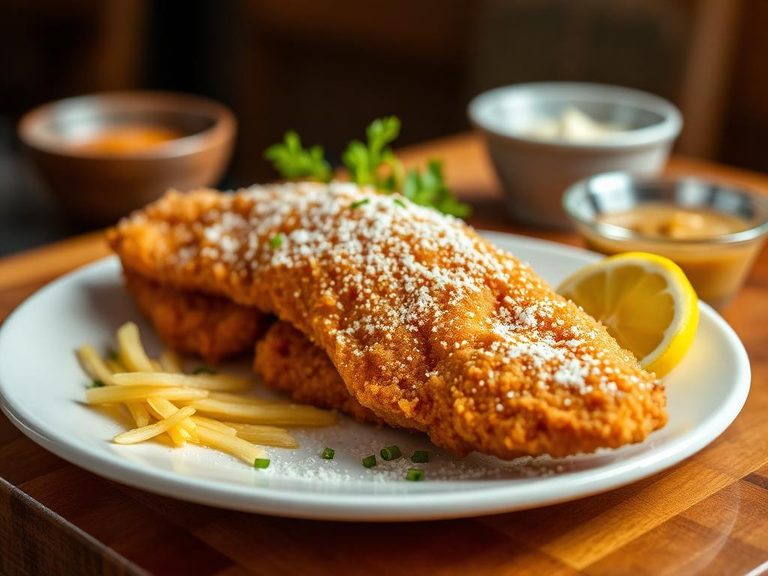
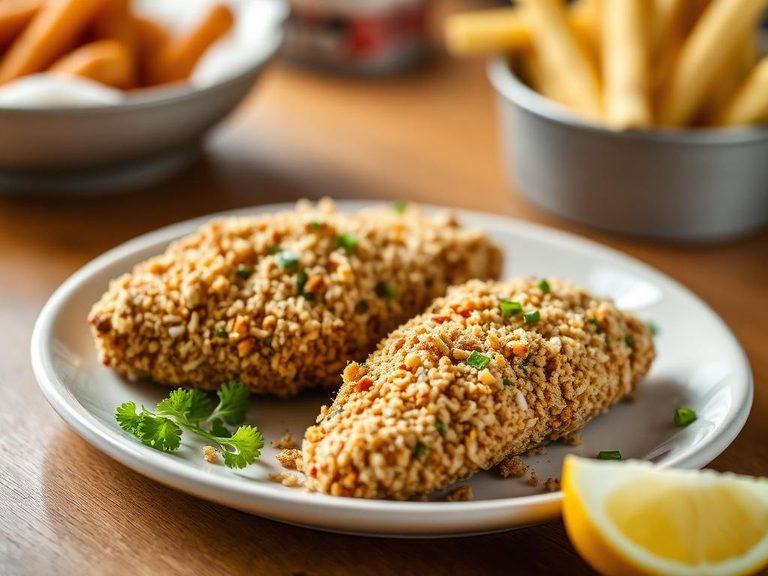
Fried fish coating is the crispy outer layer applied to fish fillets or pieces before deep-frying or pan-frying. It typically consists of a combination of flour, cornmeal, breadcrumbs, and seasonings like salt, pepper, paprika, and garlic powder. This technique is popular in many cuisines worldwide, particularly in Southern American, British, and Southeast Asian cooking.
🍽️ Nutrition at a glance
The coating is generally high in carbohydrates from the flour or cornmeal and adds significant fat from the frying oil, while the fish itself provides high-quality protein. A typical serving can range from 250 to 400 calories, depending on the thickness of the coating and the amount of oil absorbed.
Nutrition breakdown
| Calories | 220 kcal |
| Protein | 4 g |
| Carbs | 28 g |
| Fat | 10 g |
| Fiber | 1 g |
| Sugar | 1 g |
| Sodium | 480 mg |
| Iron | 1.8 mg |
| Calcium | 40 mg |
| Potassium | 85 mg |
| Phosphorus | 70 mg |
| Thiamin (B1) | 0.2 mg |
| Niacin (B3) | 1.5 mg |
| Folate | 45 mcg |
| Magnesium | 15 mg |
Per 1/2 cup (60 g) · estimated, varies by recipe
💡 What's interesting
The coating serves a dual purpose: it creates a satisfyingly crunchy texture contrast to the tender fish inside and helps lock in moisture during cooking. In some cultures, the specific type of coating—like a beer batter in the UK or a cornmeal dredge in the American South—is a point of regional pride and culinary identity.
🍽️ Related dishes
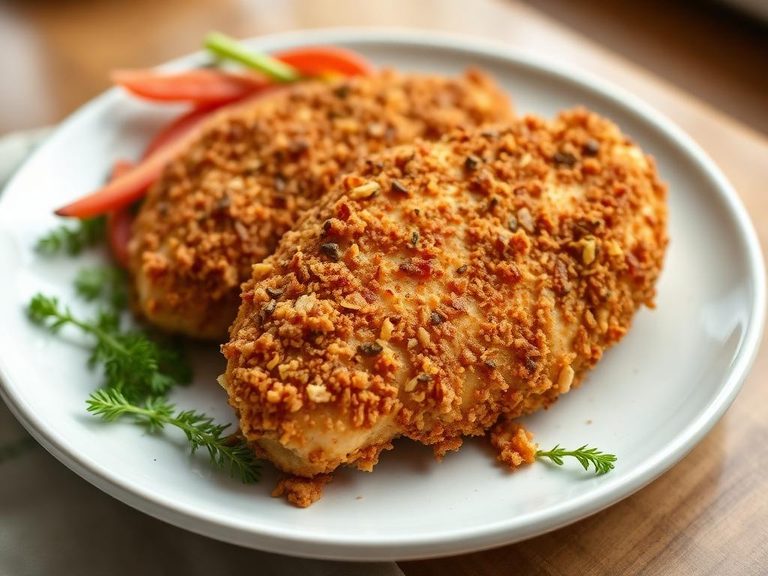 Crunchy coating for baked chicken or fish
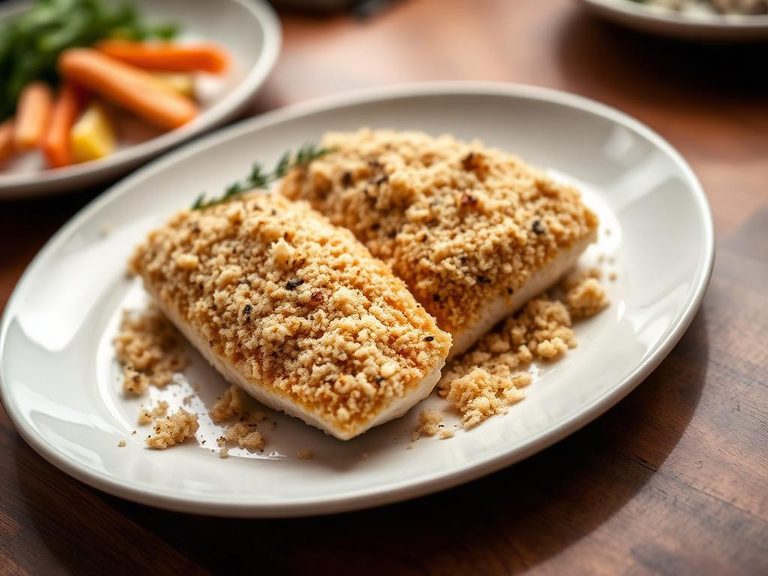 Crumbled coating for baked fish or chicken
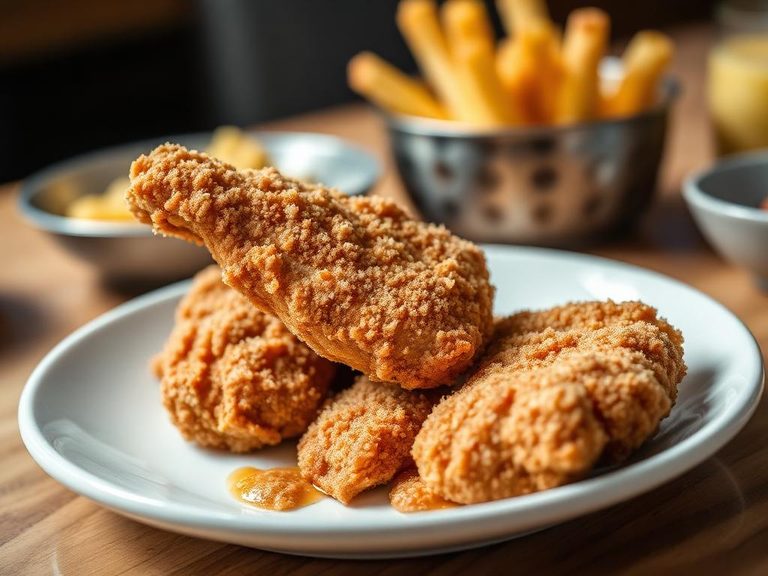 Crunchy coating for fried chicken or fish
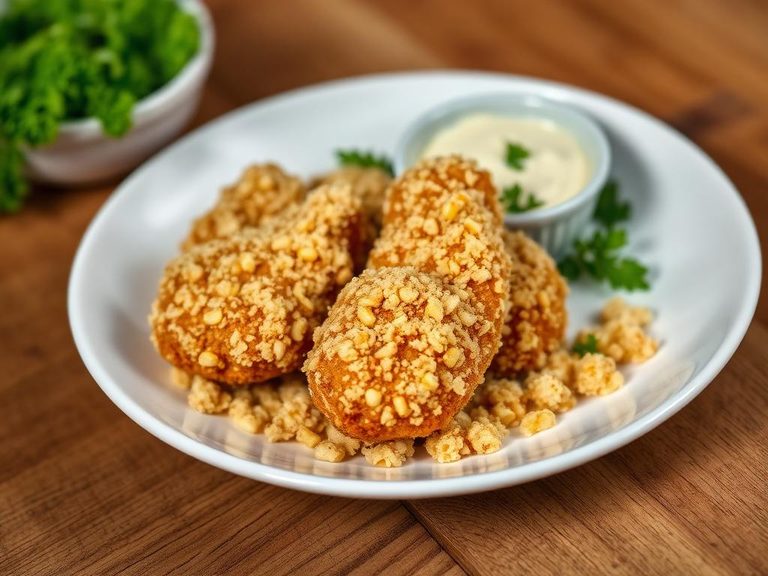 Crushed corn puffs as a coating for fried chicken or fish
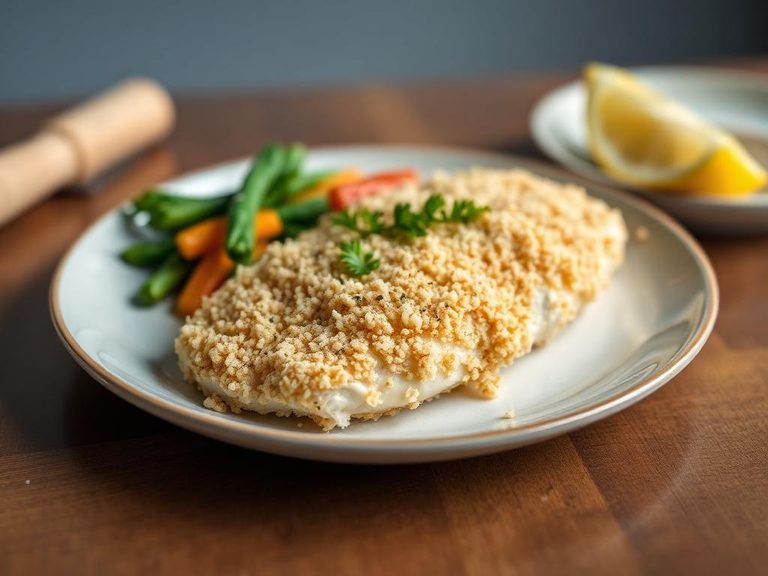 Bread crumb coating for baked fish or chicken
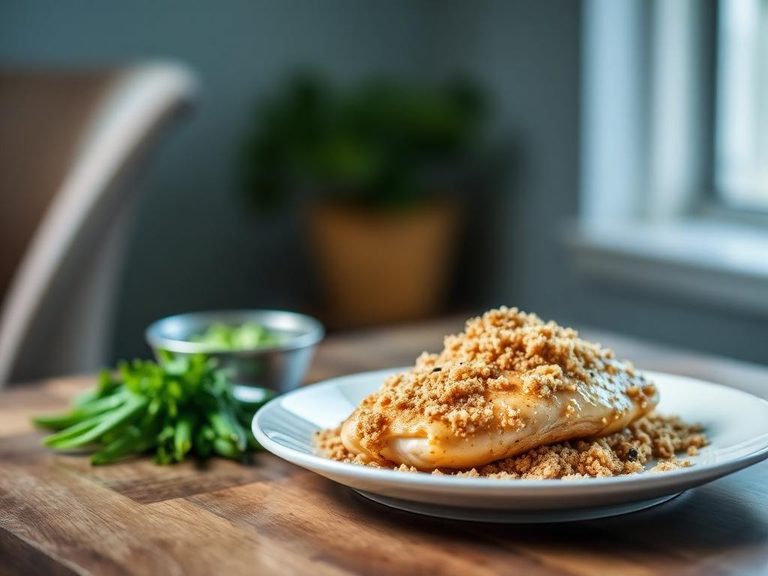 Crushed as a coating for baked chicken or fish
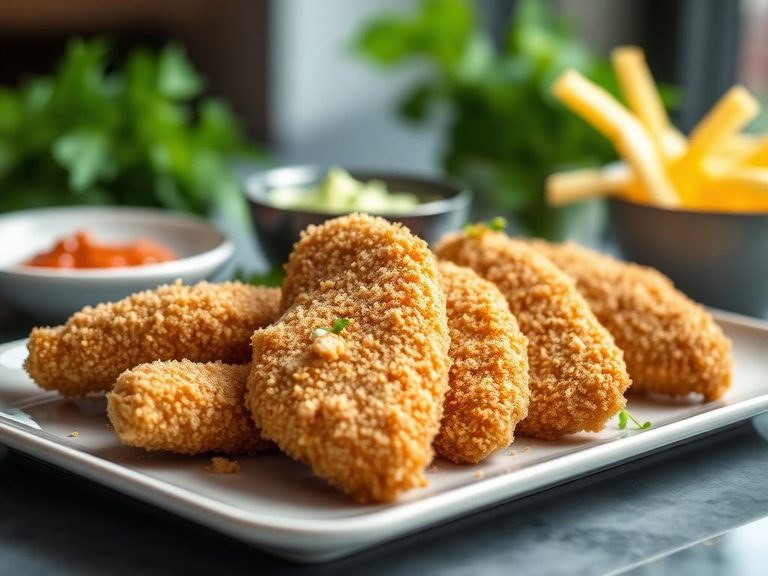 Crushed coating for chicken tenders or fish
 Crushed pretzel coating for chicken or fish