

Coffee creamer, liquid, fat free, sugar free, flavored
Common food

Photo: Wikipedia
This is a smooth, pourable liquid designed to lighten coffee or tea, offering a creamy texture without the dairy. It typically has a neutral to slightly sweet, vanilla-like flavor, with a mouthfeel that mimics whole milk or cream. Nutritionally, it's a low-calorie option, providing minimal protein and fat while contributing most of its calories from carbohydrates.
Calorie split: 5% protein · 51% carbs · 44% fat
↓ Full nutrition💚 Why it's loved
People love it for its convenience and ability to transform black coffee into a smoother, more palatable drink with a consistent taste. It's a staple in many offices and homes for its ease of use and long-lasting freshness.
⚠️ Watch-outs & how to enjoy it better
Some versions contain thickeners or artificial flavors that may not appeal to all palates. Those monitoring blood sugar should be cautious, as the carbohydrates can cause a spike if consumed in large amounts without protein or fat. Tip: Pair it with a source of protein (like nuts) or healthy fat (like a handful of seeds) to help stabilize blood sugar response.
Key benefits
- Low-calorie alternative to dairy cream
- Provides a creamy texture without dairy fat
- Adds flavor without sugar
- Long shelf life unopened
- Convenient for travel or office use
🍽️ Popular dishes
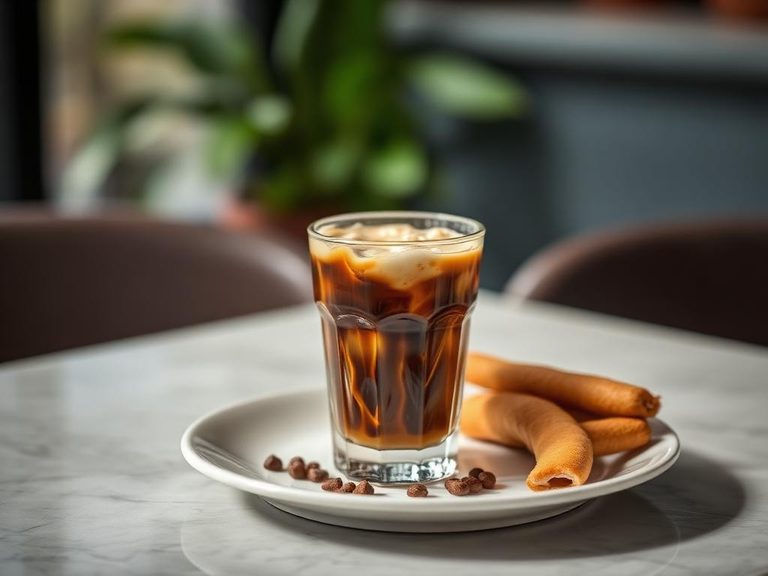


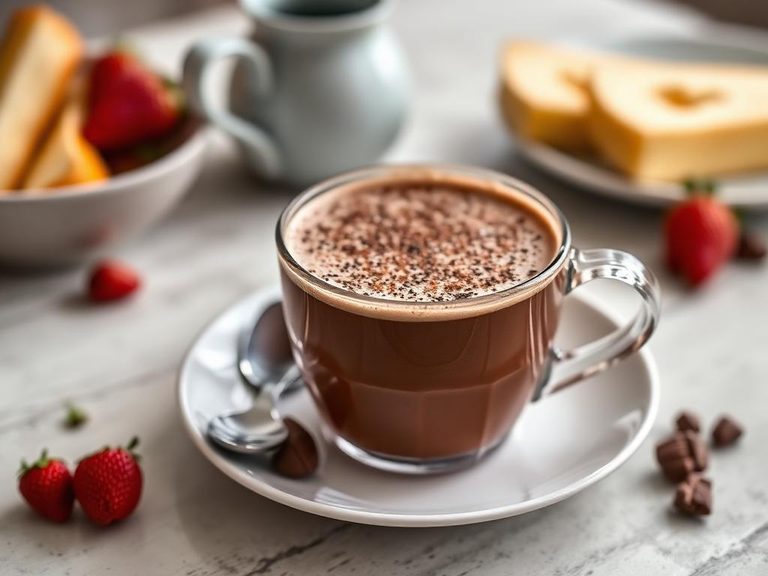
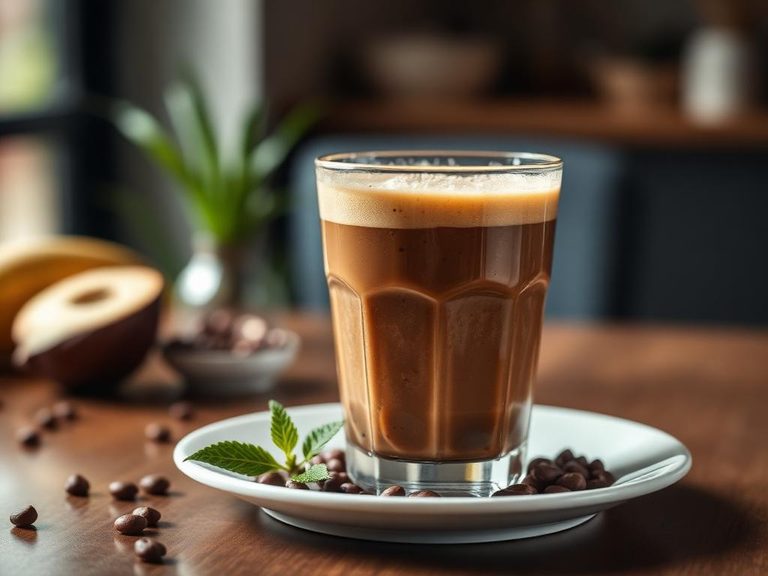
🌍 Where it's eaten
💡 Did you know?
The first non-dairy creamer, 'Coffee-mate,' was invented in 1958 by a Swiss inventor who wanted to create a product that wouldn't curdle in hot coffee, unlike milk.
Full nutrition (USDA data · scales with serving)
| Water | 86.2 g |
| Energy | 71.0 kcal |
| Protein | 0.80 g |
| Total lipid (fat) | 3.5 g |
| Carbohydrate, by difference | 9.1 g |
| Fiber, total dietary | 0.00 g |
| Total Sugars | 9.1 g |
| Calcium, Ca | 1.0 mg |
| Iron, Fe | 0.56 mg |
| Magnesium, Mg | 0.00 mg |
| Phosphorus, P | 75.0 mg |
| Potassium, K | 177 mg |
| Sodium, Na | 60.0 mg |
| Zinc, Zn | 0.05 mg |
| Copper, Cu | 0.00 mg |
| Selenium, Se | 0.90 ug |
| Vitamin C, total ascorbic acid | 0.00 mg |
| Thiamin | 0.00 mg |
| Riboflavin | 0.00 mg |
| Niacin | 0.00 mg |
| Vitamin B-6 | 0.00 mg |
| Folate, total | 0.00 ug |
| Folic acid | 0.00 ug |
| Folate, food | 0.00 ug |
| Folate, DFE | 0.00 ug |
| Choline, total | 0.00 mg |
| Vitamin B-12 | 0.00 ug |
| Vitamin B-12, added | 0.00 ug |
| Vitamin A, RAE | 0.00 ug |
| Retinol | 0.00 ug |
| Carotene, beta | 3.0 ug |
| Carotene, alpha | 0.00 ug |
| Cryptoxanthin, beta | 0.00 ug |
| Lycopene | 0.00 ug |
| Lutein + zeaxanthin | 0.00 ug |
| Vitamin E (alpha-tocopherol) | 0.28 mg |
| Vitamin E, added | 0.00 mg |
| Vitamin D (D2 + D3) | 0.00 ug |
| Vitamin K (phylloquinone) | 0.90 ug |
| Alcohol, ethyl | 0.00 g |
| Caffeine | 0.00 mg |
| Theobromine | 0.00 mg |
Fat & fatty acid profile (per 100g)
| Fatty acids, total saturated | 0.90 g |
| SFA 4:0 | 0.00 g |
| SFA 6:0 | 0.00 g |
| SFA 8:0 | 0.00 g |
| SFA 10:0 | 0.00 g |
| SFA 12:0 | 0.00 g |
| SFA 14:0 | 0.02 g |
| SFA 16:0 | 0.46 g |
| SFA 18:0 | 0.42 g |
| Fatty acids, total monounsaturated | 2.0 g |
| MUFA 16:1 | 0.00 g |
| MUFA 18:1 | 2.0 g |
| MUFA 20:1 | 0.00 g |
| MUFA 22:1 | 0.00 g |
| Fatty acids, total polyunsaturated | 0.42 g |
| PUFA 18:2 | 0.40 g |
| PUFA 18:3 | 0.02 g |
| PUFA 18:4 | 0.00 g |
| PUFA 20:4 | 0.00 g |
| PUFA 20:5 n-3 (EPA) | 0.00 g |
| PUFA 22:5 n-3 (DPA) | 0.00 g |
| PUFA 22:6 n-3 (DHA) | 0.00 g |
| Cholesterol | 0.00 mg |
FAQ
Is liquid coffee creamer the same as powdered creamer?
No, they are different products. Liquid creamer is a pre-mixed, shelf-stable or refrigerated liquid, while powdered creamer is a dehydrated product that you reconstitute with water. Their textures and sometimes ingredients can differ.
Can I use this as a milk substitute in cooking or baking?
It can work in some recipes for moisture and flavor, but it lacks the protein and natural sugars of milk, which can affect browning, structure, and taste. It's best used in coffee, tea, or simple sauces where its primary role is adding creaminess.
Why does it sometimes separate in very hot coffee?
Separation can occur due to the emulsifiers reacting to extreme heat or acidity. While safe to consume, a quick stir will usually recombine it. Using it in coffee that's slightly off the boil can prevent this.
Nutrient density (calculated · NRF9.3)
Nutrient Rich Foods index: beneficial nutrients (protein, fiber, vitamins, minerals) minus saturated fat, added sugar & sodium, per 100 kcal.
NRF9.3 index — Fulgoni, Keast & Drewnowski, 2009. Computed from USDA nutrients.
Weight-loss friendliness (composite index)
Energy density 0.71 kcal/g · 5% calories from protein · 0.0 g fiber · 9.1 g sugar per 100 g.
Composite of energy density (Rolls et al., 1999), protein & fiber satiety, minus sugar. A calculated heuristic — ranks satiety-per-calorie, not a clinical measure.
Dietary load (calculated from USDA values)
Potential renal acid load. Positive = acid-forming, negative = alkaline-forming.
Sodium-to-potassium ratio: 0.34 (lower is better — aim for ≤ 1)
Sodium:potassium per WHO potassium guidance. Computed from USDA nutrients.