

Chicken "wings", plain, from other sources
Common food
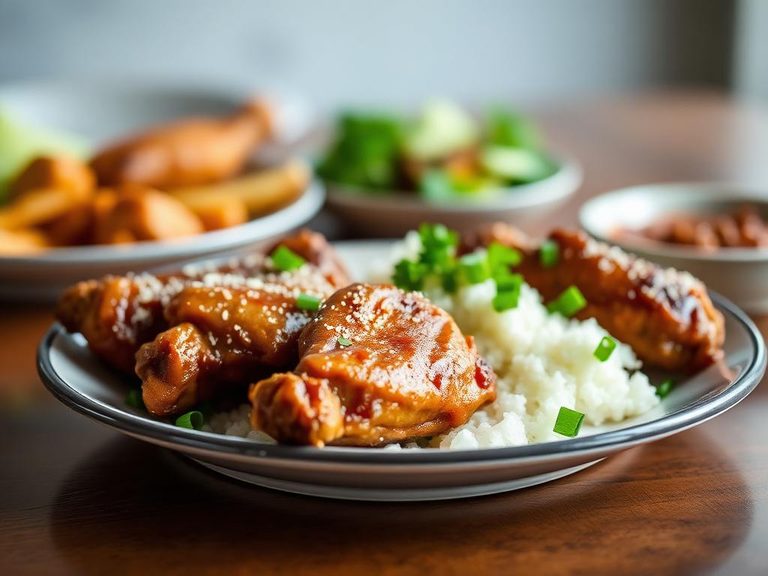
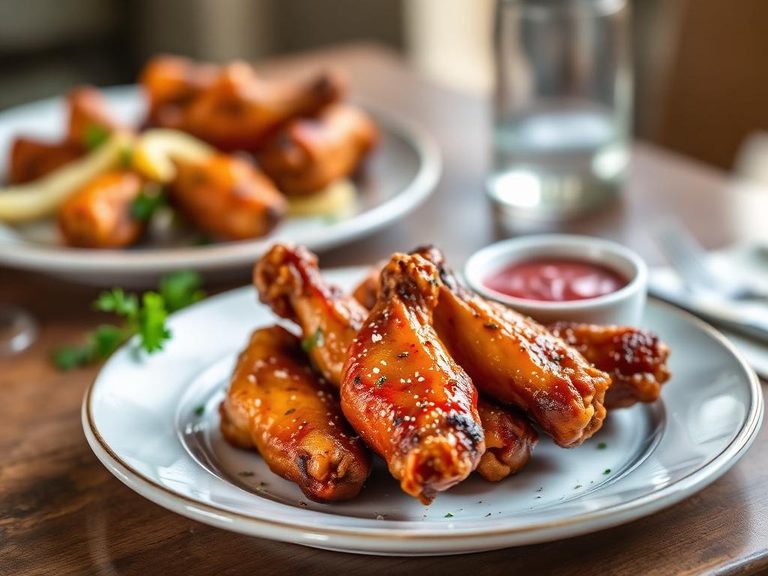
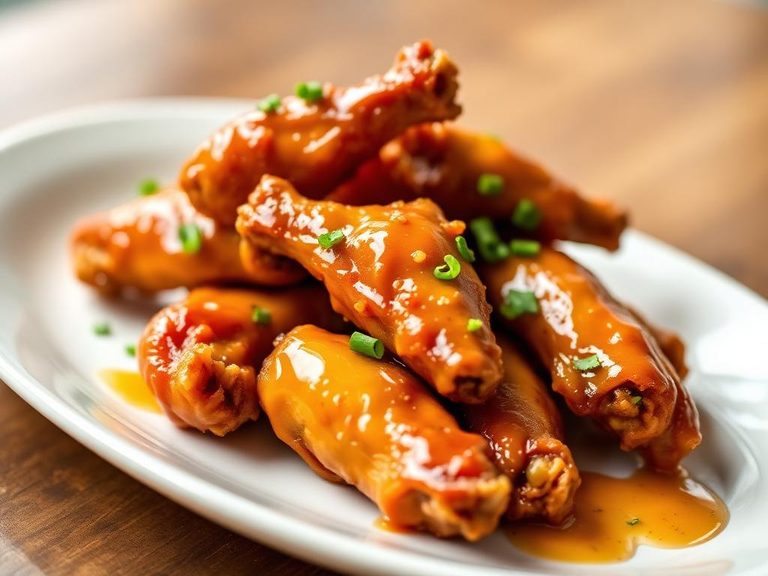
Plain chicken wings are the unadorned, uncooked or simply cooked (boiled, steamed, or lightly roasted) sections of the bird, prized for their juicy meat and rich skin. Their flavor is mild and savory, with a texture that's tender yet slightly chewy, especially around the joints. Nutritionally, they are a dense source of protein and fat, making them a hearty, energy-dense component of a meal.
Calorie split: 23% protein · 16% carbs · 61% fat
↓ Full nutrition💚 Why it's loved
People love chicken wings for their deeply satisfying, savory flavor and the hands-on, communal experience of eating them. They are the ultimate canvas for sauces and spices, making them a beloved centerpiece for gatherings, game days, and casual feasts across many cultures.
⚠️ Watch-outs & how to enjoy it better
The high fat and calorie content, especially from the skin, can be a concern for those managing weight or heart health. They are also often high in sodium when seasoned, which can affect blood pressure. To counteract this, opt for baking or grilling instead of frying, remove the skin before eating if desired, and pair with a large portion of non-starchy vegetables to add fiber and volume to the meal.
Key benefits
- Excellent source of complete protein for muscle maintenance.
- Provides essential B vitamins, particularly niacin and B12.
- Contains minerals like selenium and phosphorus.
- High in collagen from the skin and connective tissue.
- A versatile base for a wide variety of global seasonings.
🍽️ Popular dishes



🌍 Where it's eaten
💡 Did you know?
The world record for the most chicken wings consumed in 12 minutes is 443 wings, held by Joey Chestnut.
Full nutrition (USDA data · scales with serving)
| Water | 45.9 g |
| Energy | 314 kcal |
| Protein | 18.0 g |
| Total lipid (fat) | 21.1 g |
| Carbohydrate, by difference | 12.6 g |
| Fiber, total dietary | 0.30 g |
| Total Sugars | 0.11 g |
| Calcium, Ca | 49.0 mg |
| Iron, Fe | 1.3 mg |
| Magnesium, Mg | 20.0 mg |
| Phosphorus, P | 167 mg |
| Potassium, K | 206 mg |
| Sodium, Na | 729 mg |
| Zinc, Zn | 1.2 mg |
| Copper, Cu | 0.07 mg |
| Selenium, Se | 23.1 ug |
| Vitamin C, total ascorbic acid | 0.00 mg |
| Thiamin | 0.14 mg |
| Riboflavin | 0.21 mg |
| Niacin | 5.5 mg |
| Vitamin B-6 | 0.24 mg |
| Folate, total | 29.0 ug |
| Folic acid | 20.0 ug |
| Folate, food | 9.0 ug |
| Folate, DFE | 43.0 ug |
| Choline, total | 73.9 mg |
| Vitamin B-12 | 0.35 ug |
| Vitamin B-12, added | 0.00 ug |
| Vitamin A, RAE | 13.0 ug |
| Retinol | 13.0 ug |
| Carotene, beta | 0.00 ug |
| Carotene, alpha | 0.00 ug |
| Cryptoxanthin, beta | 0.00 ug |
| Lycopene | 0.00 ug |
| Lutein + zeaxanthin | 5.0 ug |
| Vitamin E (alpha-tocopherol) | 1.7 mg |
| Vitamin E, added | 0.00 mg |
| Vitamin D (D2 + D3) | 0.10 ug |
| Vitamin K (phylloquinone) | 6.2 ug |
| Alcohol, ethyl | 0.00 g |
| Caffeine | 0.00 mg |
| Theobromine | 0.00 mg |
Fat & fatty acid profile (per 100g)
| Fatty acids, total saturated | 4.9 g |
| SFA 4:0 | 0.00 g |
| SFA 6:0 | 0.00 g |
| SFA 8:0 | 0.00 g |
| SFA 10:0 | 0.01 g |
| SFA 12:0 | 0.01 g |
| SFA 14:0 | 0.12 g |
| SFA 16:0 | 3.4 g |
| SFA 18:0 | 1.2 g |
| Fatty acids, total monounsaturated | 9.7 g |
| MUFA 16:1 | 0.73 g |
| MUFA 18:1 | 8.7 g |
| MUFA 20:1 | 0.15 g |
| MUFA 22:1 | 0.01 g |
| Fatty acids, total polyunsaturated | 5.0 g |
| PUFA 18:2 | 4.3 g |
| PUFA 18:3 | 0.53 g |
| PUFA 18:4 | 0.00 g |
| PUFA 20:4 | 0.06 g |
| PUFA 20:5 n-3 (EPA) | 0.00 g |
| PUFA 22:5 n-3 (DPA) | 0.01 g |
| PUFA 22:6 n-3 (DHA) | 0.00 g |
| Cholesterol | 98.0 mg |
FAQ
What's the difference between a drumette and a flat?
The drumette is the meatier, upper part of the wing that resembles a small drumstick. The flat (or wingette) is the middle section with two bones, known for its tender meat and crispy skin when cooked properly.
Are chicken wings a good source of protein?
Yes, they are an excellent source of complete protein, providing all essential amino acids. A 100g serving contains about 18g of protein, though the exact amount can vary with the cooking method and whether the skin is consumed.
How can I make plain chicken wings healthier?
Choose baking, air-frying, or grilling over deep-frying. You can also remove the skin before or after cooking to significantly reduce the fat and calorie content. Seasoning with herbs, spices, and citrus instead of salty sauces also helps control sodium.
Nutrient density (calculated · NRF9.3)
Nutrient Rich Foods index: beneficial nutrients (protein, fiber, vitamins, minerals) minus saturated fat, added sugar & sodium, per 100 kcal.
NRF9.3 index — Fulgoni, Keast & Drewnowski, 2009. Computed from USDA nutrients.
Weight-loss friendliness (composite index)
Energy density 3.14 kcal/g · 23% calories from protein · 0.3 g fiber · 0.1 g sugar per 100 g.
Composite of energy density (Rolls et al., 1999), protein & fiber satiety, minus sugar. A calculated heuristic — ranks satiety-per-calorie, not a clinical measure.
Dietary load (calculated from USDA values)
Potential renal acid load. Positive = acid-forming, negative = alkaline-forming.
Sodium-to-potassium ratio: 3.54 (lower is better — aim for ≤ 1)
Sodium:potassium per WHO potassium guidance. Computed from USDA nutrients.