

Ceviche
Common food

Photo: Wikipedia
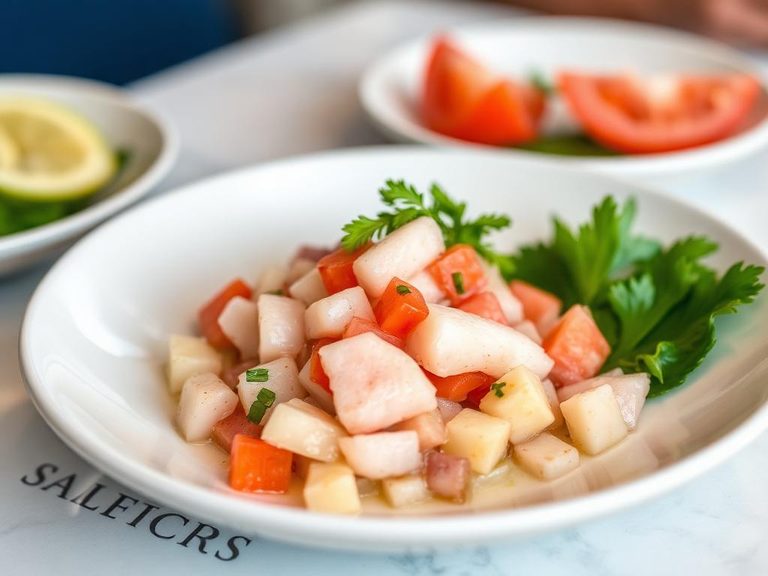
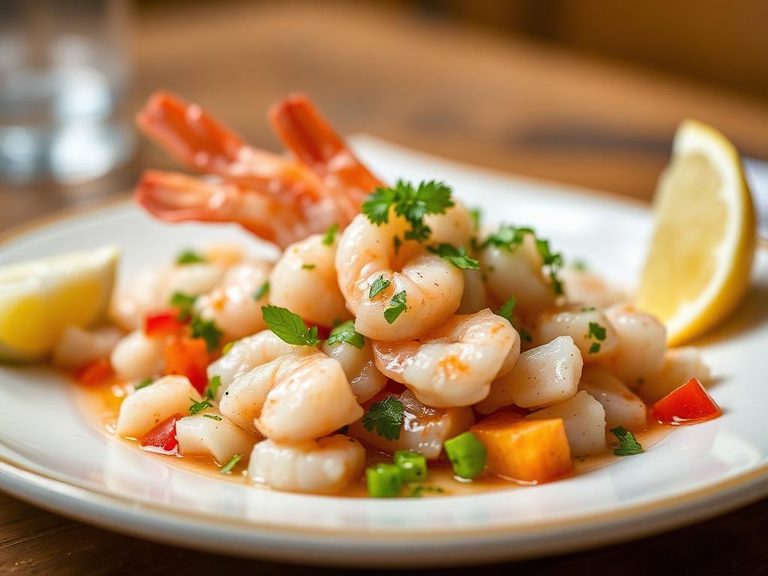
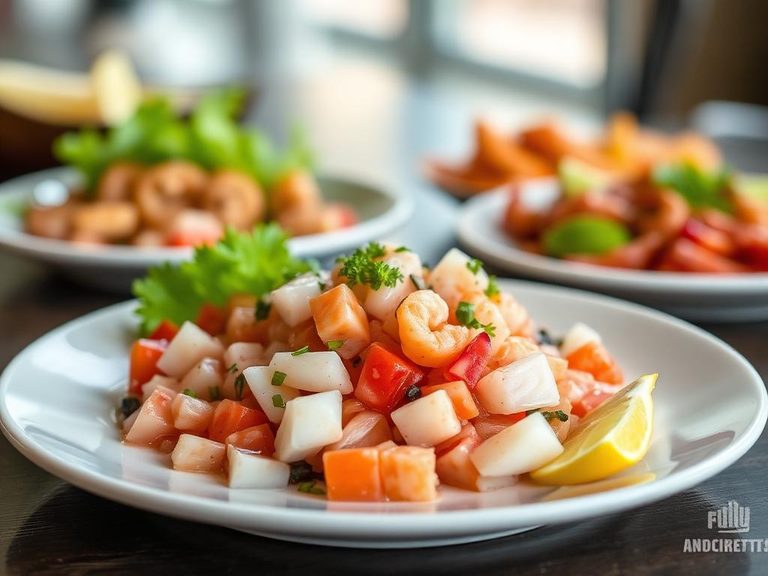
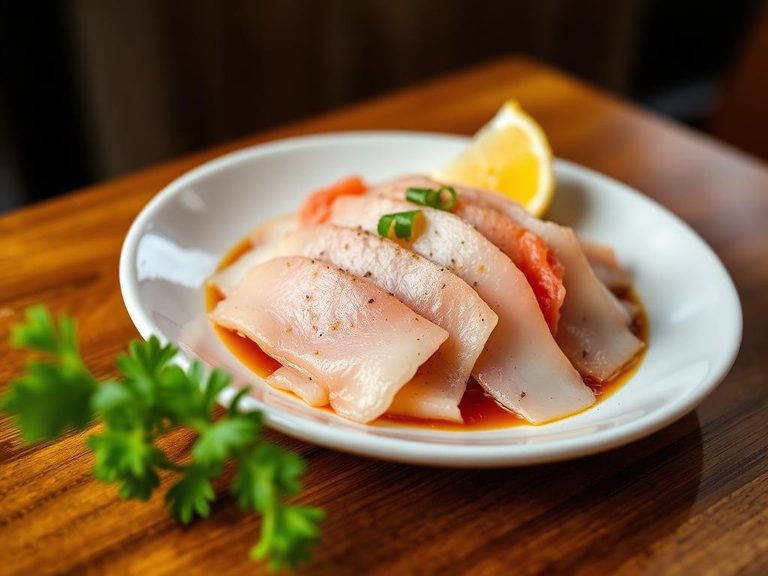
Ceviche is a vibrant dish of raw fish or seafood 'cooked' in citrus juice, resulting in a firm, opaque texture and a bright, tangy flavor. It's a nutritional powerhouse, exceptionally high in lean protein while being very low in fat and calories. The preparation highlights the fresh, clean taste of the seafood, often balanced with onions, chili, and cilantro.
Calorie split: 67% protein · 23% carbs · 11% fat
↓ Full nutrition💚 Why it's loved
People love ceviche for its refreshing, zesty explosion of flavors and the satisfying contrast between the tender-crisp fish and crunchy vegetables. It's a versatile dish that can be an elegant appetizer, a light main, or a festive shared platter, deeply tied to coastal Latin American culture and celebrations.
⚠️ Watch-outs & how to enjoy it better
The primary caution is the use of raw fish, which poses a risk of foodborne illness if not prepared with ultra-fresh, sushi-grade fish and proper hygiene. The high acidity from citrus can also be harsh on sensitive stomachs or tooth enamel. To counteract, always source fish from a reputable supplier, consume immediately, and consider rinsing the fish briefly in cold water after marinating if the texture is too firm or the flavor too intense.
Key benefits
- Excellent source of high-quality, lean protein
- Very low in fat and calories
- Rich in essential nutrients like selenium and vitamin B12
- Provides a good amount of omega-3 fatty acids (from fish)
- No cooking required, preserving heat-sensitive nutrients
🍽️ Popular dishes
🌍 Where it's eaten
💡 Did you know?
The 'cooking' process in ceviche is called denaturation, where the acid from citrus juice changes the protein structure in the fish, making it firm and opaque without any heat.
Full nutrition (USDA data · scales with serving)
| Water | 84.0 g |
| Energy | 63.0 kcal |
| Protein | 10.5 g |
| Total lipid (fat) | 0.76 g |
| Carbohydrate, by difference | 3.6 g |
| Fiber, total dietary | 0.50 g |
| Total Sugars | 1.3 g |
| Calcium, Ca | 22.0 mg |
| Iron, Fe | 0.16 mg |
| Magnesium, Mg | 20.0 mg |
| Phosphorus, P | 107 mg |
| Potassium, K | 282 mg |
| Sodium, Na | 149 mg |
| Zinc, Zn | 0.23 mg |
| Copper, Cu | 0.03 mg |
| Selenium, Se | 19.1 ug |
| Vitamin C, total ascorbic acid | 18.6 mg |
| Thiamin | 0.04 mg |
| Riboflavin | 0.01 mg |
| Niacin | 0.30 mg |
| Vitamin B-6 | 0.25 mg |
| Folate, total | 11.0 ug |
| Folic acid | 0.00 ug |
| Folate, food | 11.0 ug |
| Folate, DFE | 11.0 ug |
| Choline, total | 35.3 mg |
| Vitamin B-12 | 1.5 ug |
| Vitamin B-12, added | 0.00 ug |
| Vitamin A, RAE | 22.0 ug |
| Retinol | 16.0 ug |
| Carotene, beta | 68.0 ug |
| Carotene, alpha | 11.0 ug |
| Cryptoxanthin, beta | 6.0 ug |
| Lycopene | 205 ug |
| Lutein + zeaxanthin | 55.0 ug |
| Vitamin E (alpha-tocopherol) | 0.76 mg |
| Vitamin E, added | 0.00 mg |
| Vitamin D (D2 + D3) | 5.1 ug |
| Vitamin K (phylloquinone) | 1.7 ug |
| Alcohol, ethyl | 0.00 g |
| Caffeine | 0.00 mg |
| Theobromine | 0.00 mg |
Fat & fatty acid profile (per 100g)
| Fatty acids, total saturated | 0.16 g |
| SFA 4:0 | 0.00 g |
| SFA 6:0 | 0.00 g |
| SFA 8:0 | 0.00 g |
| SFA 10:0 | 0.00 g |
| SFA 12:0 | 0.00 g |
| SFA 14:0 | 0.02 g |
| SFA 16:0 | 0.09 g |
| SFA 18:0 | 0.04 g |
| Fatty acids, total monounsaturated | 0.13 g |
| MUFA 16:1 | 0.03 g |
| MUFA 18:1 | 0.09 g |
| MUFA 20:1 | 0.01 g |
| MUFA 22:1 | 0.00 g |
| Fatty acids, total polyunsaturated | 0.25 g |
| PUFA 18:2 | 0.02 g |
| PUFA 18:3 | 0.01 g |
| PUFA 18:4 | 0.00 g |
| PUFA 20:4 | 0.02 g |
| PUFA 20:5 n-3 (EPA) | 0.03 g |
| PUFA 22:5 n-3 (DPA) | 0.03 g |
| PUFA 22:6 n-3 (DHA) | 0.13 g |
| Cholesterol | 18.0 mg |
FAQ
Is the fish actually raw?
Technically, yes, the fish is not heated. However, the acid in the citrus juice denatures the proteins, changing the texture and appearance to resemble cooked fish. This process does not kill all bacteria, so using fresh, high-quality fish is crucial.
How long should you marinate ceviche?
It varies by fish type and cut size. For most white fish, 15-30 minutes is sufficient. Over-marinating can make the texture tough and chalky. Shrimp and firmer fish can handle slightly longer.
Can ceviche be made with other proteins?
Yes. While fish and seafood are classic, you can make 'ceviche' with thinly sliced beef (like in some Peruvian dishes), chicken, or even plant-based proteins like hearts of palm or mushrooms for a vegetarian version.
Nutrient density (calculated · NRF9.3)
Nutrient Rich Foods index: beneficial nutrients (protein, fiber, vitamins, minerals) minus saturated fat, added sugar & sodium, per 100 kcal.
NRF9.3 index — Fulgoni, Keast & Drewnowski, 2009. Computed from USDA nutrients.
Weight-loss friendliness (composite index)
Energy density 0.63 kcal/g · 67% calories from protein · 0.5 g fiber · 1.3 g sugar per 100 g.
Composite of energy density (Rolls et al., 1999), protein & fiber satiety, minus sugar. A calculated heuristic — ranks satiety-per-calorie, not a clinical measure.
Dietary load (calculated from USDA values)
Potential renal acid load. Positive = acid-forming, negative = alkaline-forming.
Sodium-to-potassium ratio: 0.53 (lower is better — aim for ≤ 1)
Sodium:potassium per WHO potassium guidance. Computed from USDA nutrients.